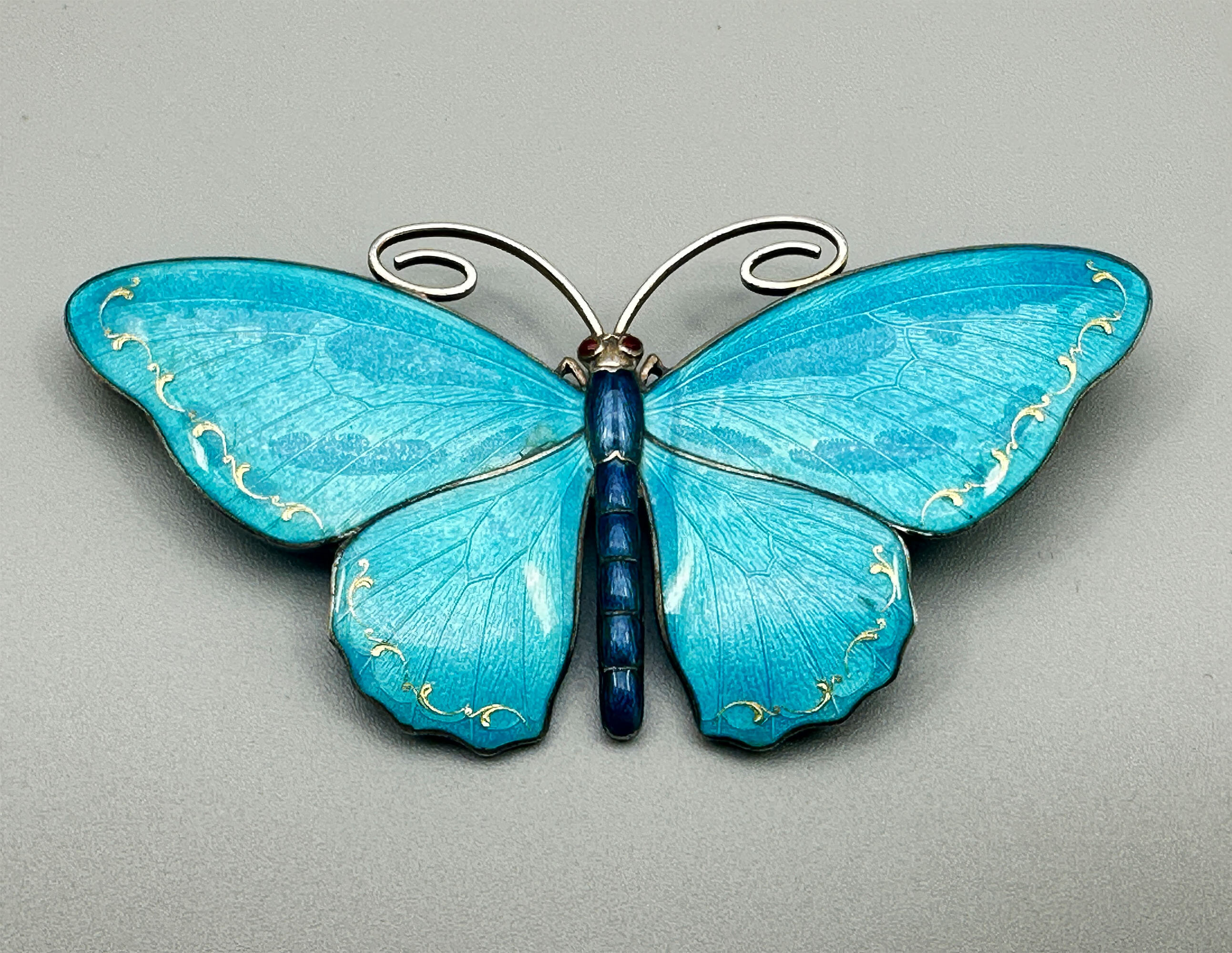
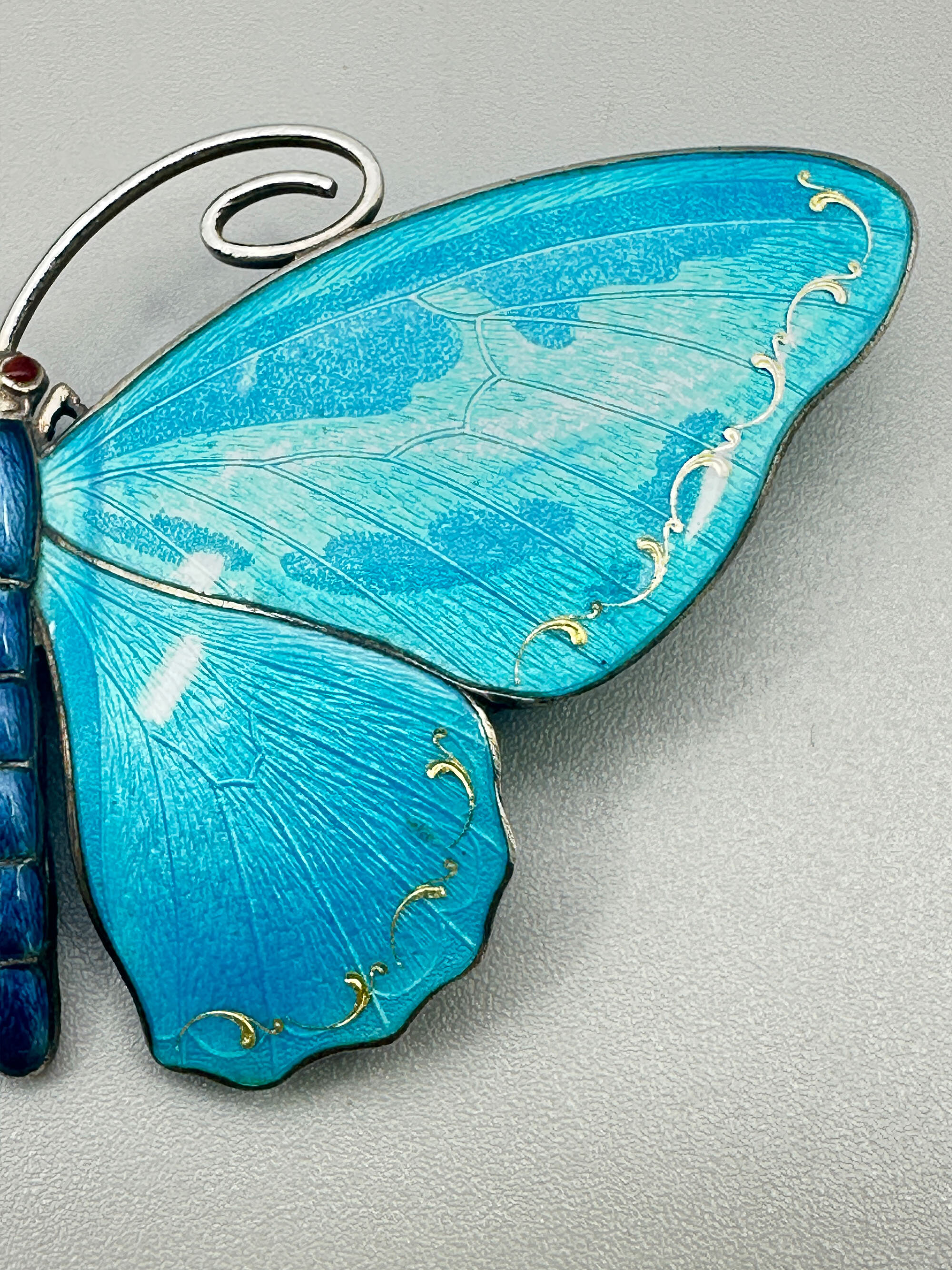
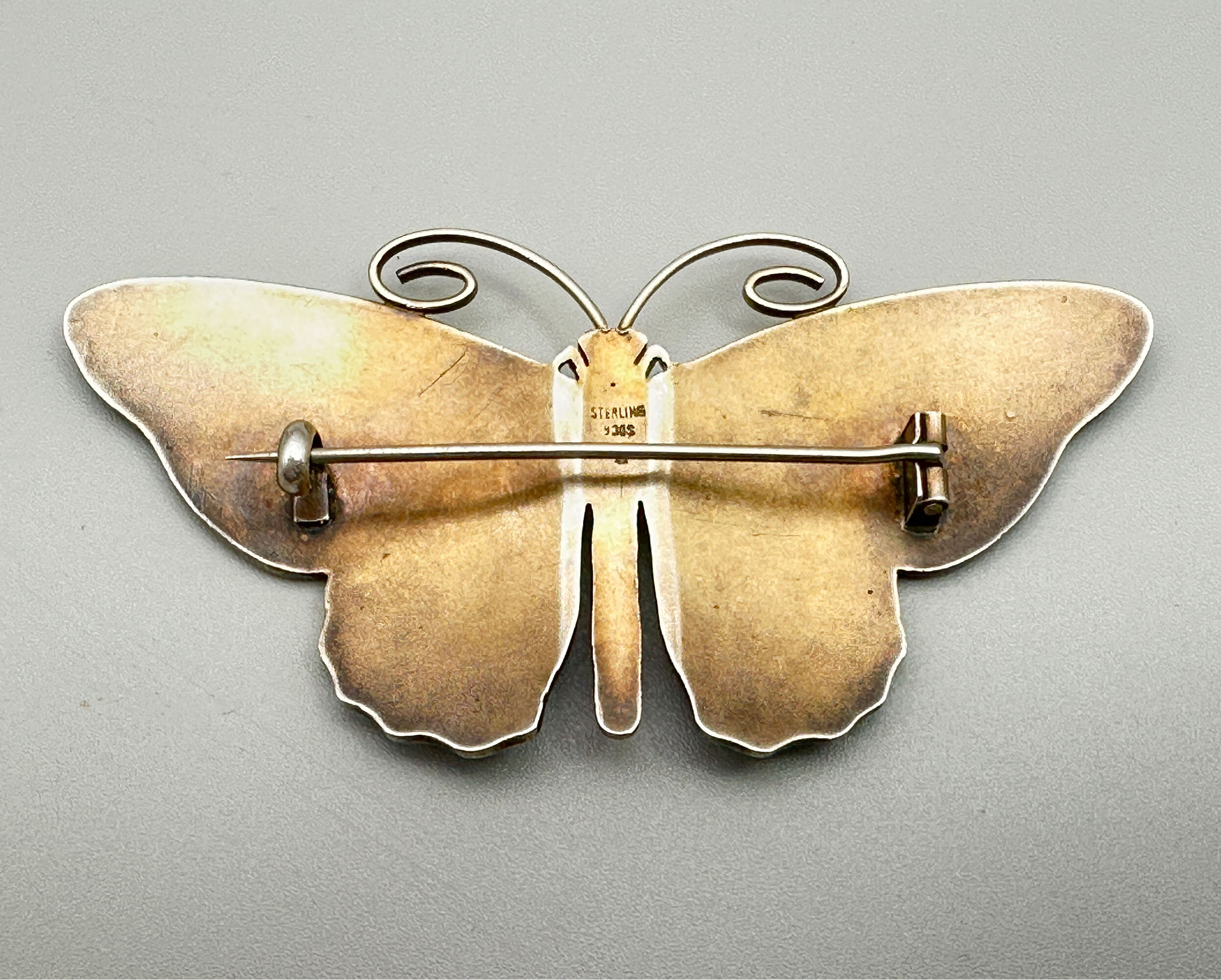
Butterfly brooch by Marius Hammer (1847-1927), c1910
£550.00


Welcome to Intercollector retail sales. Here you will find many interesting items all ready for immediate purchase.
Butterfly brooch by Marius Hammer (1847-1927), c1910
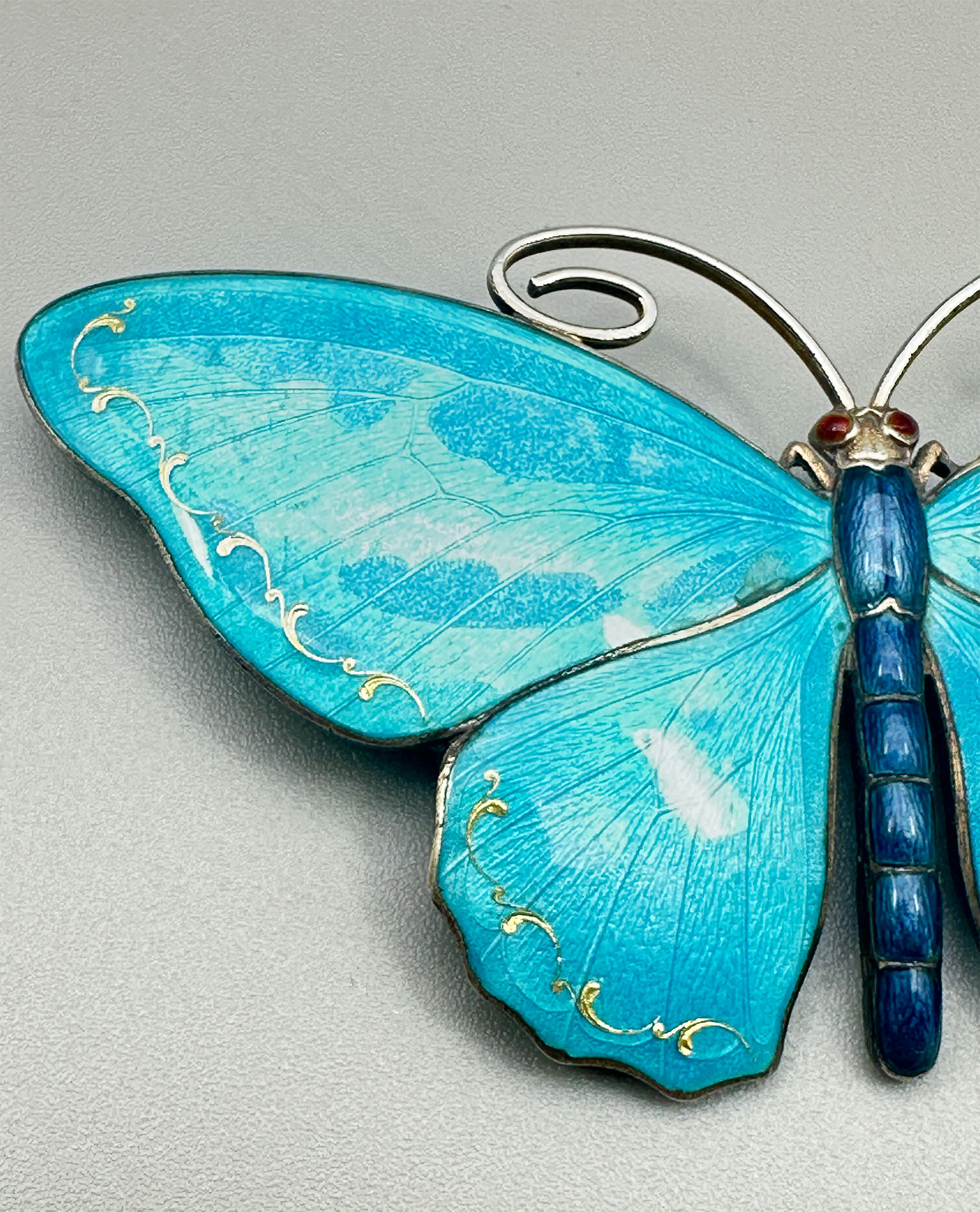
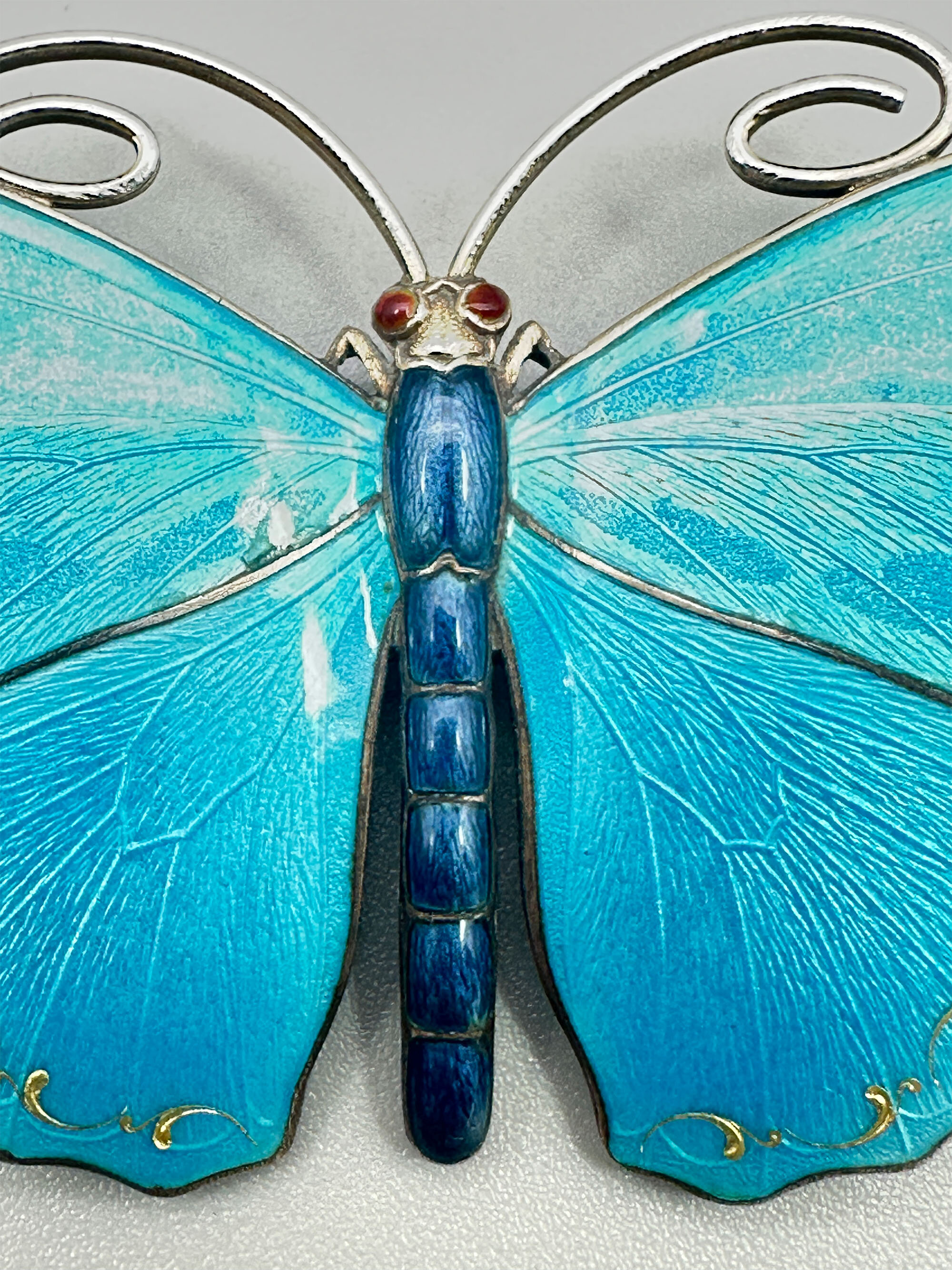
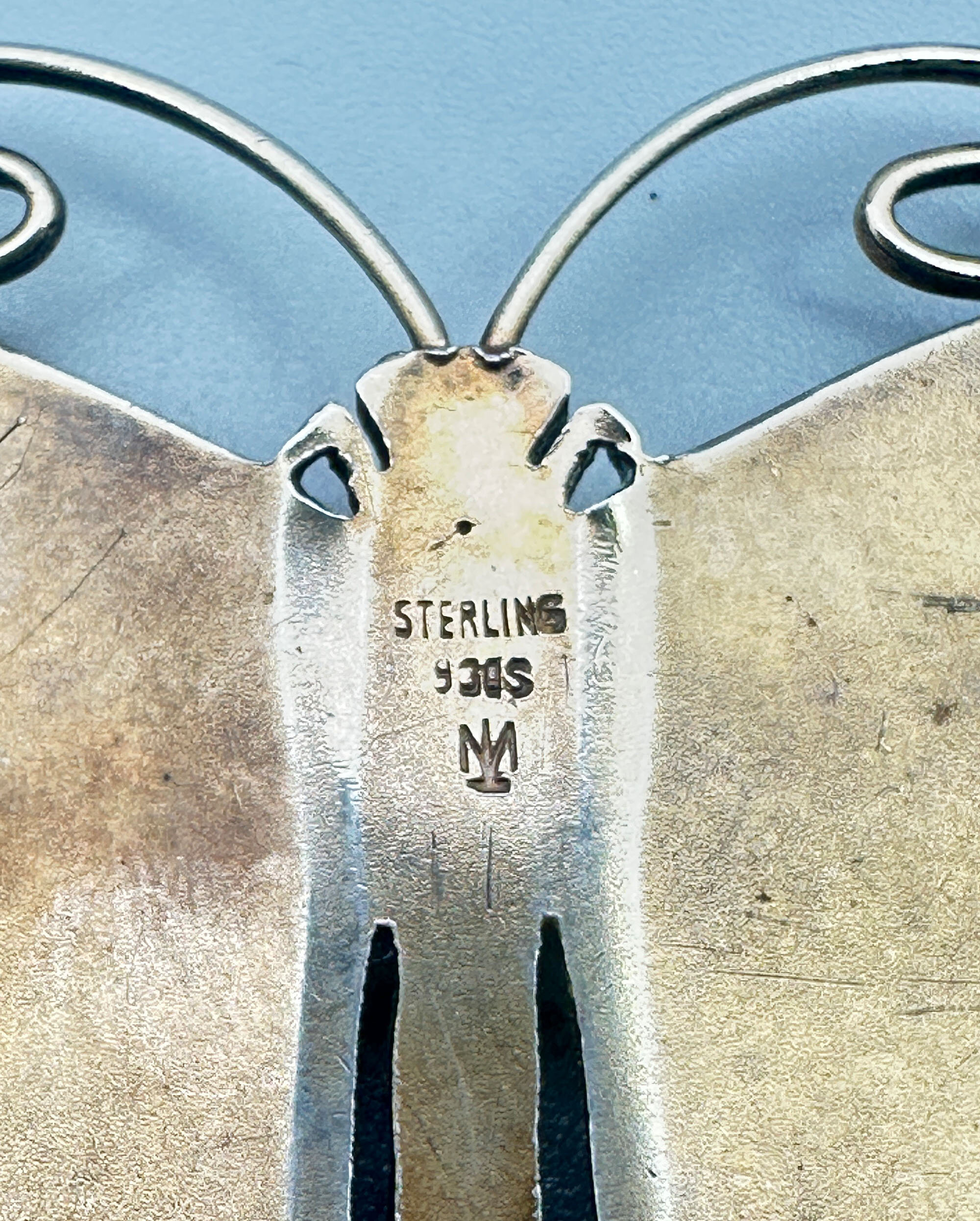
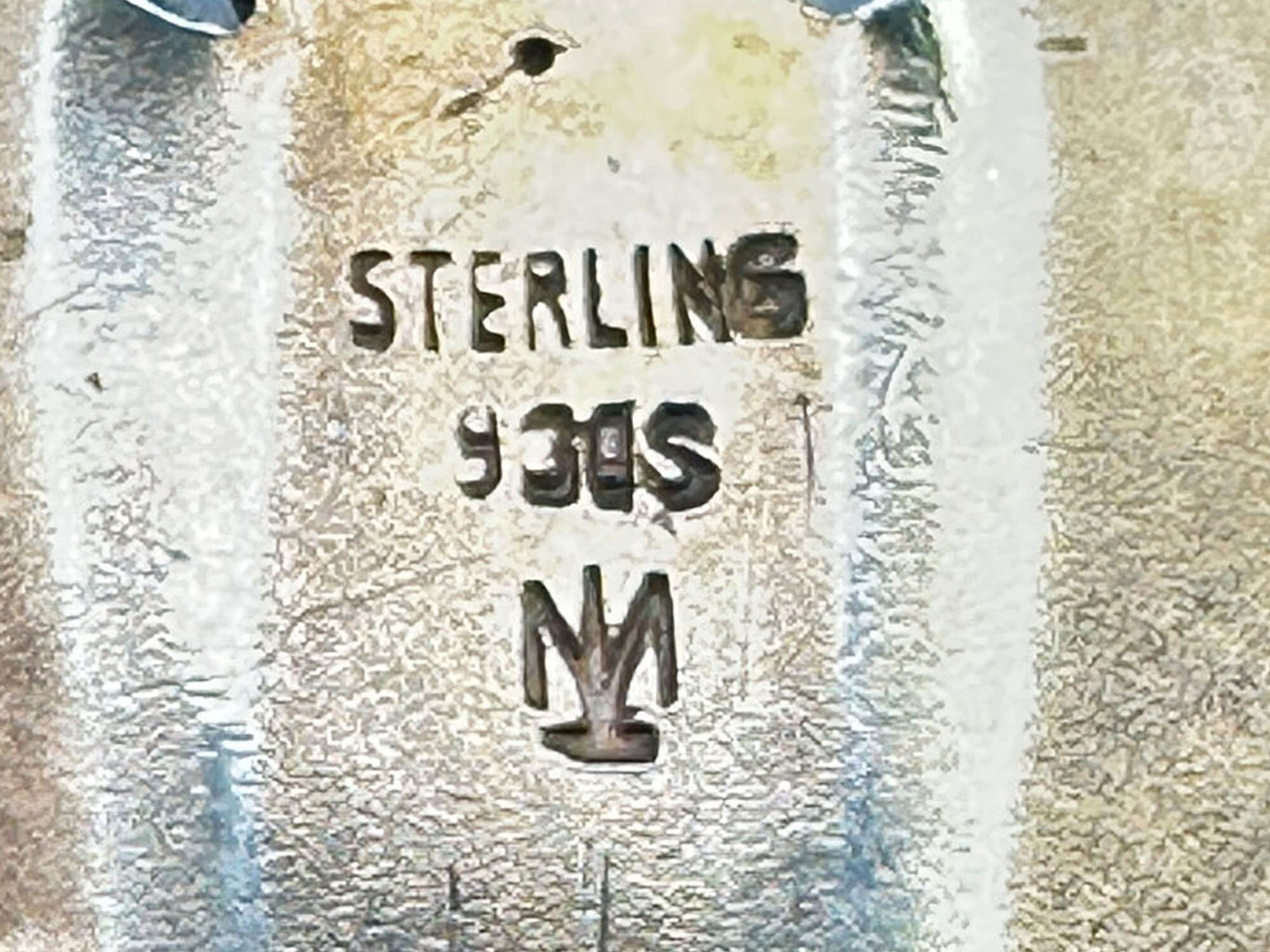
This is a very fine example of the work by the well known Norwegian goldsmith Marius Hammer (1847 - 1927). It is one of his most popular designs, a butterfly with guilloche enamel wings and body. The wings are turquoise, the body is blue and the eyes are red enamel. It is all done in silver with a gold finish on the reverse and is marked 'Sterling 930S' and then with his monogram which is an M with an inverted hammer intersecting it. This is quite a unique piece as it is one of the largest examples of the butterfly designs known with a wingspan of 8 cm (the most commonly found size is 6.2 cm). The gilt detail on the edge of the wings is also seldom seen.Marius Hammer built up and managed Norway's largest goldsmith's workshop in the decades around 1900. By investing heavily in marketing and international exhibitions, he helped to make Norwegian enamelwork an important export item. In what was a golden age for Norwegian handicrafts generally, Hammer's company also produced many pieces that are among the finest works of the Norwegian goldsmiths' art.
Hammer was a third-generation goldsmith in the traditional craft town of Bergen. In his father's workshop, he received training in what was an ancient guild craft, but his ambitions were greater than running a small workshop, as his father and grandfather had done. During his studies in Hamburg and Berlin around 1870, he gained insight into new techniques and production methods, and in a few years from 1871 onwards he built up his workshop to become the largest in Bergen with modern aids such as gas and electricity being installed very early on.
The workshop made all types of goldsmith's wares: centrepieces, jugs, coffee sets, cutlery, jewellery and much more. However, from the 1880s, Hammer focused on the tourist market and became a major producer of souvenirs and other luxury items in filigree and enamel. He built up a network of branches in the well-known tourist destinations in Western Norway, and he also supplied large quantities of goods to businesses abroad, including London. From 1885, Hammer's company was court supplier to the Prince of Wales, and somewhat later the German Emperor Wilhelm II became an enthusiastic customer. The main product was filigree work with window enamel – glass mosaics in all the colours of the rainbow built up on a fragile network of thin, gilded threads. Small and large Viking ships in various price ranges for tourists, boots, teaspoons, jewellery and much more were produced in a wide variety and large quantities. Around 1914, the company reached its peak with about 130 employees.
The key to Hammer's success in the tourist market was active marketing, including participation in the major world exhibitions. Together with the Kristiania firms Tostrup and David-Andersen, Hammer made enamelware one of the most important Norwegian exports.
In addition to souvenir production, Hammer also produced a substantial body of mainstream works, objects such as bowls, jugs and mugs and in addition invested heavily in prestige works for exhibition purposes and for the upper bourgeoisie. Hammer engaged outstanding designers, and during its most prosperous years from around 1900 to 1920 the firm produced works that are now considered masterpieces in the goldsmith's art of the period.
Marius Hammer became Bergen's richest craftsman; he lived at the elegant country estate Christinegård in Sandviken and had himself driven in a two-horse carriage to his shop in Strandgaten. He built up a large collection of antiques and also traded in these in his shop.
With the outbreak of World War I, the tourists disappeared, and after the war, times became tougher for the luxury production that Hammer had focused on. The company was converted into a limited liability company in 1915, with his eldest son Torolf as director. However, Torolf died in 1920, and from then on the company went into decline. Neither the old Marius Hammer nor his youngest son Max, who took over as manager, were able to carry out the radical restructuring that was necessary to adapt to the changing times. Shortly after Marius Hammer died in 1927, the company's properties and most of the machinery were sold, and the remnants of the company went into bankruptcy in 1930. (REF: https://nbl.snl.no/Marius_Hammer)
Width 8cm
For more detailed measurements and a condition report, please visit our website : www.intercollector.com
| Size: | Width 8 cm x Ht 3.6 cm |
| Weight: | 28.9 grams |
| Date: | c1910 |
| Condition: | Very good condition, no issues |
| Price: | £550 |
Global shipping is available. We use standard Royal Mail Tracked and Signed For service.
If you would like a quote for the shipping cost please email us at shipping@intercollector.com.
Please see our Terms and Conditions Section 13 for more details.
Dispatched usually within 5 working days from receipt of payment.