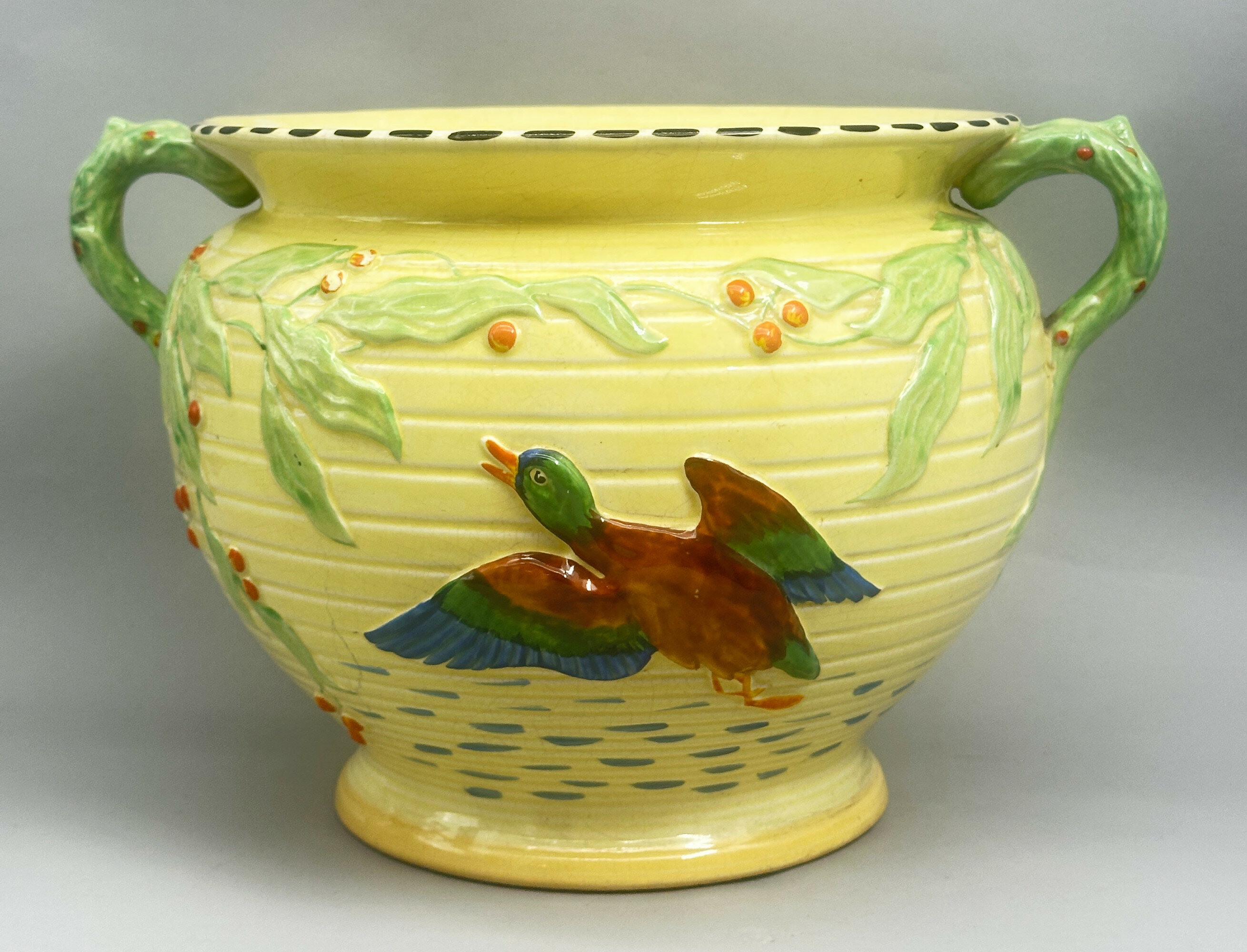
Falcon Ware Jardiniere decorated Mallard Duck and Foliage, 1930s
Price: £65Falcon Ware was the trade name for pieces produced by Thomas Lawrence, later Thomas Lawrence (Longton) Ltd, a business founded by Thomas Lawrence in 1885 which moved to the Falcon works, Longton, in 1895. In the same year he took his nephew, John Grundy into partnership and around 1920 Grundy became the Managing Director. Thomas Lawrence died in April 1932 and John Grundy became the sole proprietor until his death in 1938 when the business was sold to Grundy's son-in-law Mr Richard Hull (jnr) and Mr. E.J. Dennis and the name was changed to 'Thomas Lawrence (Longton) Limited'. At the same time the firm merged with Shaw and Copestake Ltd of which Richard Hull was a Director but the two businesses still operated independently until 1962 when the Thomas Lawrence business was fully subsumed by its partner with the ‘Falcon’ name ceasing to be used two years later in 1964.
Falcon Ware was known for colourful and decorative designs often with naturalistic themes. This jardiniere is an excellent and unusual example. The cipher ‘LG’, for Lawrence and Grundy, which is not so often found, implies a dating to the 1930s which corresponds with the general style of the piece with its hint of Art Deco associations.
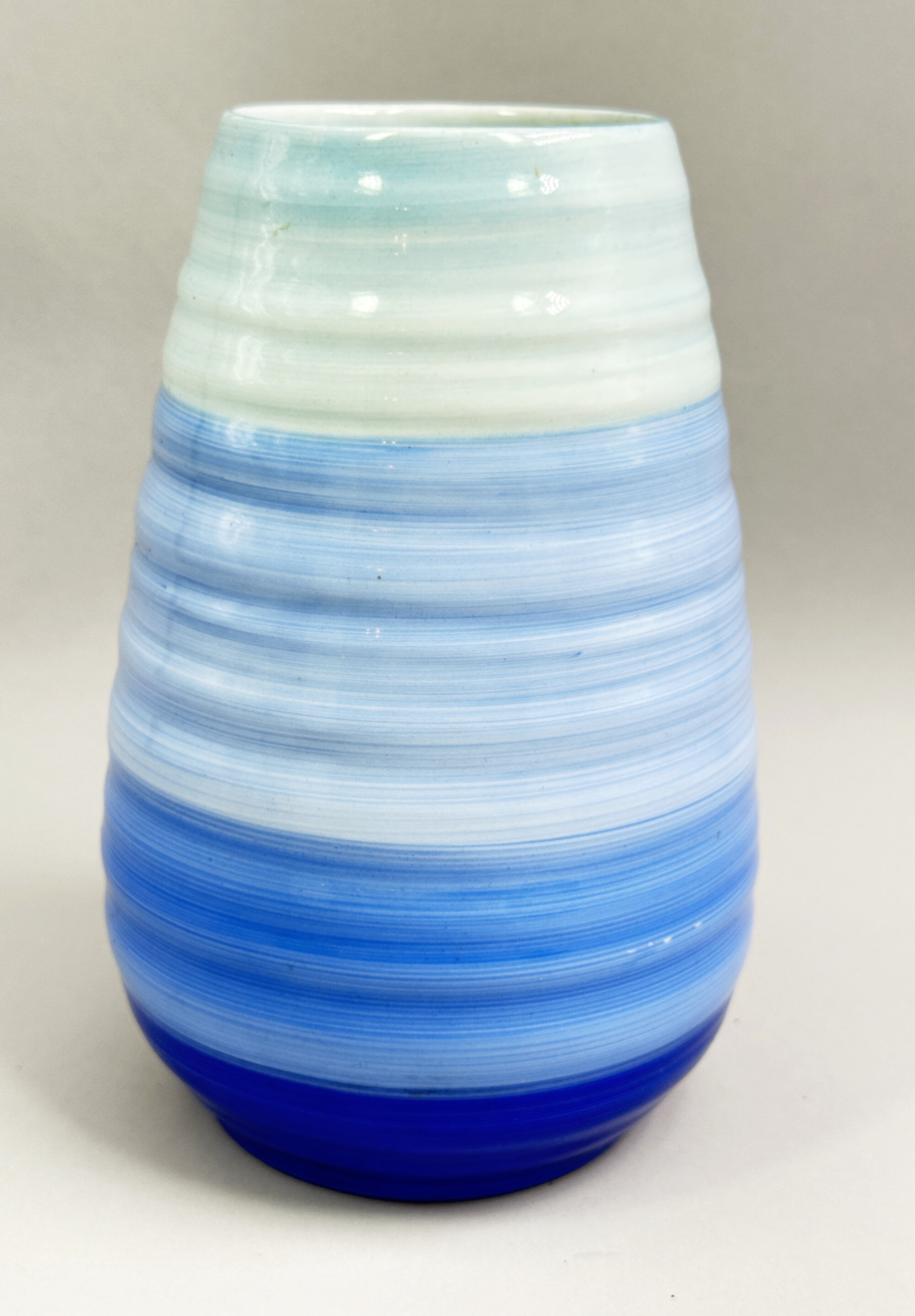
Shelley Harmony Ware Vase glazed in blue, 1930s
Price: £45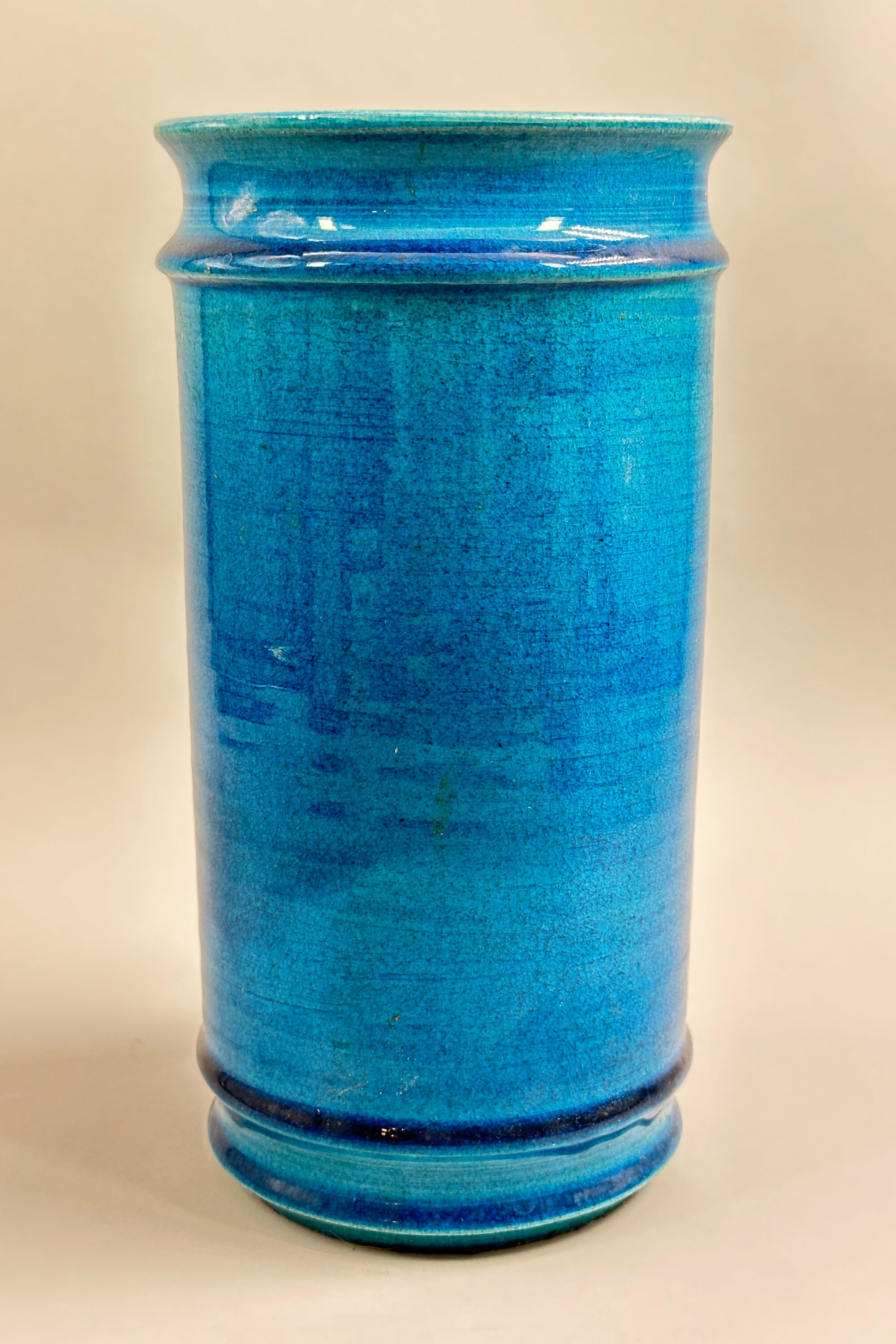
Cylindrical Vase, Herman Kähler, HAK, blue glazed stoneware, 1950s
Price: £250
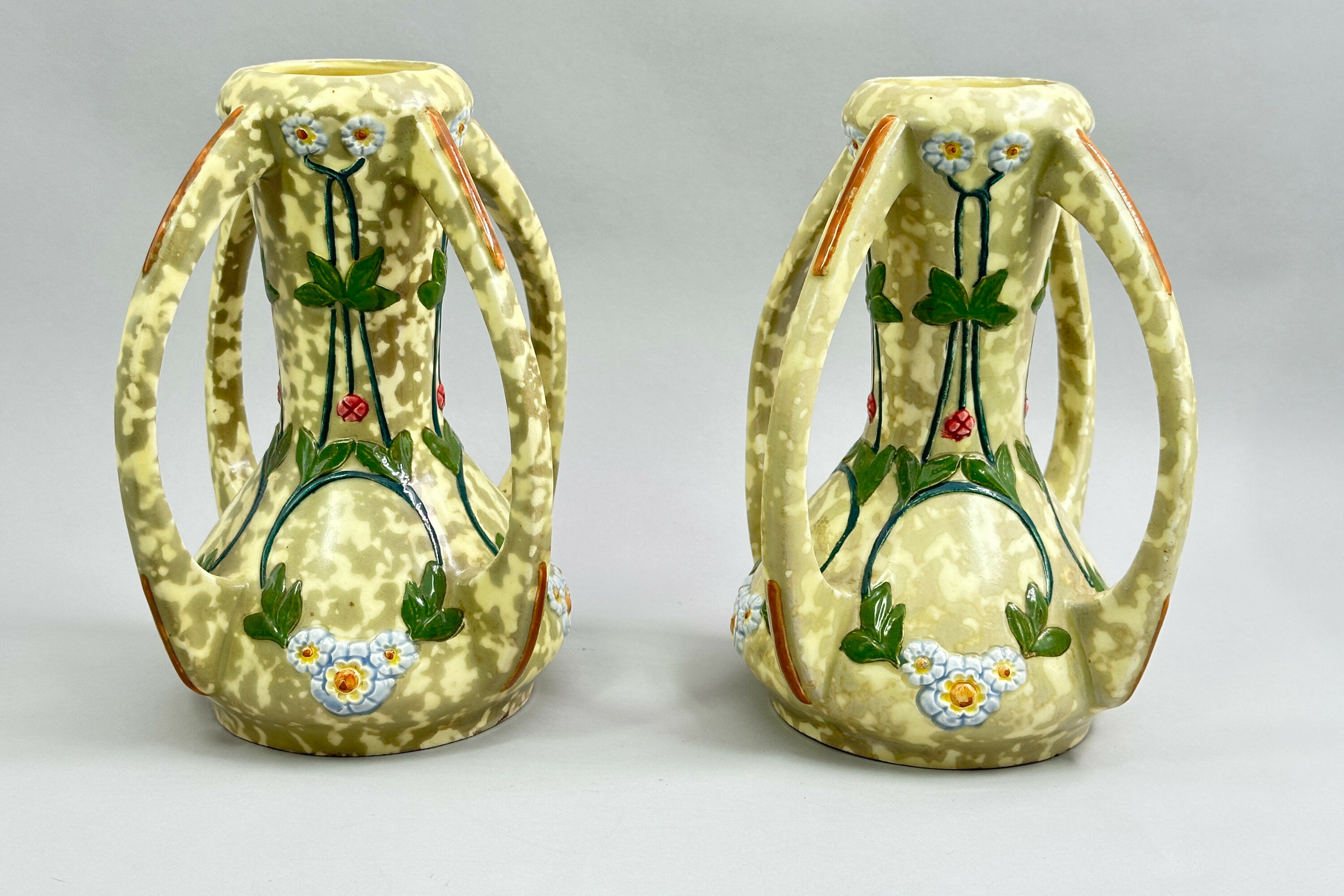
Pair of Royal Dux Secessionist Style Vases, 1930s
Price: £250
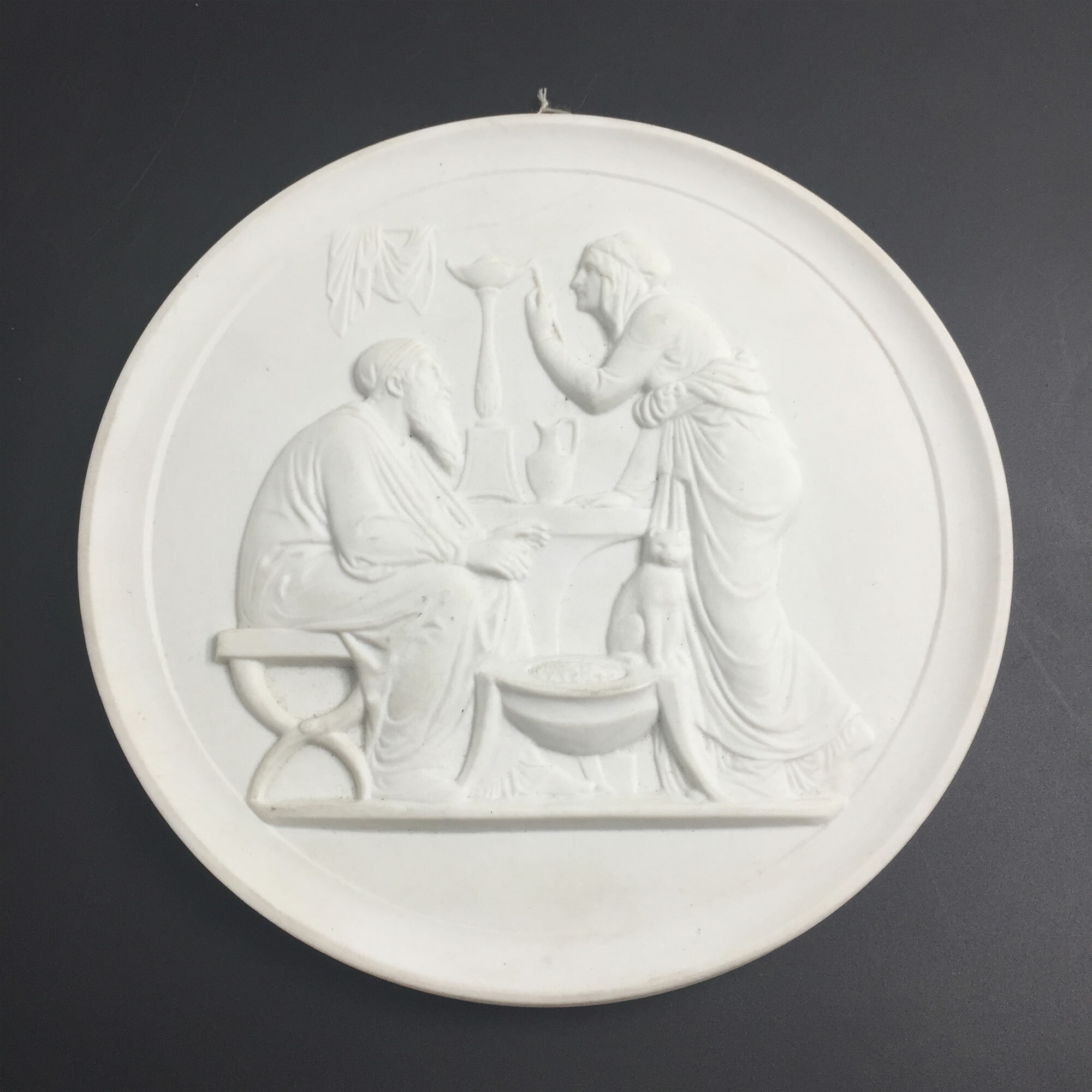
Pair of bisque relief plaques by artist Bertel Thorvaldsen. Royal Copenhagen 1969 - 74
Price: £40Bertel Thorvaldsen (born Nov. 19, 1770, or Nov. 13, 1768, Copenhagen, Den.—died March 24, 1844, Copenhagen), sculptor, prominent in the Neoclassical period, who was the first internationally acclaimed Danish artist. Prominent in Roman intellectual and artistic circles, he influenced many emerging artists from Europe and the United States. Most of Thorvaldsen’s most characteristic sculptures are reinterpretations of the figures or themes of classical antiquity. The Alexander frieze of 1812 in the Palazzo del Quirinale, Rome, modeled in only three months in anticipation of a visit by Napoleon, is an example of the feverish energy with which he could at times work. Religious sculptures include the colossal series of statues of Christ and the Twelve Apostles (1821–27) in the Vor Frue Kirke in Copenhagen. He also made numerous portrait busts of distinguished contemporaries.
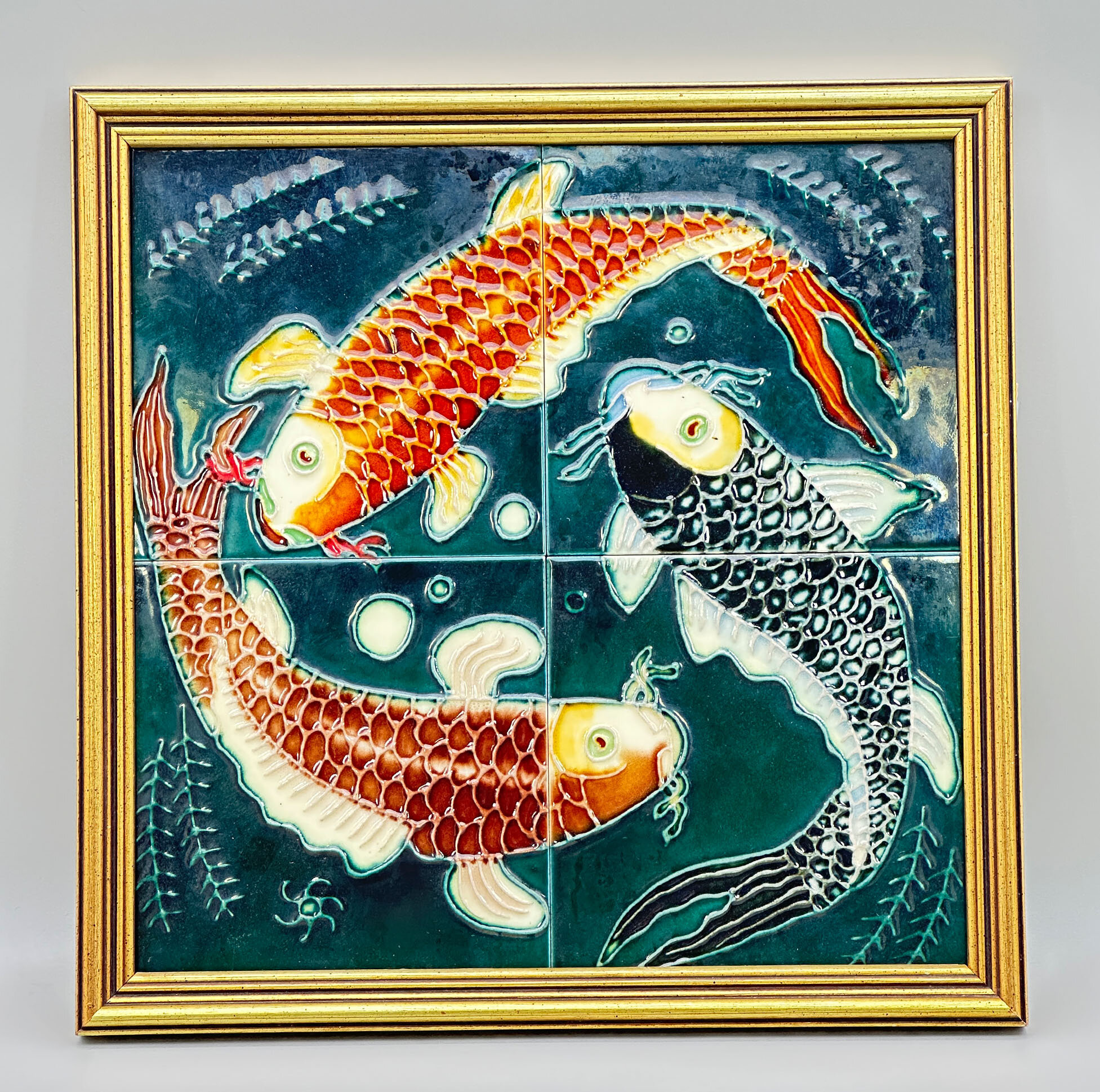
Decorative tile panel with three Koi Carp, C20th
Price: £75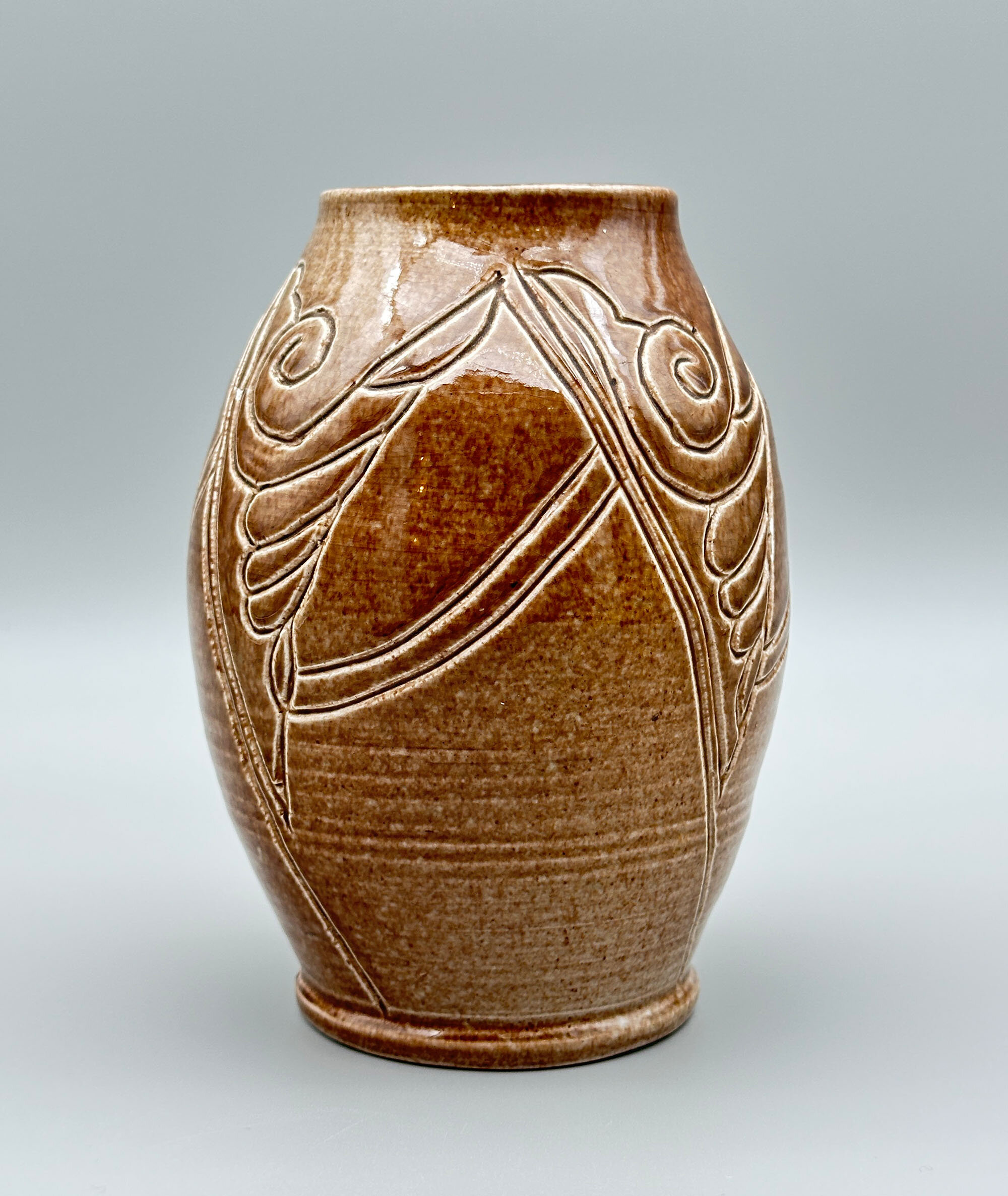
Abstract design studio pottery vase, signed E.E. Lewis 1954
Price: £35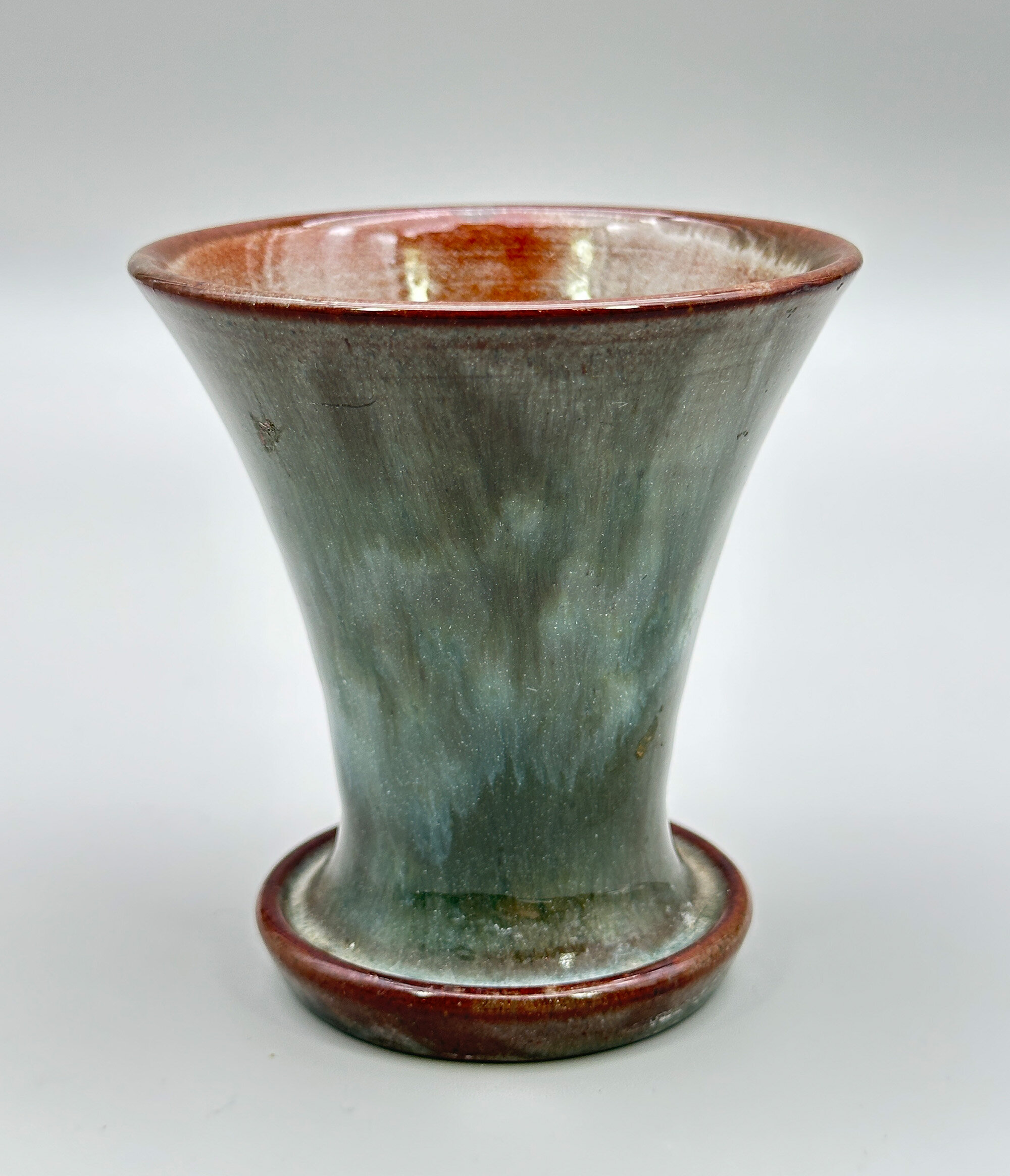
Ewenny Pottery Beaker, signed, late C20th
Price: £25There has been a pottery at the small Welsh town of Ewenny since 1610, the area around being, at the time, a fertile source of clay. In the early 1800s Evan Jenkins married Mary, the daughter of then owner John Morgan, and this began a period of ownership by the Jenkins family which continues today, the studio and shop being run by Alun Jenkins and his daughter Caitlin, who is the eighth generation member of the business. Their mark can be seen at ‘British Studio Potters’ Marks’ by Eric Yates-Owen and Robert Fournier (2nd edition 2005 p157). Production has tended to concentrate on modest utilitarian items, hand potted and finished with the distinctive glazes for which the studio is known which involve dipping the pot in one glaze adding another with the splash technique and firing the item so that the two glazes fuse. The effects seen on this beaker are typical of their work as is also the clear evidence of hand throwing. Ewenny pieces are made and sold today, but the current catalogue does not list items exactly similar to this, so a late twentieth century dating is the most likely.

Alan Wallwork Studio Totem Vase, signed, 1960s
Price: £85This is a classic example of the early work of the distinguished British studio potter Alan Wallwork whose pieces now appear in many collections and galleries (see images 15,16). Born in Watford, Hertfordshire, in 1931, Wallwork’s training included a one year spell at Goldsmith’s after which he taught in local schools and then opened his first gallery at Forest Hill in 1958 where he both sold pieces by Lucie Rie and Kenneth Clark, amongst others, and also developed his own work. Eventually finding this too small he moved to a studio in Greenwich where he sold items to Heal’s and the Craft Potters Association, moving yet again to Dorset in 1965 where he continued production for many years. After an illness in the late 1990s, Wallwork opened yet another studio in France in 2004 where he continued to pot but with a rather reduced output. In his last years, his health unfortunately declined and he died in Dorset in 2019.
Wallwork’s work, distinguished by its rugged rustic forms enjoyed great popularity throughout his lifetime. In 2012 he wrote “My pots have no deep ‘message’, or not consciously. They have the simple forms I personally warm to and I try to give them a variety of pattern and texture that I find sympathetic to the touch, not just the eye. Colour is not all important, but surface is. I hope my pots invite being picked up and felt.”
The form of this piece, often described as ‘totem’, dates it to the years in Greenwich, 1960-1965, (see the website alanwallwork.co.uk for more detail on this). In common with other examples it is signed with a single ‘W’ which indicates that it was a studio or apprentice piece rather than hand produced by Wallwork himself, who usually marked his own pieces with both his initials ‘AW’, see ‘British Studio Potters’ Marks’ by Eric Yates-Owen and Robert Fournier (2nd edition 2005 p517). But this should not detract from the vase itself which retains the distinctive appeal of his work and is a particularly striking shape enhanced by the ‘native’ decoration.
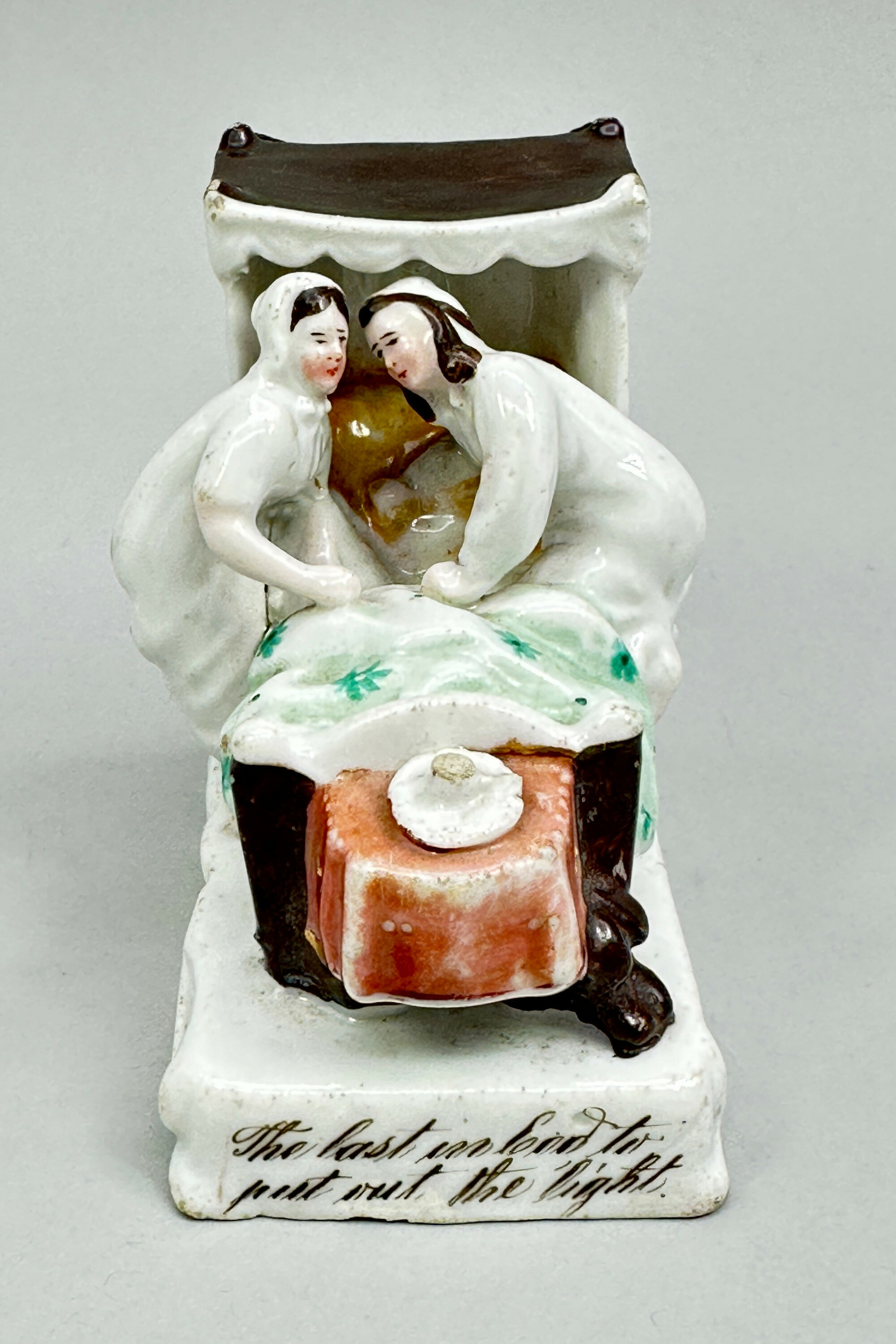
Fairing Figurine - The last in bed to put out the light, German, late Nineteenth Century
Price: £25The various figures were made in white glazed porcelain with coloured decoration. The compositions were sculptural and often accompanied by an inscription, as here. Many models are known. Two typical examples are 'Returning from the Ball' and 'Twelve Months after Marriage' but the most common example is represented here 'The last in bed to put out the light'. A couple are seen climbing into a covered bed at the foot of which stands a candle in a holder. These candles are usually broken off, most likely because of simple damage over the years but it has been suggested that this was done deliberately for good luck.
Some of the fairing figurines are marked, as here. The impressed number '2851' comes from the first series of figures produced by the Conta factory with numbers ranging from 2850 to 2899. The earlier examples do not have the shield mark found on most of the pieces which indicates an earlier dating here, more towards the middle of the nineteenth century.
Fairings have been collectors' items for many years now and still hold a naif charm which makes them appealing display items, with a history of their own.
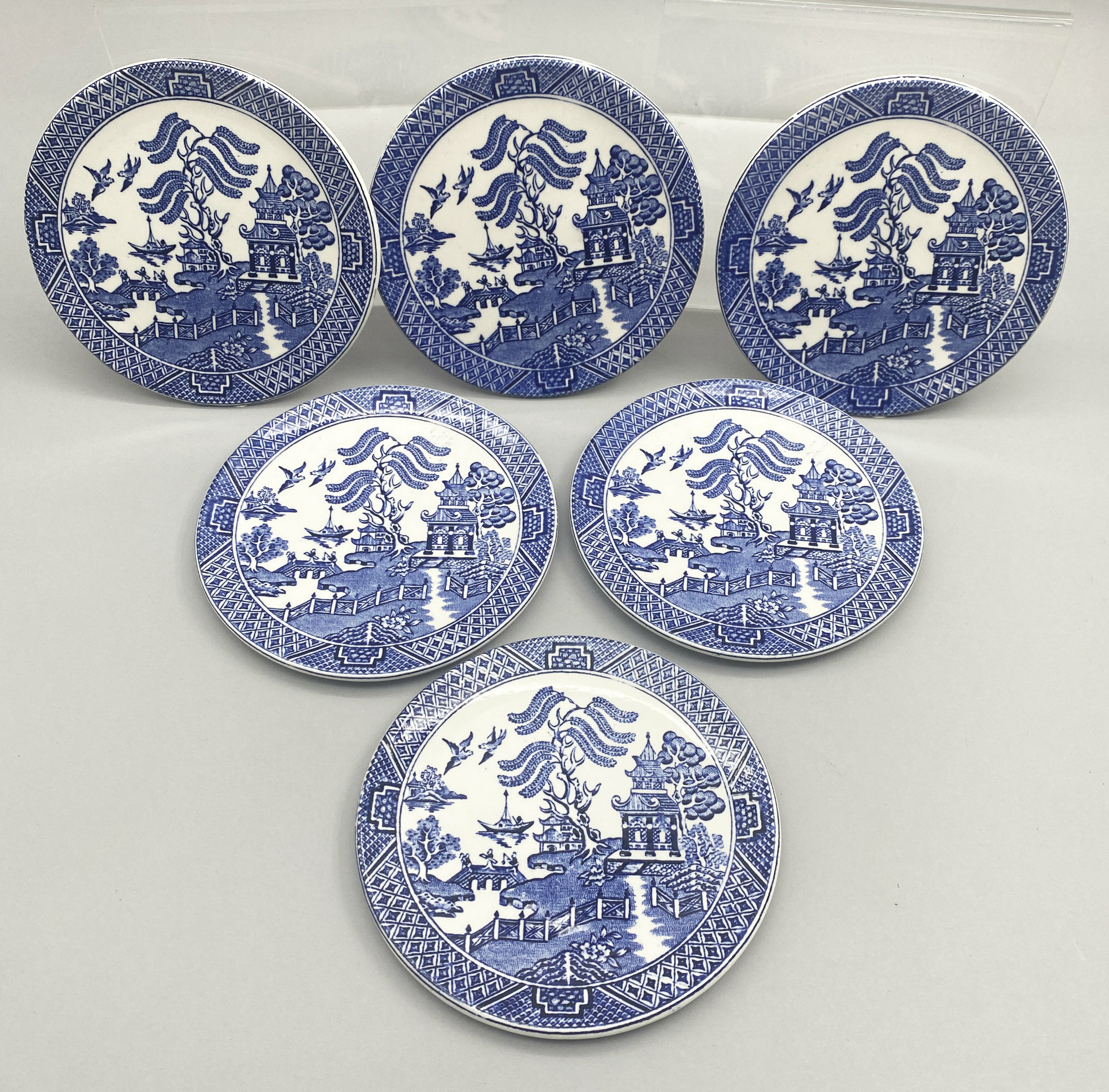
A Set of Six Blue and White Willow Pattern Coasters English Ironstone 1980s
Price: £30These coasters formed part of their range. The decoration employs the transfer pattern technique developed in England in the mid eighteenth century and a staple of nineteenth century productions. Printed designs were 'transferred' to the ceramic surface allowing the production of extensive services in a matching pattern. The Chinese derived 'Willow Pattern' design seems to have been first used around 1790 and was probably designed by Thomas Minton for Spode. All the versions contain similar elements besides the pagodas and landscape scenes most notably the three figures on a bridge and a pair of flying swallows. In order to promote sales, various stories were invented based on elements of the design. These coasters are an amusing recollection of times past and highly practical in addition.
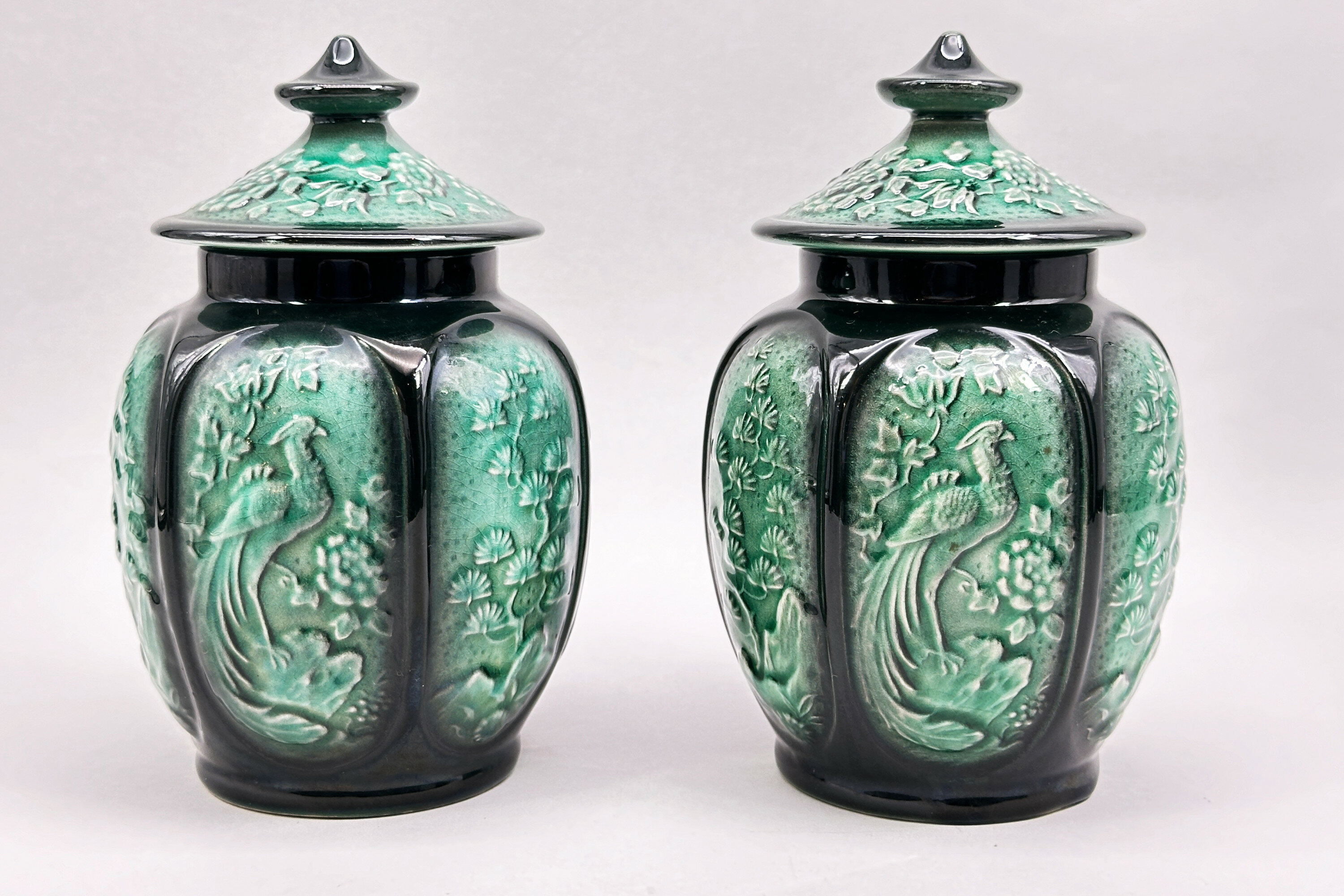
Pair of Oriental Style green glazed Sylvac Jars and Covers, circa 1960
Price: £95‘SylvaC’ (the name was written with a capital ‘C’ after registration of the trademark in 1938) was a trade name of Shaw and Copestake, a company formed by Mr. William Shaw and a Mr. Copestake around 1900. Mr. Copestake sold his shares to a Mr. Richard Hull after about six months of business and this partnership continued until Mr. Hull’s death in 1935. He was succeeded by his son, Mr. Richard Hull junior. In the following year, the business became a limited company. Various mergers and acquisitions followed and in the 1950s new premises were built and production expanded considerably continuing until the early 1980s when changing markets and increased competition forced the company into liquidation.
Sylvac were known for imaginative glazed wares, particularly animals, but this design with its reminiscences of the Orient in both form and decoration is rather more unusual and particularly pleasing. These jars were produced in a variety of colours but the combination here of green and black, loosely recalling Chinese ‘Famille Noire’, is probably the most successful.
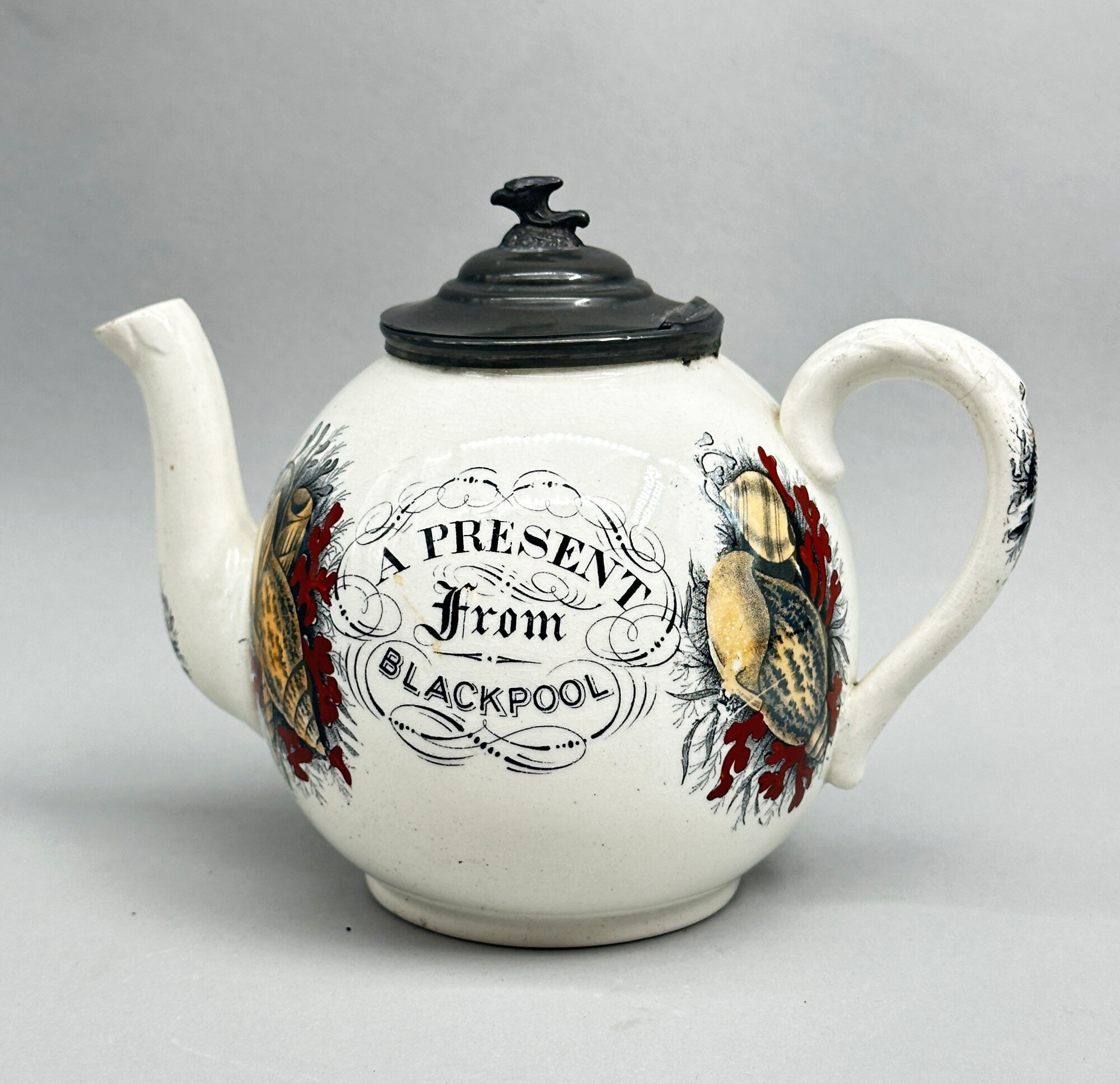
Blackpool souvenir teapot c1920
Price: £35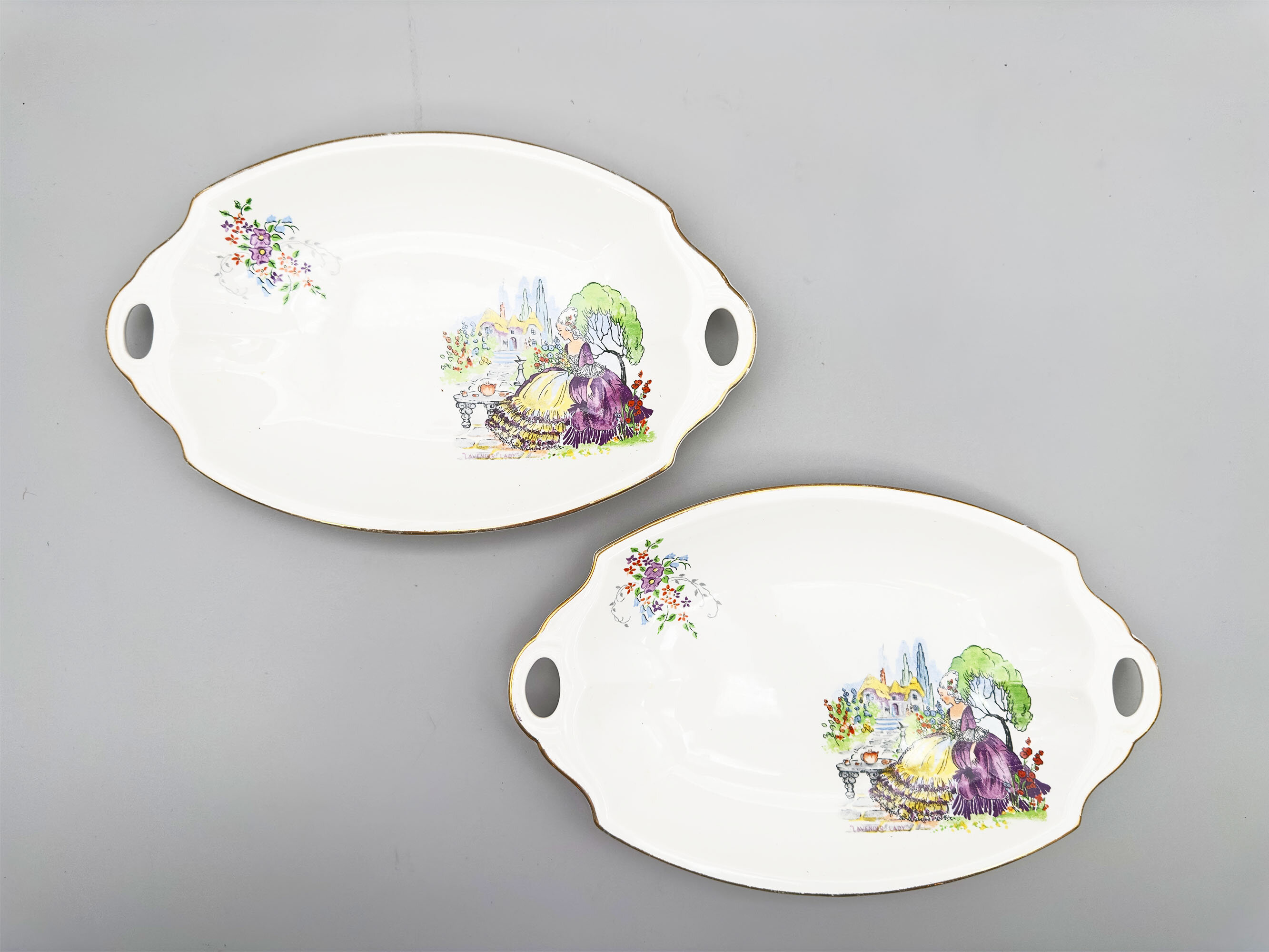
Pair of oval dishes with handles decorated lady in crinoline dress, English mid C20th
Price: £25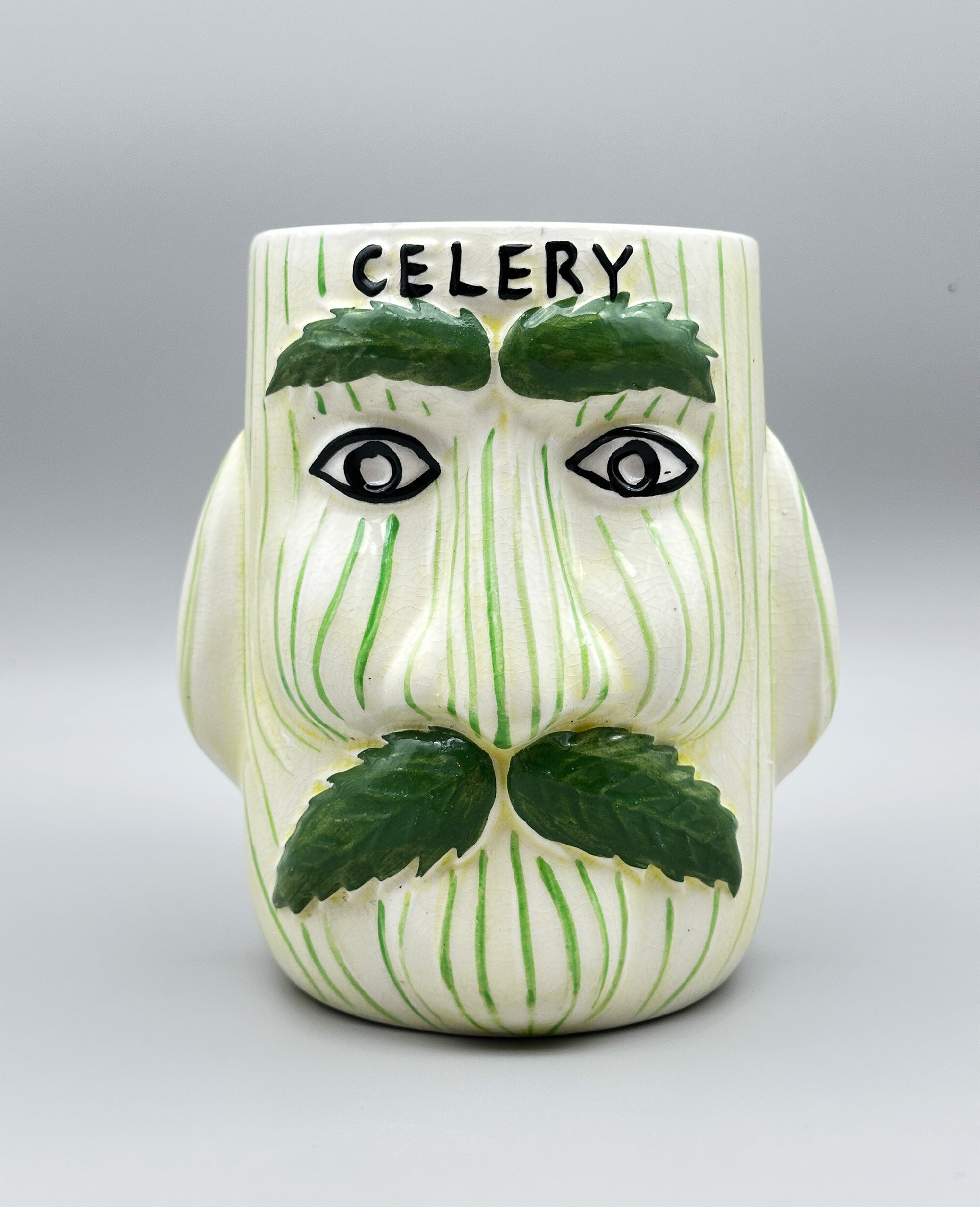
Novelty ceramic celery Vase, Price Kensington, 1960s
Price: £25Price & Kensington was the trademark for Price & Kensington Potteries Ltd which was formed in 1962 by the amalgamation of Price Bros. (Burslem) Ltd and Kensington Pottery Ltd which were both subsidiaries of Arthur Wood & Son (Longport) Ltd. From 1962 to 2003 Price & Kensington produced large quantities of domestic wares alongside novelties and souvenirs, but in 2003 their parent company went into administration and their brand name was eventually sold to Rayware Limited which continued to use it, eventually moving the manufacture abroad, mainly to China.
This celery vase was one of the most popular and distinctive pieces which Price & Kensington produced and examples are enthusiastically collected today.
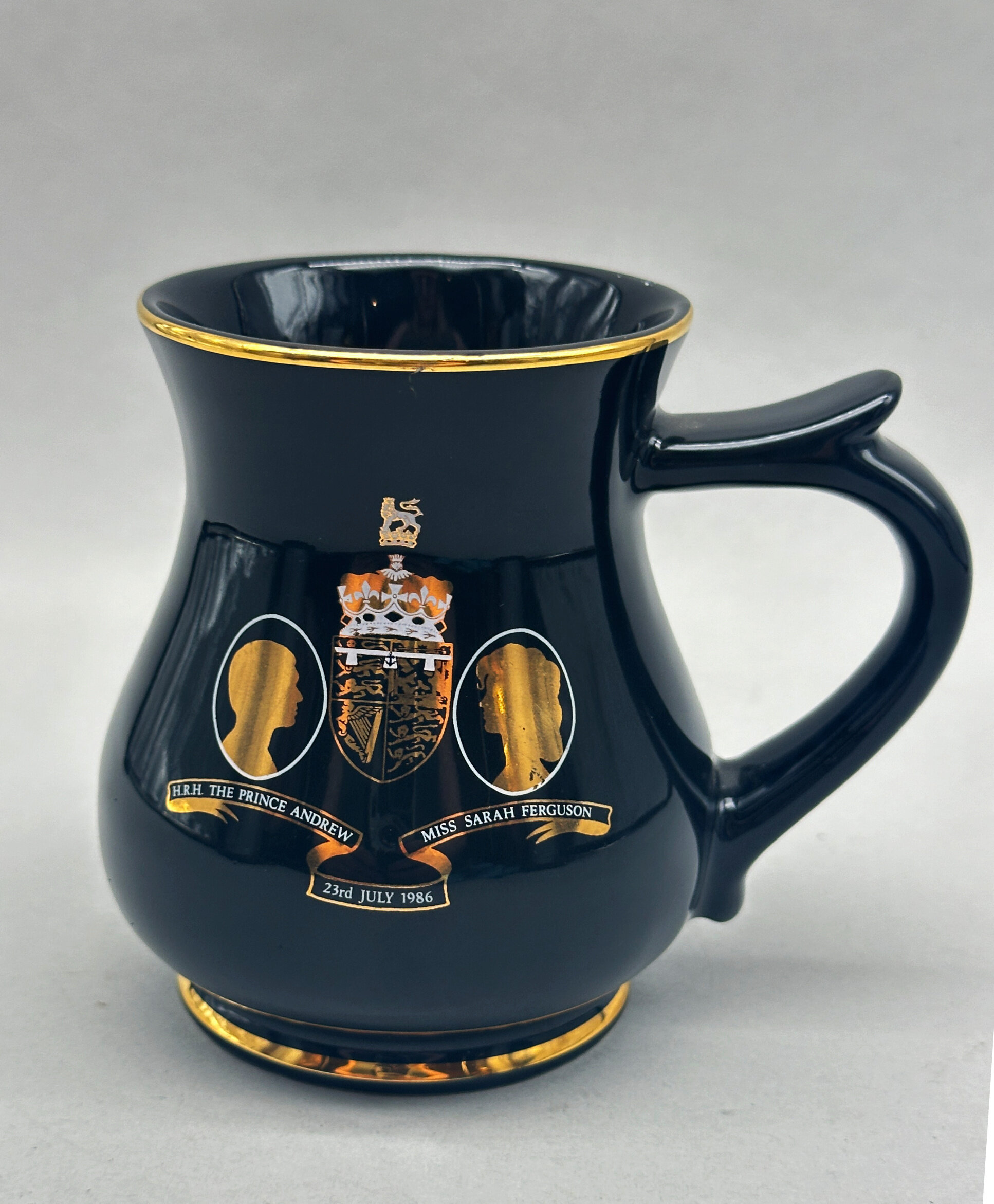
Ceramic Tankard celebrating the Marriage of Prince Andrew and Sarah Ferguson in 1986
Price: £10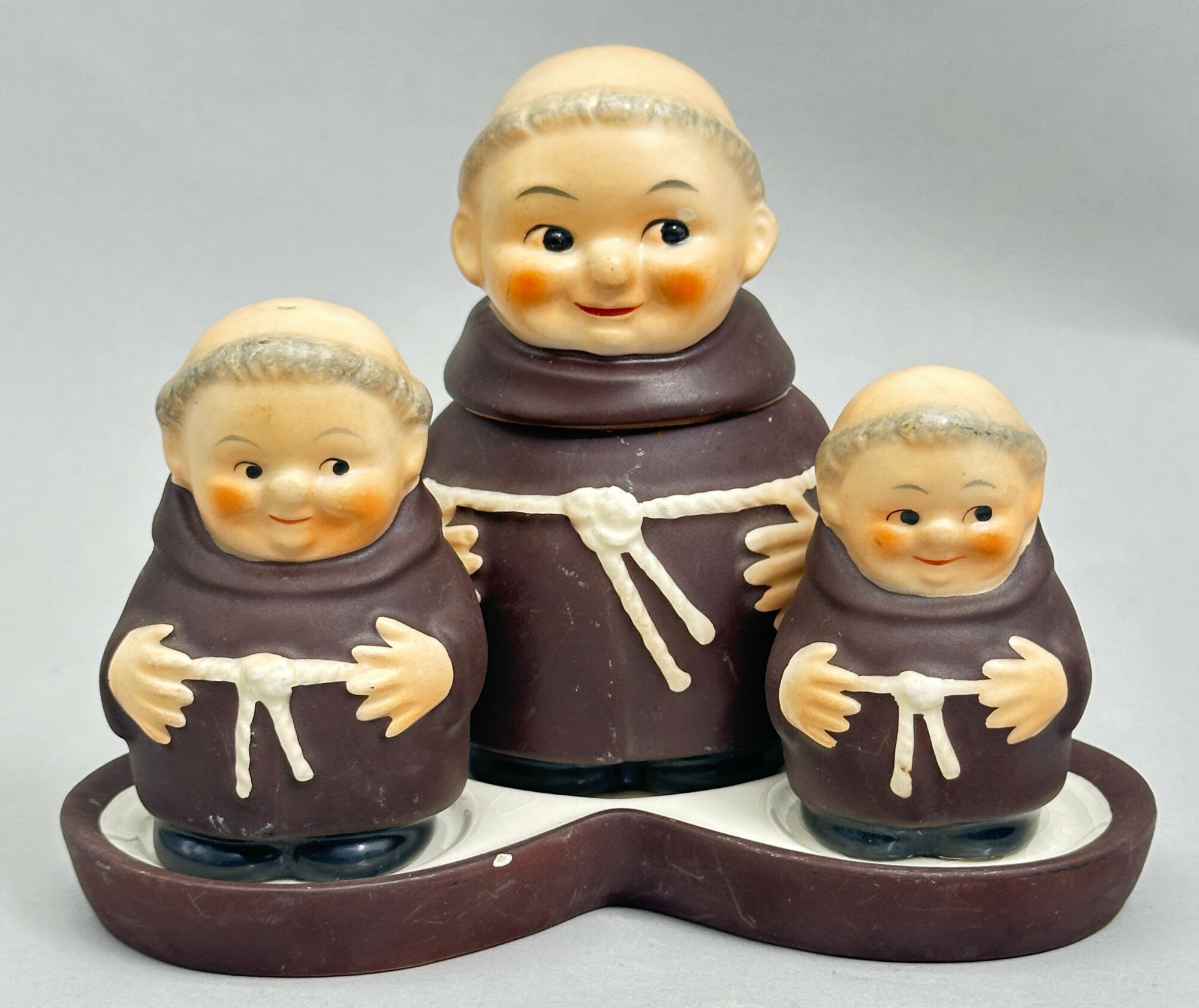
Cruet set in the form of three Friar Tuck Monks on a Tray, Hummel, West Germany, 1960s
Price: £55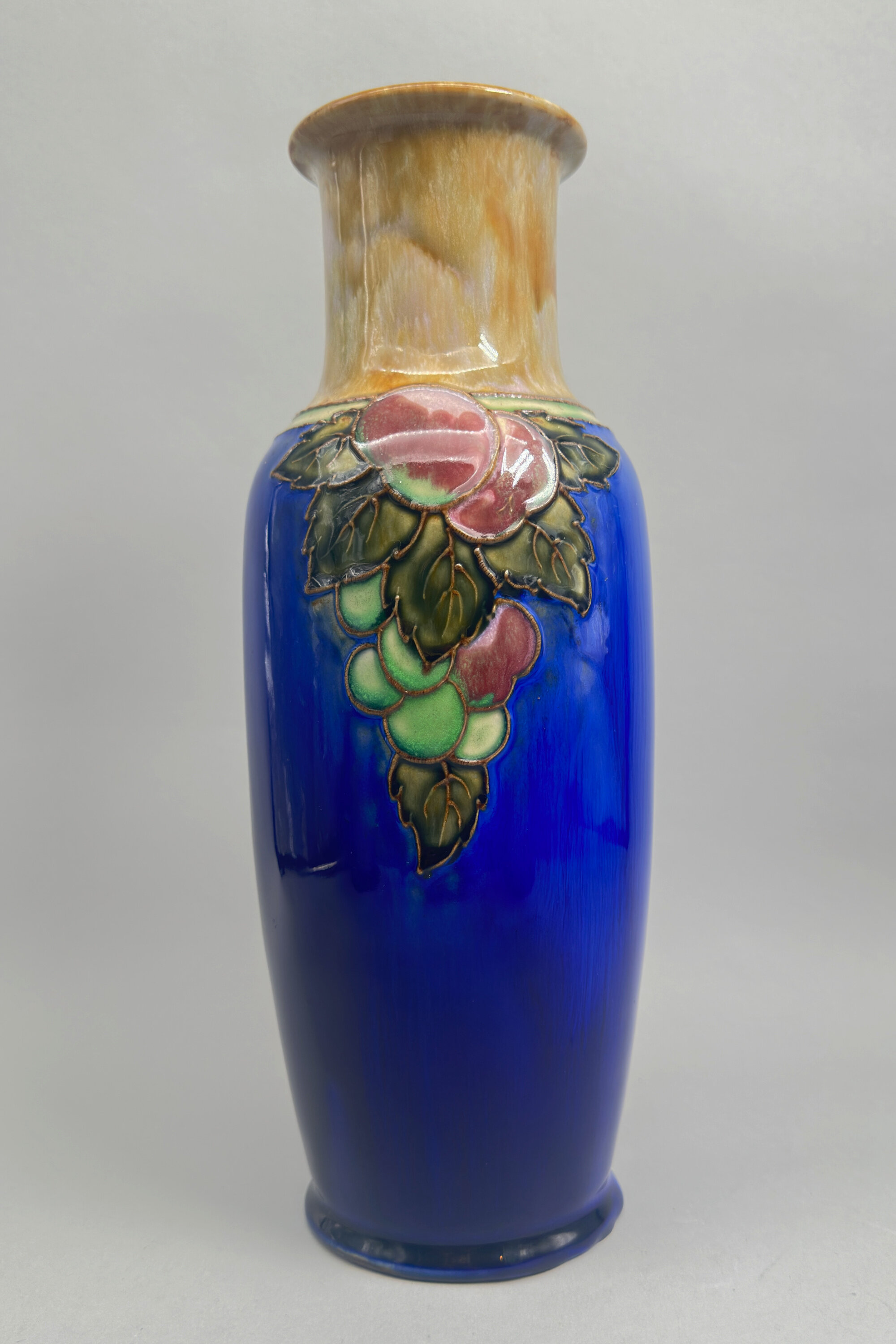
Doulton Vase with raised grape and peach decoration, 1920s
Price: £110The mark for Doulton is one of the standard impressed 'Royal Doulton England' marks where the lettering forms part of a circle combined with three thick lines and the centre is filled with four interlocking 'D's. The addition of a lion but not with the usual accompanying crown allows a fairly precise dating to between 1923 and 1927, although the pattern number beginning with ‘X’, which appears on other pieces with similar decoration but a different shape, is supposedly found on pieces made for couple of years thereafter. Either way, the mid to late 1920s dating fits with both the form and the decoration which have a distinctly Art Deco feel. The mark ‘P’ is for the decorator Lizzie Padbury but the scratched mark cannot be identified. Presumably the second set of numbers indicate the shape.
Royal Doulton produced many pieces reflecting the Art Deco style and other similar vases can be found on this site. They are an elegant reinterpretation producing pieces of great decorative appeal.
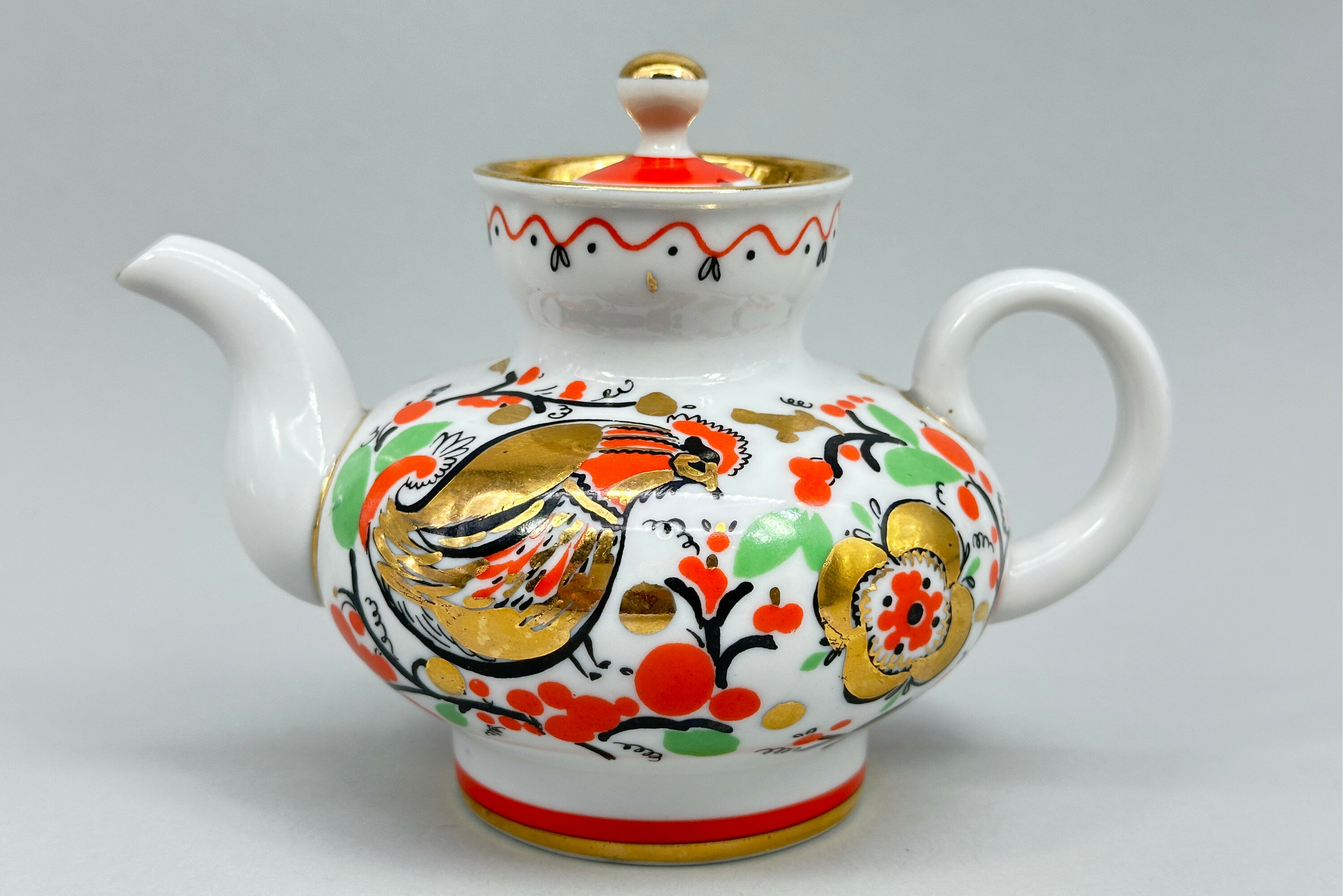
Lomonosov Teapot decorated Cockerels, late C20th
Price: £45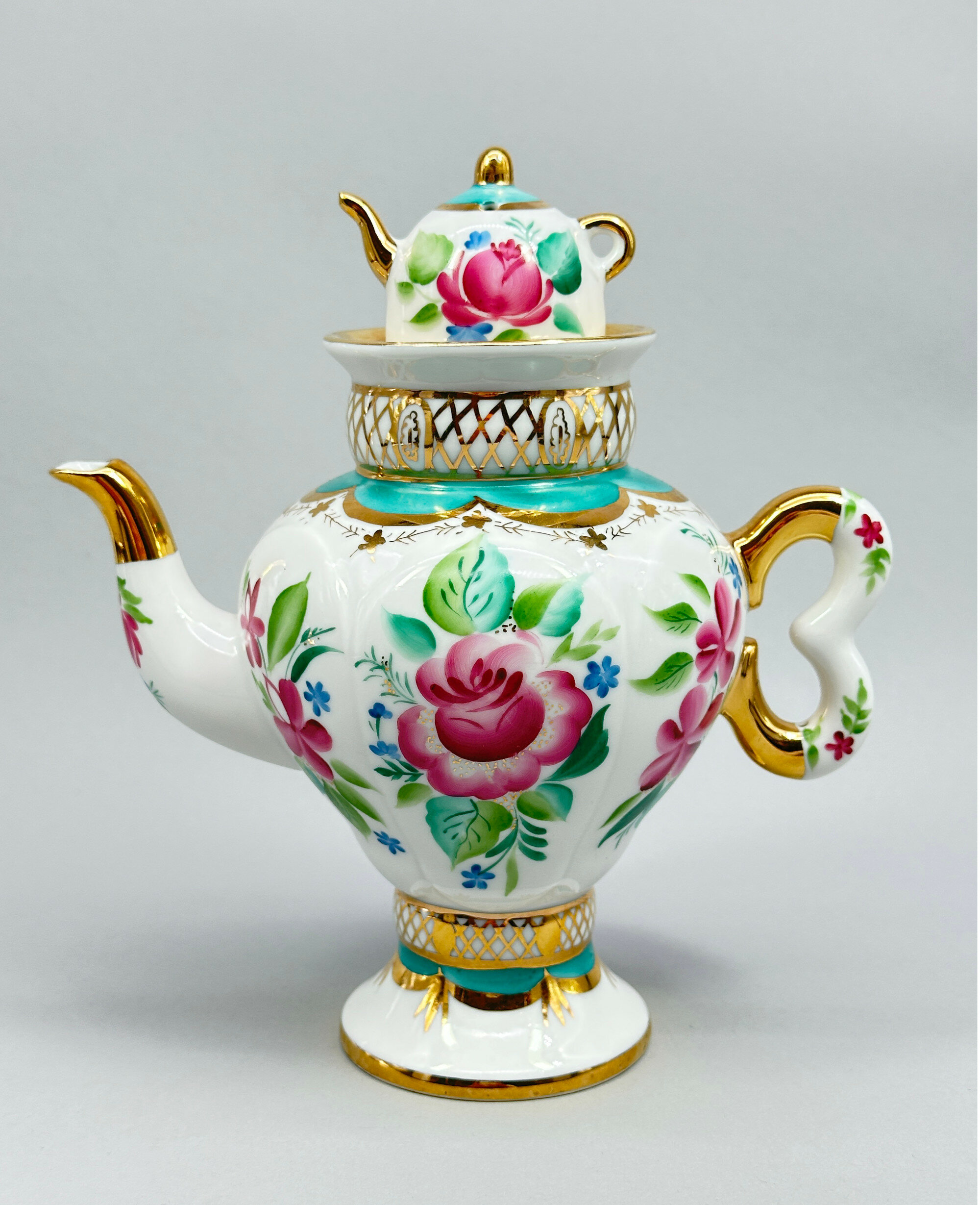
Lomonosov Teapot in the form of a Samovar, late C20th
Price: £75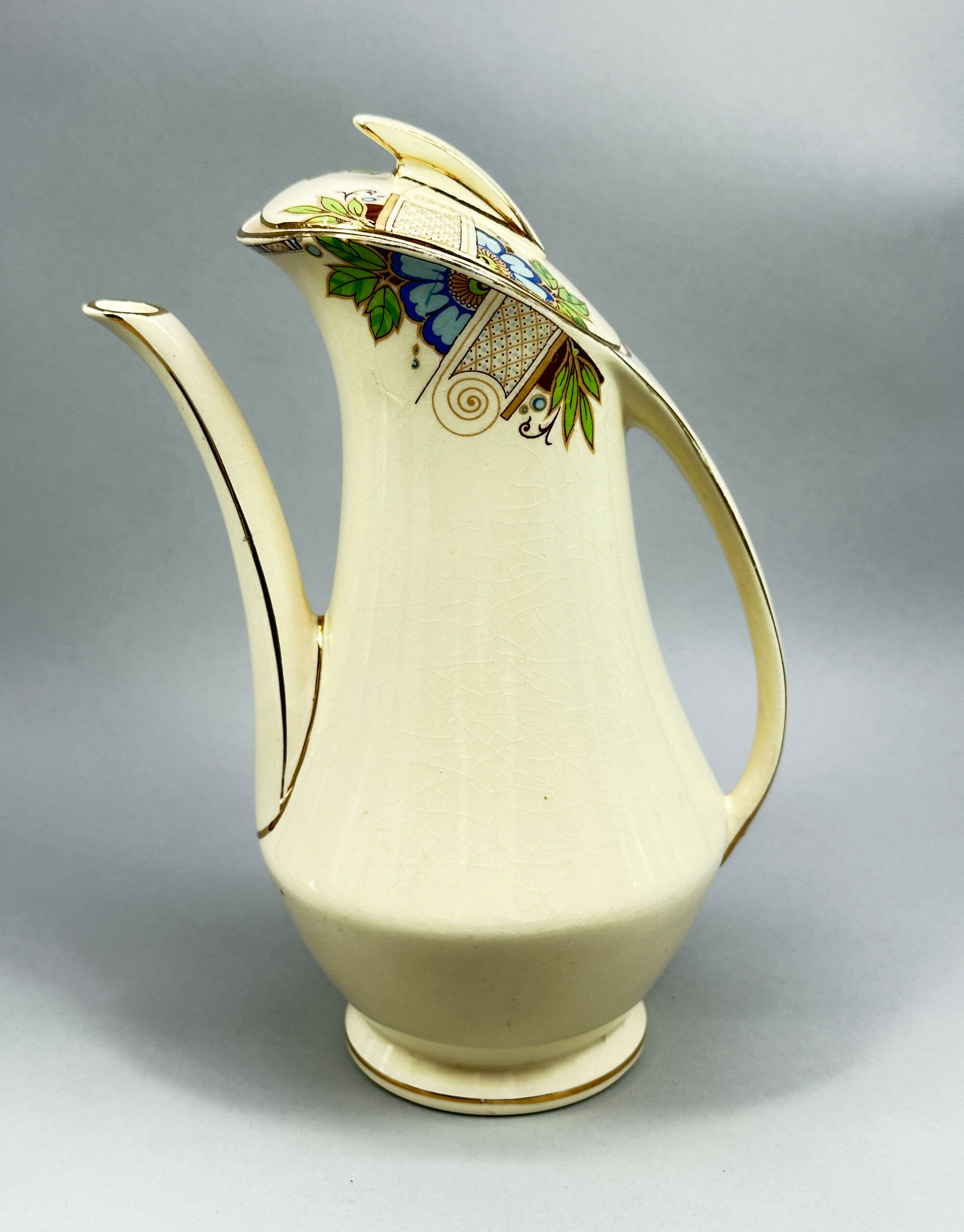
Art Deco Coffee Pot, Crownford Burslem, Staffordshire 1930s
Price: £35Burslem in Staffordshire was one of the famous six ‘pottery towns’ and immortalised in the novels of Arnold Bennett as ‘Bursley’. The firm Thomas Ford and Sons began its production there in the late nineteenth century, continuing until 1938 when the business was purchased by Oswald Shufflebottom who renamed it Ford & Sons (Crownford) Ltd. The trade name ‘Crownford’ had been adopted quite early on by the Ford family and was kept by the Shufflebottom family until the late 1980s. The ‘Crownford Burslem’ wares were mostly produced in the fashionable Art Deco style during the late 1920s and 1930s and this coffee pot is a fine and representative example of their work.
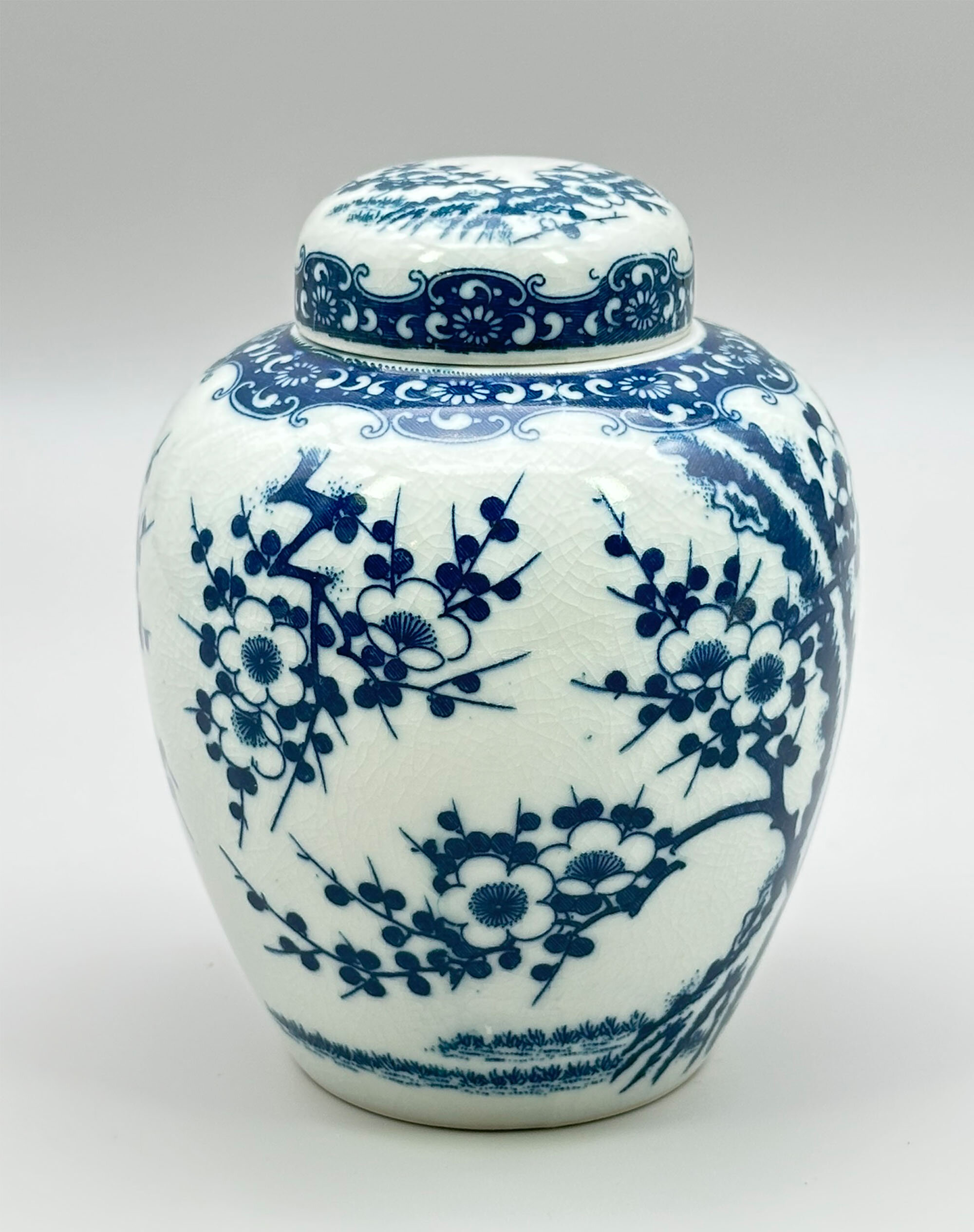
Japanese small blue and white Jar and Cover with inner liner, decorated Prunus, late C20th
Price: £25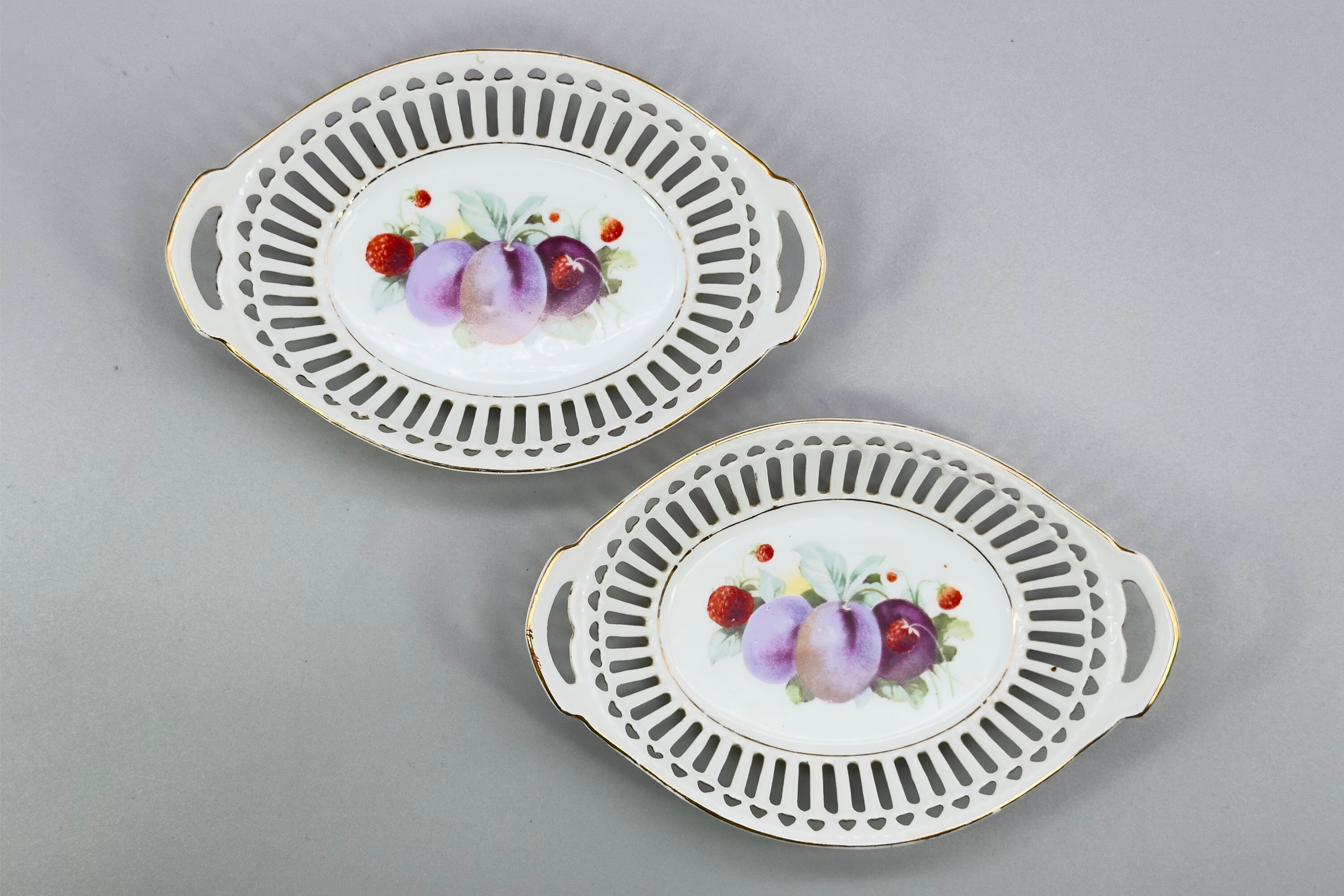
Pair of continental style openwork border Dishes, probably Chinese C20th
Price: £20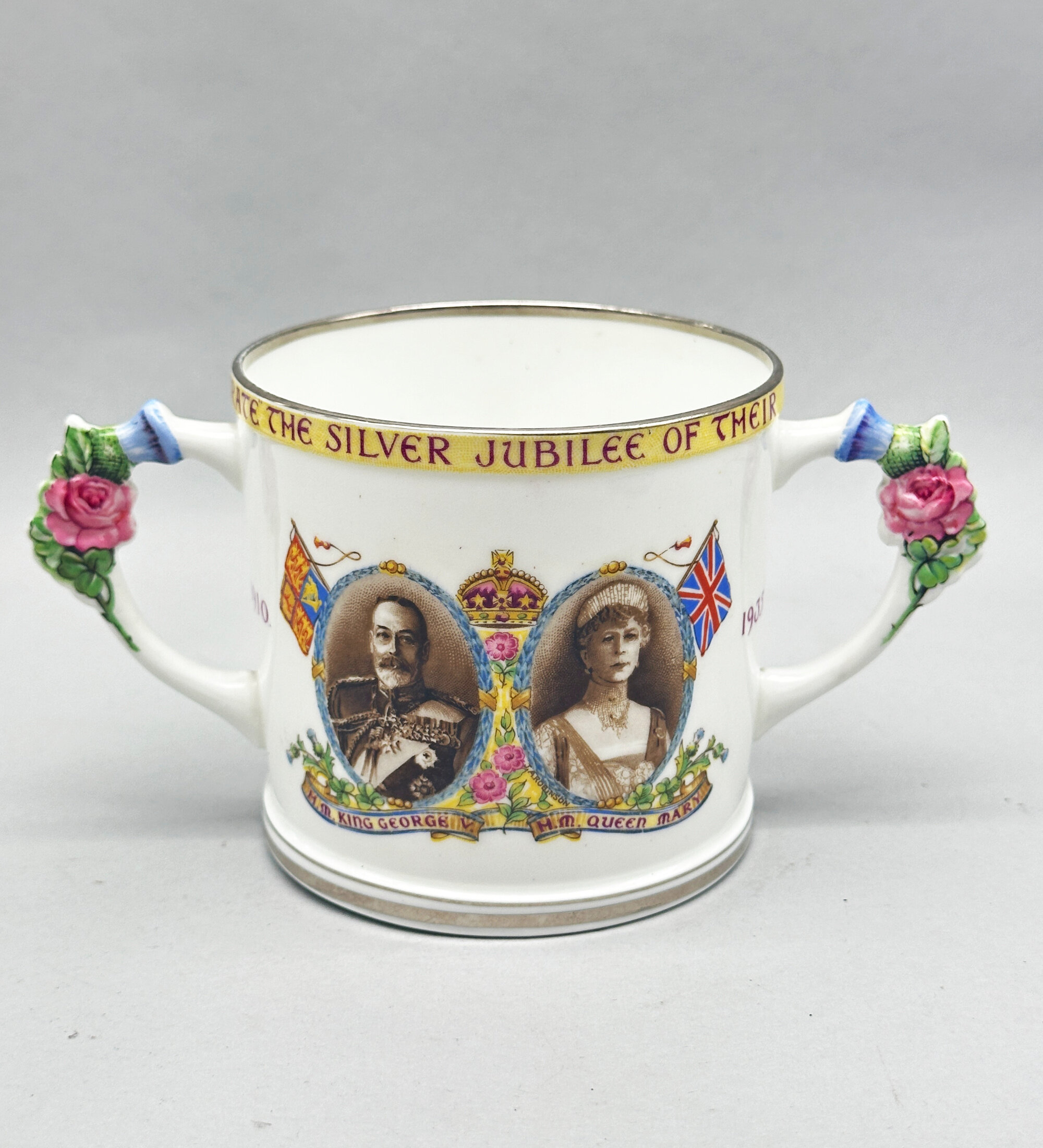
Cup Commemorating the Silver Jubilee of King George V and Queen Mary in 1935
Price: £55The Paragon China Company, formerly the Star China Company (see Lot XX), produced high quality gift items from 1920 to 1971, at first independently and then in alliance with other companies, finally being absorbed by Royal Doulton in 1972 who kept the ‘Paragon’ name until 1991. Commemorative wares were a speciality and this cup is a fine example.
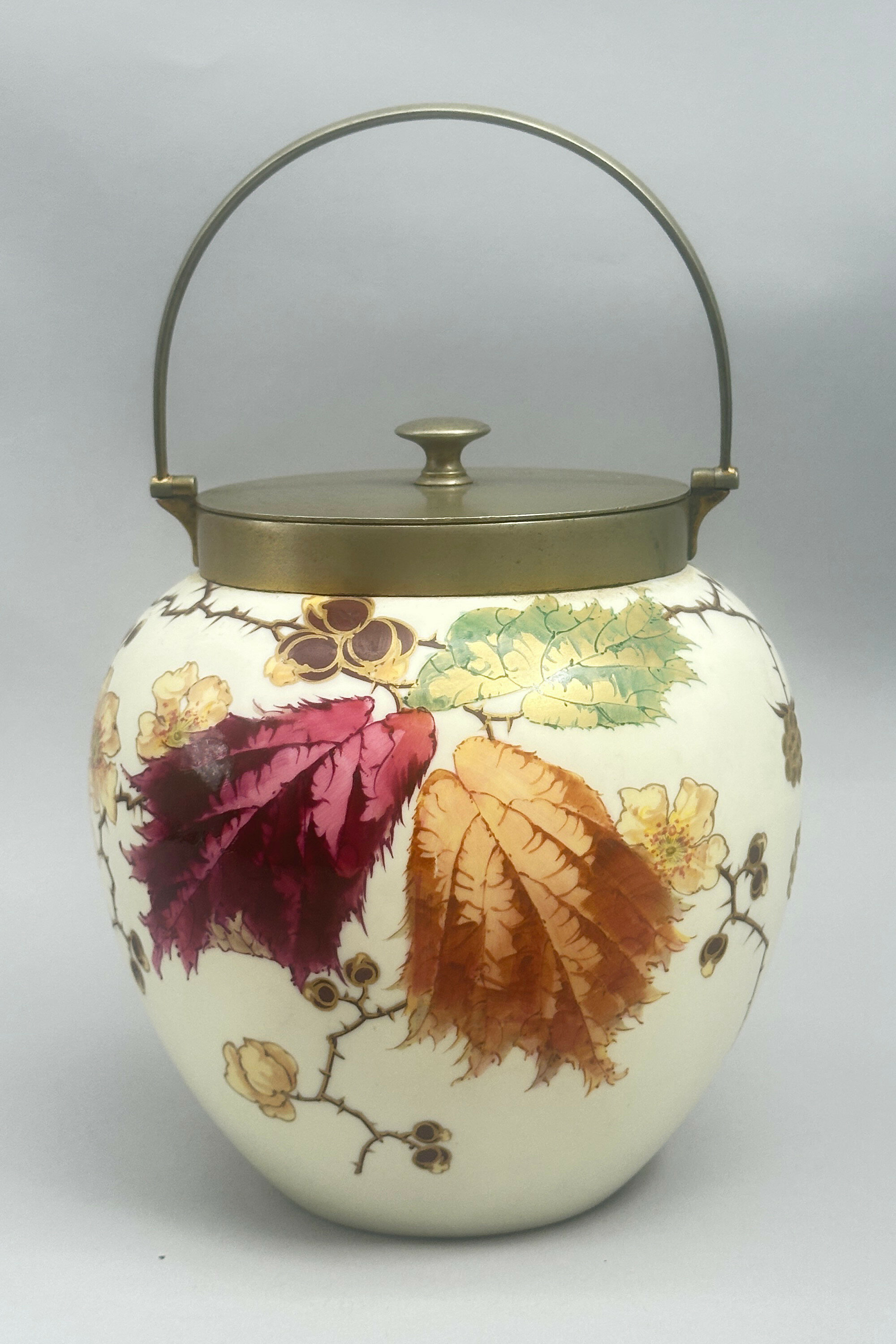
Wedgwood Biscuit Jar with brass handle and cover, marked, early C20th
Price: £55The naturalistic decoration here with its vivid and finely executed detail has elements of the Art Nouveau style to it and this is consistent with the format of the mark. The Wedgwood factory needs little introduction. Founded by Josiah Wedgwood in 1769 in Stoke-on-Trent, England and named after the Italian Etruria region to reflect its neoclassical designs, it rapidly became famous for its stoneware designs in the classical style but ceramic tablewares were produced as well and this biscuit barrel is a good example of the high quality wares produced in the early twentieth century. The inclusion of ‘ENGLAND’ indicates a dating after 1891 and the addition of three stars occurs after 1900 suggesting that this piece was made in the early 1900s The rather grand design is in keeping with the opulence of the Edwardian era and survives in excellent condition with the brass metal fittings undamaged and intact.
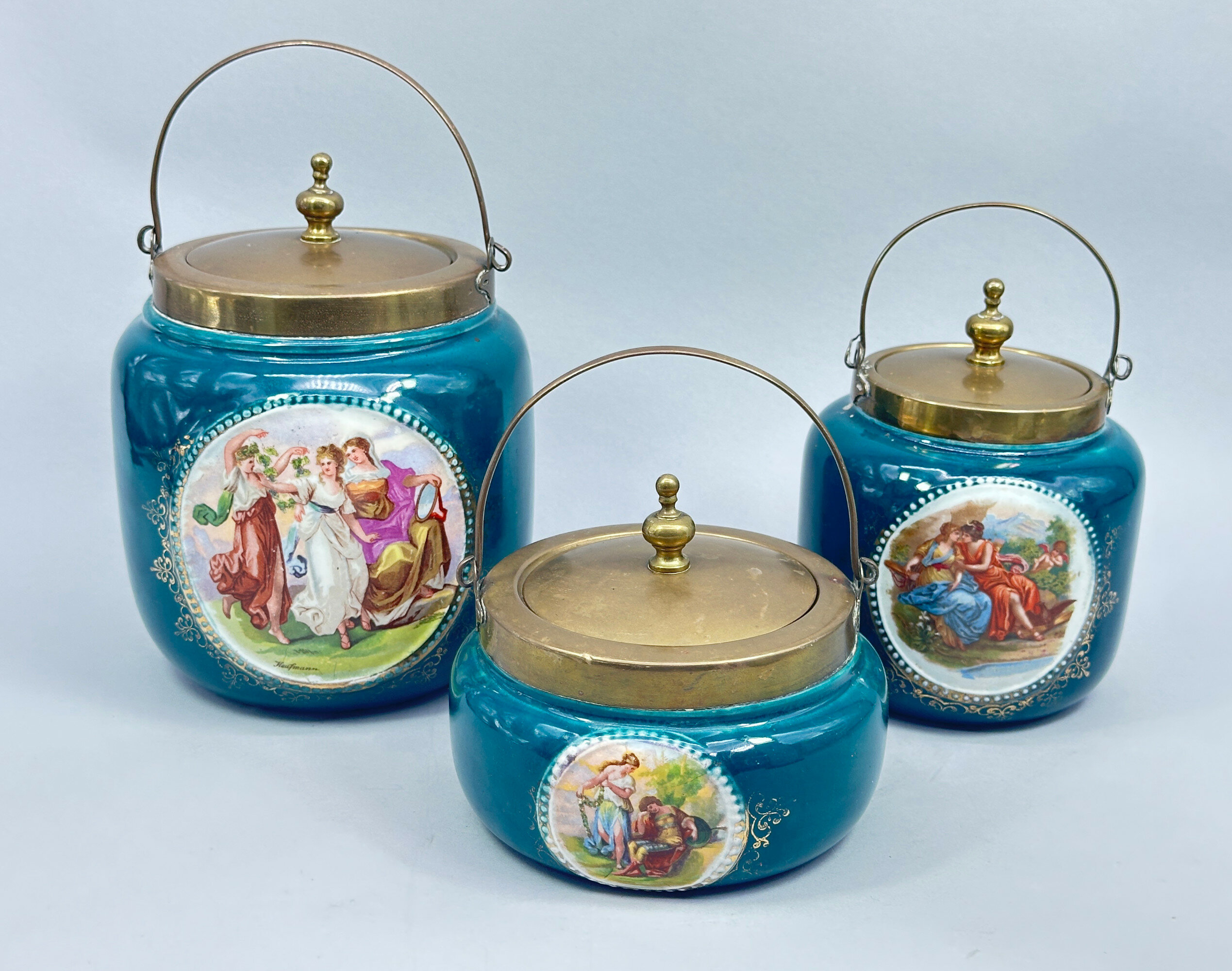
Set of Three Empire Porcelain Company Biscuit Jars circa 1900
Price: £120The Empire Porcelain Company was established in 1896 at the Empire Works in Stoke Road, Hanley, Stoke on Trent. A wide range of pottery and porcelain was subsequently produced until the factory’s closure in 1967. The various marks include the initials EPC, EP or the word Empire. The form of the mark seen here occurs on the earliest pieces made between 1896 and 1912. Blue ground pieces with mythological scenes were produced in a variety of forms during this period, some decorative, such as ornamental vases, and some more practical, as here : modest but graceful accessories for the Edwardian drawing room.
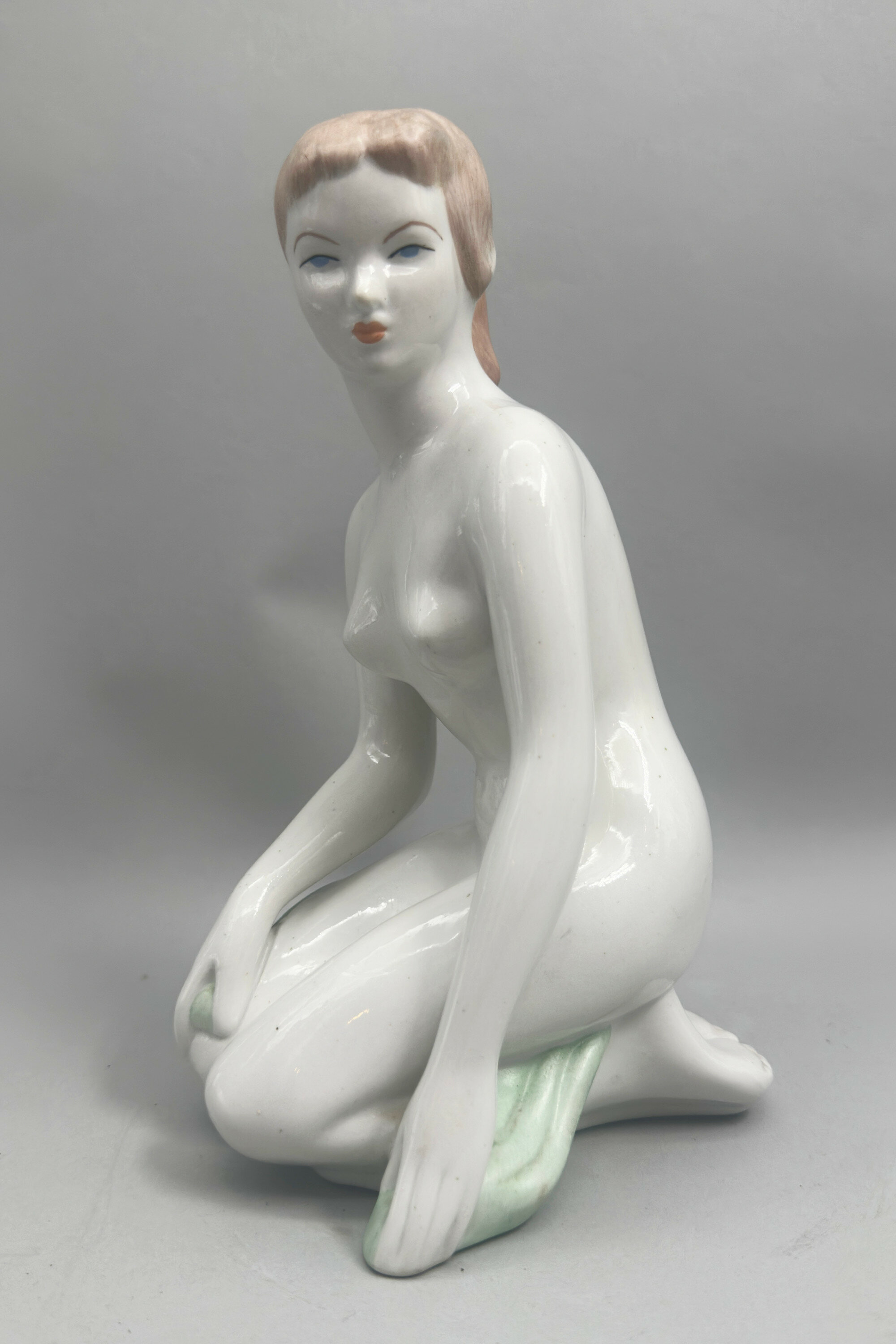
Art Deco style kneeling figure of a Girl, Aquincum Hungary, second half C20th
Price: £75Aquincus was an ancient Roman settlement, eventually to become the town Obuda, the third of the three cities which were merged to form Budapest and the oldest district in the Hungarian capital. In 1854, Hüttl Tivadar set up a shop in Pest selling porcelain eventually becoming involved in porcelain manufacture itself with such success that by the early 1900s he was supplying the court at Buda, eventually supplanting the rival firm of Herend. Despite legal battles amongst the family concerning the ownership of the business, the firm continued to prosper until the 1950s when the new communist government decided to nationalize the factory, renaming it Aquincum Porcelángyár. Tableware, which had been the staple of the Hüttls’ production was replaced by figurines which rapidly enjoyed great popularity. One of the principle artists was Antonia Szabó who became chief designer in 1966. With the end of socialism, the firm went into private hands in 1993 but suffered an immediate and rapid decline causing it to close soon after.
This figure may possibly, then, have been designed by Szabó himself but it is certainly typical of the pieces produced in the early years of state control and perhaps one of the most appealing. The form of the mark corresponds with a dating to the 1950s or 1960s and the piece has both historical associations and considerable decorative appeal.
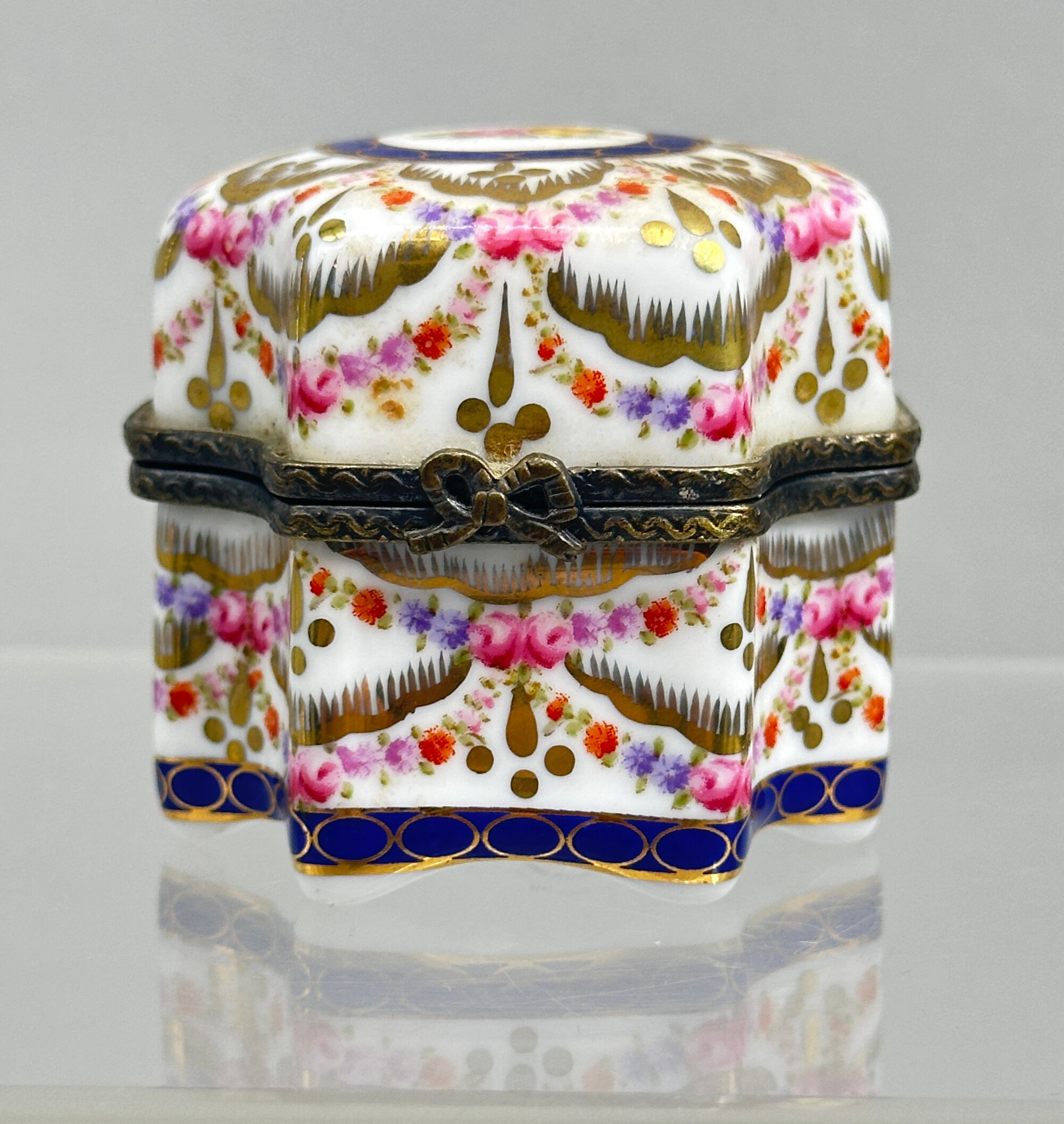
Reproduction Limoges Porcelain Box with Scent Bottles, Modern
Price: £25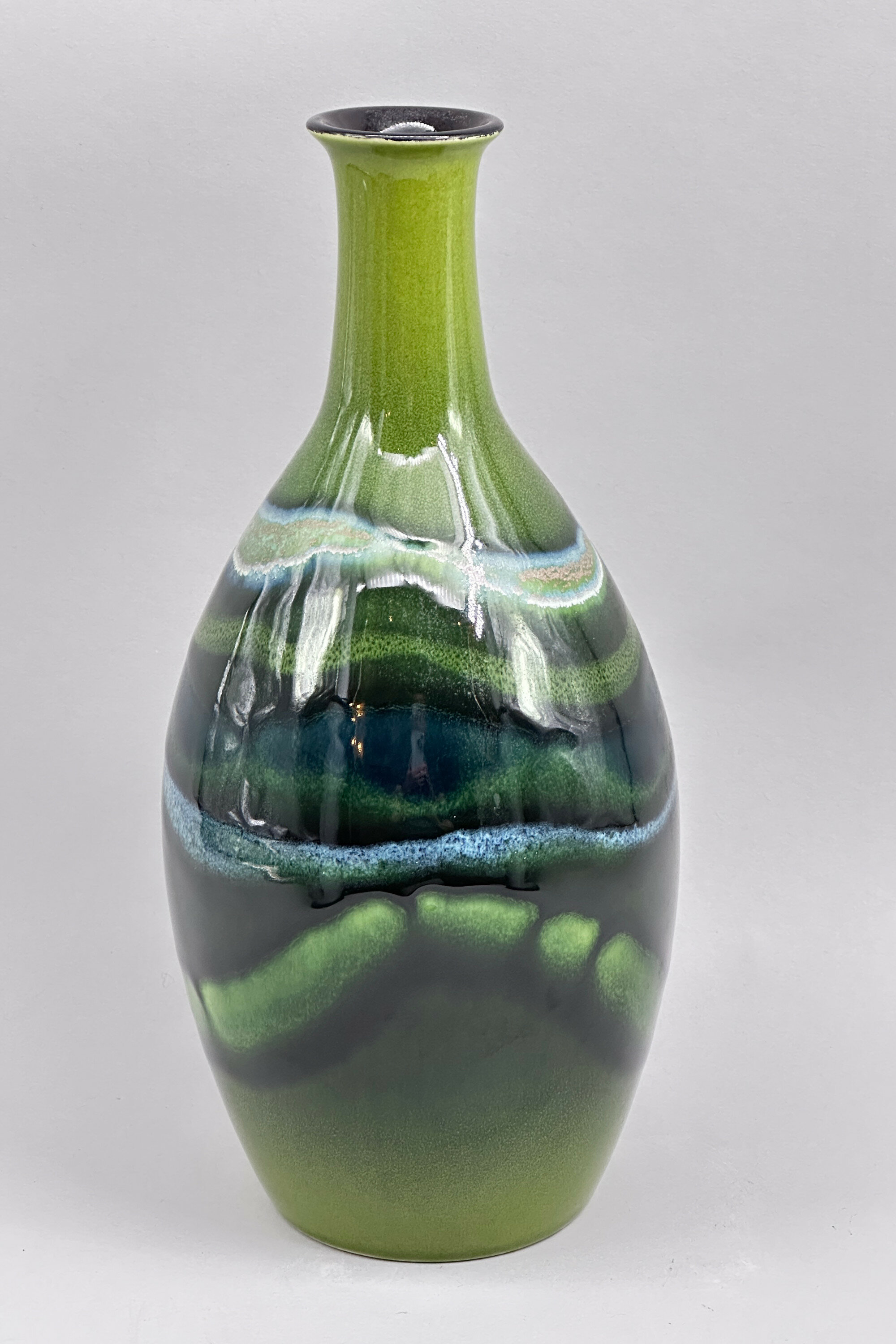
Poole Pottery Maya Pattern Bottle Vase, early C21st
Price: £85This fine quality vase is from the Maya range made by Poole Pottery, some of the pieces still being in production today and described in the maker’s catalogue as follows “Poole Pottery’s Maya collection is inspired by British landscapes and earthy tones. The greens and blues in this stunning range represent the earth meeting the sky in a natural yet bold design. Here at Poole Pottery, all our Maya ceramics are hand-cast and made using our signature reactive glaze in the famous Middleport Pottery in Staffordshire. The distinctive pieces you see here are created via our Living Glaze technique, where layers of colourful glazes react with one another to create a unique, glossy and dynamic finish.” But this particular form does not appear in the current catalogue and does not seem to be otherwise available. The form of the mark appears on other Poole pieces of more recent manufacture and dating is probably to around twenty years ago. The initials are for the artist’s signature and Poole write “Items are personalised with the artist's own individual mark, adding value to the collectability of each piece.” Given its scarcity, this vase would make an interesting addition to a collection of Poole Pottery aside from being a highly decorative item in its own right.
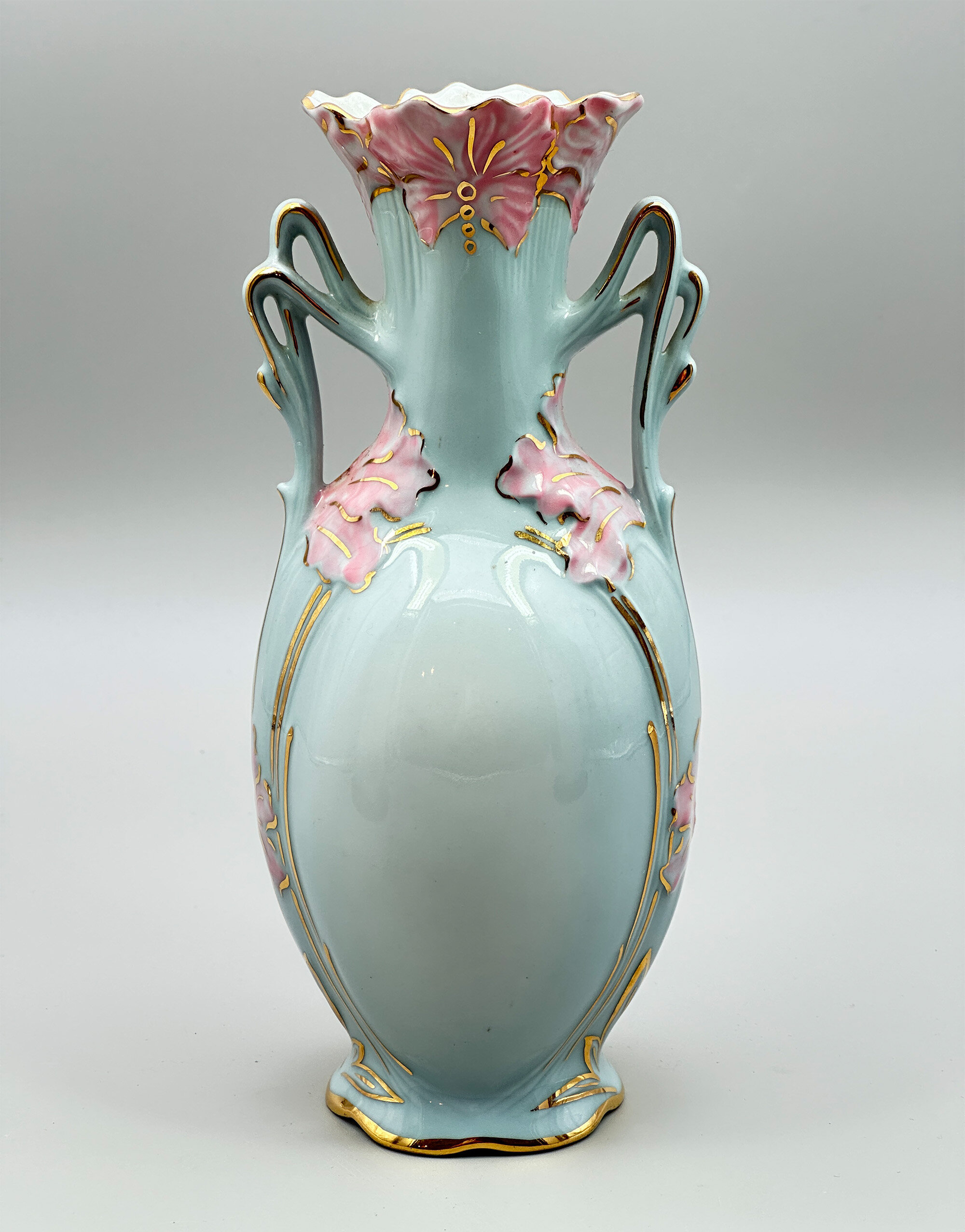
Art Nouveau style Vase, Royal Dux, late C20th
Price: £55Duxer Porzellanmanufaktur, or the Dux Porcelain Manufactory, was started in 1860 by Eduard Eichler in what was then Duchov, Bohemia, later to become part of Czechoslovakia. Production was to continue until the beginning of the second world war and beyond and their later pieces are now generally referred to by the abbreviated name, ‘Royal Dux’. The distinctive pink triangle plaque mark was first used in the late nineteenth century but appears on pieces from all dates, the version found here indicating late twentieth century work which is also confirmed by format of the stamped blue mark.
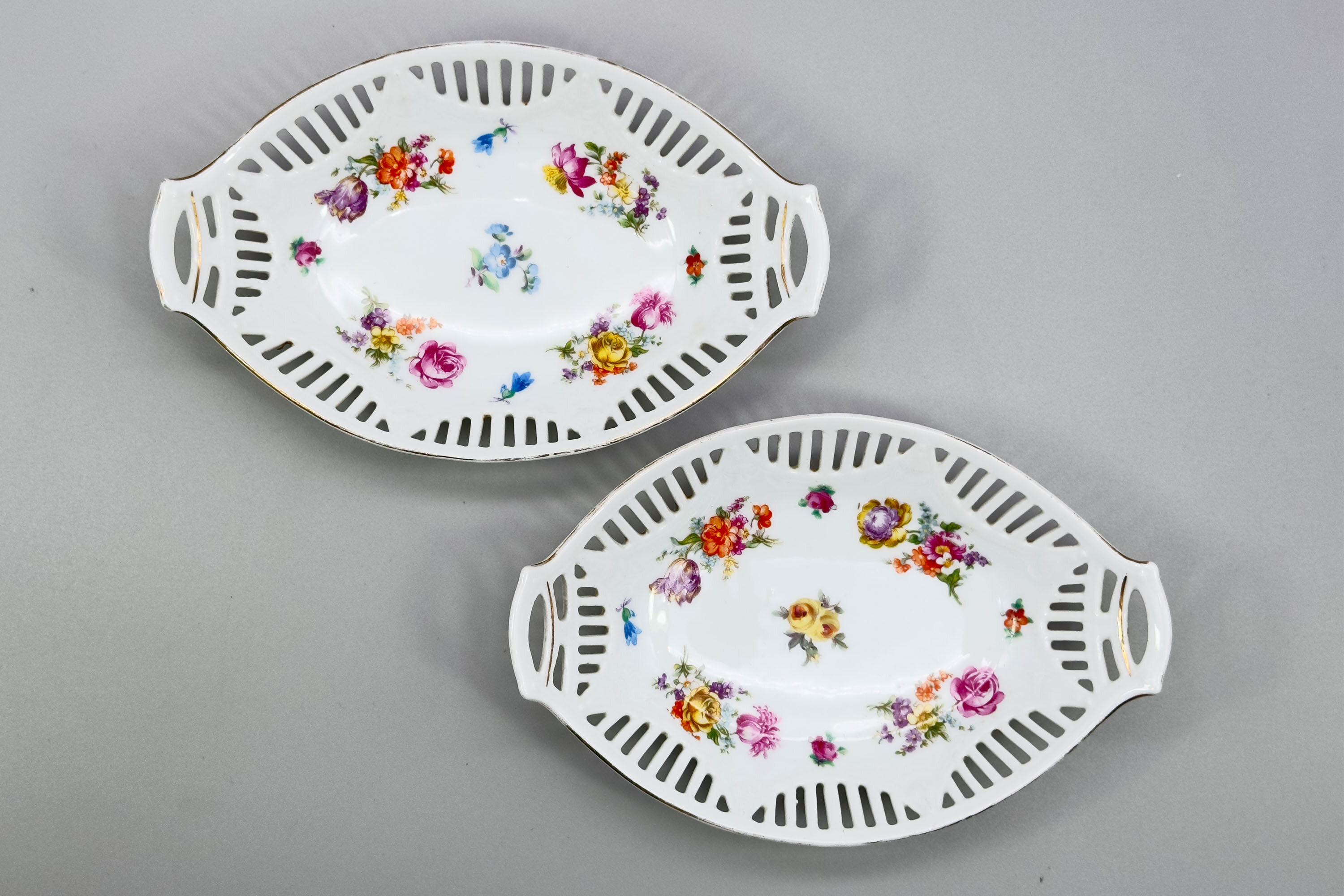
Pair of reticulated edge floral decorated Dishes, Schumann Bavaria, Germany 1920s
Price: £45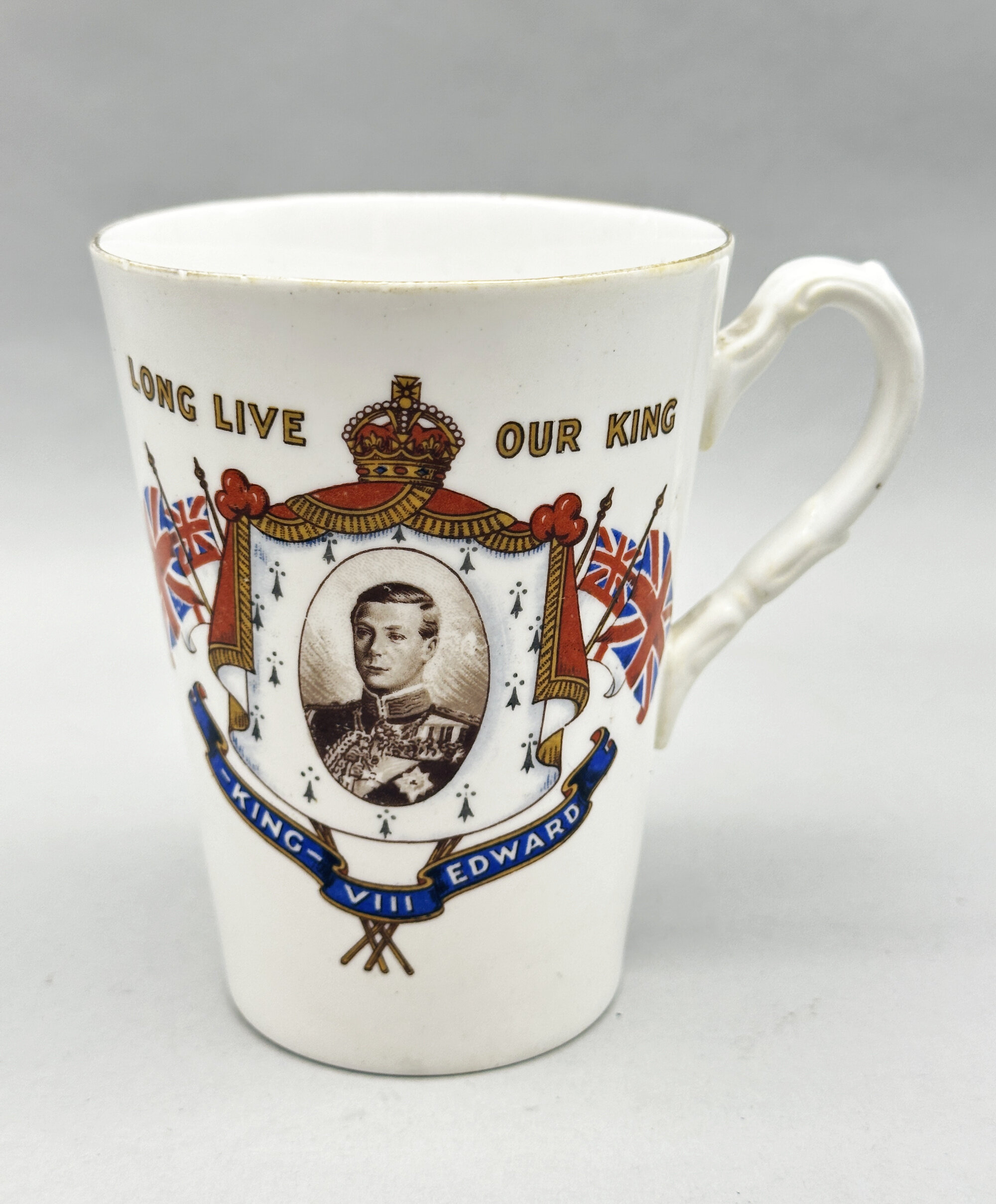
Mug Commemorating the Coronation of Edward VIII in 1937
Price: £25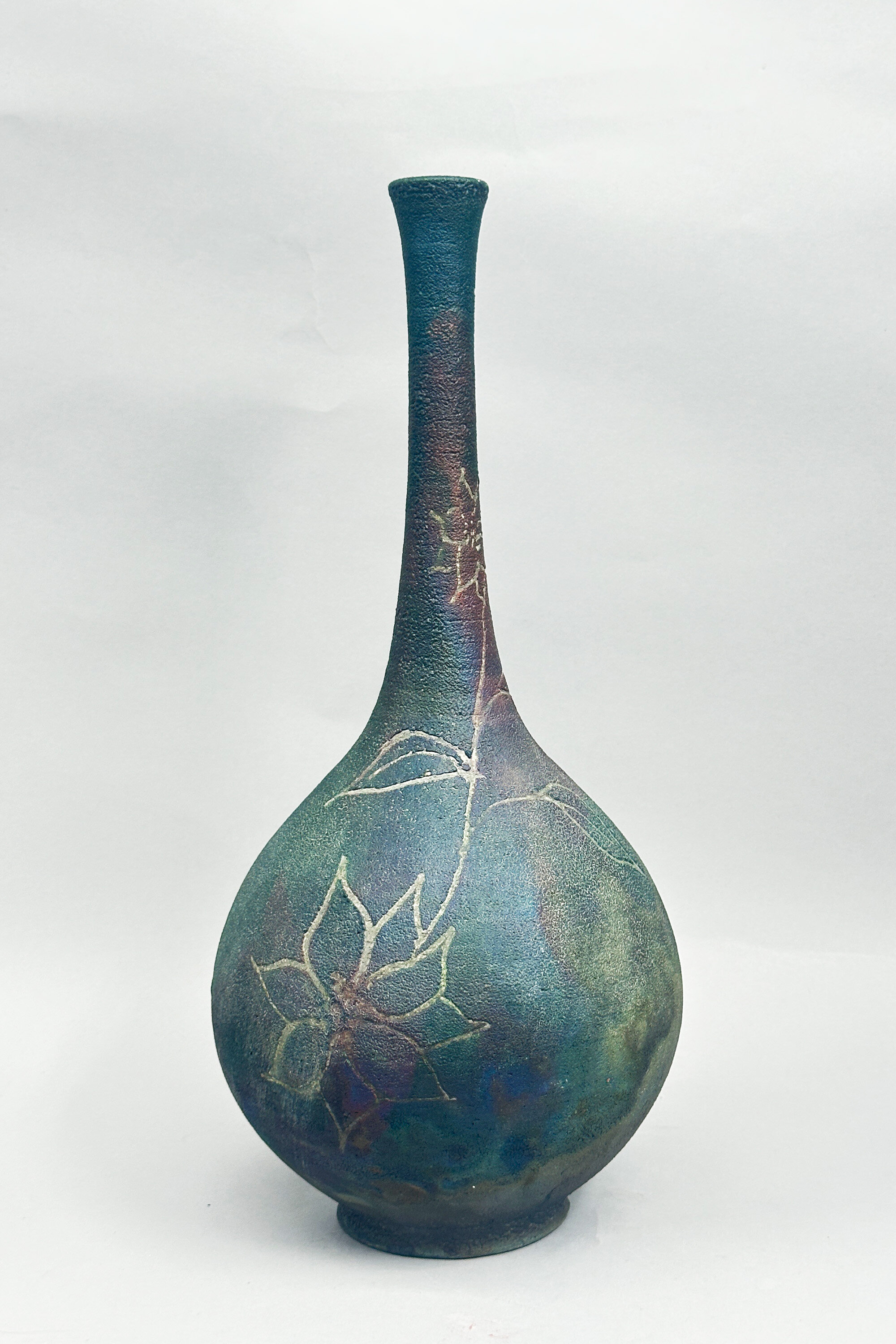
Studio Pottery Vase with incised lotus, signed C.A.C., C20th
Price: £45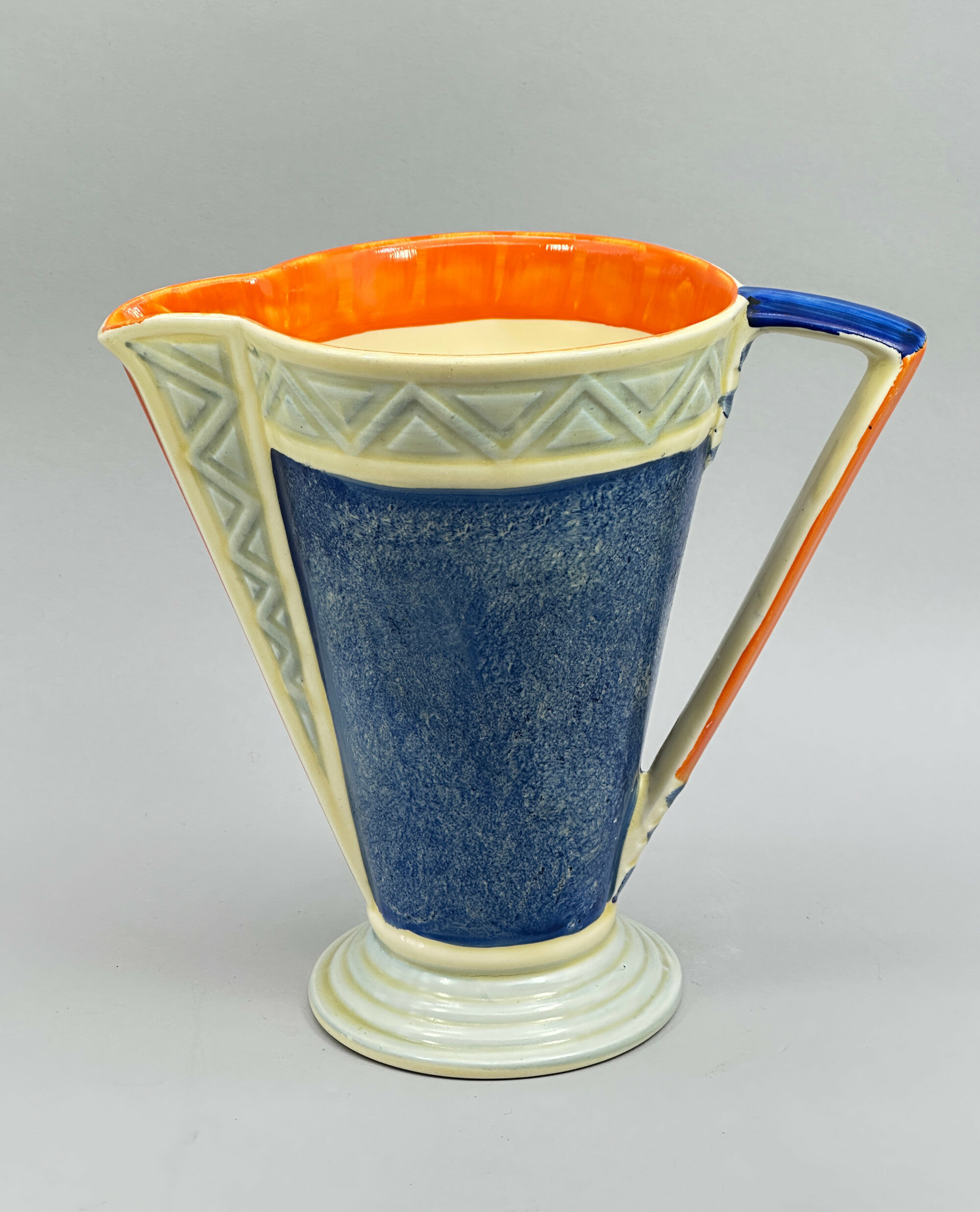
Myott Son & Co Art Deco style Jug, 1930s
Price: £75Myott Son & Co was one of famous the Staffordshire Potteries and traded for over 90 years. Founded in 1898, it began production in Stoke moving to Cobridge four years later. Its output was continuous but in 1949 the firm suffered a disastrous fire which reportedly destroyed the firm's records and pattern books and probably for this reason it relocated to Hanley. In 1969 it was bought by the American firm Interpace, but the Myott name was retained until 1976 when the company merged with Alfred Meakin Ltd, who were based in Tunstall, to form Myott-Meakin Ltd.
Myott now are best known for their Art Deco inspired designs from the 1930s. Following the success of their competitors, most notably the designs of Clarice Cliff, Myott established their own popular following and produced pieces which could rival the output of their celebrated competitors. This jug, with its clean lines and bold colours is an excellent example and like others of the same form bears the pattern umber ‘8498’. Some of their glazes were easily subject to wear and blue was less commonly used so both the condition and the colour range of this jug make it a highly desirable collector’s item.
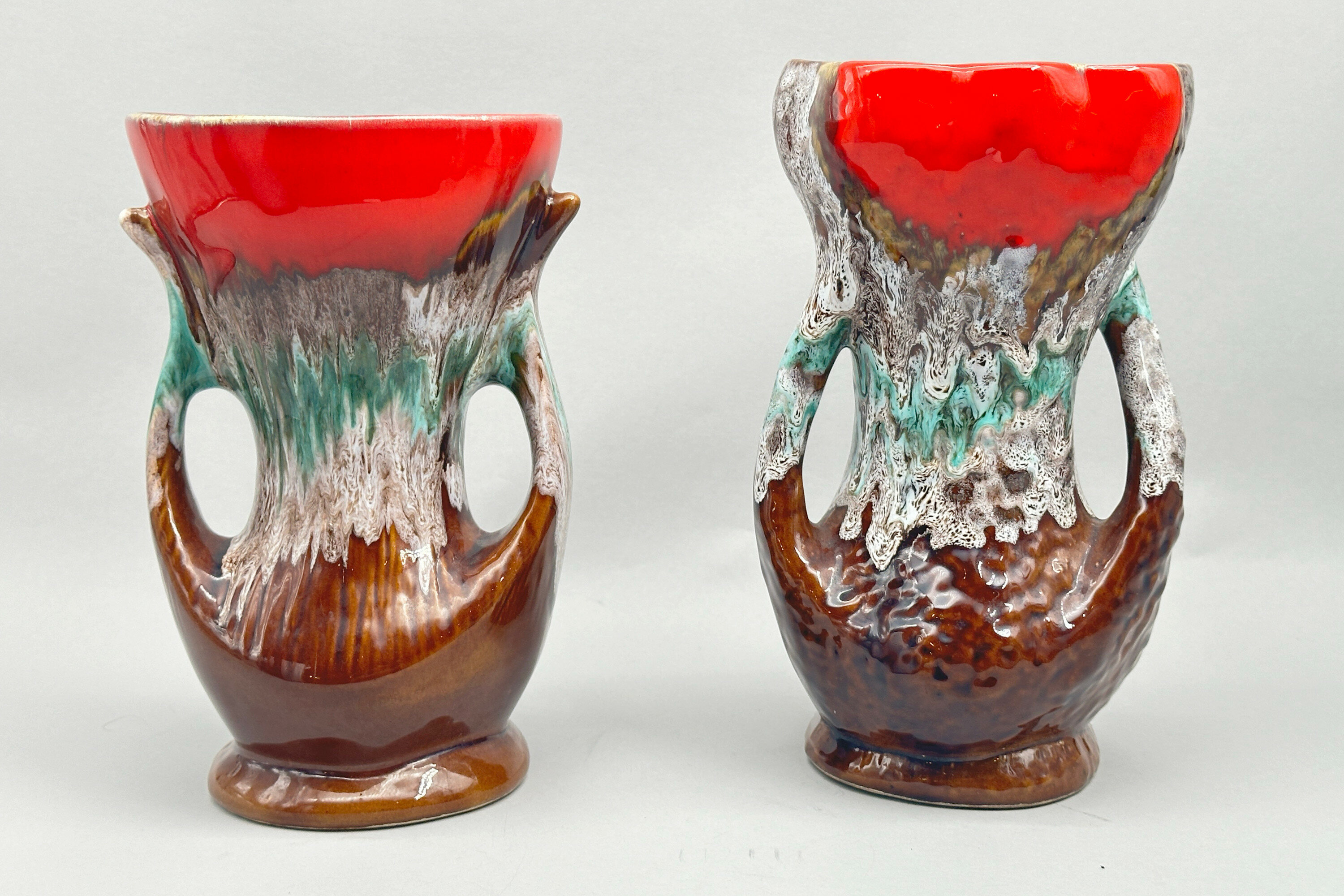
Two Vallauris Lava Vases, French 1950s/1960s
Price: £150………………………………………………………………………………………………….....................................................................
Vallauris is a tourist town of the French Riviera near Antibes taking its name form the Provencal ‘Valauria’ meaning ‘the golden valley’. It is divided into two parts: the upper town which is the old centre and the seaside district which runs from the port along the coast, towards Antibes. Deposits of clay were found there in Roman times giving the impetus for the creation of potteries which tended to concentrate on domestic wares. Production was then continuous with an infux of craftsmen from Genoa, Italy, in the sixteenth century and the development of artistic activity in the seventeenth. The advent of the railways in the late nineteenth century led to an even further expansion of production and companies were established there which achieved widespread fame and recognition notably those of Massier and Foucard-Jourdan.
After the war, Picasso, along with a group of fellow artists, settled in Vallauris and it proved to be a congenial stimulus. He began to experiment with producing ceramics in 1947 and was to continue working extensively in this field until his death in 1973 (see image 12). There were collaborations, one with the ceramicist Robert Picault and another with Suzanne and Georges Ramié, the owners of the Madoura workshop, where Picasso worked on his productions. Indeed it was at the Madoura workshop that Picasso met Jacqueline Roque, a saleswoman working there and 44 years his junior. They married in 1961 and remained together until his death in 1973, Jacqueline being the inspiration for many of the designs which Picasso created.
It would be fanciful, though, to see the influence of the famous artist on these vases although they were very much created in the tradition of Vallauris pottery with which he was so in sympathy. The town seems to have become particularly fashionable in the 1950s and 1960s and it was around that time that these vases were made. Many pieces were created in lead glazed earthenware, the overall decoration resembling the ‘lava’ glazes used in West German pottery of the same period. These two vases are similar and complementary. The bodies are concave with a short foot and a widely flaring mouth; there are loop handles at each side. The brown glaze at the base is succeeded by a blend of mottled greens and greys and topped with a vibrant red at the mouth. The interiors are glazed brown as is the base with the unglazed foot rim showing the fairly coarse clay used. Some but not all Vallauris pieces are marked and there are many unmarked examples as here. Considerable skill must have been required to produce the variety of glaze effects and the results are striking. As two matching items, these vases have considerable decorative appeal and are worthy examples of a long established tradition of ceramic production.
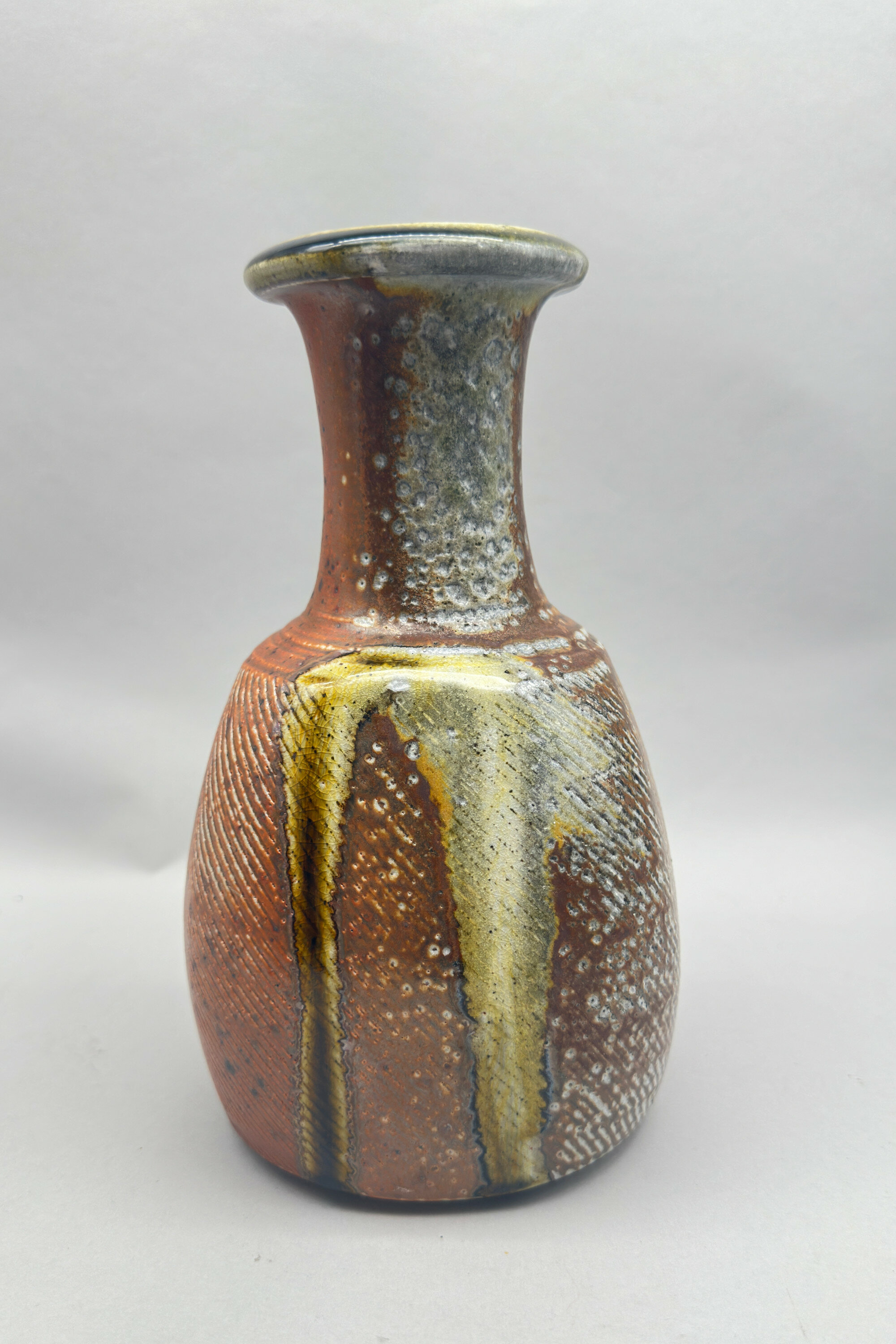
Studio Pottery Vase by John Jelfs, signed, late C20th
Price: £220……………………………………………………………………………………………..................................................................................................................….
John Jelfs was born in Exeter, Devon in 1946 and studied ceramics at the Cheltenham College of Art. In 1973, alongside his wife Jude, also a skilled potter in her own right, he set up his own studio, The Cotswold Pottery Company, in the Cotswolds at Bourton on the Water, from where he has been producing ceramics in a wide variety of forms for over fifty years and still continues to work today. Every piece of his pottery is unique, being made entirely by hand and with the decoration kept to a minimum. Wherever possible locally sourced ingredients of clays, limestone and woodash are used for his glazes of celadon, ochre and shino (a white colour glaze developed in Japan sometimes with red,orange or black spotting).
Jelfs writes himself “From my first exposure to studio pottery I was immediately excited by the work of the late Bernard Leach and his lifelong friend the Japanese potter Shoji Hamada. It was the strength and quietness of their pots which most excited me about their work. For the past few years, I have been concentrating on a range of forms, to which I have applied olive/celadon, ochre and shino glazes made up from wood ash and clay, ingredients both local to my studio. The pots are all hand-thrown from a blend of West-country clays, and are often altered while still soft on the wheel. They are fired twice, the first to biscuit (1000 degrees centigrade) and the second firing to stoneware (1300 degrees Centigrade) in a gas kiln. I use a long firing cycle as this brings out the subtlety and depth in my glazes.”
In more recent years, the construction of a new kiln allowed Jelfs to develop the use of ‘soda glazes’, a complex firing process in which a vapour glaze made of sodium oxide (soda) glazes the clay body of the pottery during the firing process. Sodium materials are introduced into the kiln, usually with a nozzle, at a high temperature of over approximately 1280°C (2350°F). The soda then evaporates and the flame carries the vapour within the kiln, landing on the hot pottery pieces where it fuses with the materials in the clay and any slip decoration applied to it. The soda vapours are colourless and it is the reaction on contact that produces a wide range of colours and textures.
“Since the soda fuses to the surfaces of the work in this way, it blurs the line between pot and glaze/surface; they become one.” — Harrison Levenstein
This elegantly potted vase is a prime example of the technique and the wide variety of glaze effects and textures can be seen and admired. As often, the base is unglazed and in this case marked with the artist's stamp ‘JJ’. The earliest pieces were given an impressed ‘swan’ mark soon to be followed with the wording ‘Bourton on the Water’ in addition. The simple mark of the artist’s initials seems to be later which fits with the use of the ‘soda glaze’ technique developed some years after the pottery studio was set up. Jelfs' work has been widely exhibited in leading galleries including Galerie Besson and the Victoria & Albert Museum in London, Alpha House in Sherborne, Beaux Arts, Bath, and the Rufford Ceramics Centre in Nottingham. It is also included in many collections around the world and our vase would make a fine addition to any of them.
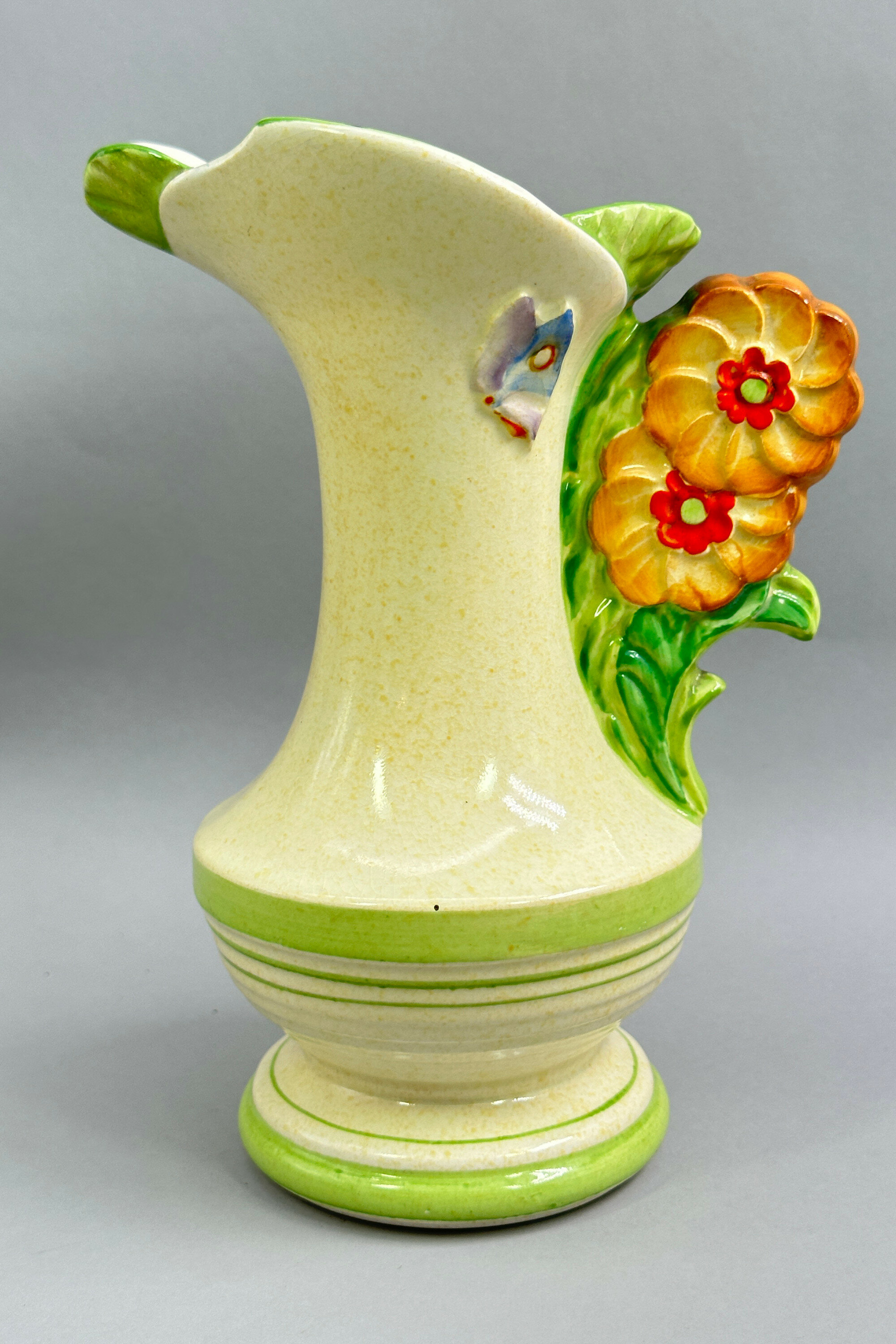
Art Deco Style Ceramic Jug with Floral Handle, probably 1930s
Price: £45
Studio Pottery Vessel by David White, signed DW, late C20th
Price: £180The mark is for David James White (1934-2011) who established Broadstairs Pottery with his wife in 1978 (see lot XXXX) and then sold this in 1983 to concentrate on his own work which focused on high-fired porcelain decorated with a blend of crackle glazes in a range of colours with a high sophistication of technique, see ‘British Studio Potters’ Marks’ by Eric Yates-Owen and Robert Fournier (2nd edition 2005 p534). This vessel, a form he produced in a variety of colourings of which this is perhaps one of the most pleasing, is an excellent example of his work which rivals some of the best creations of earlier Chinese potters in the standard of finish achieved.
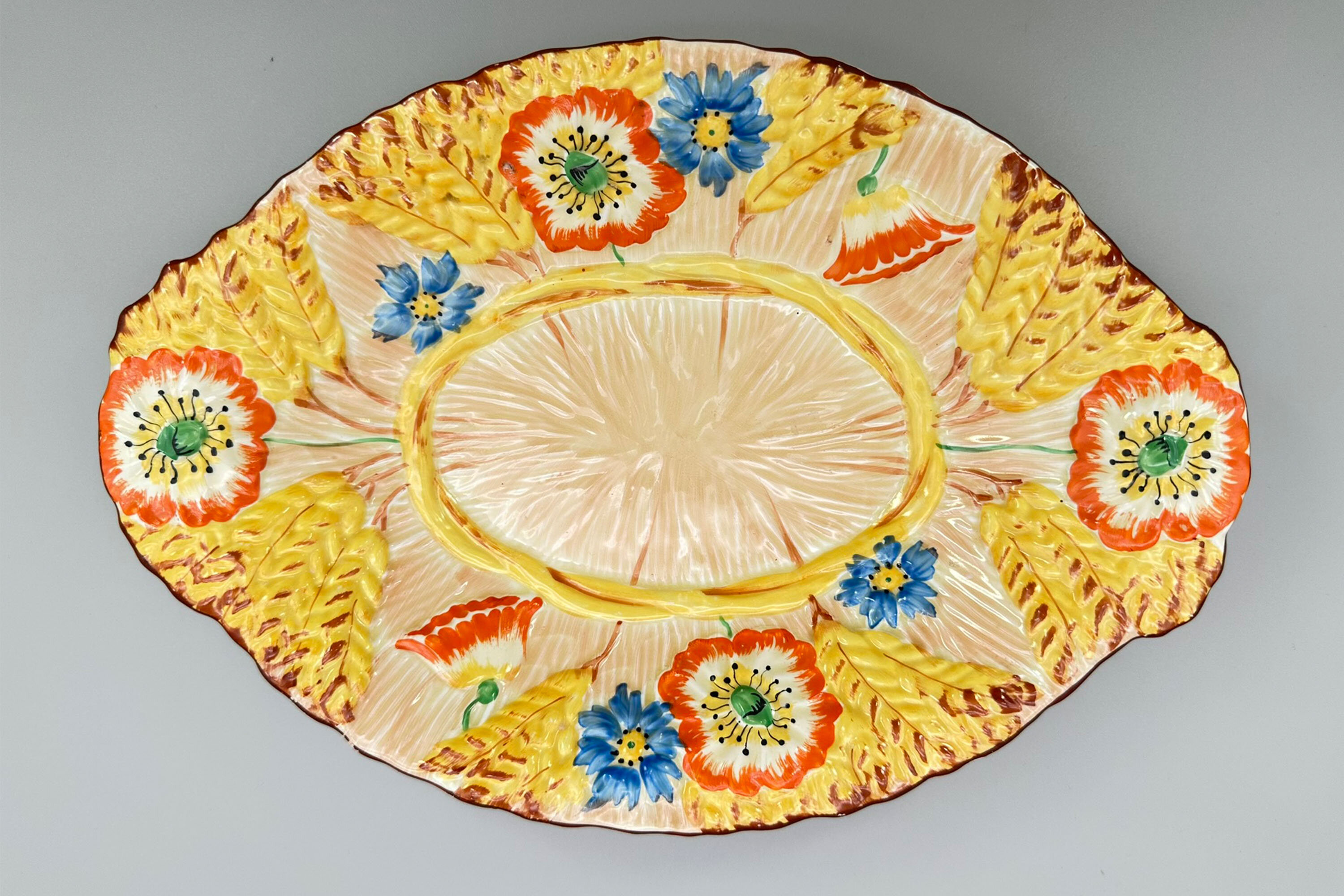
Falcon Ware oval serving Dish, J. H. Weatherby & Sons Ltd, 1930s
Price: £25Two Staffordshire potteries produced pieces with the trademark name ‘Falcon Ware’, Thomas Lawrence and J.H. Weatherby & Sons. The name derived from the Falcon Works at Hanley where both the ranges were made. John Henry Weatherby founded the business under his name in 1891 and moved to the Falcon Works one year later. Pieces marked ‘Falcon Ware’ were produced from the mid 1920s onwards and the addition of ‘Royal’ was introduced in the 1930s as a marketing tool. There was in no sense a Royal Warrant! Accordingly, the format of the mark on this dish dates it to the 1930s and it can be seen as a modest rival to the designs of Clarice Cliff, in particular her celebrated ‘Wheatsheaf’ pattern, which other factories imitated as well. The work is, in fact, in no way inferior making this an attractive if modest souvenir of a popular 1930s design.
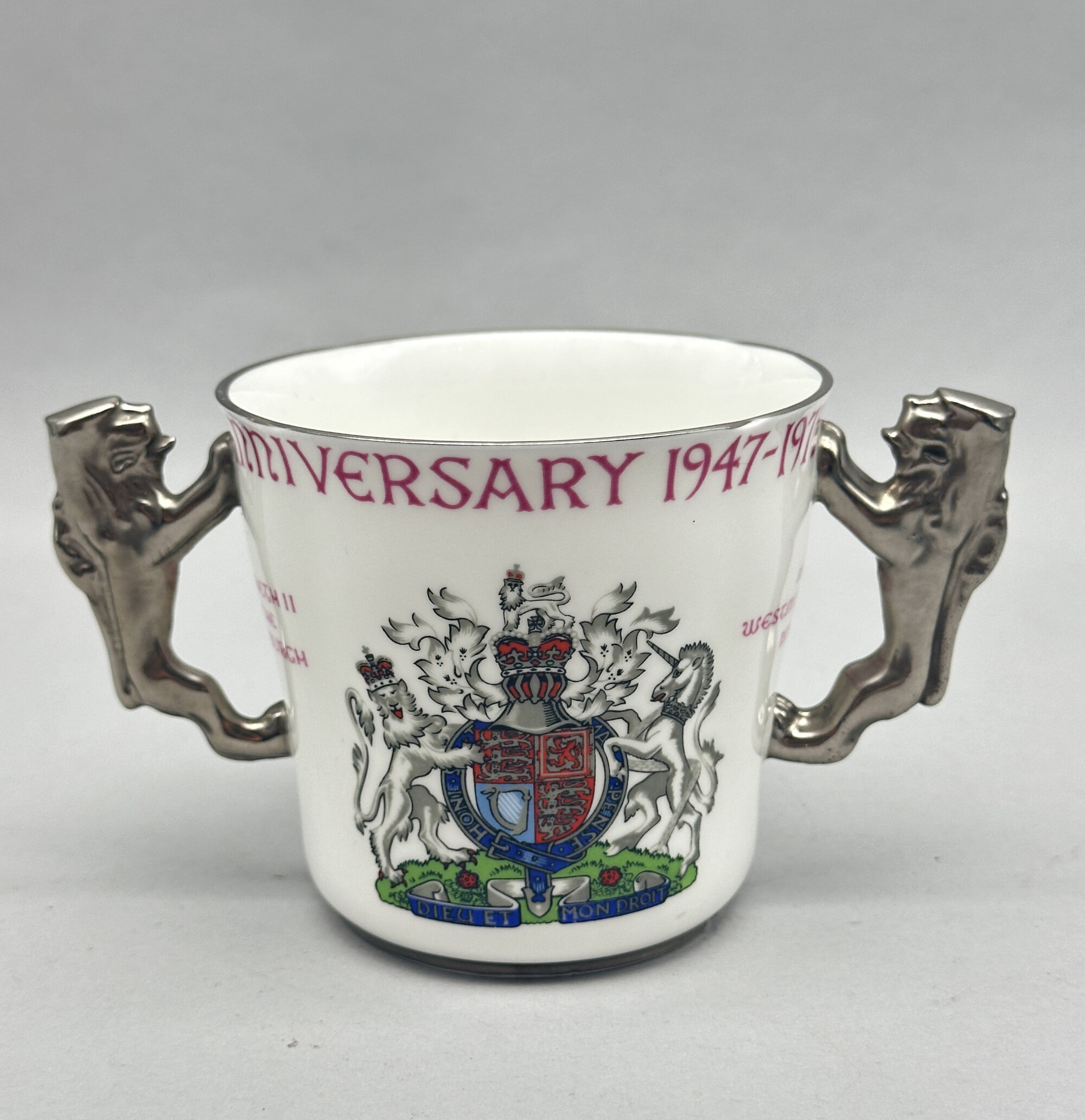
Cup : the Silver Wedding Anniversary of Queen Elizabeth II and Prince Philip in 1972
Price: £25The Paragon China Company, formerly the Star China Company (see Lot XX), produced high quality gift items from 1920 to 1971, at first independently and then in alliance with other companies, finally being absorbed by Royal Doulton in 1972 who kept the ‘Paragon’ name until 1991. Commemorative wares were a speciality and this cup is a fine and typical example.
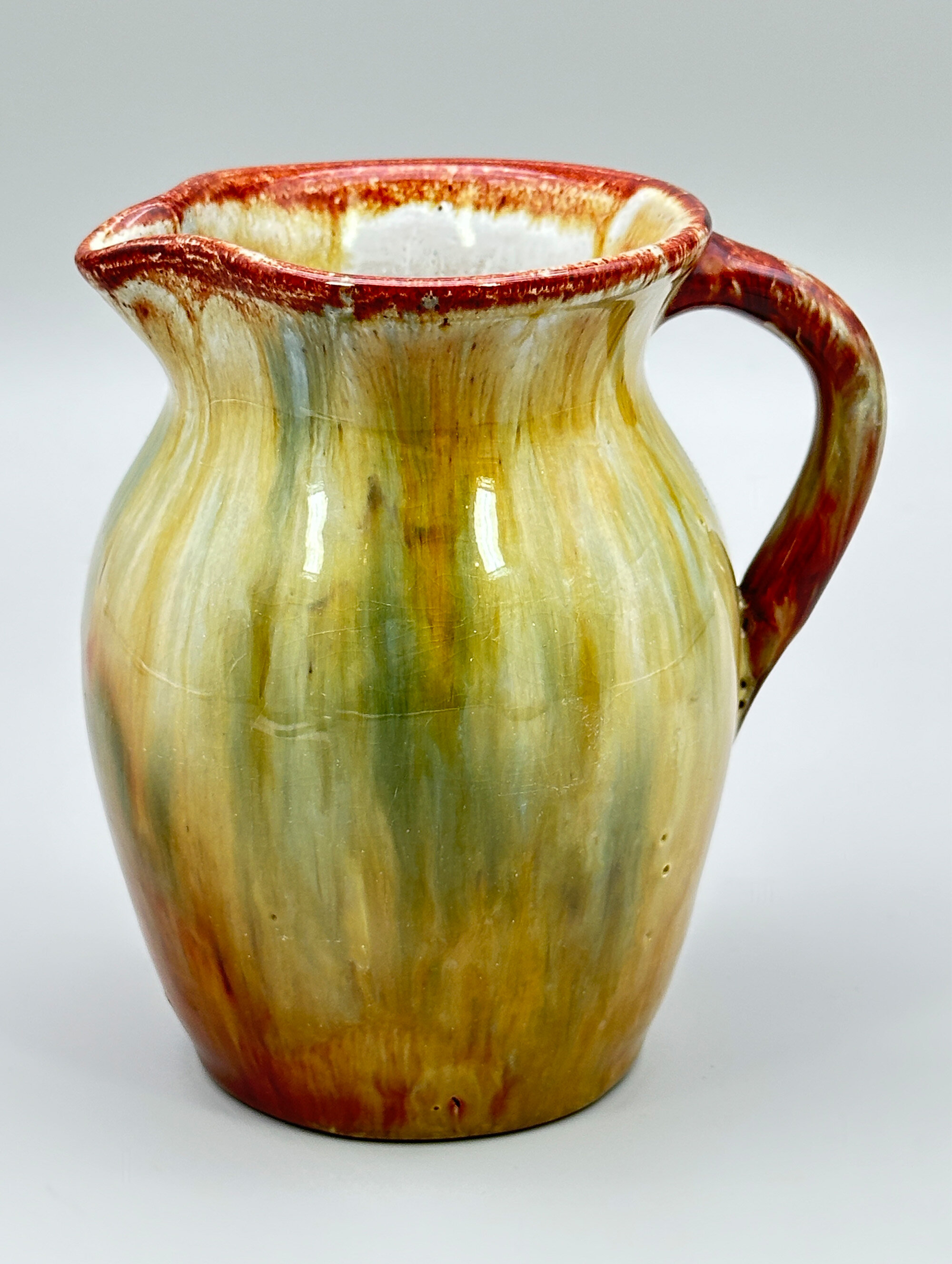
Ewenny Pottery Jug, signed, late C20th
Price: £25There has been a pottery at the small Welsh town of Ewenny since 1610, the area around being, at the time, a fertile source of clay. In the early 1800s Evan Jenkins married Mary, the daughter of then owner John Morgan, and this began a period of ownership by the Jenkins family which continues today, the studio and shop being run by Alun Jenkins and his daughter Caitlin, who is the eighth generation member of the business. Their mark can be seen at ‘British Studio Potters’ Marks’ by Eric Yates-Owen and Robert Fournier (2nd edition 2005 p157). Production has tended to concentrate on modest utilitarian items, hand potted and finished with the distinctive glazes for which the studio is known which involve dipping the pot in one glaze adding another with the splash technique and firing the item so that the two glazes fuse. The effects seen on this jug are typical of their work as is also the clear evidence of hand throwing. Ewenny pieces are made and sold today, but the current catalogue does not list items exactly similar to this, so a late twentieth century dating is the most likely.
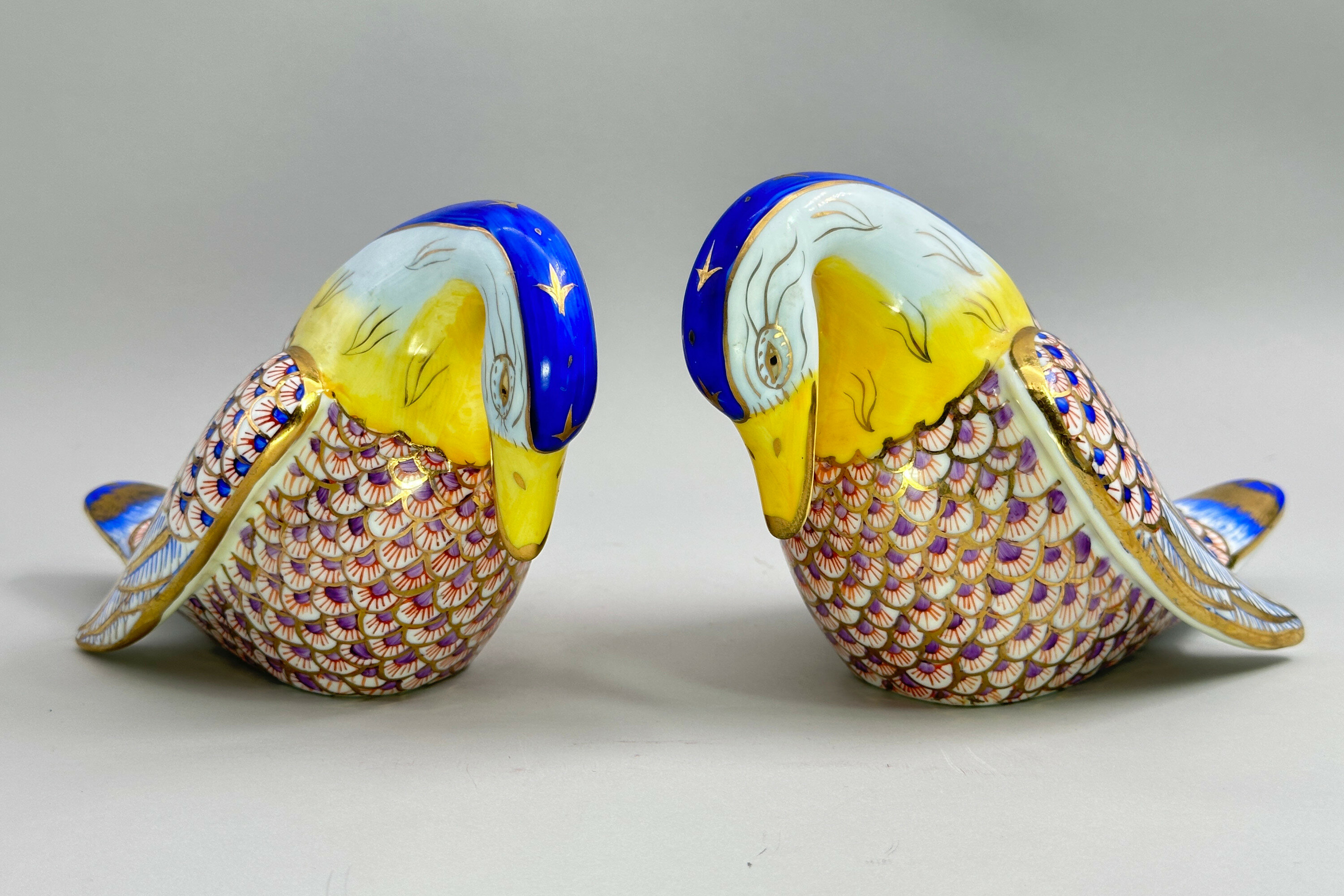
Pair of Ceramic Figures of Swans, probably continental, C20th
Price: £45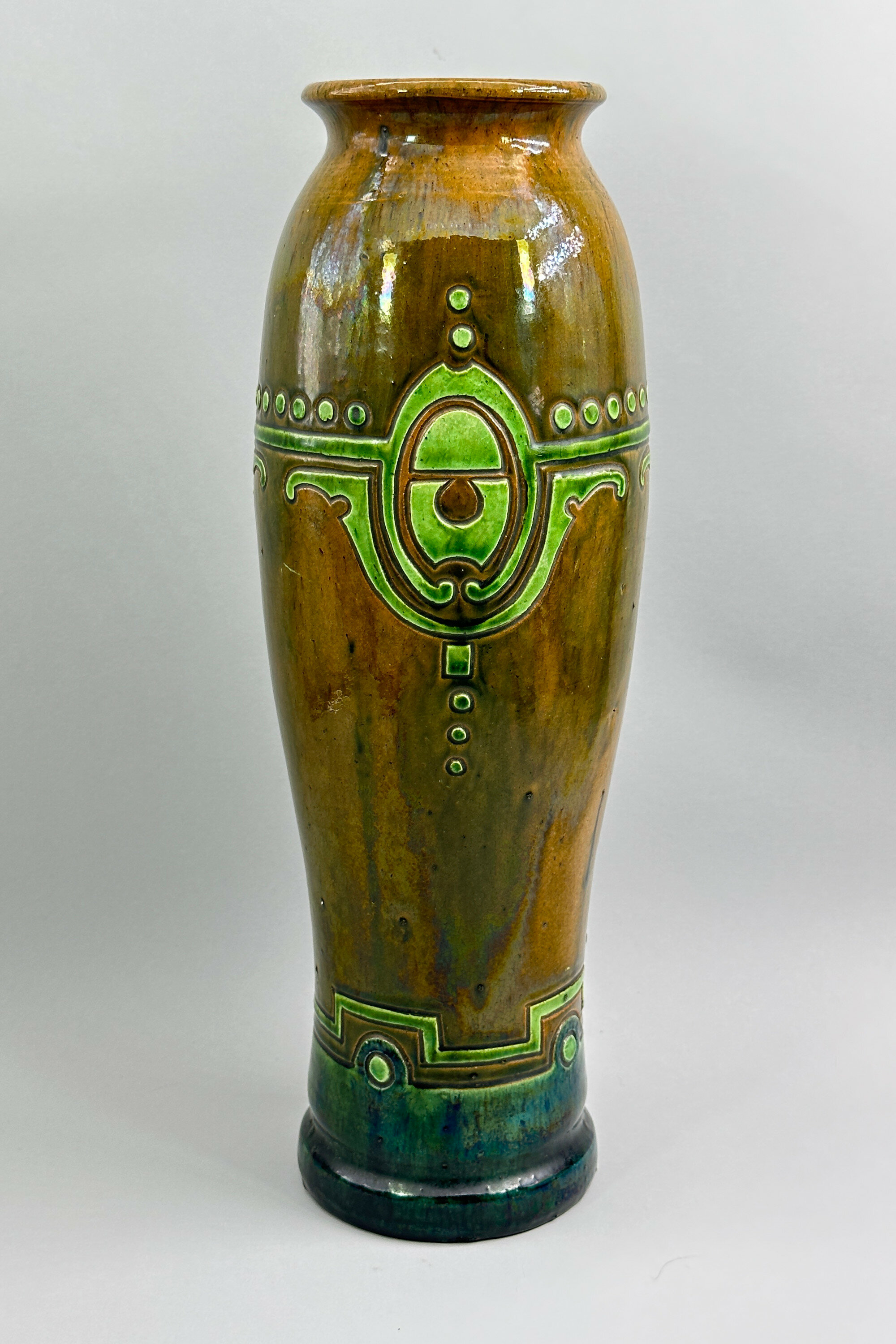
Art Pottery Vase with Geometric Motifs, C20th
Price: £55The style of decoration suggests Art Nouveau designs but there are no obvious parallels. Continental manufacture seems likely, perhaps France or Germany.
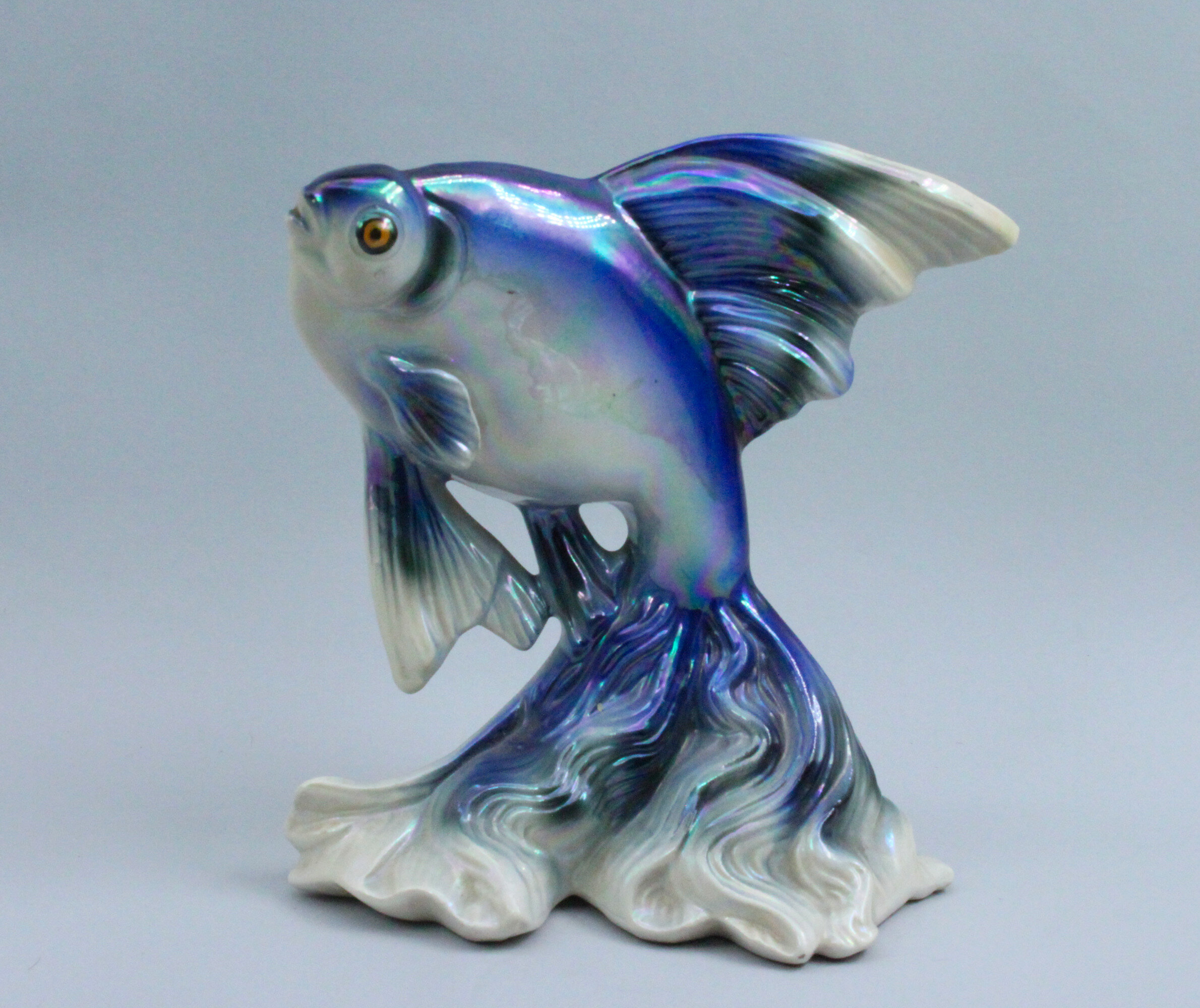
Ceramic Model of a Fish, Jema Holland, signed, 1950s/1960s
Price: £30The Jema factory in Holland was started by two brothers, Jelis Mager ( born 1912 in Rotterdam, Netherlands) and his brother Johan Willem Mager (born 1919 also in Rotterdam) both living in Maastricht who took over an existing ceramics factory, founded originally by J.Meussen, in 1942 and traded together in a partnership which was dissolved in 1955 when the firm JEMA KERAMISCH ATELIER N.V. (jema ceramic studio; the first JE standing for Jelis and MA standing for Mager) was created under a new agreement between them. Ceramic products of many types were produced with figurines a speciality and the business continued until 1984 when it became insolvent and closed its doors.
Most of the pieces seem to have been marked, usually with an impressed script as here indicating the factory itself and the model number of the piece. For modest decorative items the quality of the manufacture is of a high standard as can be seen in both the modelling and the glazing of this piece. Their animal figurines were immediately approachable and provided modest but amusing items of decoration.
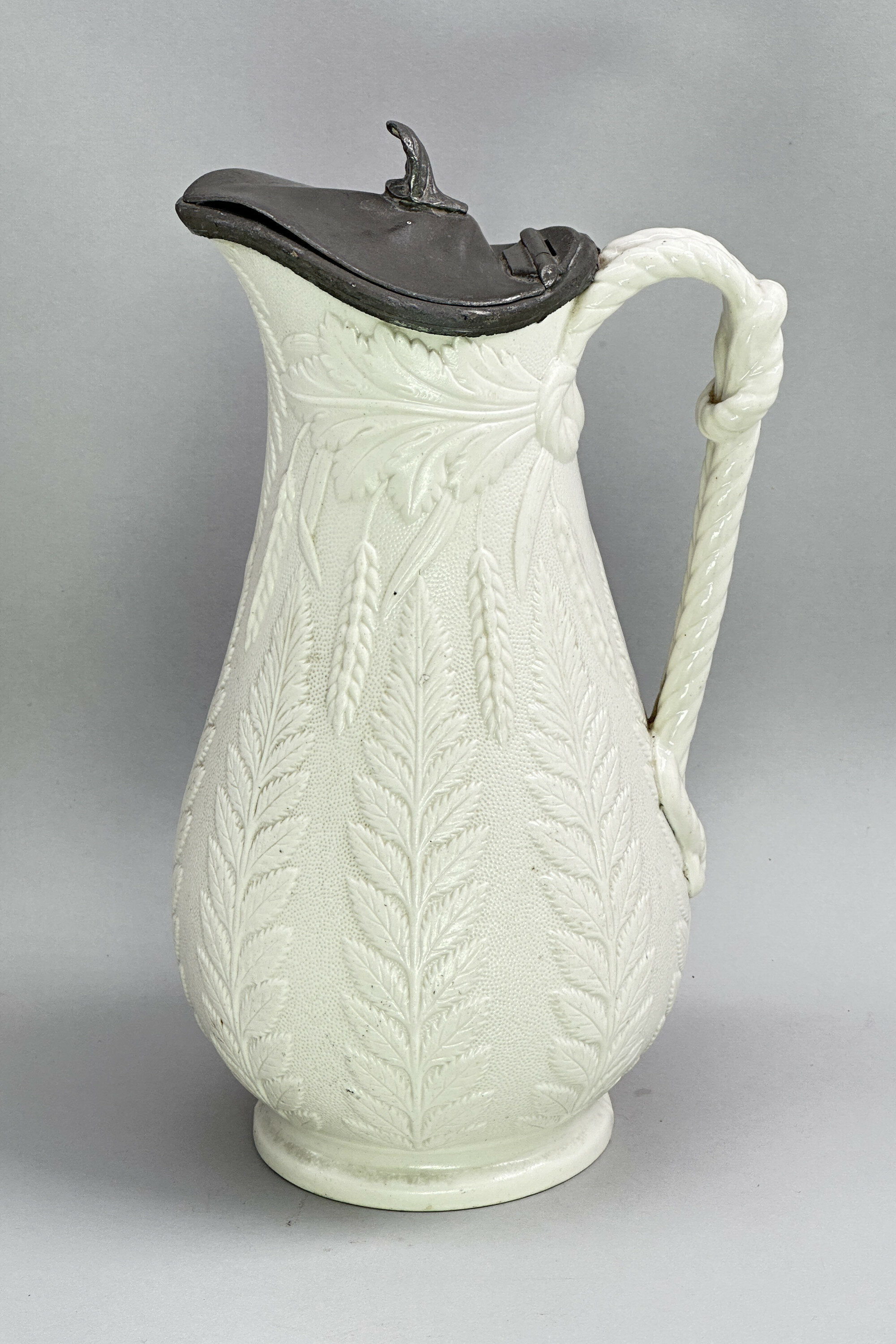
Antique English Staffordshire pitcher, William Brownfield and Sons, circa 1860.
Price: £55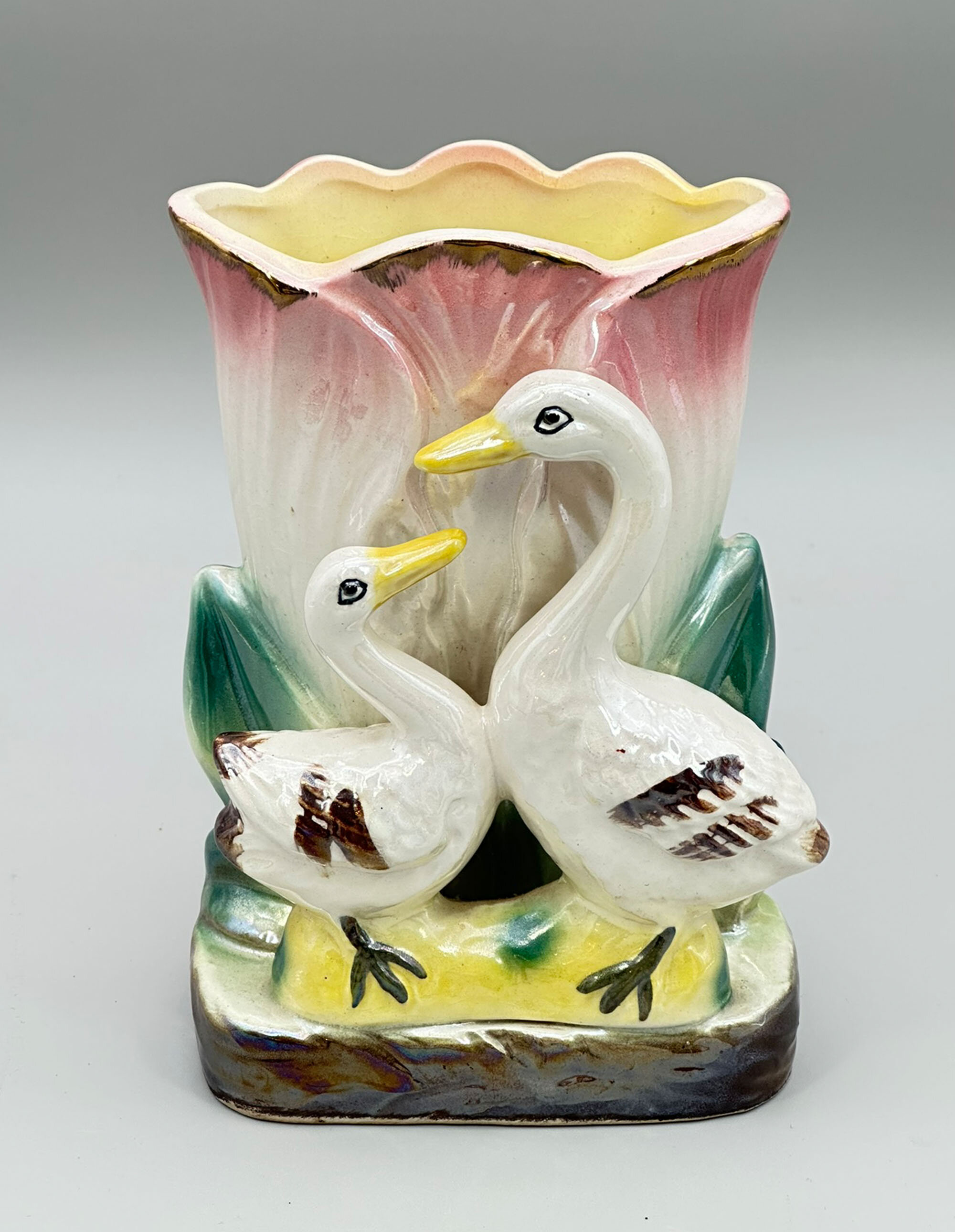
Lustreware novelty Flower Vase with swans, probably French, mid C20th
Price: £35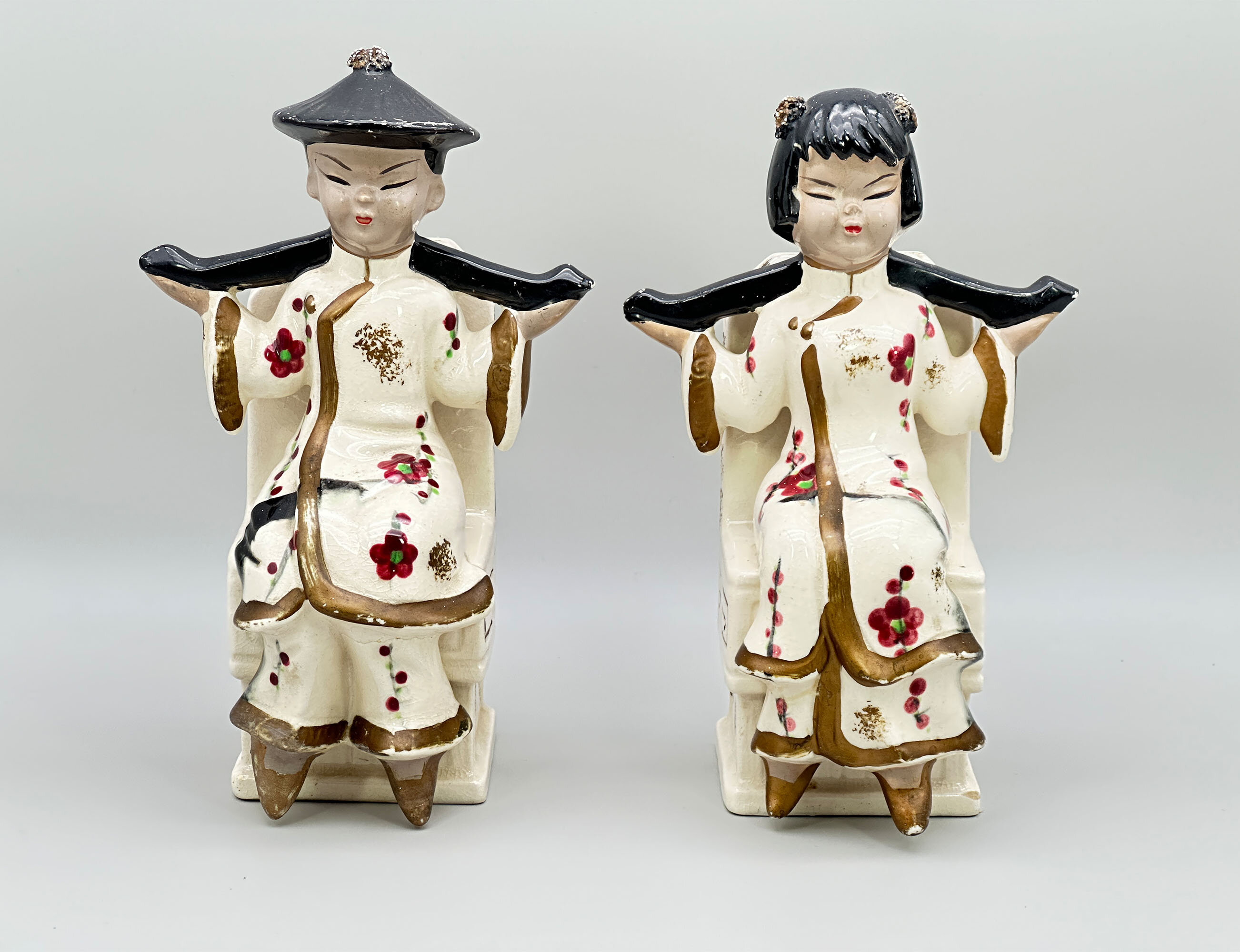
Pair of Japanese ceramic Bookends, seated Boy and Girl, mid C20th
Price: £55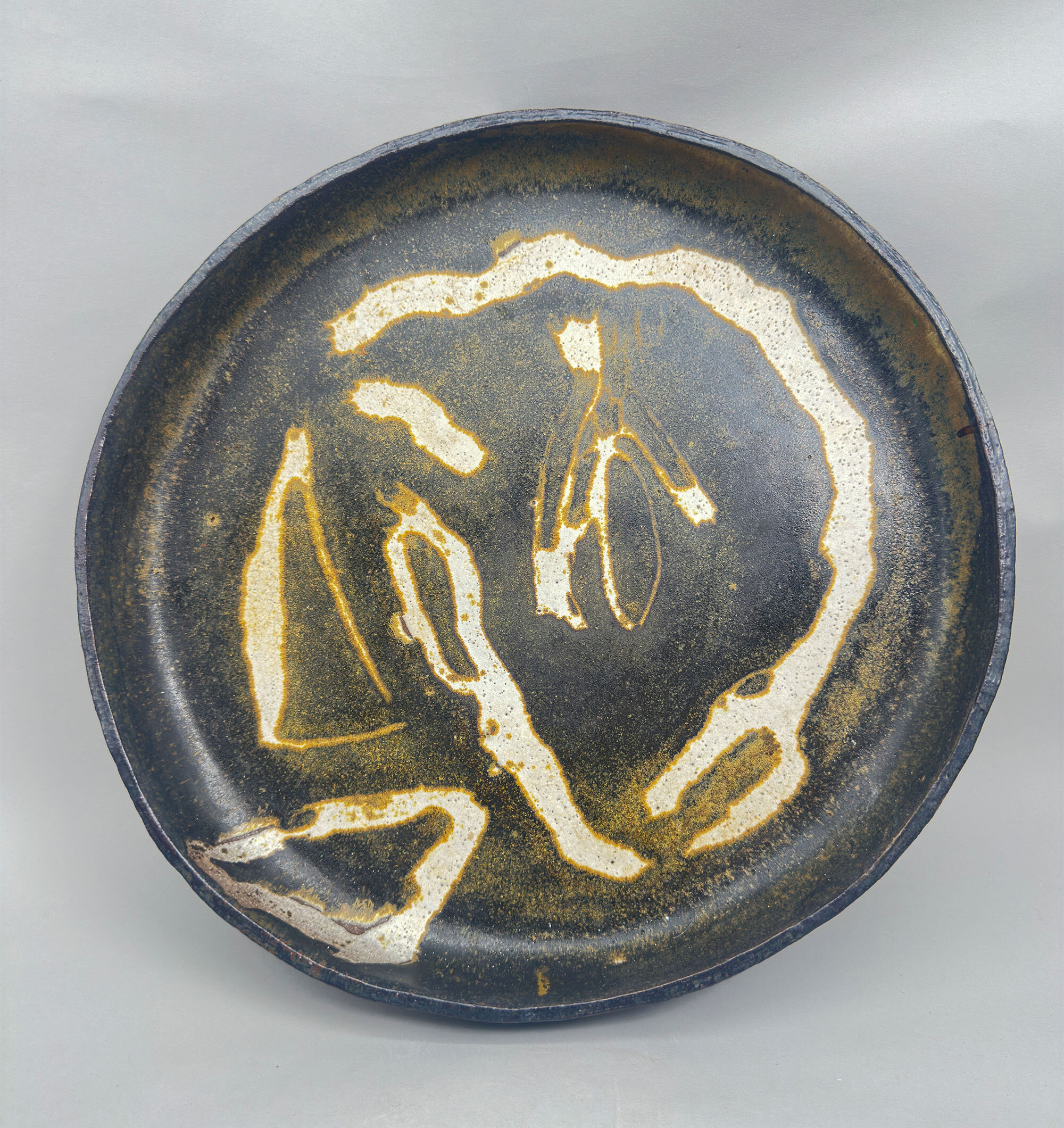
Studio Pottery Charger with tenmoku glaze, signed, C20th
Price: £45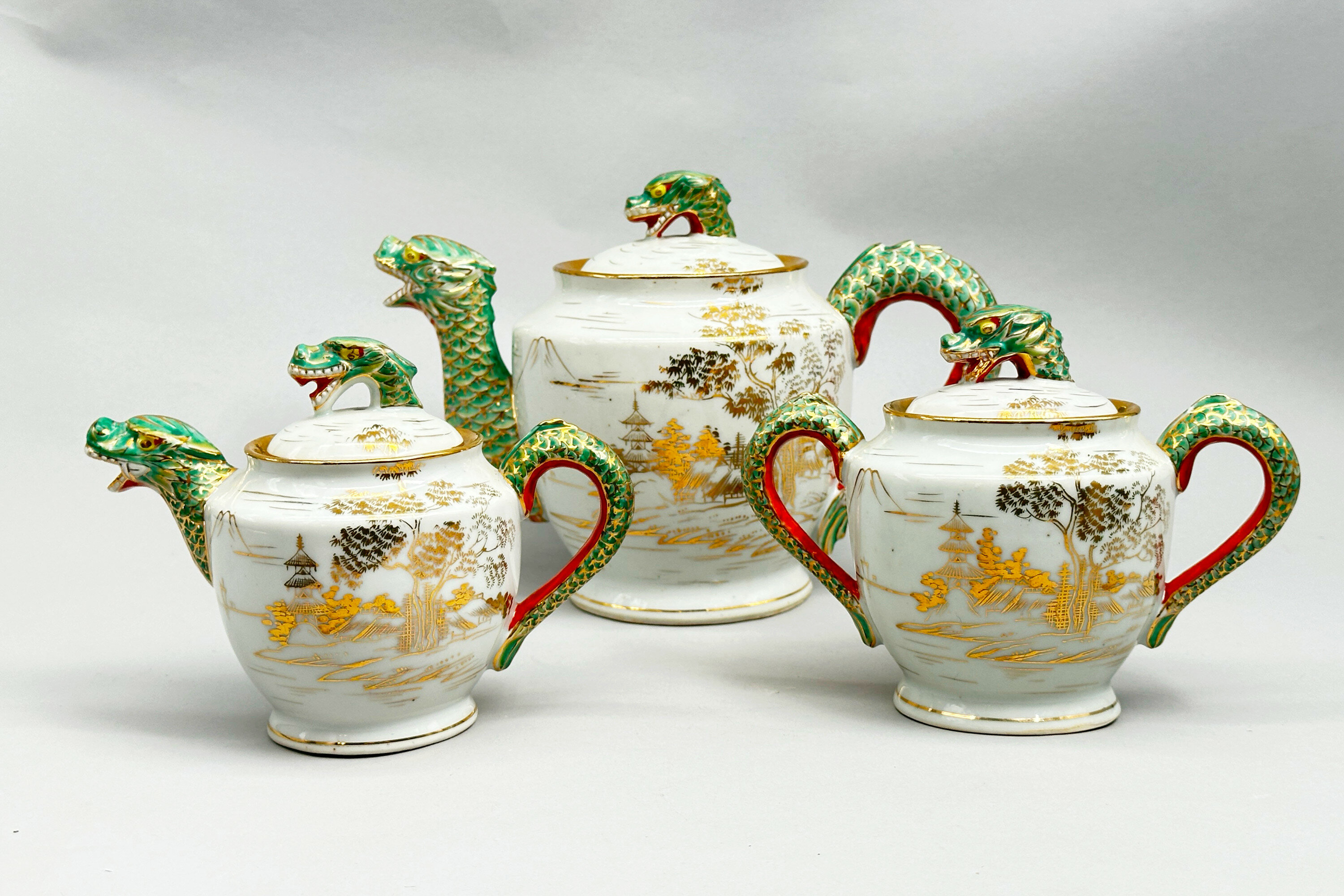
Japanese Kutani Part Tea Service circa 1920
Price: £75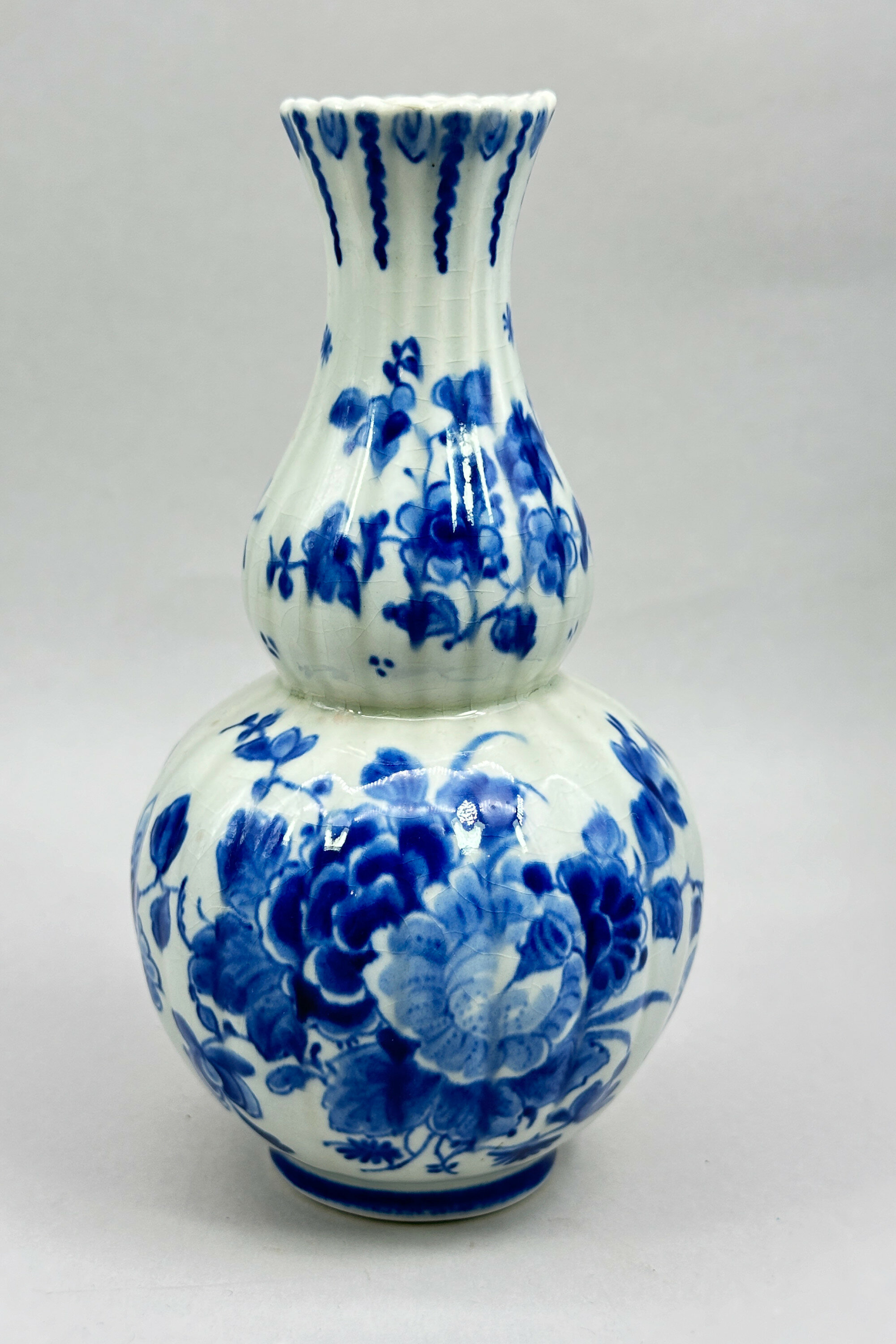
Dutch Delft Blue and White Gourd Vase in C18th Style, late C20th
Price: £25This vase is typical of one of these later creations and copies an eighteenth century original which itself was based on Chinese pieces. The marks underneath, although some of them are blurred, offer a clue to the dating. Below an ‘A’ at the top can be seen a vase which stands for ‘De Porcelyne Fles (The Porcelain Bottle) a factory which was established in 1653 and continues production today. There follow the initials ‘JT’ as a monogram standing for Joost Thooft who bought the factory in 1876 and below this ‘Delft’. At the bottom are usually found the painter’s initials to the left and letters to the right which are the date mark. On this vase these are unclear but the painter’s initials read ‘MA’ which appears to stand for M.H.van Aalst who worked for the firm from 1941to 1983. This would fit with a likely dating here to the second half of the twentieth century, but the artist has successfully recreated the work of his predecessors and produced a piece of great charm.
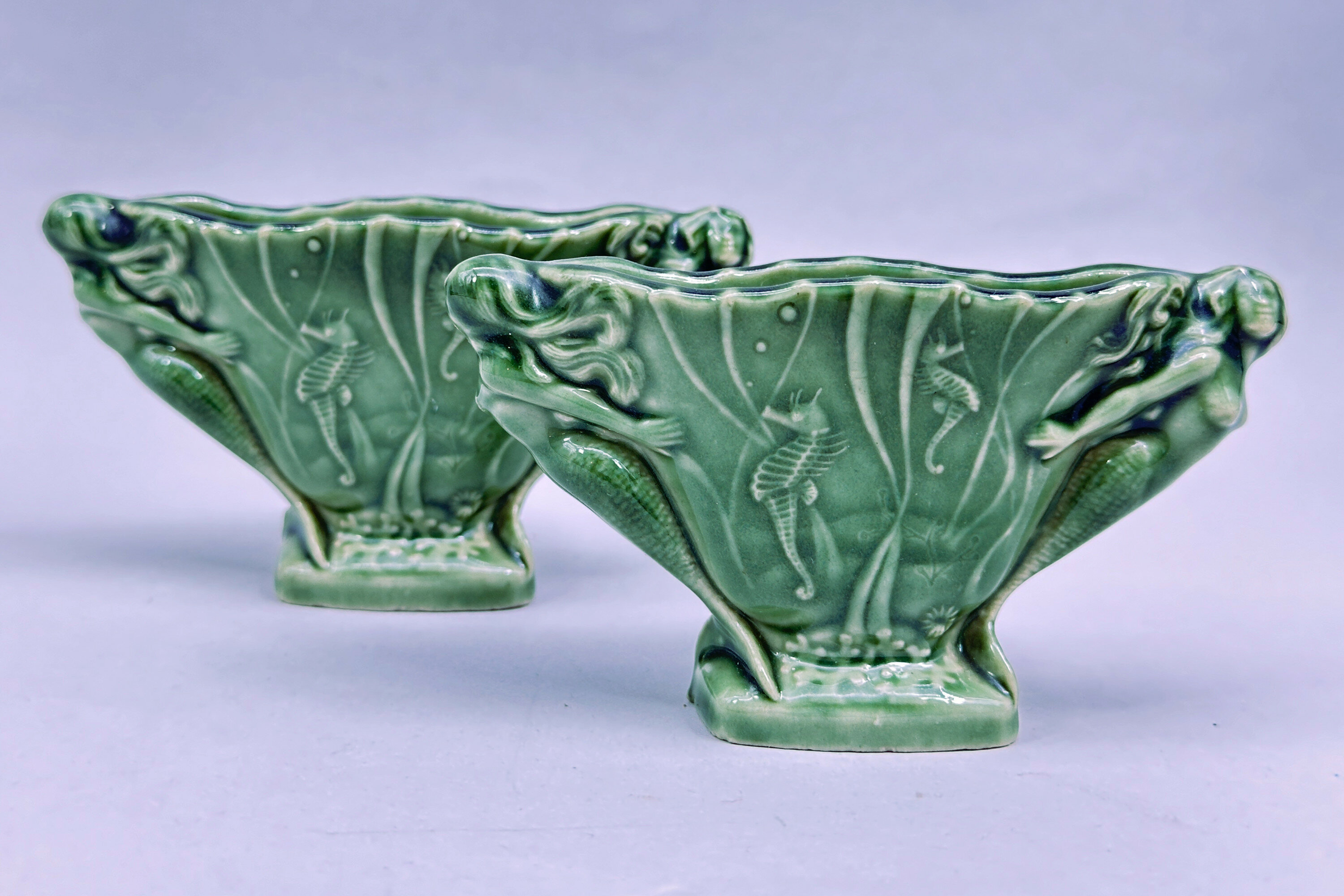
Pair of Wade green glazed Mermaid salts, 1950s
Price: £55Wade Ceramics Ltd was a manufacturer of porcelain and earthenware, headquartered in Stoke-on-Trent, England. Founded in 1867, it was run by various members of the Wade family until the death of George Anthony Wade in 1987 after which there was a succession of management buyouts. Despite substantial investment in 2009, the firm eventually went into administration in 2022. Wade produced a wide variety of ceramics, including the well known Wade Whimsies animal figurines.
This pair of salts is rather different to many of their productions and have a distinctly ‘Art Nouveau’ feel but, in fact, date to the 1950s when this particular format of the factory mark was used. It seems to be one of the rarer forms and pairs are even rarer still, so definitely one for Wade collectors!
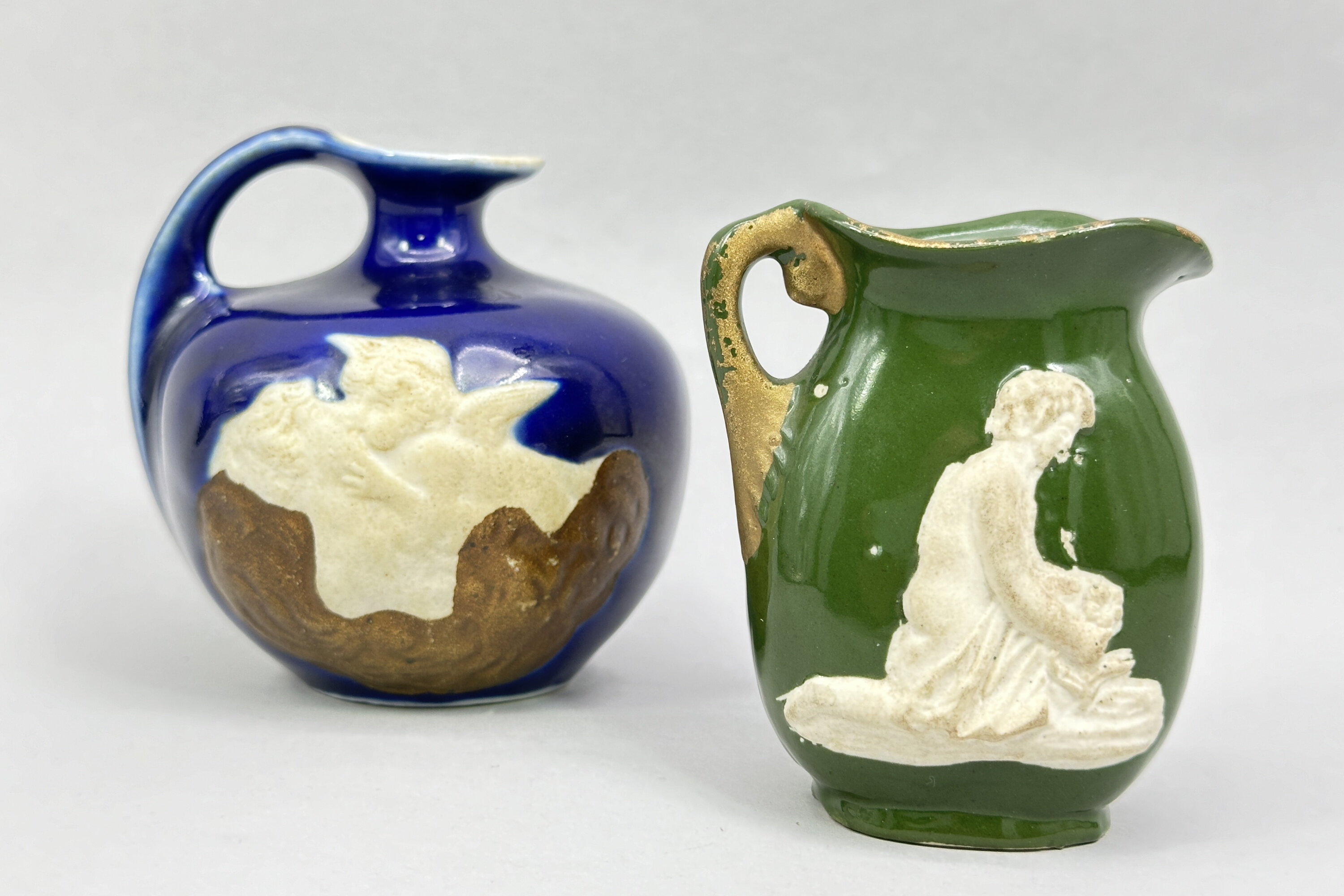
Two Ceramic Jugs with Erotic Decoration, continental perhaps German, circa 1900
Price: £25These pieces represent something of a puzzle. Seen the right way round (with the handle on the right) they are plain and the decoration only reveals itself on the reverse. This suggests a playful intent to conceal which, when combined with the subject matter, suggests something a bit ‘naughty’ which could confirm the second interpretation of what the seated man is holding! The paste, and general style of the pieces, looks continental and a German origin might be a good guess, but no more than that. The blue glazed jug has an impressed mark to the base ‘186 [plus an unidentifiable number]’ which might be the date but is more likely the pattern number; a dating of around 1900 for both seems reasonable - certainly there is an ‘old’ look to the pieces. There are one or two similar examples but little in the way of firm information. One for a collector to puzzle out!
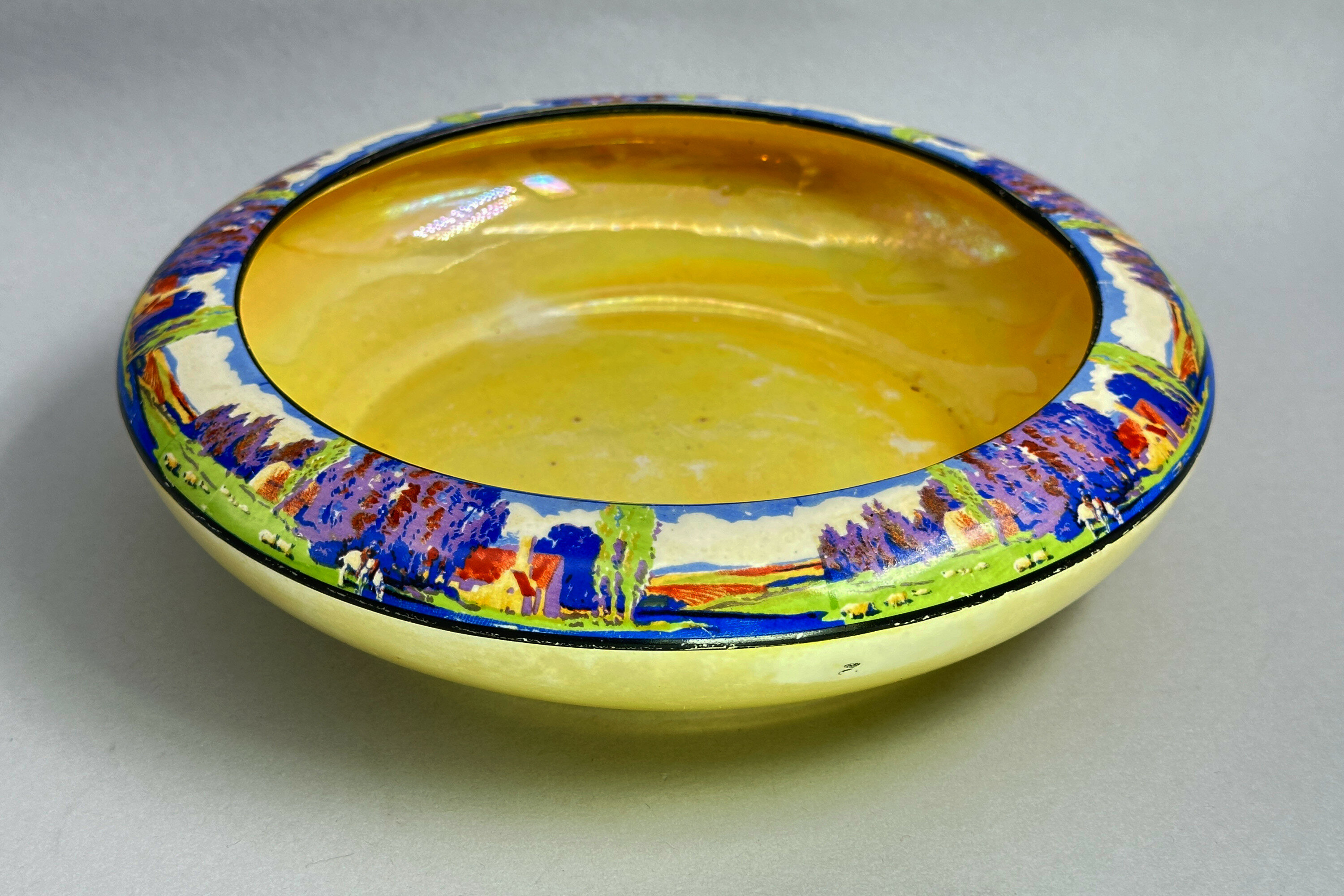
Hanley Ware circular bowl, Lancaster and Sons, 1920s
Price: £25Lancaster & Sons Ltd were manufacturers of earthenware at the Dresden works, Tinkersclough, in the Shelton area of Hanley, Stoke-on-Trent, England. The firm was founded in 1899 under the name ‘Lancaster and Barker’ was renamed ‘Lancaster & Sons Ltd’ in the early 1900s and continued production until 1944. In the 1920s they produced various pieces with rural landscape scenes of which this is an example. Some see reminiscences of the ‘Arts and Crafts’ movement here but the mark found on the bottom clearly dates the piece to the 1920s. The yellow lustre glaze is interesting and free from the crazing sometimes found.

Pair of Nodding Head Figures, Chinese Emperor and Empress, Germany circa 1900
Price: £350……………………………………………………………………………………………………...................................................................................
A pair of ceramic figures depicting two Chinese figures seated cross legged, usually termed an Emperor and an Empress. They are modelled dressed in colourful and patterned robes fastened with sashes at the waist and with frill collars. The lady holds a fan and the gentleman a pipe and both hold parasols fitted to their hands by wire and with decoration to the undersides. The heads are made separately, weighted at the bottom (see images 7, 13) and have wire supports to the side which rest on wires on each side of the top interior which are secured through holes on the exterior at the front and back. When pushed, the heads then move in a most lifelike fashion. The hollow interiors are glazed white with an unglazed foot rim, but there are no marks.
So called ‘nodding head’ figures began to be exported from China to the West in the mid eighteenth century following a tradition which dated back many years before. The figures were drawn from the Court or Chinese high society and at first were made from clay or wood with painted decoration, necessarily rather delicate interior accessories. A pair can be seen in the background of a picture painted by Zoffany of Queen Charlotte (1744-1818) with her two eldest Sons depicting an interior at Buckingham house (now Buckingham Palace) and dated to 1764 (see image 15). Rather larger models, almost life size, were displayed in the Gallery of the Brighton pavilion, reflecting the passion of the Prince Regent, George IV (1762–1830) for Chinoiserie in general.
But the form was also taken up by the kilns at Jingdezhen and the decorators at Canton and ceramic ‘nodding head’ figures were soon exported too, brightly painted in the popular ‘Famille Rose’ enamels (see image 16 for a typical example from the Qianlong period, 1736-1795). Sensing the popularity of the type, European manufacturers too began to produce their own versions, rather different from the Chinese originals and usually depicting the figures seated which was much less common for the Eastern examples. The most well known examples were made by Meissen and tended to have both moving heads and hands as well (see image 17) but a less expensive version of these (see image 18) was made by the firm Ernst Bohne & Sohne, prolific manufacturers of modest ceramic ornaments for the domestic interior including the well known ‘fairing’ figurines, examples of which can be seen elsewhere on this site. There are also figures with their mark which exactly resemble the model type offered in this sale, complete with the parasol, so it is a reasonable assumption that this pair of figures can be attributed to them as well. While perhaps less grand than their companions, this pair of eastern potentates have a charm of their own and, when set in motion, are uncannily lifelike. Gilbert and Sullivan for the 21st century!

Stoneware ceramic Wall Flagon, Simon Eeles, signed, late C20th
Price: £180Simon Eeles was one of the two sons of David and Patricia Eeles who started the studio Shepherd’s Well Pottery in Hampstead, London in 1955, moving to Mosterton, Beaminster, Dorset in 1962, see ‘British Studio Potters’ Marks’ by Eric Yates-Owen and Robert Fournier (2nd edition 2005 p152). Simon began working with his parents in 1979 and was to soon specialise in stoneware although in later years he took an interest in the Japanese ‘raku’ type glazes for which he gives demonstration classes today. His earlier stoneware pieces seem to have focused on decorative utility items and do not appear to be commonly available now. Priced in the 1980s/1990s at £110 this wall flagon was clearly something of a demonstration piece at the time and remains so today.
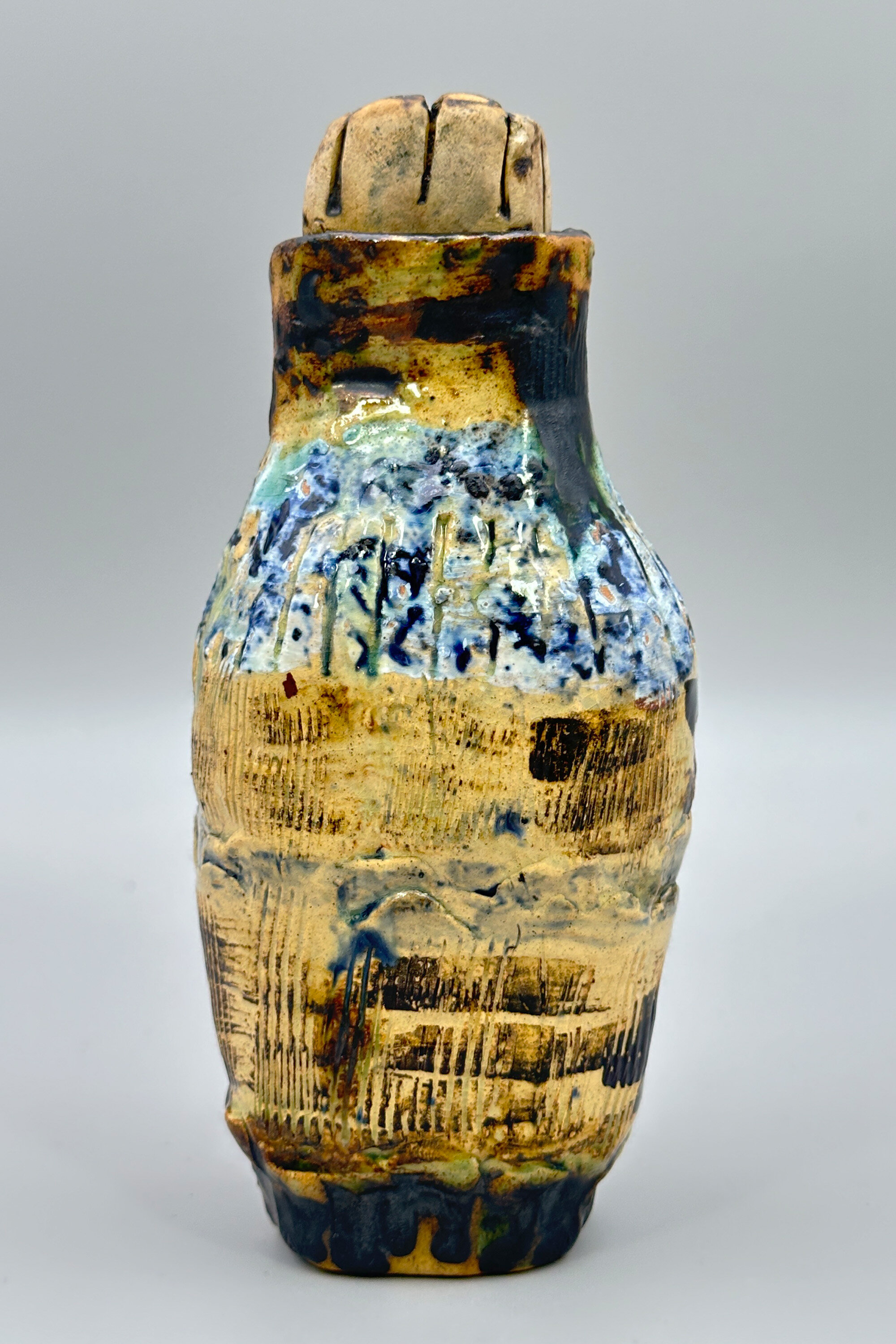
Primitive studio pottery Flask and Cover, signed, possibly Allison Weightman, C20th
Price: £45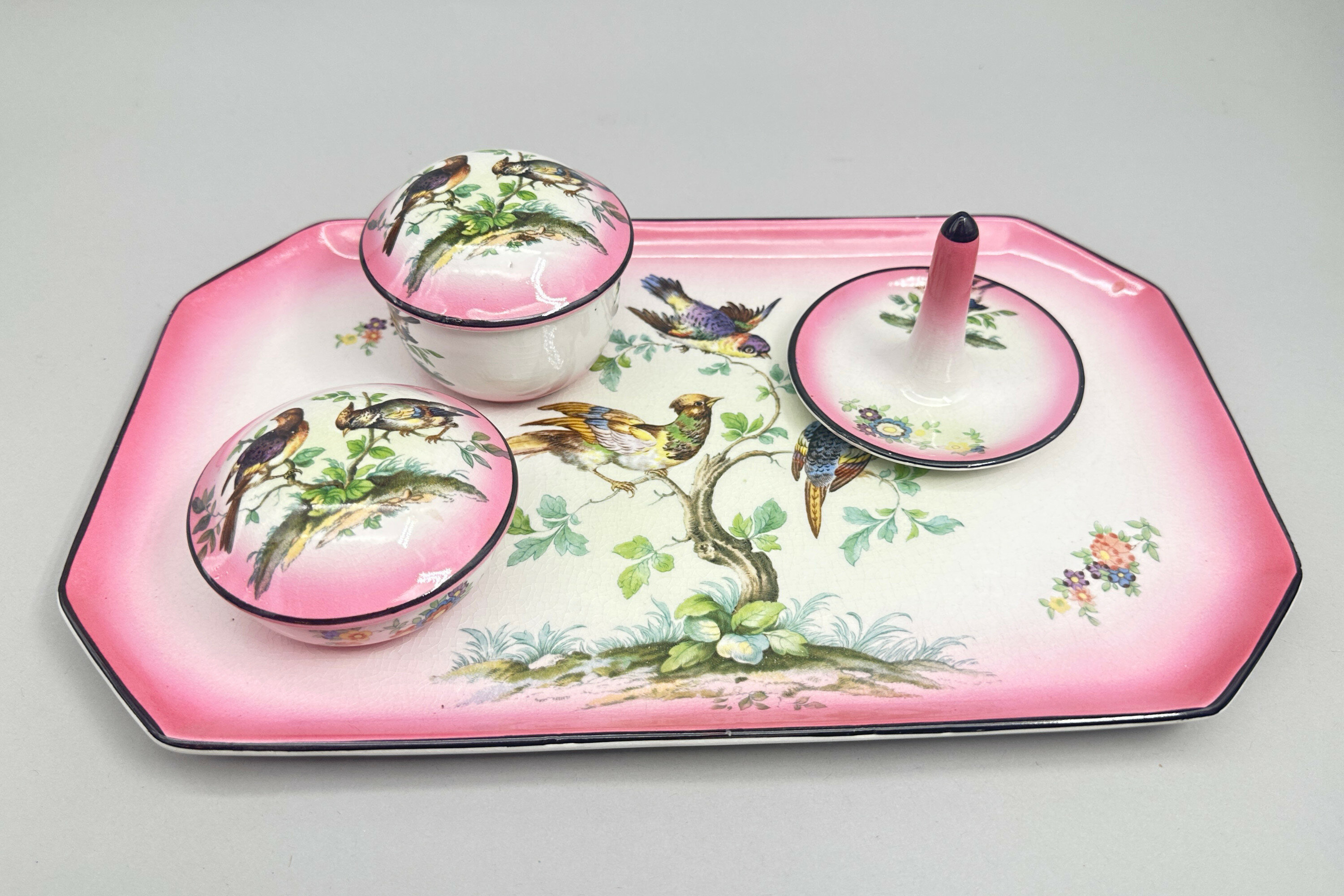
Kiralpo ware Dressing Table Set, marked, 1930s
Price: £35Kiralpo ware was one of the trade names used by Kirkland and Co, earthenware and ceramic manufacturers based at the Albion Pottery, Etruria, Stoke-on-Trent, England who traded from 1891 to 1938 when the business was bought and renamed by Mr A.E.Gray. The format of the mark gives a dating between 1928 and 1938 with ‘E’ standing for Etruria. Kirkland and Co made various modest but colourful decorative items to furnish the home. In a 1907 guide they are described as ‘general earthenware, fancy goods, and majolica manufacturers’. Their designs were not sophisticated but obviously had a popular appeal and this set with its bold transfer decoration of birds set within a rather vivid pink border is typical of their work.
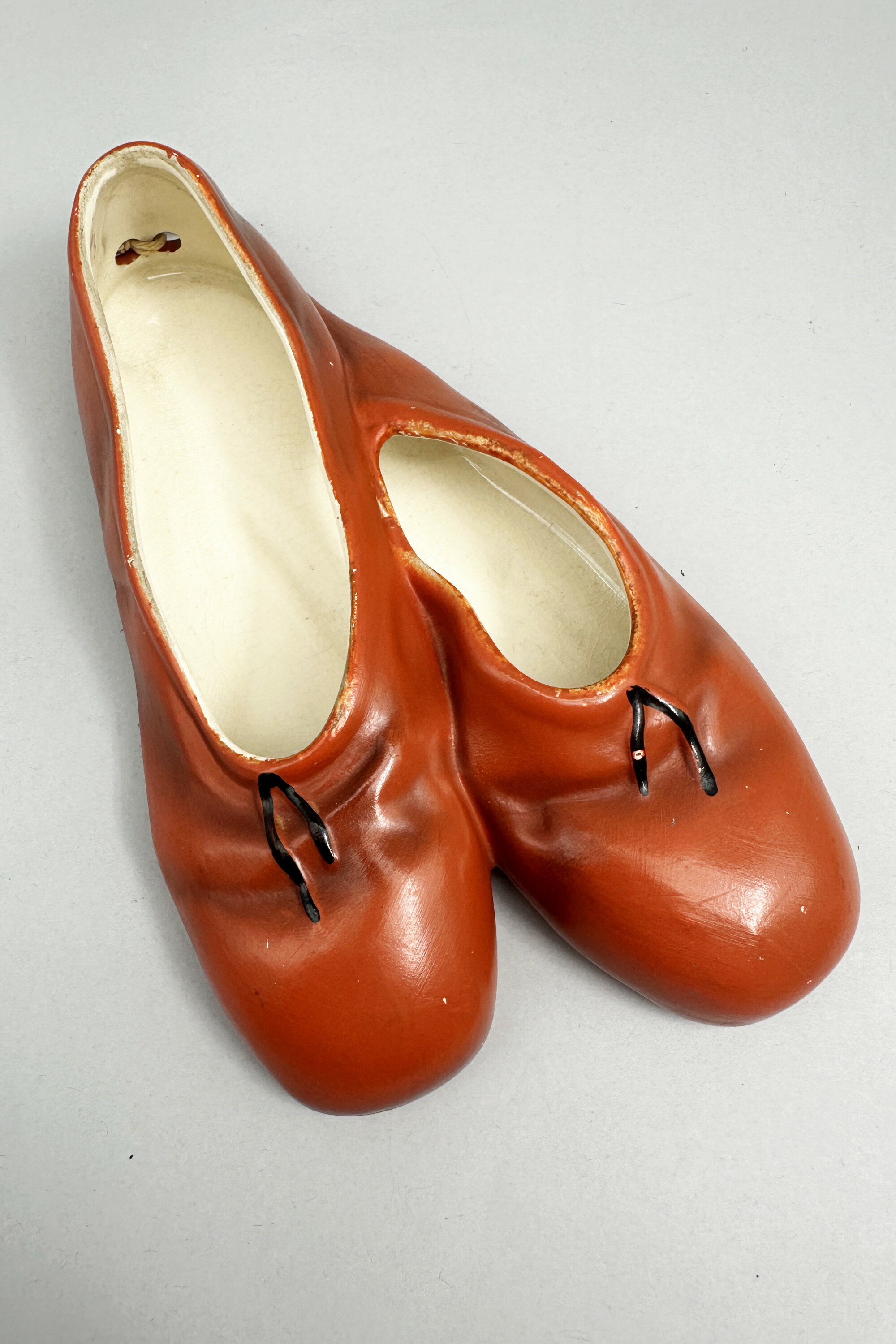
Pair of Brentleigh Ware Wall Hanging Ballet Shoes, 1930s
Price: £35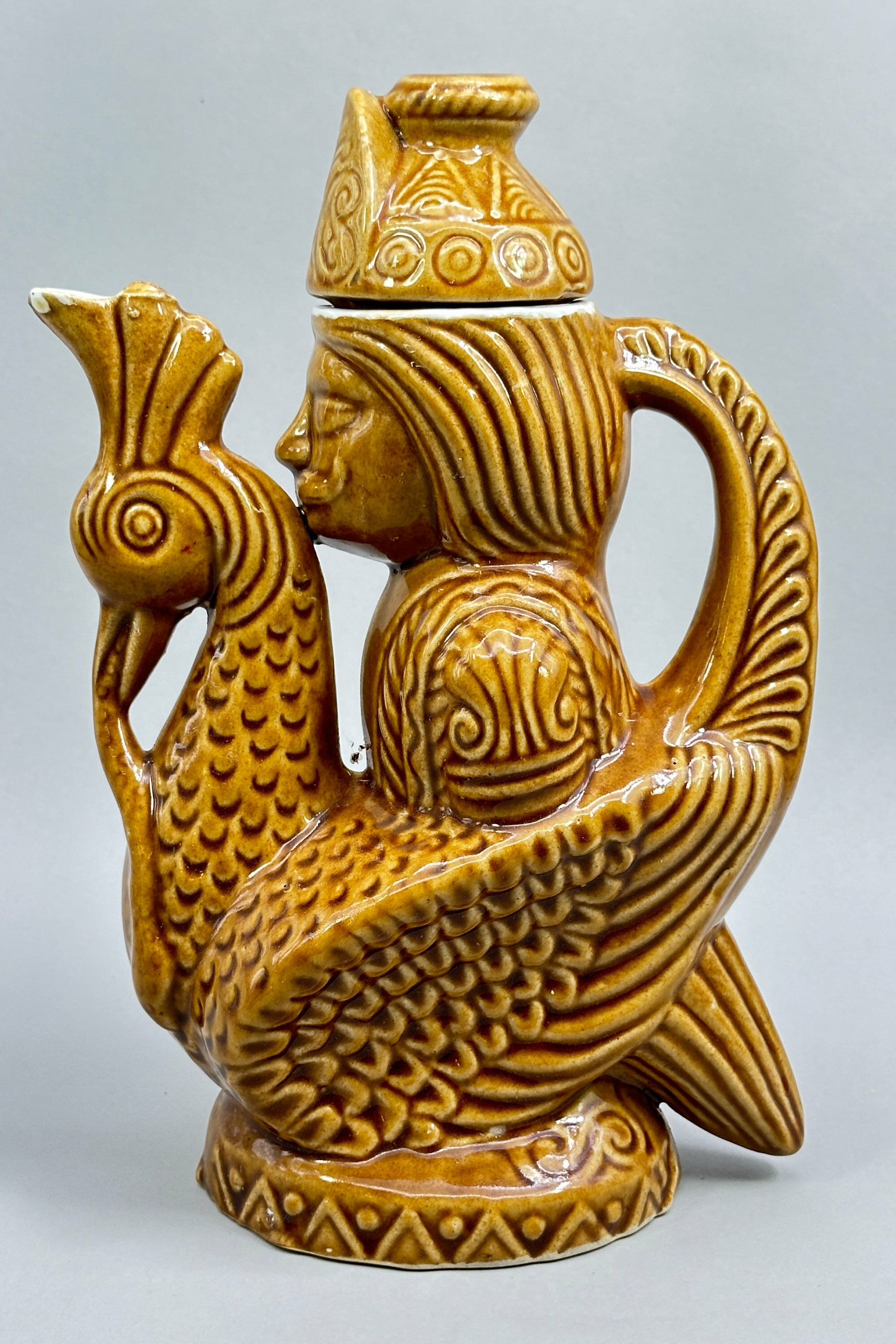
Bird form ewer with cover, possibly Russian c1960
Price: £45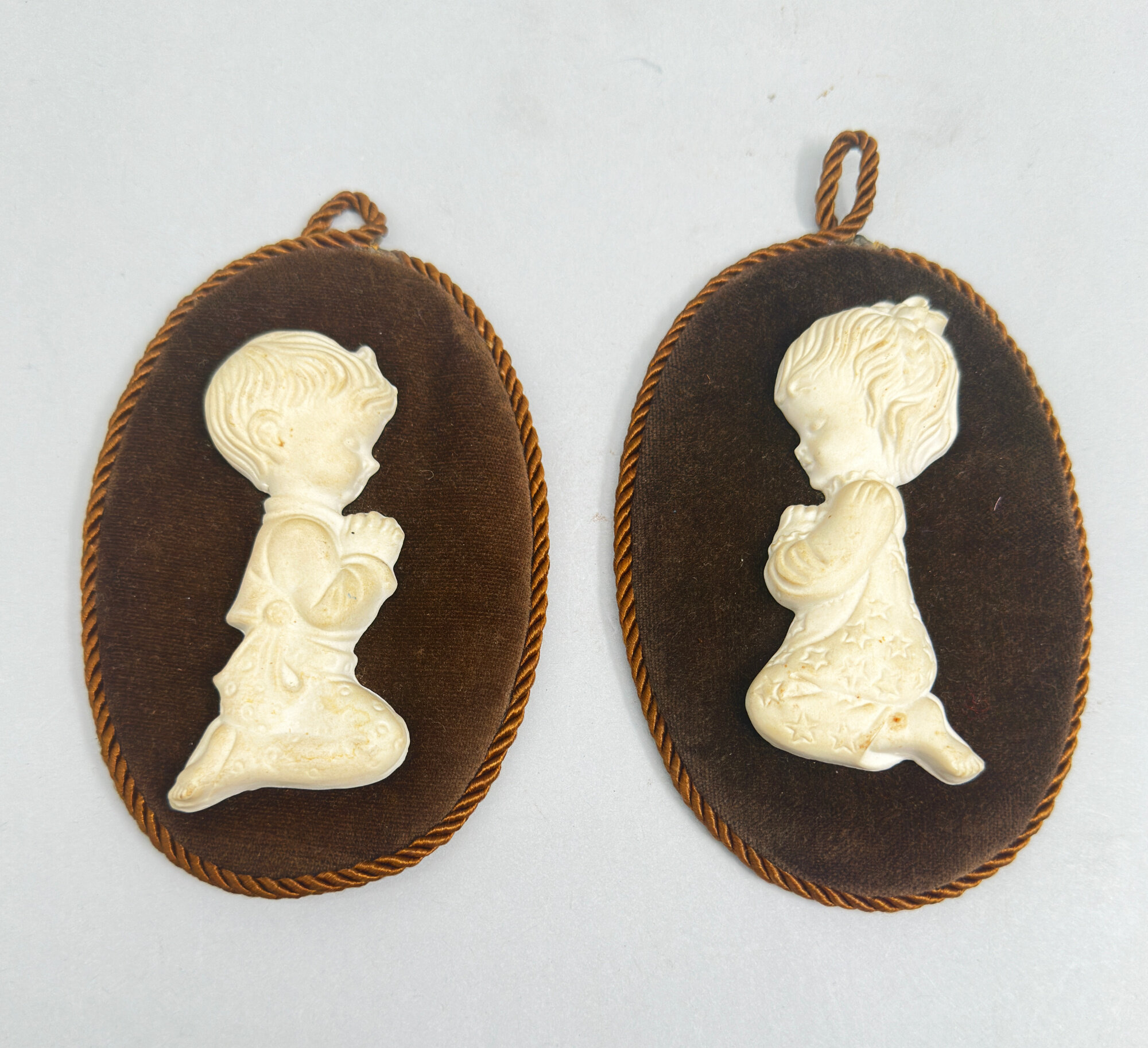
Pair of Capodimonte ceramic Wall Hanging Plaques, boy and girl praying, Italian 1960s
Price: £25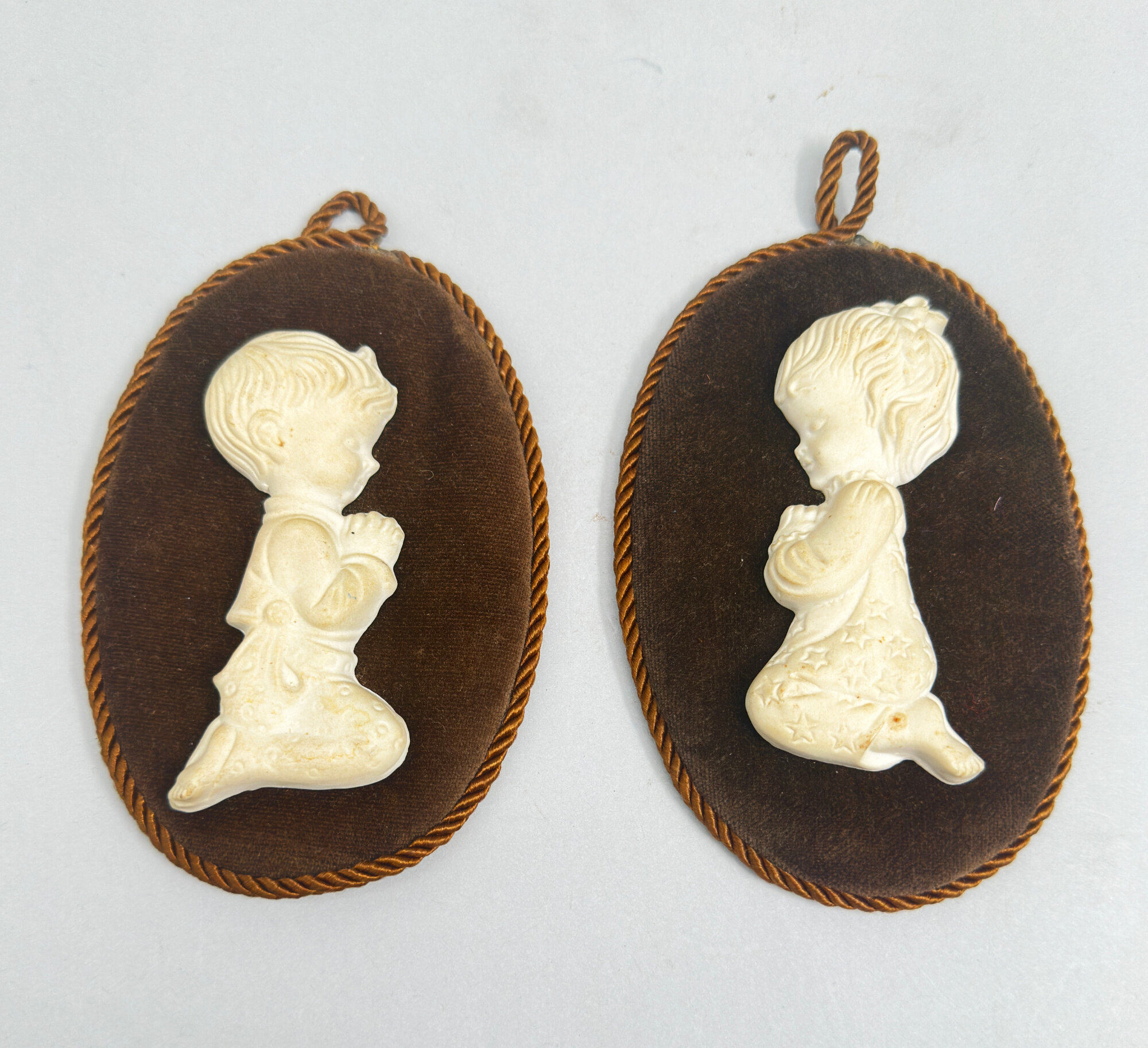
Pair of Capodimonte ceramic Wall Hanging Plaques, boy and girl praying, Italian 1960s
Price: £25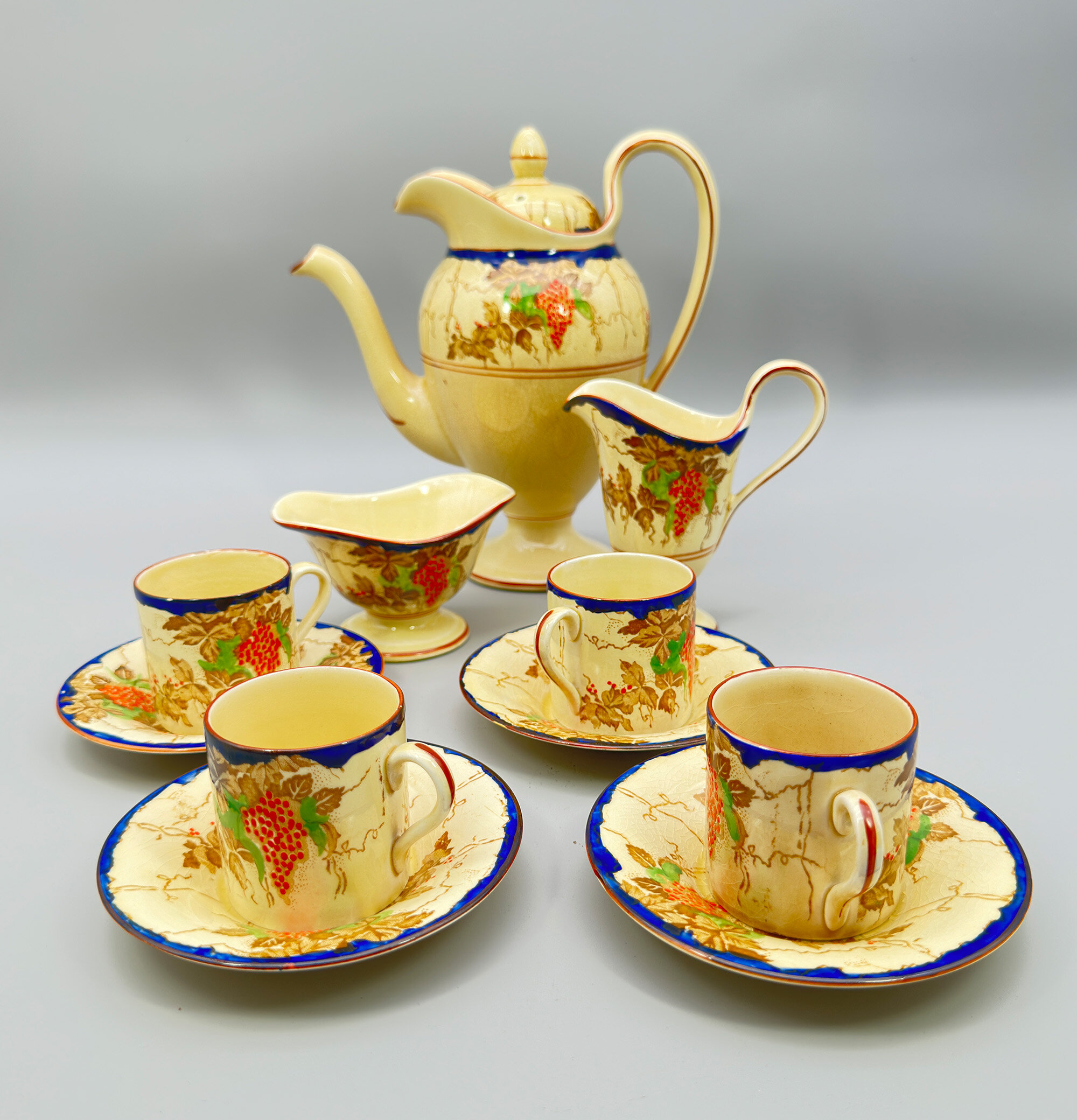
Bursley Ware Coffee Service, Bacchus pattern, 1920s
Price: £220Bursley Ltd was the creation of Frederick Read who, in collaboration with Harry Wood, bought the Crown Pottery works in 1920 and began manufacturing art pottery there under this new name. Previous to this Read had been employed as the Art Director for Wood and Sons, a firm which traced its origins back to the mid nineteenth century and of which Harry Wood, a descendant of the founders, was to become Chairman in 1921. Bursley Ltd, while independent, was a subsidiary of Wood and Sons who also had associations with other potteries in the area. Frederick Read was soon joined by his daughter Charlotte, whose designs became famous, but the designs and pattern here may well have been his own creation. Since the marks include the wording ‘registration applied for’, this service must have been one of Bursley’s first productions and it may have been taken over from Wood and Sons themselves since other pieces are found in identical shapes and decoration and titled ‘Bacchus’ but with a mark for H.H.&Co Ltd, the early name, used from 1913 to 1922 of the firm Hales Hancock and Godwin who were agents and retailers for various of the Staffordshire potteries including Wood and Sons.
There is, then, a slightly complex history here but we most likely have an early example of Read’s designs for his newly established business which went on, with the help of his daughter, to produce many innovative pieces of art pottery in the 1920s and 1930s.
Sizes
(i) Coffee Pot : Ht (max) 20.3cm, Width (max) 19cm, Depth (max) 10.5cm, Base 8cm (ii) Sugar Basin : Ht (max) 6cm, Width (max) 10cm, Depth (max) 7.5cm, Base 5.6cm (iii) Milk Jug : Ht (max) 11.5cm, Width (max) 10.5cm , Depth (max) 6cm, Base 5cm (iv) Coffee Can : Ht 5.2cm, Diam 5.2cm, Width (max) 7cm [One with three minute chips at the top] (v) Saucer : Diam 11.5cm, Ht 1.8cm, Base 4.5cm
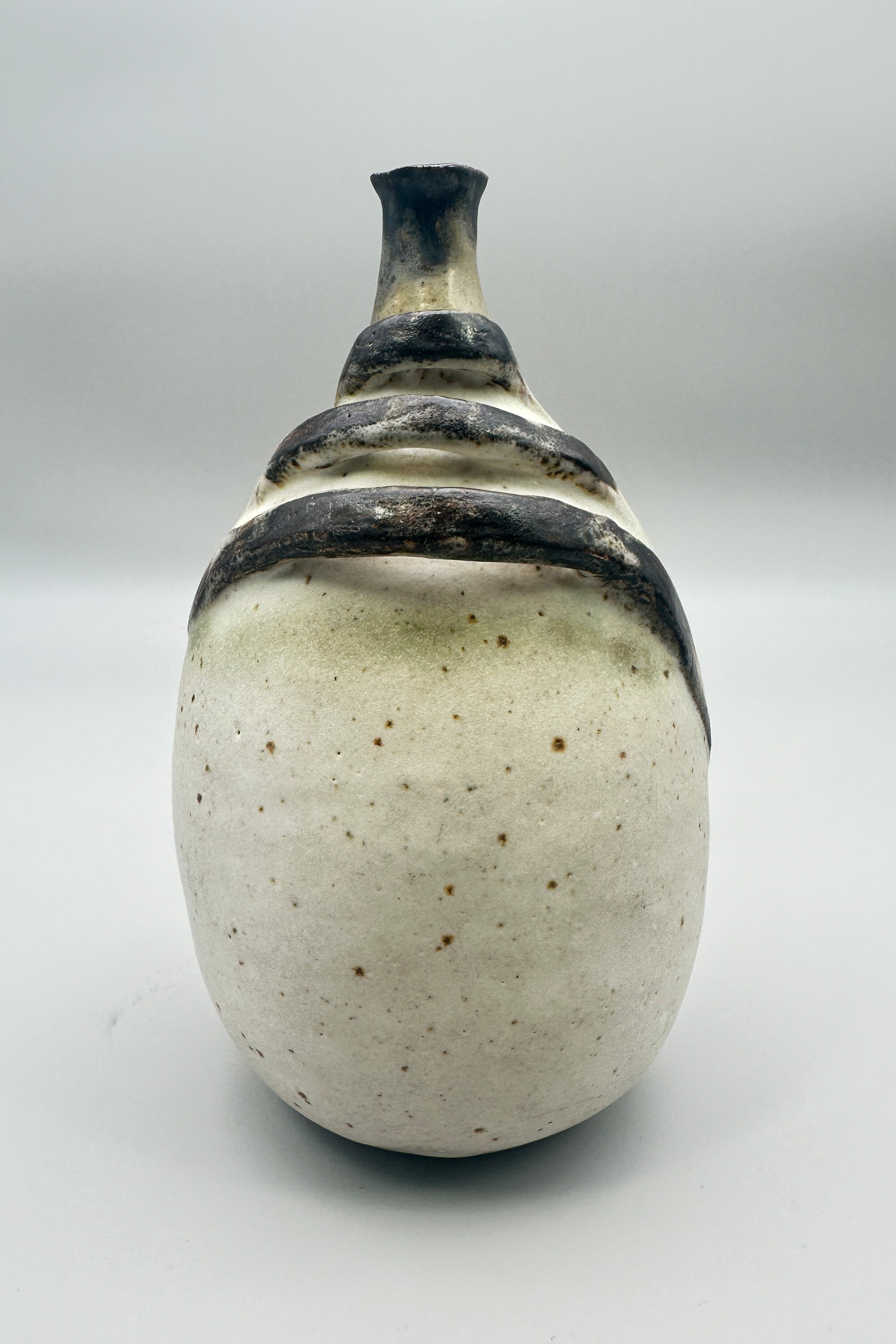
Abstract organic form Vase, Brenda Piper, Acorn Pottery, signed, late C20th
Price: £35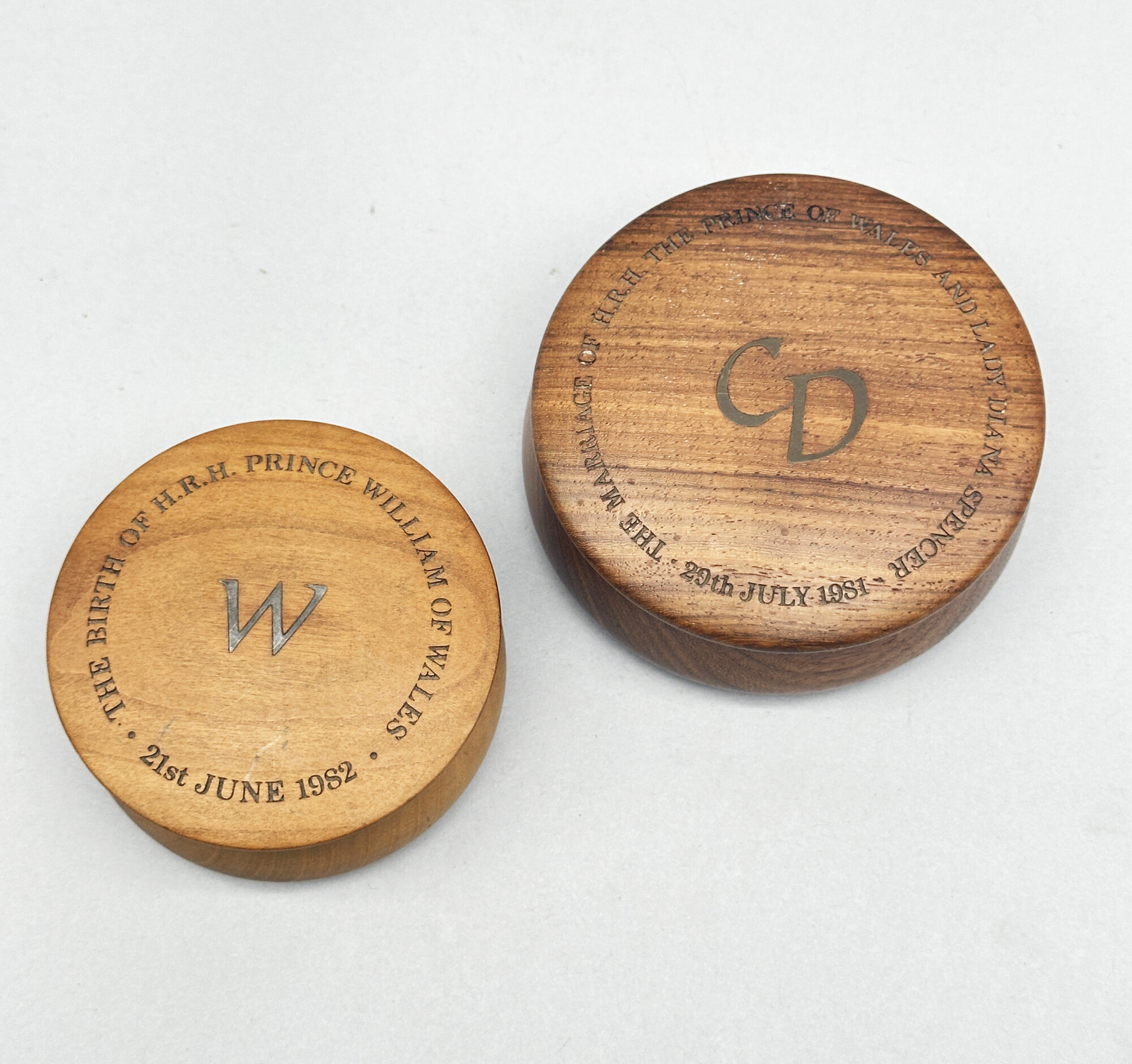
Two Wood Boxes : Marriage of Charles and Diana, Birth of Prince William, late C20th
Price: £15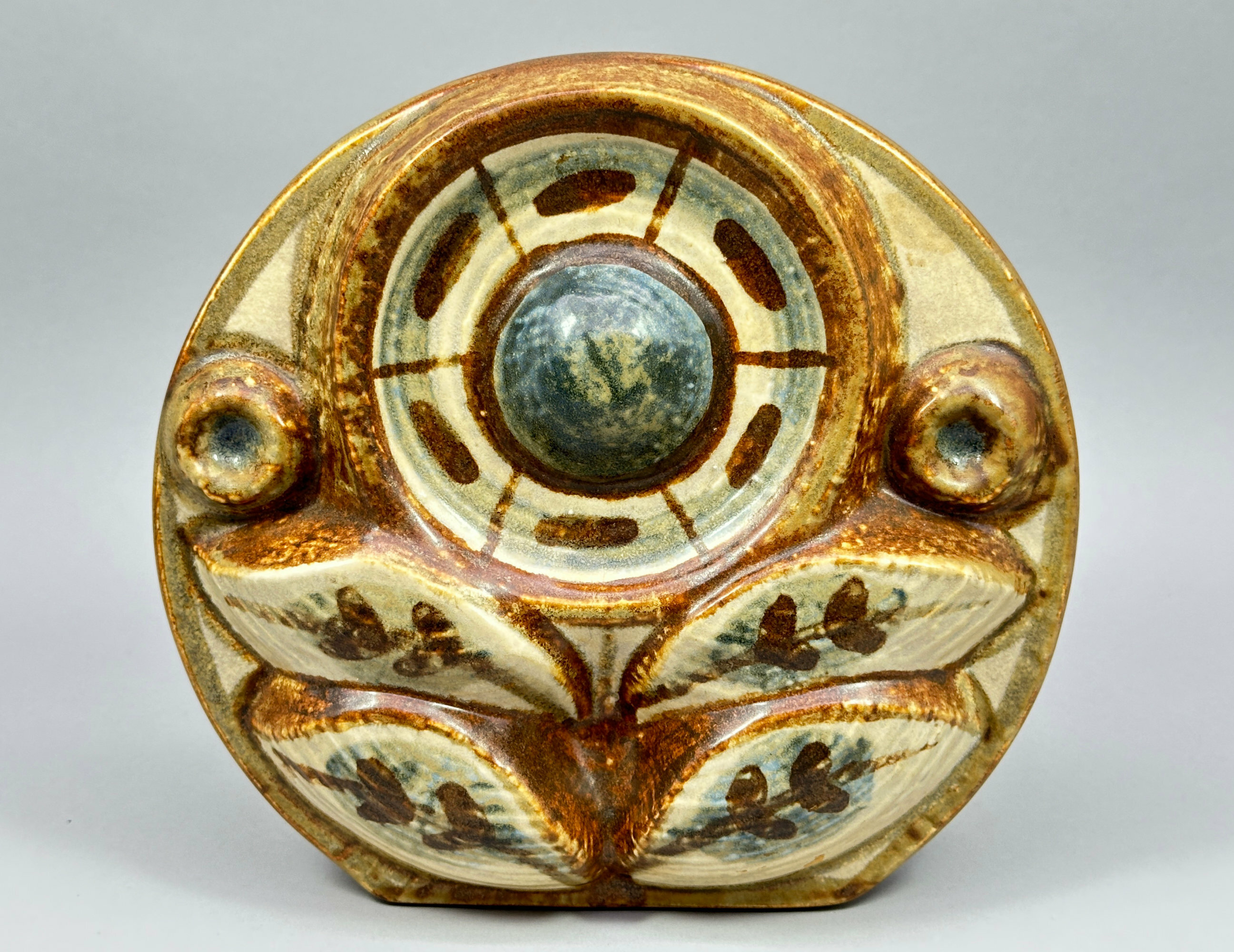
Wall Vase, designed by Noomi Backhausen, Søholm Stentøj, Denmark, late C20th
Price: £95The company Søholm Stentøj was founded by Herman Sonne Wolffsen and Edvard Christian Sonne in 1835 at Rønne, the principal town of Bornholm, a Danish island off the south coast of Sweden. One of the most respected of the Danish potteries it continued producing a wide range of ceramics until the firm closed in 1996. Noomi Backhausen was a designer for Søholm from 1966 to 1990 and set up her own pottery in Rønne in 1996 after the closure of her old employers. This wall vase is a typical example of her abstract organic designs and would be a worthy addition to a collection of twentieth century Danish design.
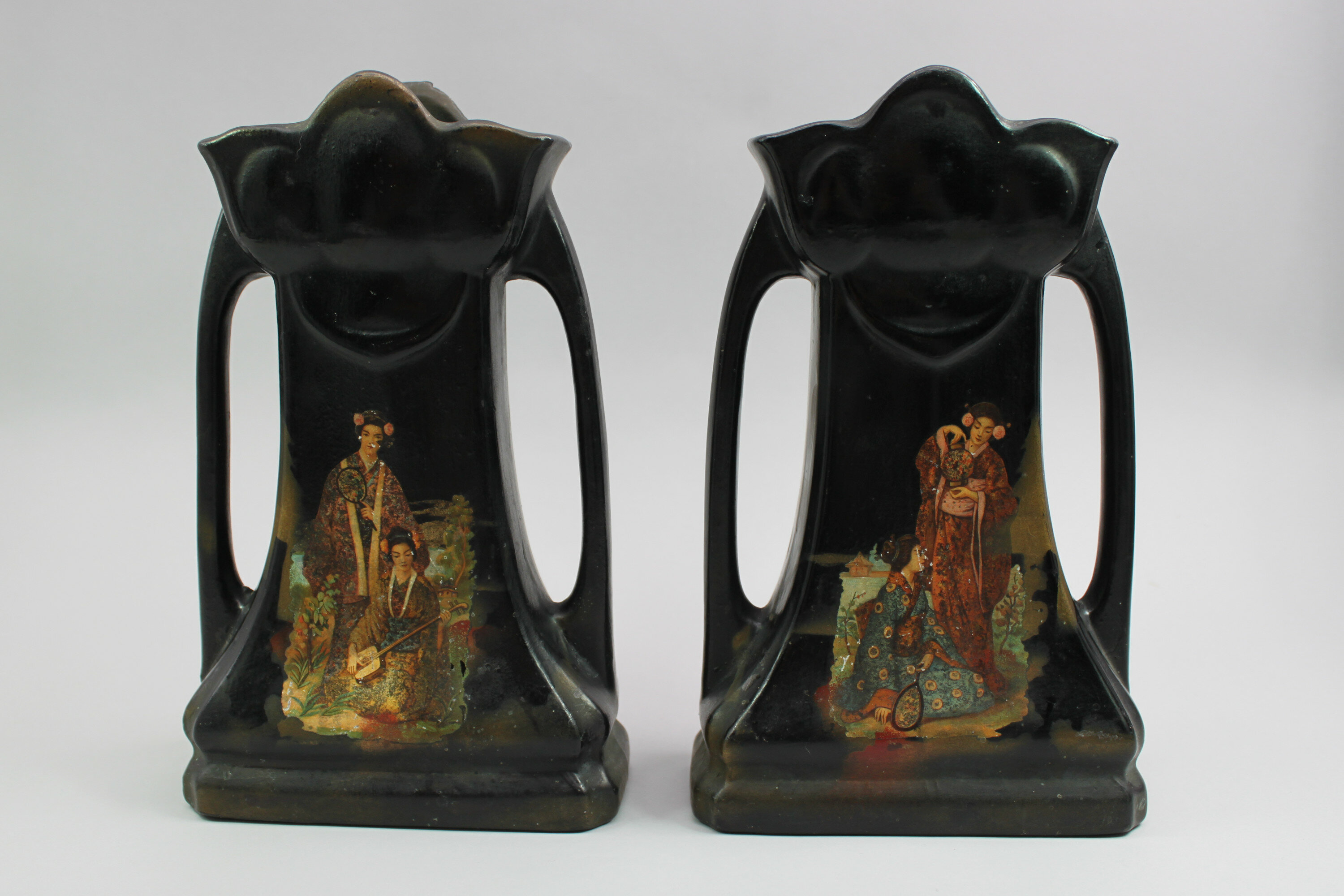
Pair of Art Nouveau Style Ceramic Vases decorated in the Japonaiserie Style, 1930s
Price: £45While Art Nouveau in form and decoration (Japanese inspired designs were very much a feature of the style), these vases probably date to the 1930s when Staffordshire potteries were producing affordable items for interior decoration in a range of imitation styles. There are no direct parallels for the mark on these vases but the type of ware here is very similar to pieces made by the 'Brentleigh' factory, Stoke on Trent, in the 1930s and a similar date and area of manufacture is the most likely.
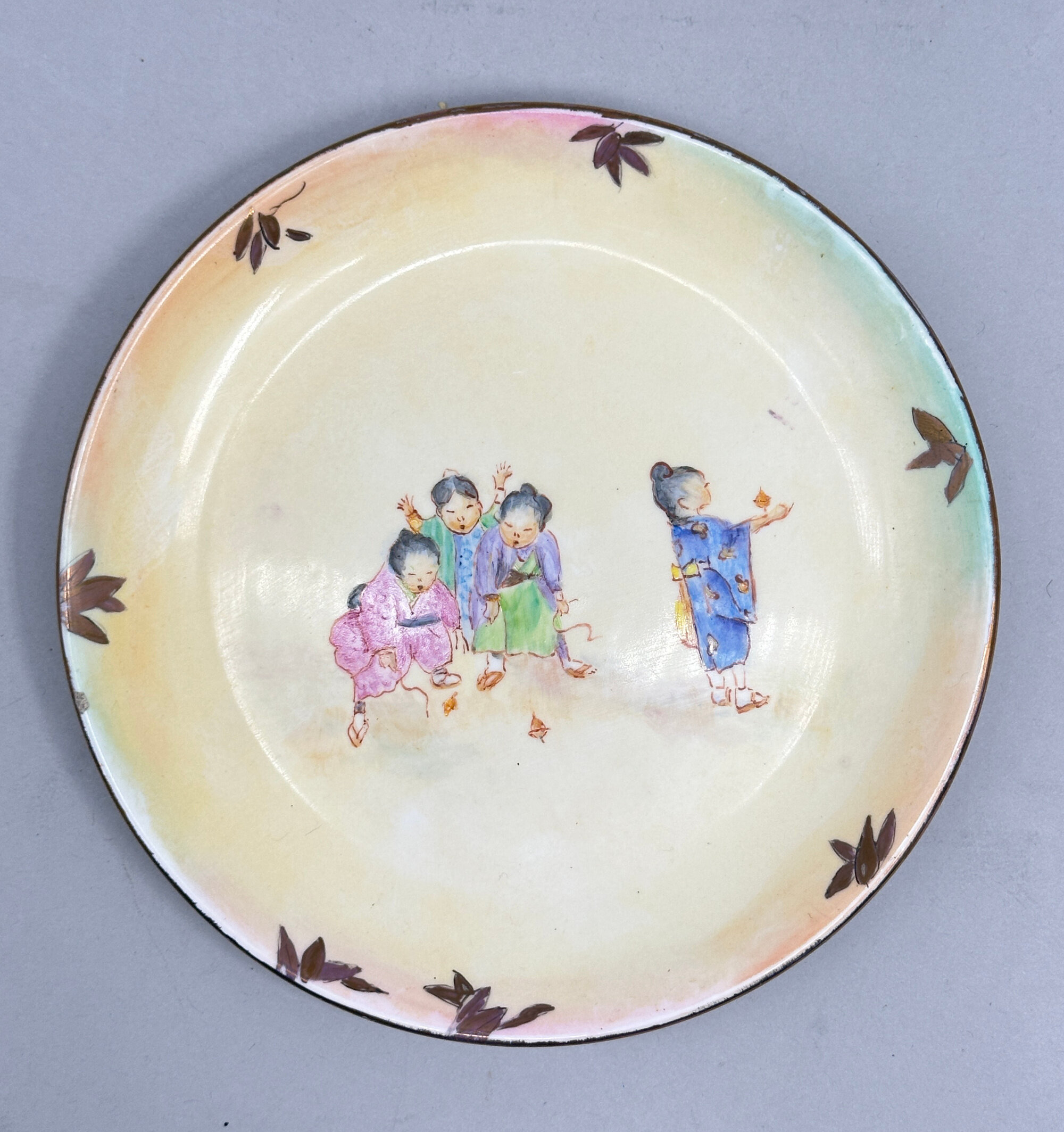
Oriental style ceramic plate, signed Alice Smith, possibly American mid C20th
Price: £20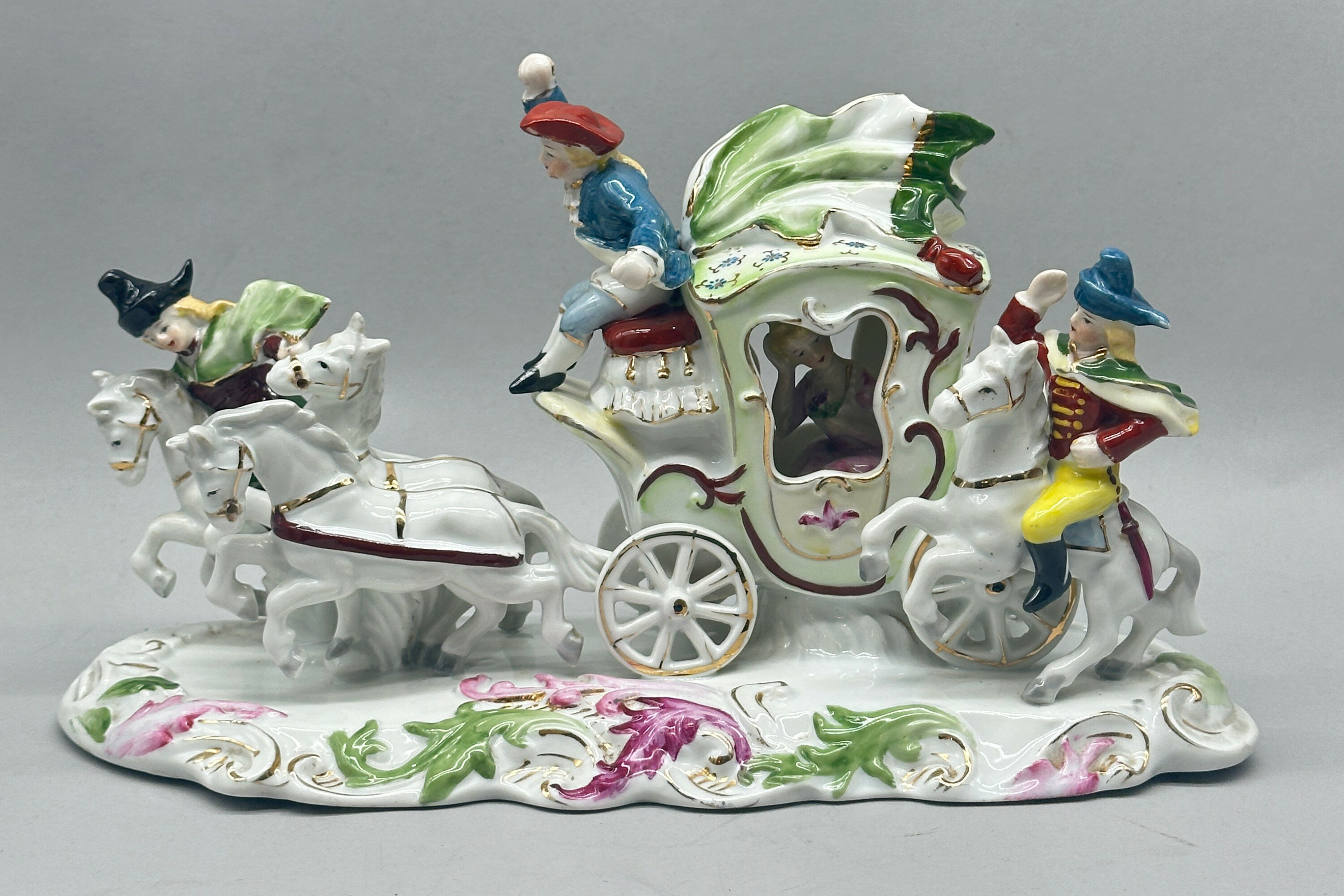
Dresden style model of a Coach and Horses, probably German early C20th
Price: £75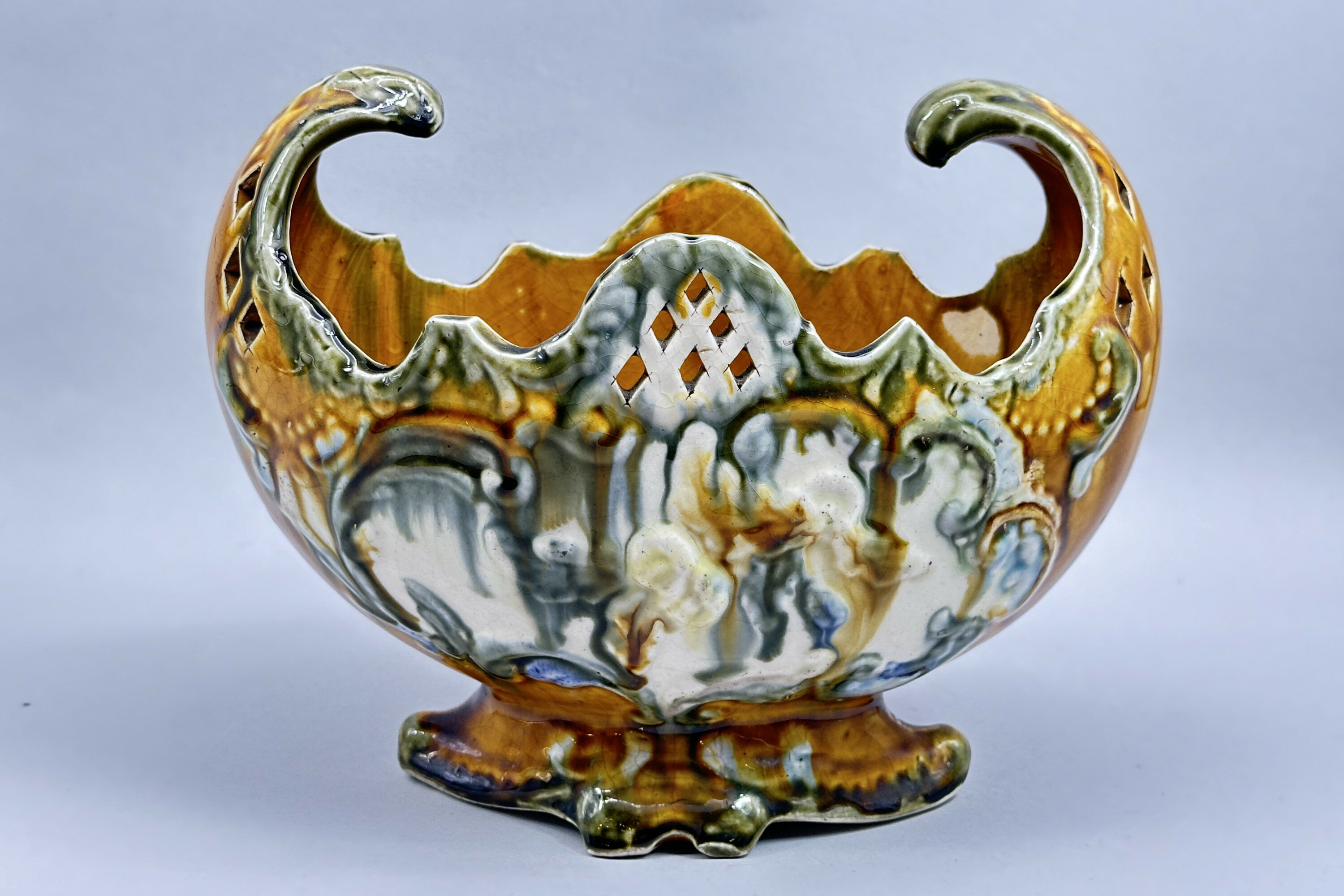
Majolica Style Jardiniere, French, circa 1900
Price: £55This is a French interpretation of the ‘Majolica’ style which became so popular, particularly in England in the second half of the nineteenth century. A very distant relation of the tin glazed Italian and Spanish wares which share the name, nineteenth century majolica employed a wide variety of brightly coloured glazes applied to elaborate forms some of which had a slightly ‘classical’ feel and some a reflection of ‘rococo’ designs. The paste and glazes here suggest France, which produced various pieces in the ‘majolica’ style and dating is probably to the end of the nineteenth century.
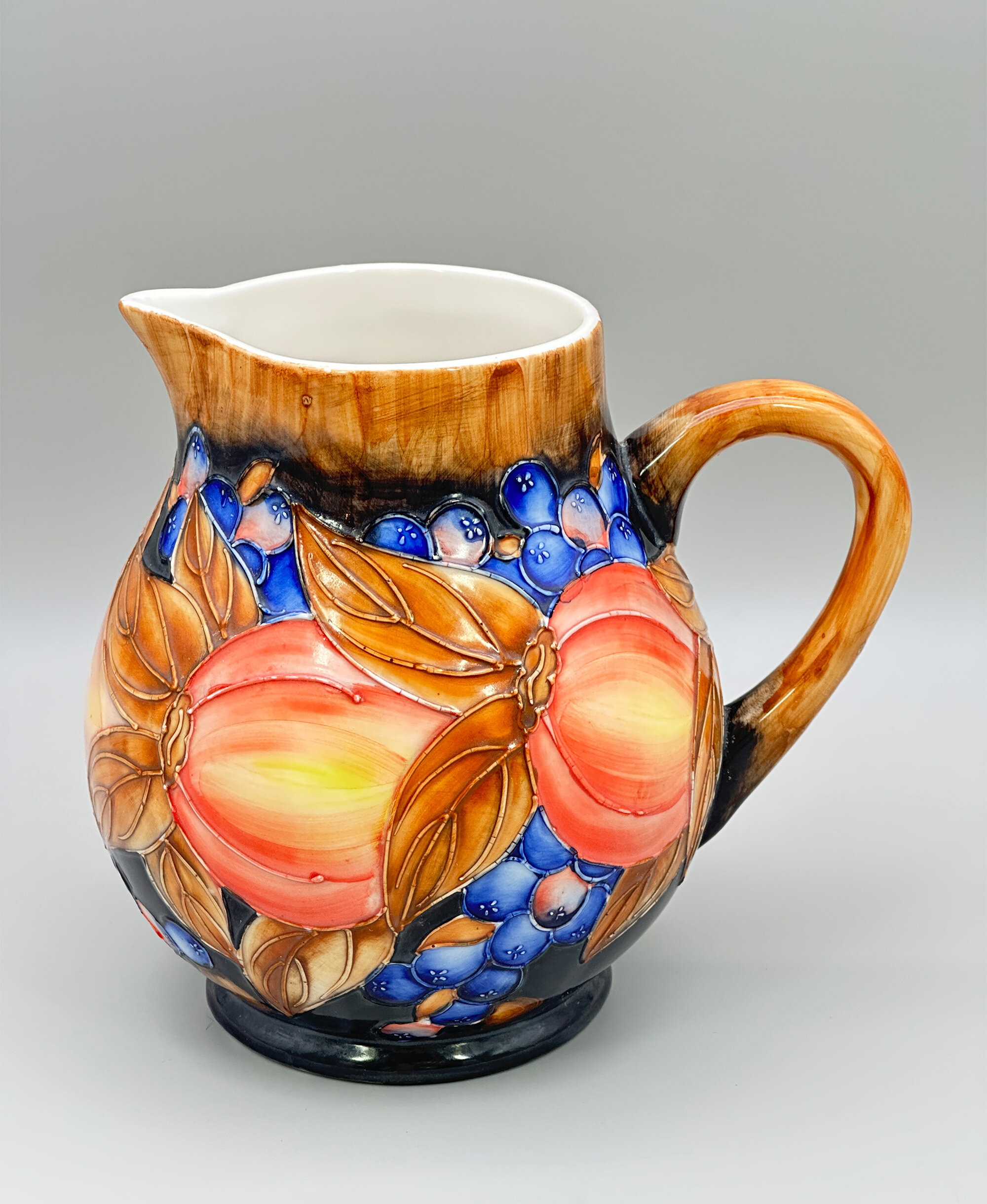
Old Tupton Ware jug with tubular floral design, Crown mark, early C21st
Price: £30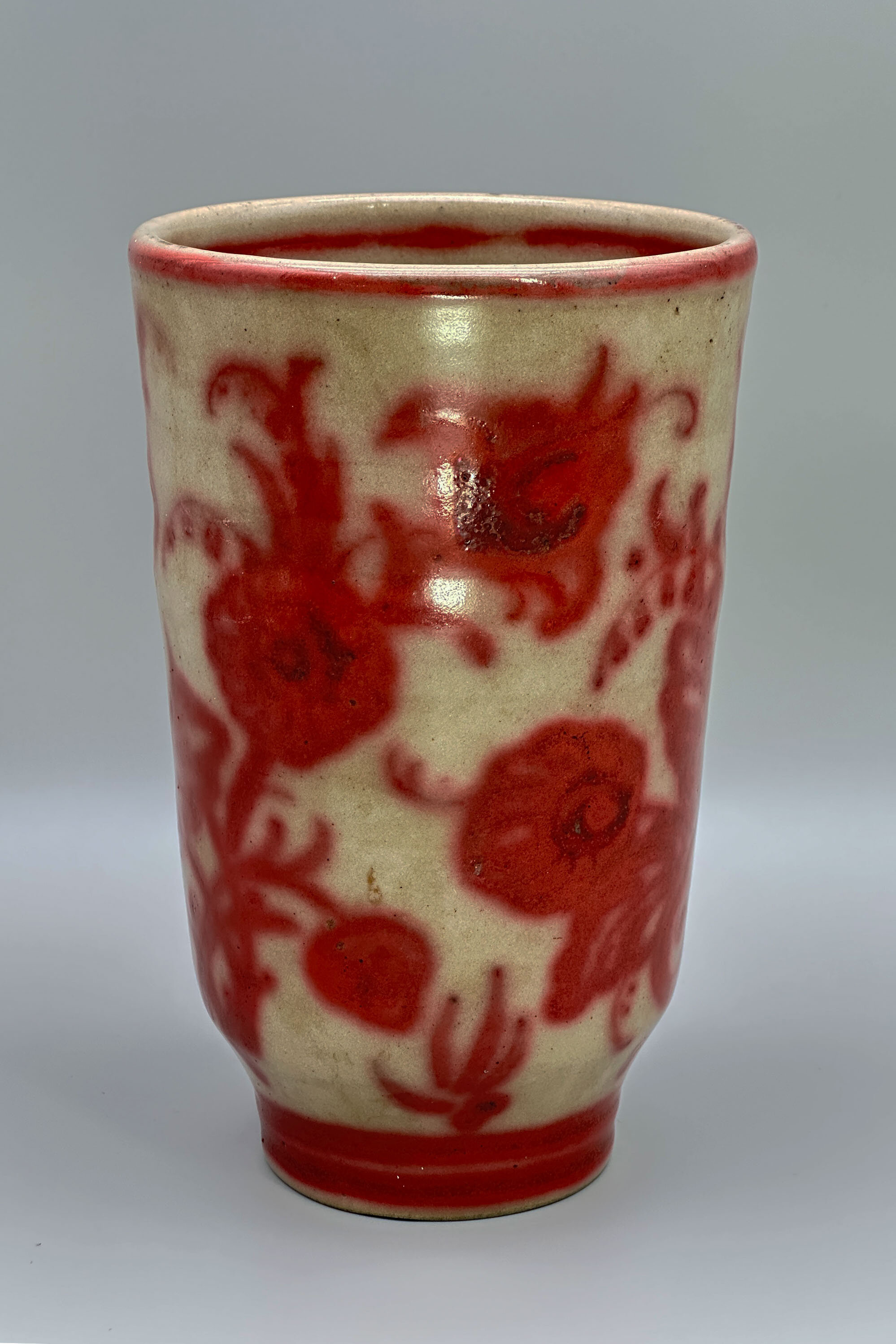
Stoneware Beaker Vase, copper red decoration, Hans Hjorth, signed, early C20th
Price: £95The firm L.Hjorth is a long established Danish ceramics manufacturer with a history extending back to the mid nineteenth century when the potter Lauritz Hjorth, after serving an apprenticeship at the the Faience factory of Edvard Chr. Sonne and travels abroad, founded a business in his own name in 1859 at Ronne on Bornholm, a Danish island in the Baltic Sea. Success was almost immediate and the firm moved to larger premises three years later concentrating their production on decorative items which by the 1880s were being sold in the big department stores of Paris, London and Berlin, as well as in New York and Australia. Lauritz Hjorth was joined by his children who took over the factory following his death in 1912. The business was to continue for another two generations and two great granddaughters still run today a working museum devoted to the firm’s products.
The abstract mark on the base below ‘L Hjorth’ can be read as ‘HA’ and is found on other pieces, usually accompanied by a model number as here (‘23/41’). It stands for Hans Adolf Hjorth (1878-1966), one of Lauritz Hjorth’s sons, who is known to have fired his first stoneware in 1902. His pieces were sold in his Father’s shop and were very popular, meriting a gold medal at the World Exhibition in Brussels in 1910. A stoneware series in greyish brown was produced from 1913 onwards and this is most likely what we have here (source : Danish House Trading). Certainly, the absence of a reindeer mark, later commonly to be found on L.Hjorth pieces, indicates a dating before 1927 when it was first introduced. Marked pieces in this glaze and colourings are not so often found and especially not in this larger size making this beaker vase a highly desirable collector’s item.
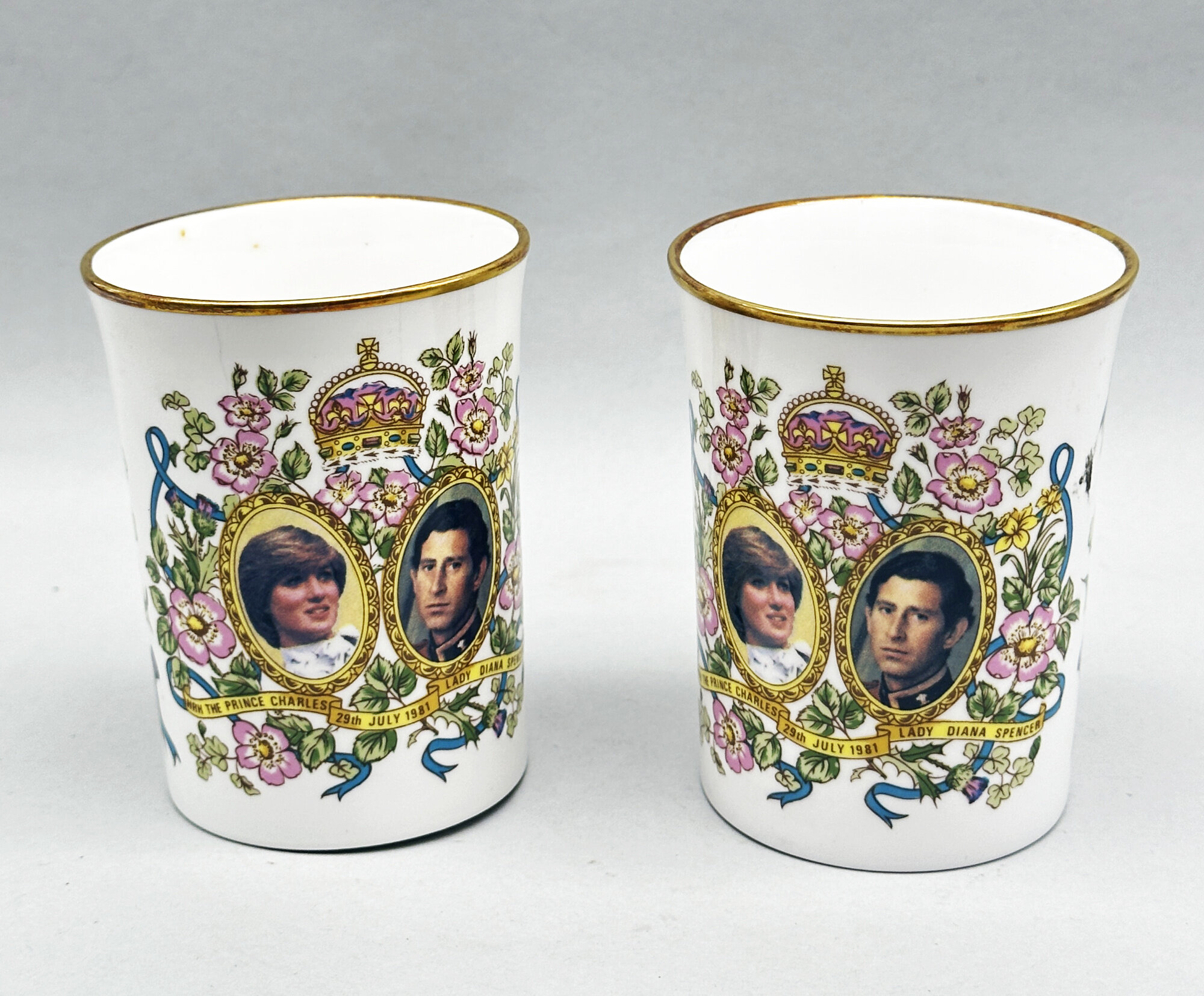
Two Beakers : Wedding of the Prince Charles and Lady Diana Spencer, 1981
Price: £15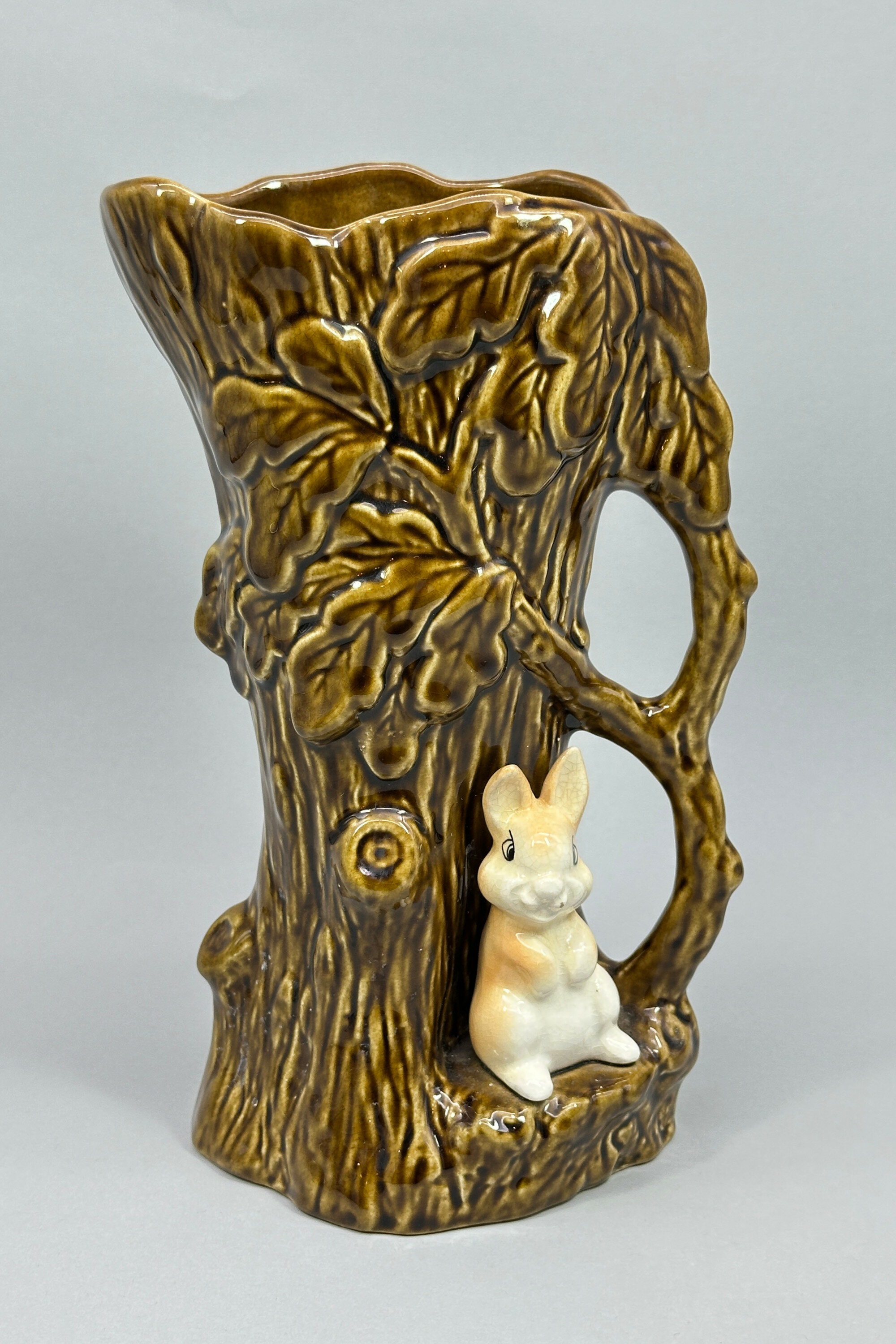
Sylvac woodland range Rabbit and Tree Jug, 1950s
Price: £35‘SylvaC’ (the name was written with a capital ‘C’ after registration of the trademark in 1938) was a trade name of Shaw and Copestake, a company formed by Mr. William Shaw and a Mr. Copestake around 1900. Mr. Copestake sold his shares to a Mr. Richard Hull after about six months of business and this partnership continued until Mr. Hull’s death in 1935. He was succeeded by his son, Mr. Richard Hull junior. In the following year, the business became a limited company. Various mergers and acquisitions followed and in the 1950s new premises were built and production expanded considerably continuing until the early 1980s when changing markets and increased competition forced the company into liquidation.
Sylvac were famous for imaginative glazed wares, particularly animals, and this jug is a typical and pleasing example of their work.
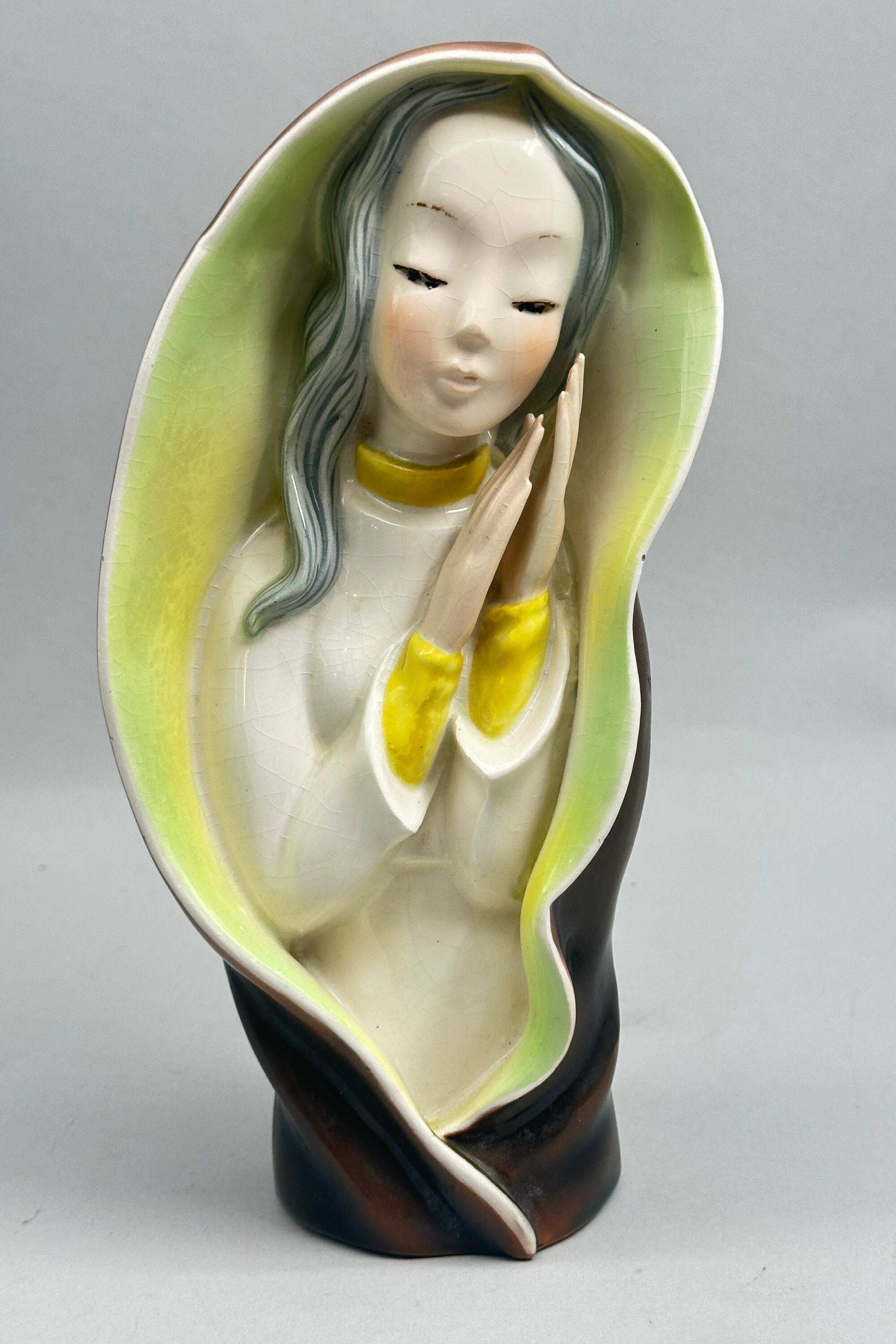
Figure of a Young Girl Praying, Continental, probably mid C20th
Price: £55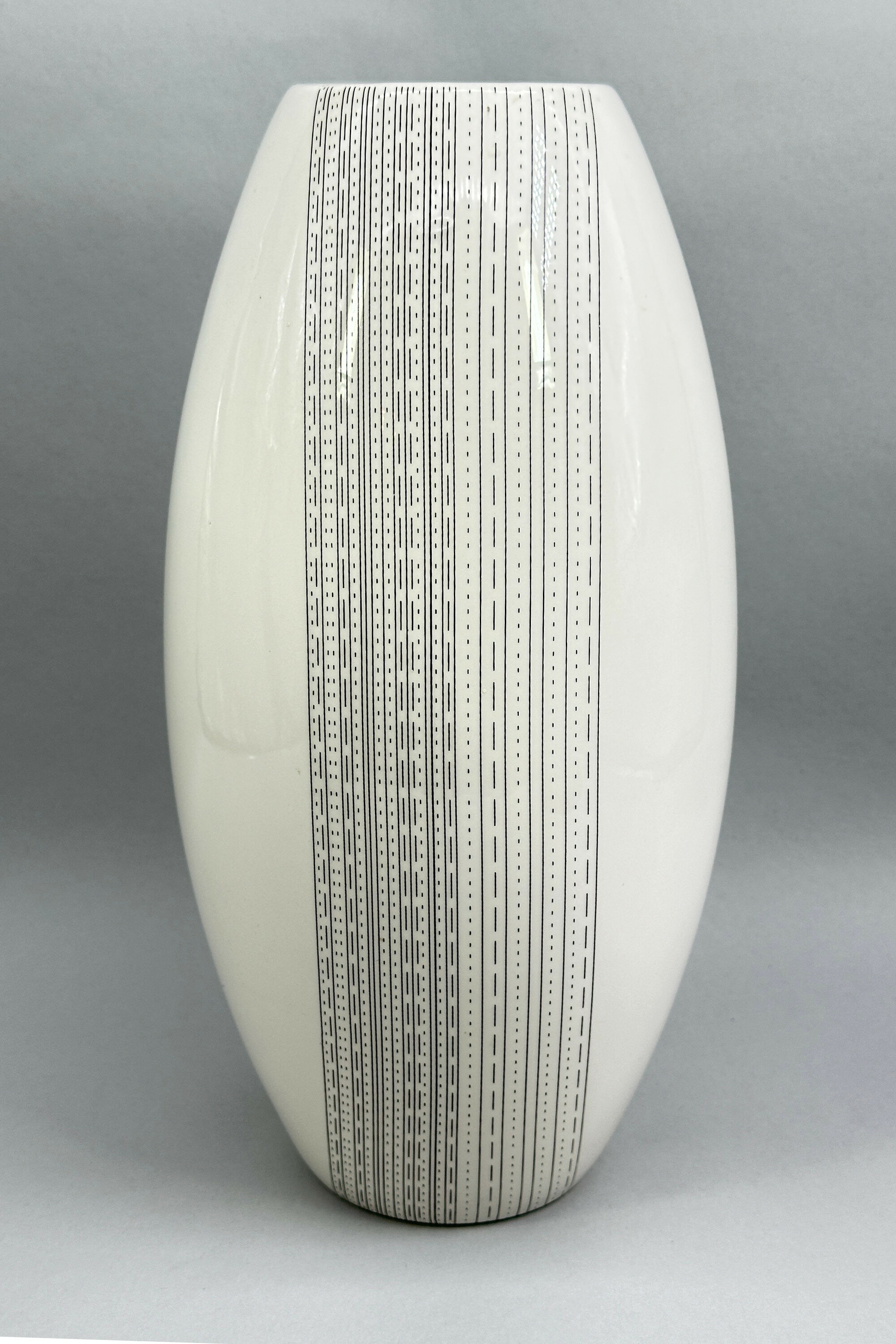
Abstract Design White Glaze Vase, probably British mid C20th
Price: £25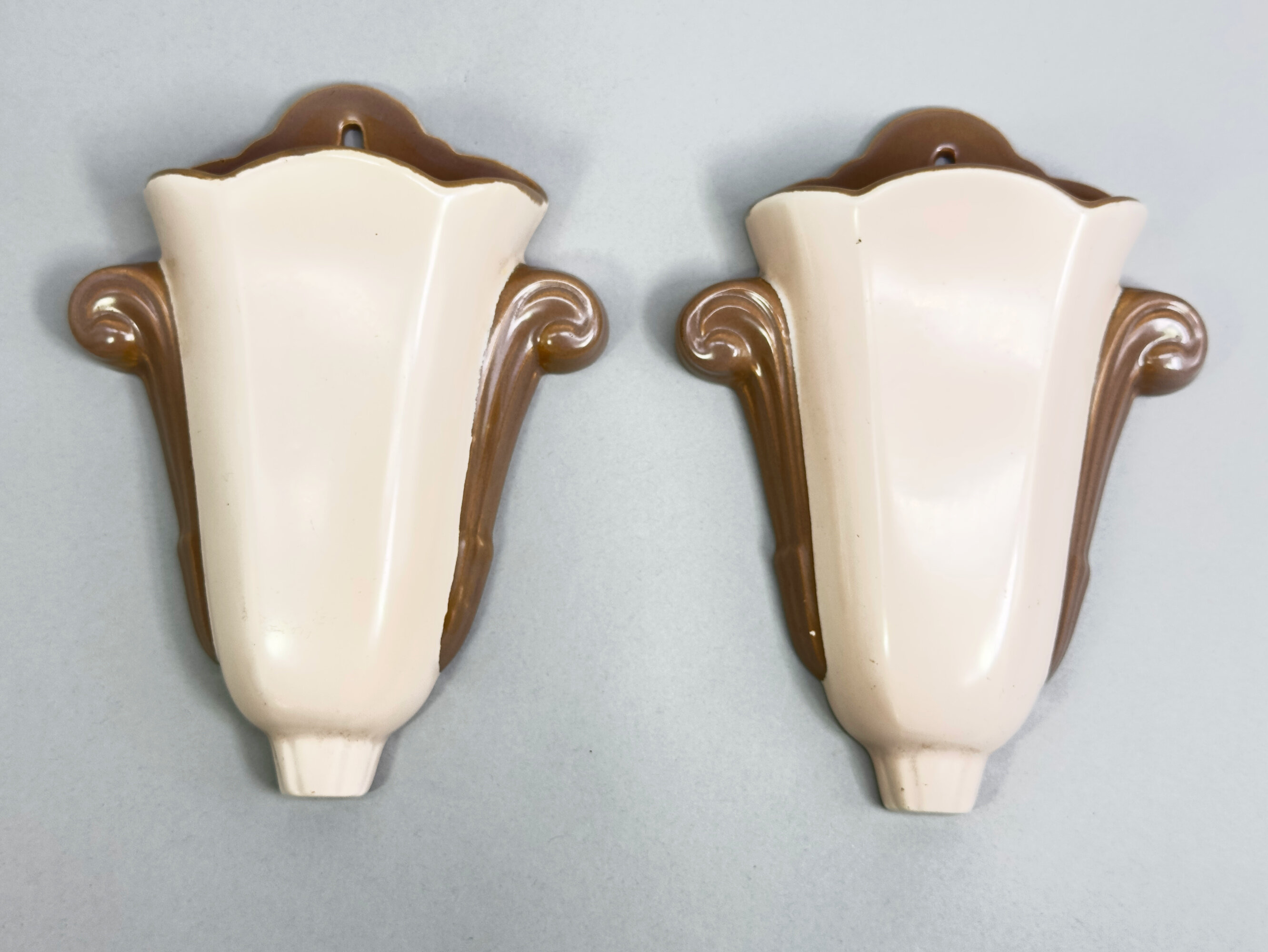
Pair of Art Deco style Wall Pocket Vases, Poole Pottery, mid C20th
Price: £55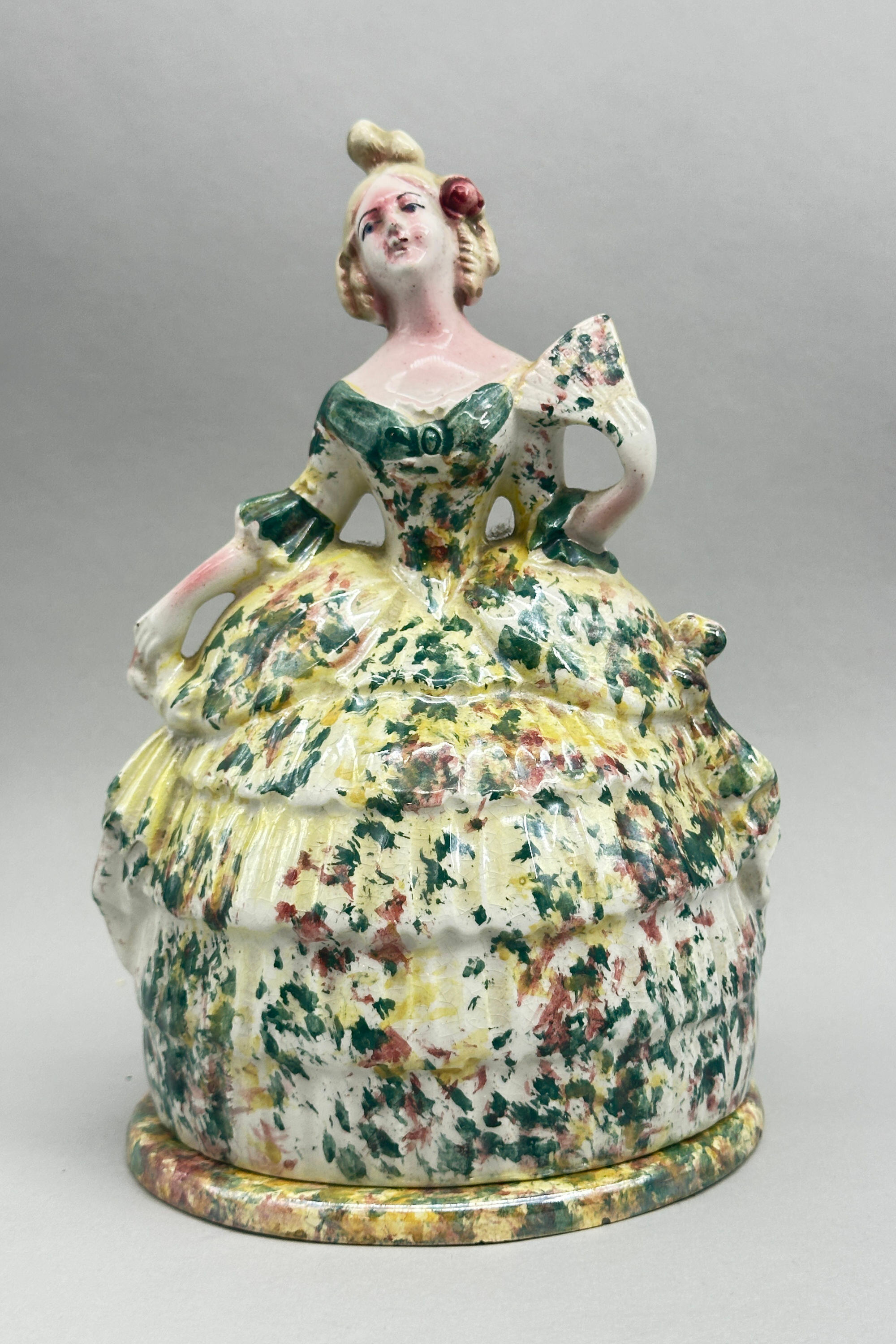
Lustreware Vanity Box, Lady in Crinoline, probably continental early/mid C20th
Price: £35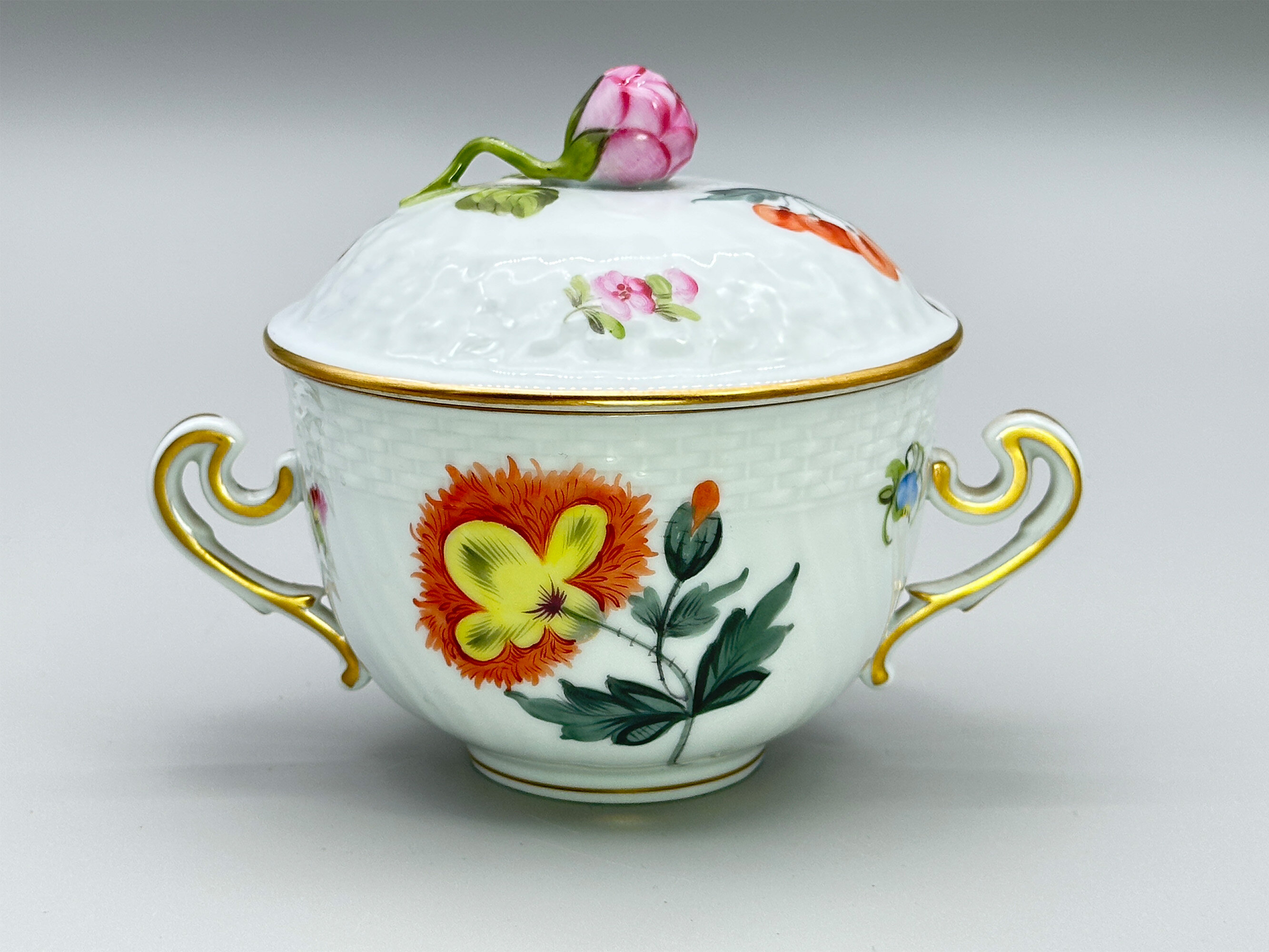
Herend écuelle and cover decorated flowers, marked, late C20th
Price: £75This écuelle and cover, possibly intended as a sugar bowl, was made by the Herend Porcelain factory. Founded in Hungary in 1826 it almost immediately enjoyed enormous popularity with wealthy customers including members of the European aristocracy. Production continued into the twentieth century through nationalistion in 1948 and reprivatisation in 1993 and continues to the present day. The designs produced in recent years often copy those of an earlier period and this is most likely the case here where resemblances can be seen to the nineteenth century productions from Meissen. The format of the mark indicates a fairly recent date of manufacture, probably in the later years of the twentieth century, but the quality of the execution is in no way diminished and the modelling of the finial in particular of the highest standard.
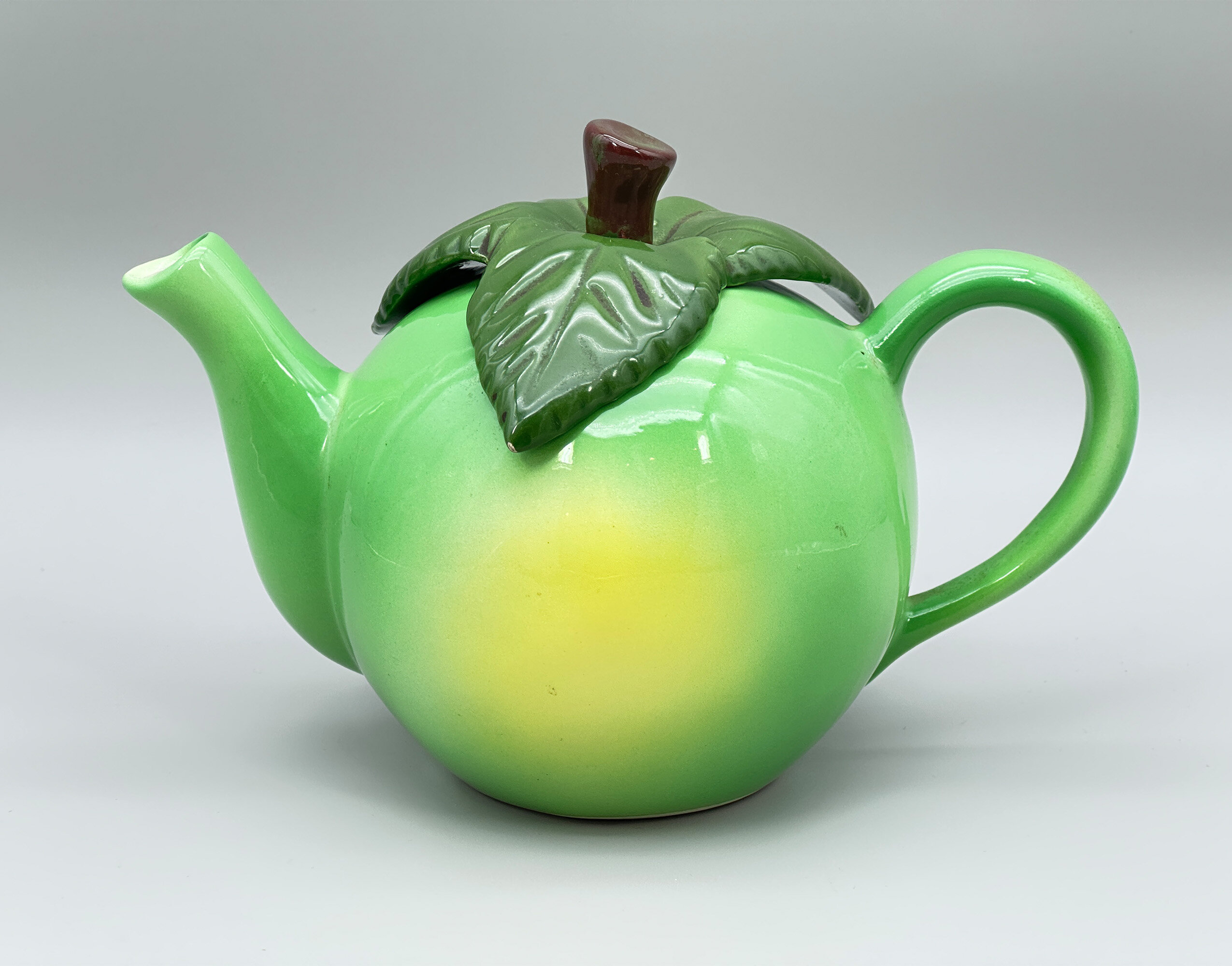
Novelty Teapot in the form of an apple, probably English, late C20th, early C21st
Price: £35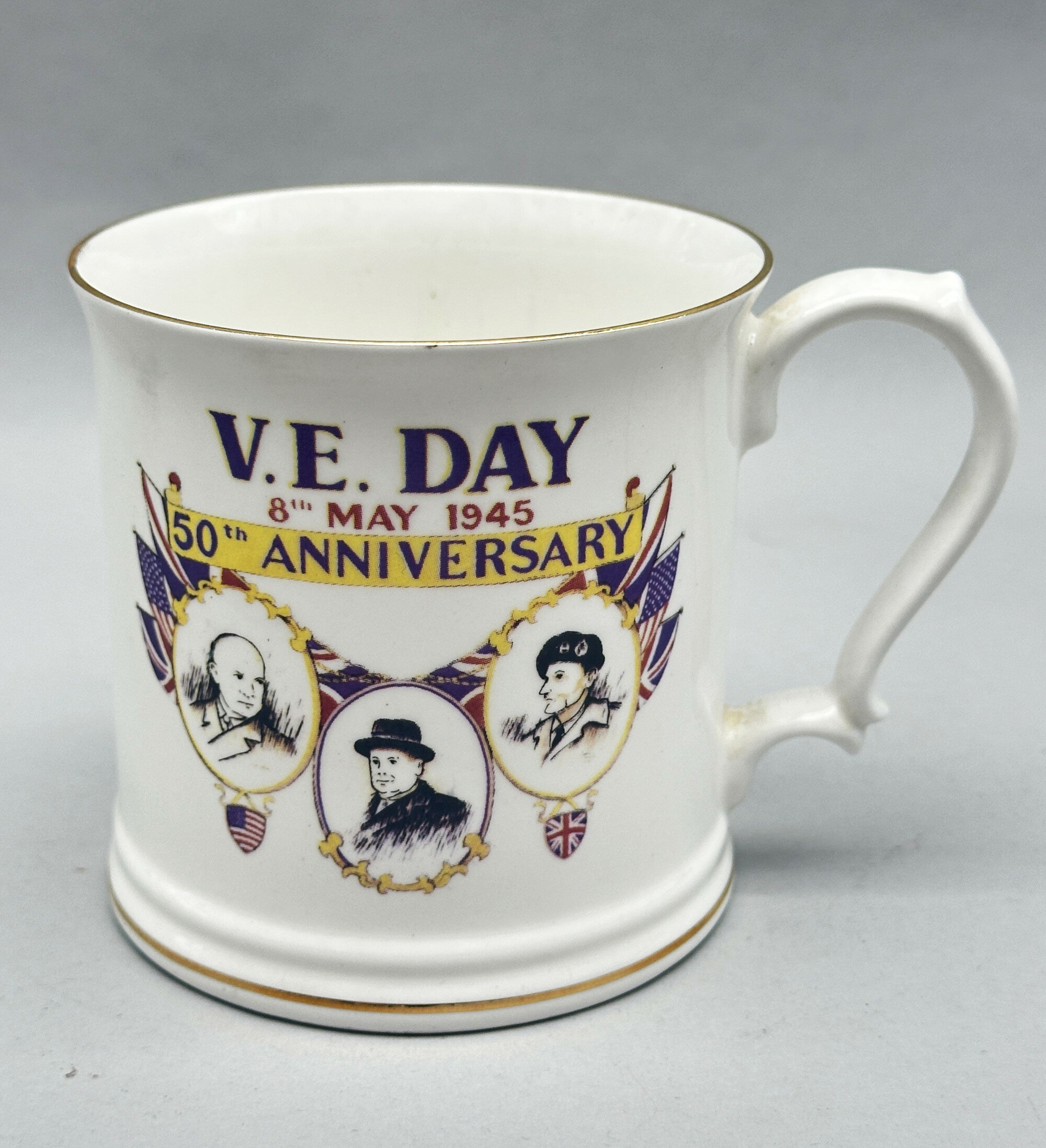
VE Day, 50th Anniversary Commemorative Mug, 1995
Price: £10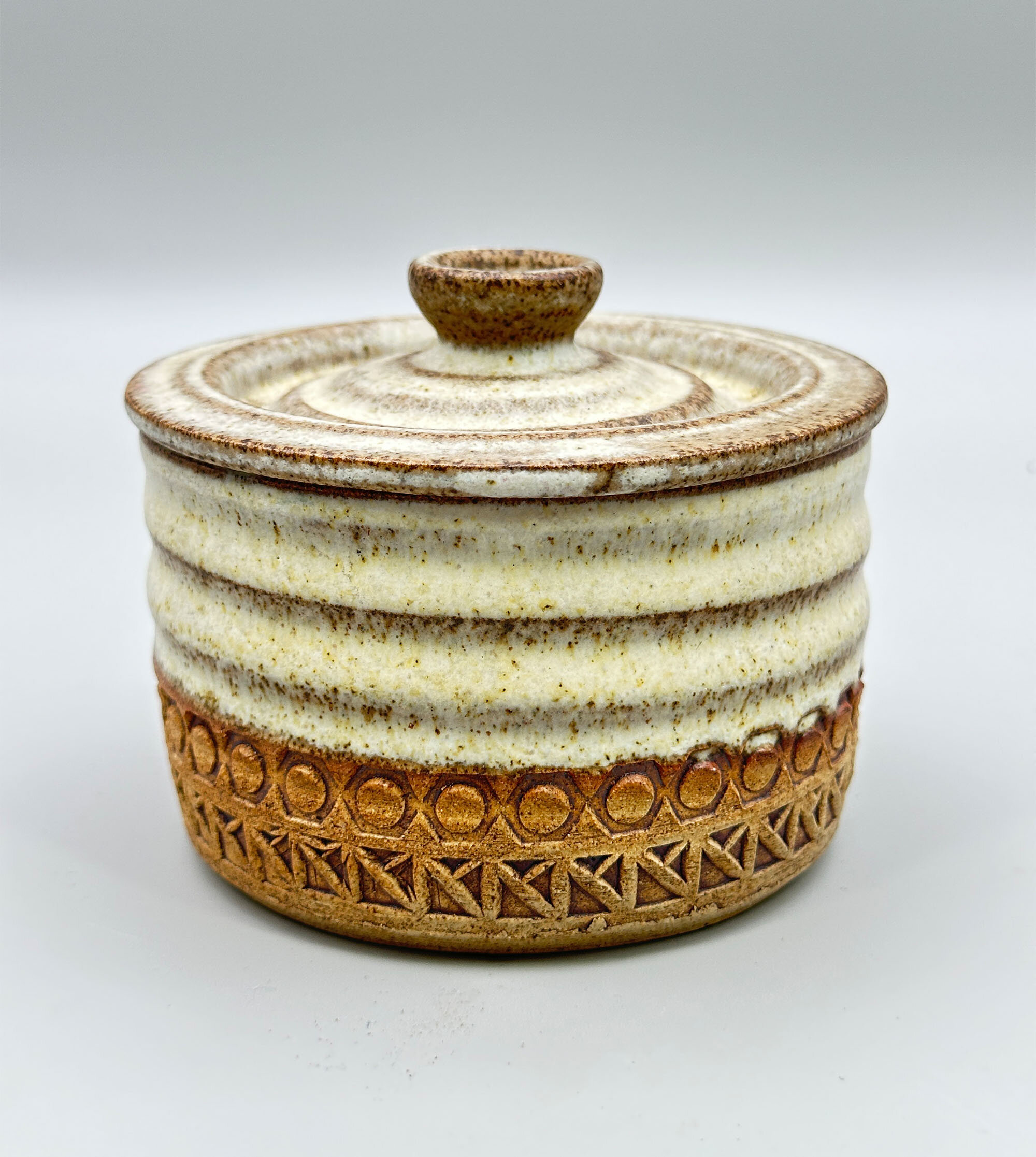
Broadstairs Pottery Bowl and Cover, signed, 1968-1983
Price: £45Broadstairs Pottery was founded by David White in 1968 as a successor to an earlier firm Thanet Pottery. For the mark, see ‘British Studio Potters’ Marks’ by Eric Yates-Owen and Robert Fournier (2nd edition 2005 p534). White worked there with assistants, some of whose initials appear on the pieces produced, until 1983 when he closed to business to concentrate on his own work, an example of which can be seen elsewhere in this sale. Both the incised geometric bands and the pronounced ridging effects are hallmarks of the firm’s output and this bowl and cover, marked only with the factory name, is a classic example of its productions.
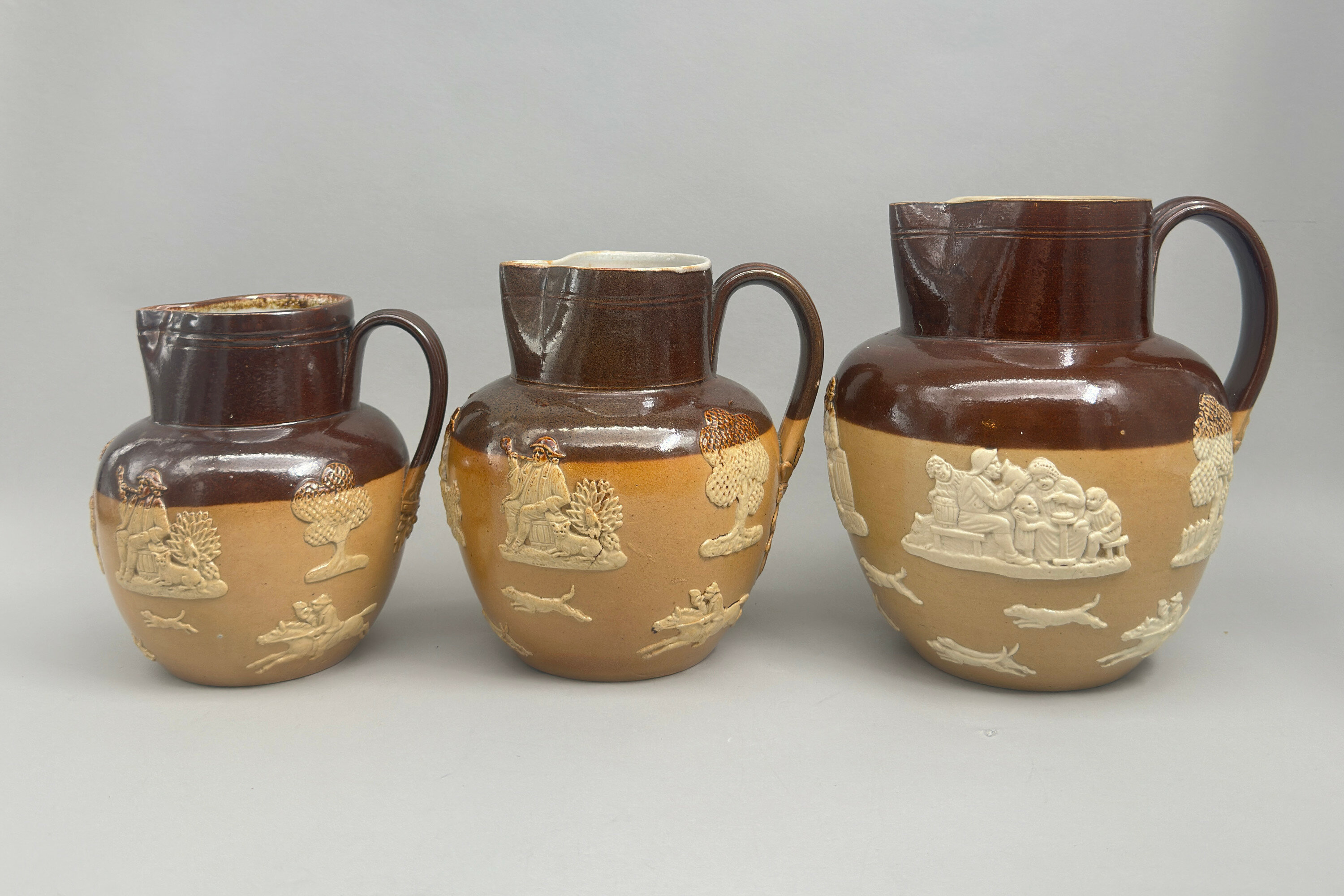
Graduated set of three Royal Doulton Harvest Pattern Jugs, early C20th
Price: £150While this model, often called the ‘harvest pattern’, is found quite often, it is very unusual to see a graduated set of three, all matching. The form of the mark, where the lion does not sit above a crown, was used between 1922 and 1927 which gives us the dating here. The largest jug carries the letter ‘a’ which was a decorator’s mark and stands for Louisa Ayling. Perhaps she worked on all three, but this must remain a guess although the quality of the work on all three is quite consistent producing a highly decorative and attractive ensemble.
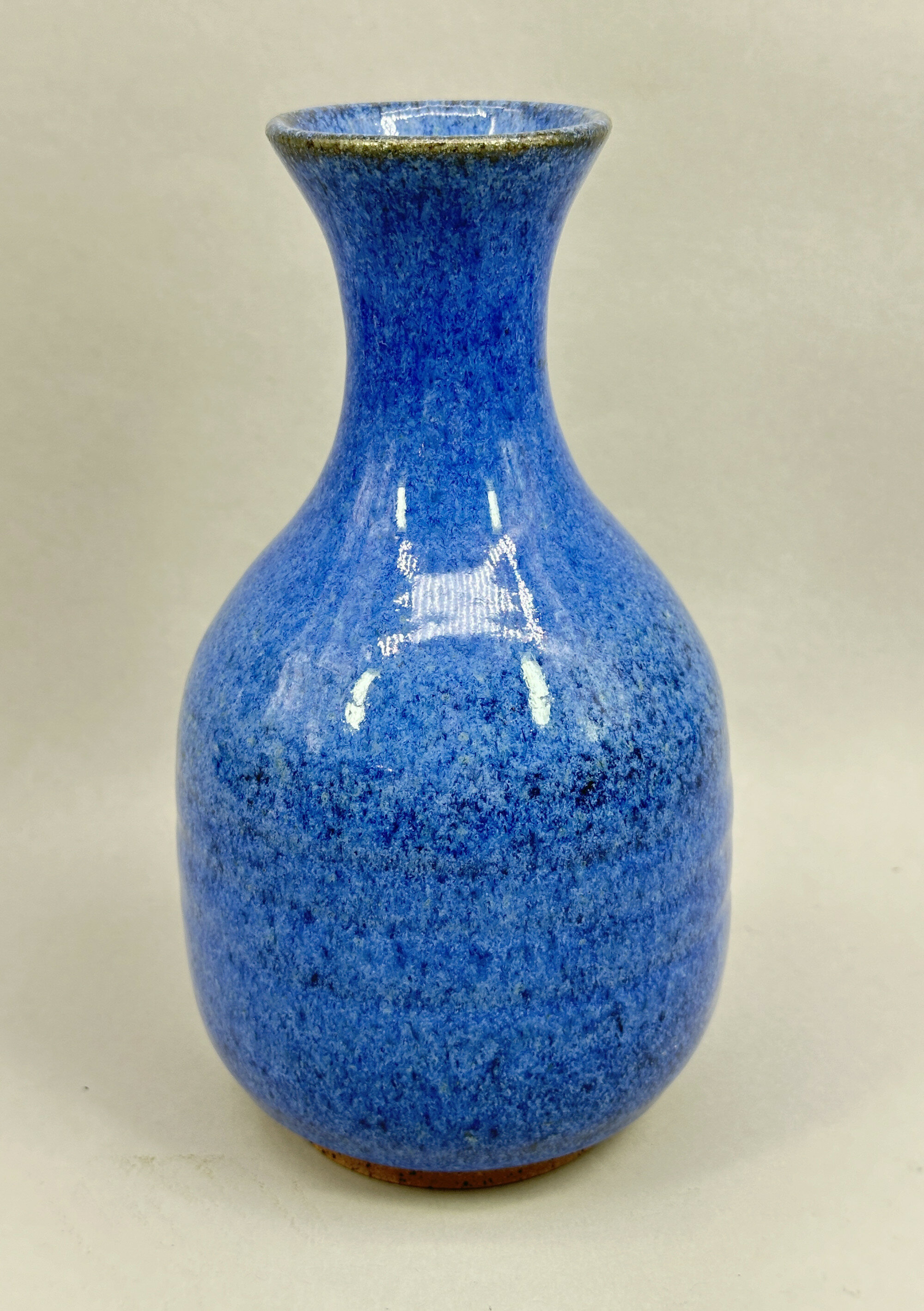
Studio Pottery Vase with Robin’s Egg Glaze marked Zambia
Price: £25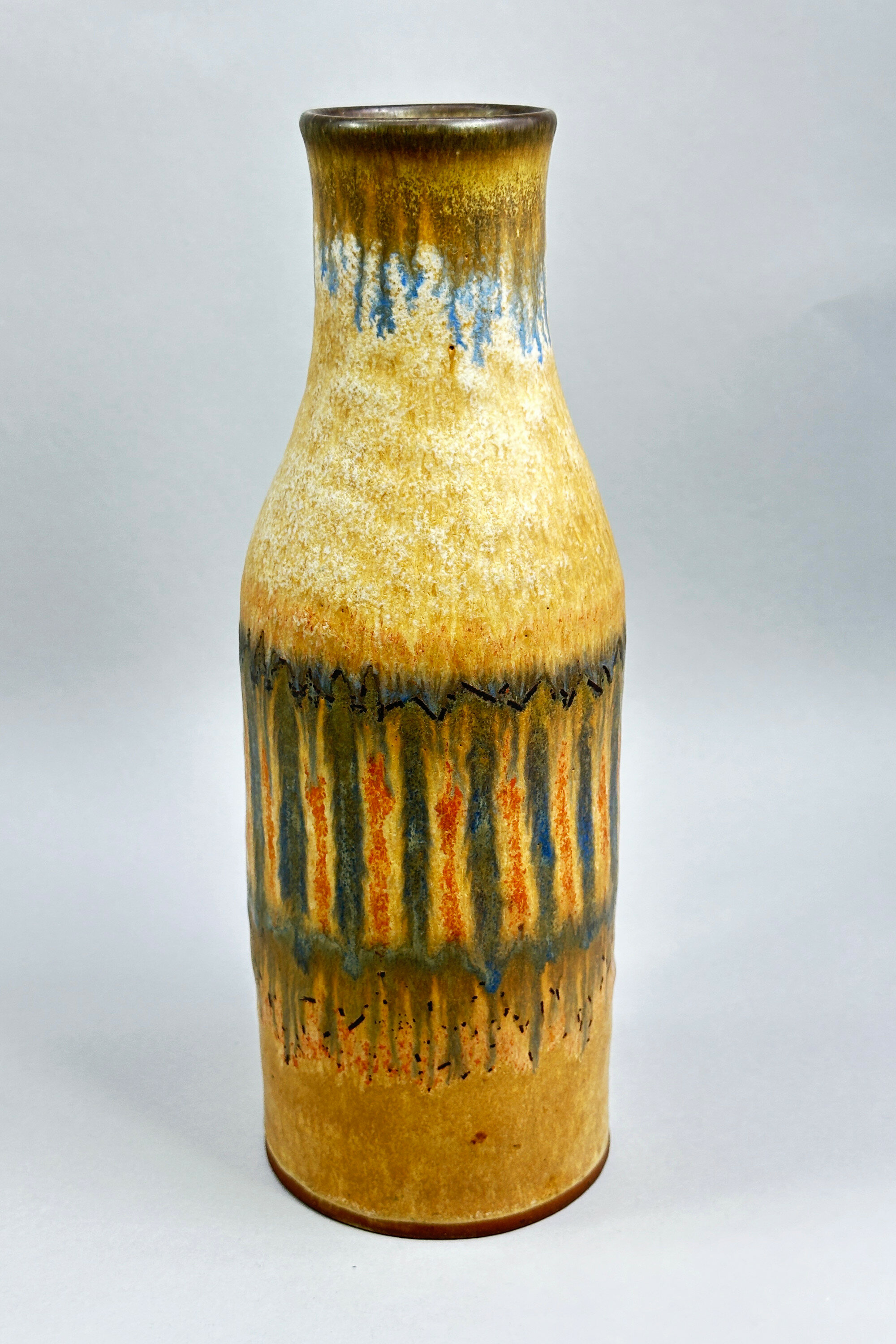
Studio Pottery Vase signed Kamini, Greece, 1970s
Price: £45Although ‘Kamini’ is both the Greek word for a kiln and the name of a village on the Greek island of Hydra, it actually stands here for the Greek firm of that name whose registered office was at Kallithea, a suburb of Athens. The Kamini pottery produced a wide range of appealing but often slightly rustic wares in the 1970s, many with the splash glaze effects we see here and all stamped with the firm’s name. This vase stands out somewhat for the simple lines of its form and the variety of effects in its decoration with a particularly pleasing palette of colours and demonstrates that this Mediterranean pottery could well rival at times the work of some of its European competitors.
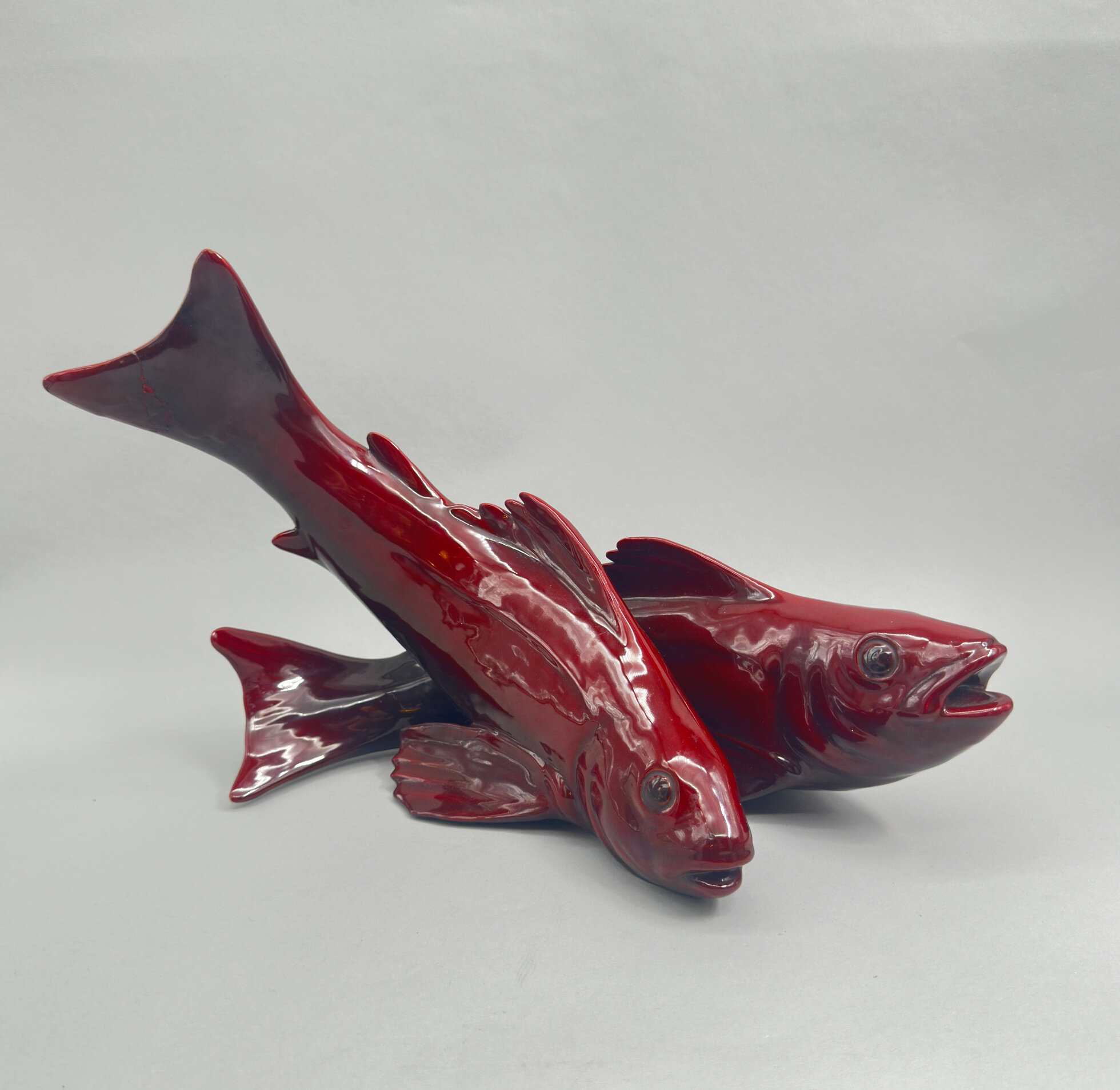
An Art Deco ceramic group of two Fish by Guido Cacciapuoti, signed, 1930s
Price: £150Guido Cacciapuoti was a celebrated Italian ceramicist. Born in Naples in 1892 and from a family with a tradition in the creation of majolica pottery, Guido exhibited his work widely in the 1920s and finally, in collaboration with his brother, Mario, and Angelo Bignami as the administrative and commercial director, he founded the factory ‘Gres d'Arte Cacciapuoti Bignami & C.' in Milan in 1927. Mario unfortunately died three years later leaving Guido to carry on on his own until his death in 1953.
In the 1930s, Guido’s workshop became famous for the production of ceramic animal sculptures with fish being a particular speciality. More commonly seen are groups of John Dory, again with a red glaze, but the smoother lines here and the particularly intense colour reflect more closely the contemporary Art Deco style. Sought after in their own time, with patrons such as the King of Italy and Mussolini, Guido’s works are highly collectible today and this group would make a striking addition to a collection of Art Deco ceramics with considerable decorative appeal.
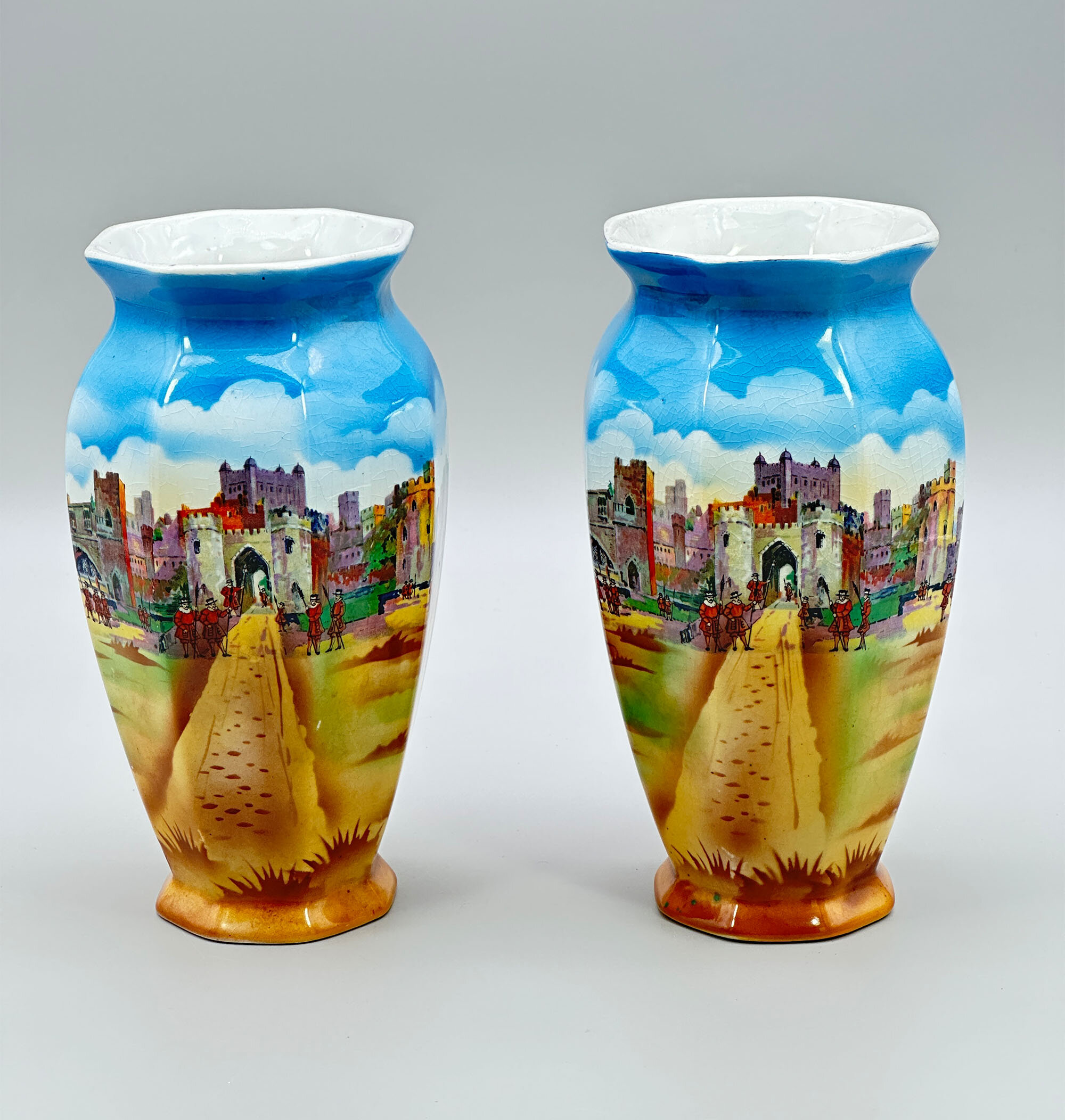
Pair of Tower of London Vases, New Hall Pottery, first half C20th
Price: £45The mark is for New Hall Pottery Co Ltd which traded in Hanley, Stoke-on-Trent, from 1899 to 1956. During the early years of the twentieth century, the firm was mainly known for the production of toilet sets and jugs, in 1908 producing and selling more than 50,000 toilet sets of the Waverley shape alone. After the First World War, demand for these pieces slackened and the firm turned towards producing dinner and hotel wares. Trading was difficult in the years before the Second World War but production was allowed to continue during it, mainly for supplying the armed forces, and was able to return to normal afterwards with an overseas trade nearly exceeding that of past years until the firm ceased trading in 1956.
A variety of marks were used of which the one seen here was the simplest version. Since it also appears on toilet sets, a similar date of production seems likely and perhaps these vases were a part of the attempt to diversify as the demand for the staple product of the business was beginning to decline. Certainly, while modest pieces in themselves, they do have something of an ‘Art Deco’ look and can be regarded as amusing decorative items today.
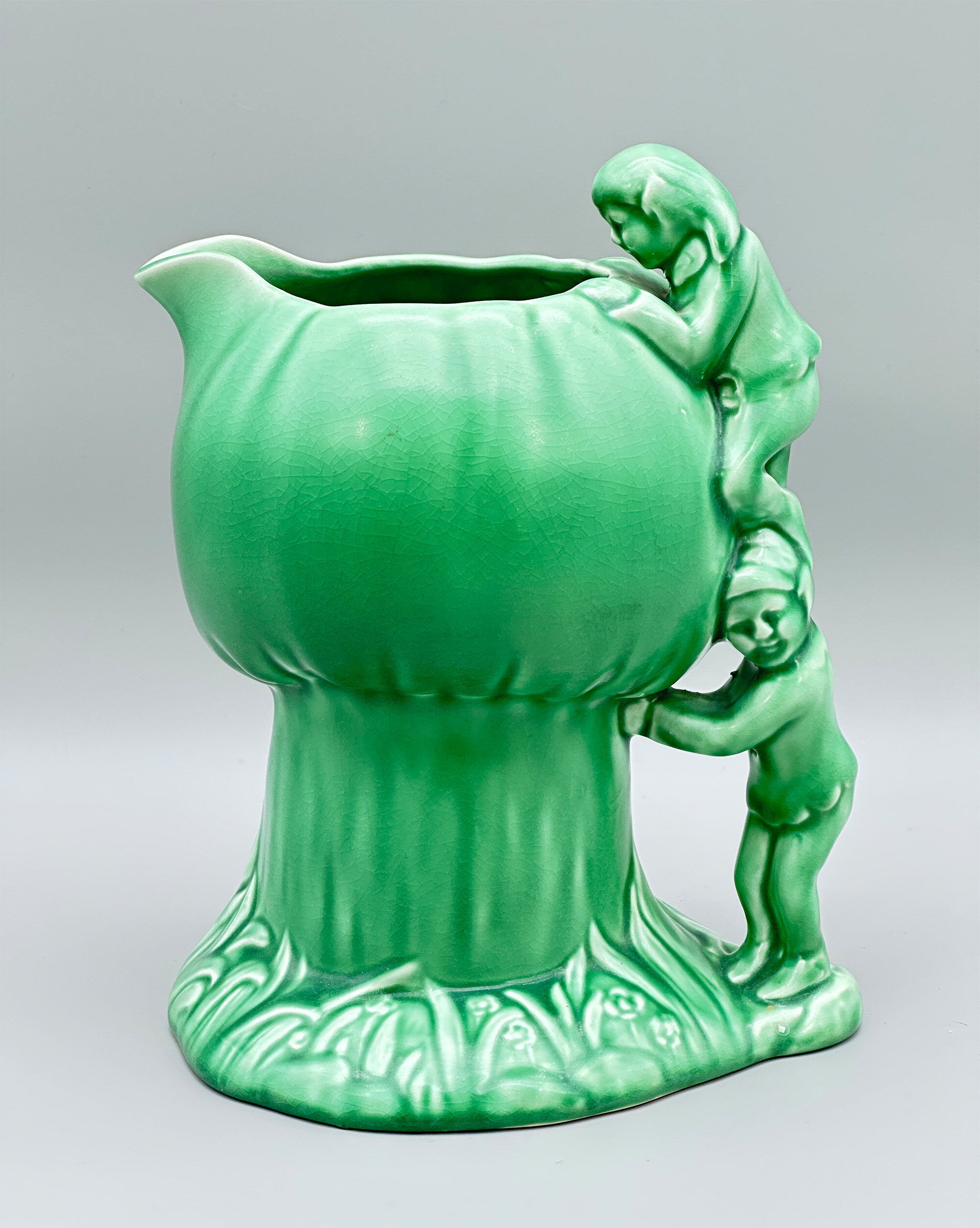
Sylvac Pixie Jug, Pattern No 1969, mid C20th
Price: £45‘SylvaC’ (the name was written with a capital ‘C’ after registration of the trademark in 1938) was a trade name of Shaw and Copestake, a company formed by Mr. William Shaw and a Mr. Copestake around 1900. Mr. Copestake sold his shares to a Mr. Richard Hull after about six months of business and this partnership continued until Mr. Hull’s death in 1935. He was succeeded by his son, Mr. Richard Hull junior. In the following year, the business became a limited company. Various mergers and acquisitions followed and in the 1950s new premises were built and production expanded considerably continuing until the early 1980s when changing markets and increased competition forced the company into liquidation.
Sylvac were known for imaginative glazed wares, particularly animals, and novelty pieces with a rustic twist of which this is a typical example. These were mainly produced in the early post war years and this jug most likely dates to the 1950s when demand was at its height. These jugs were made in a variety of colours but the green glaze here is the most characteristic of Sylvac pieces and probably the most attractive.
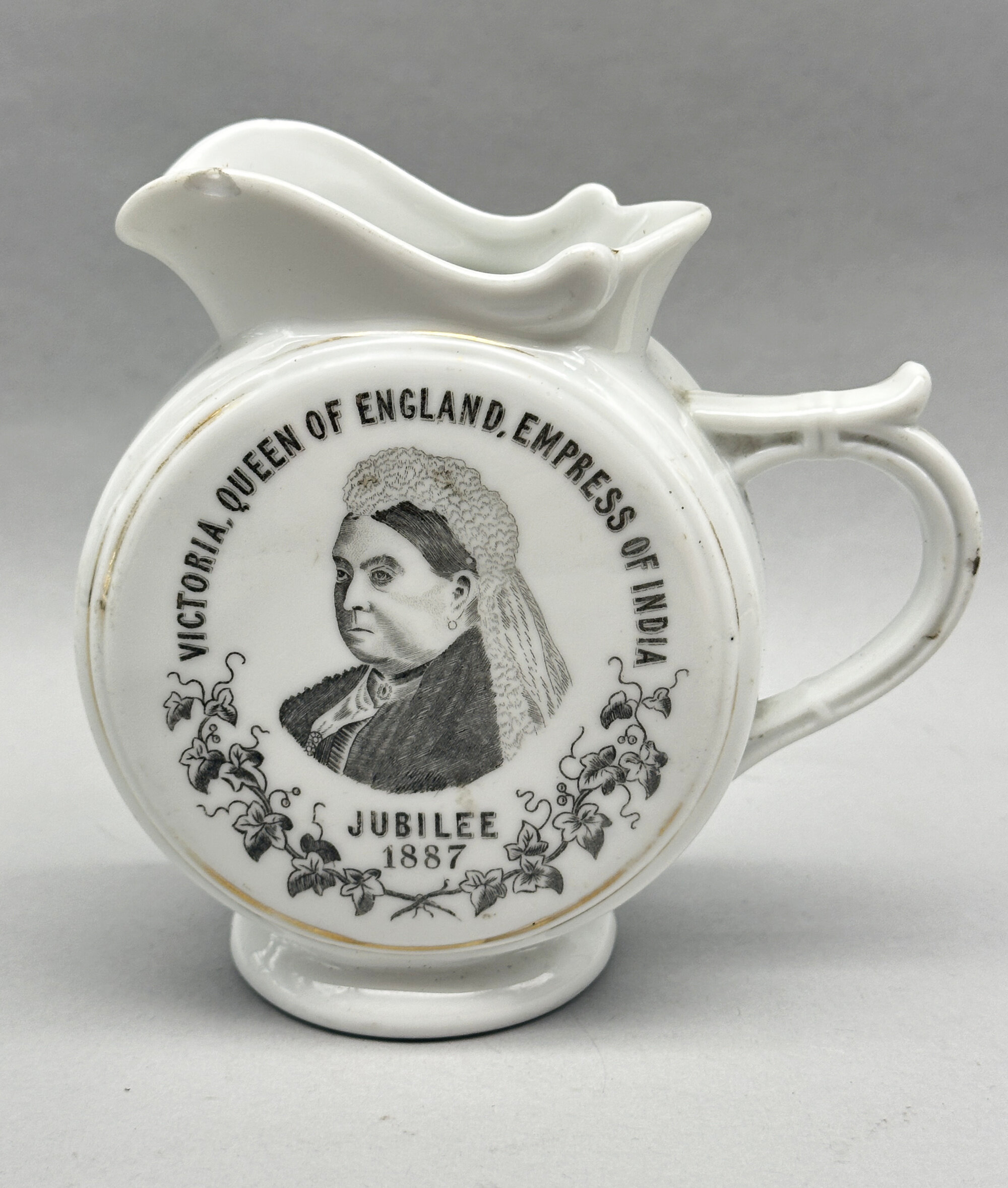
Queen Victoria Golden Jubilee Jug, 1887
Price: £10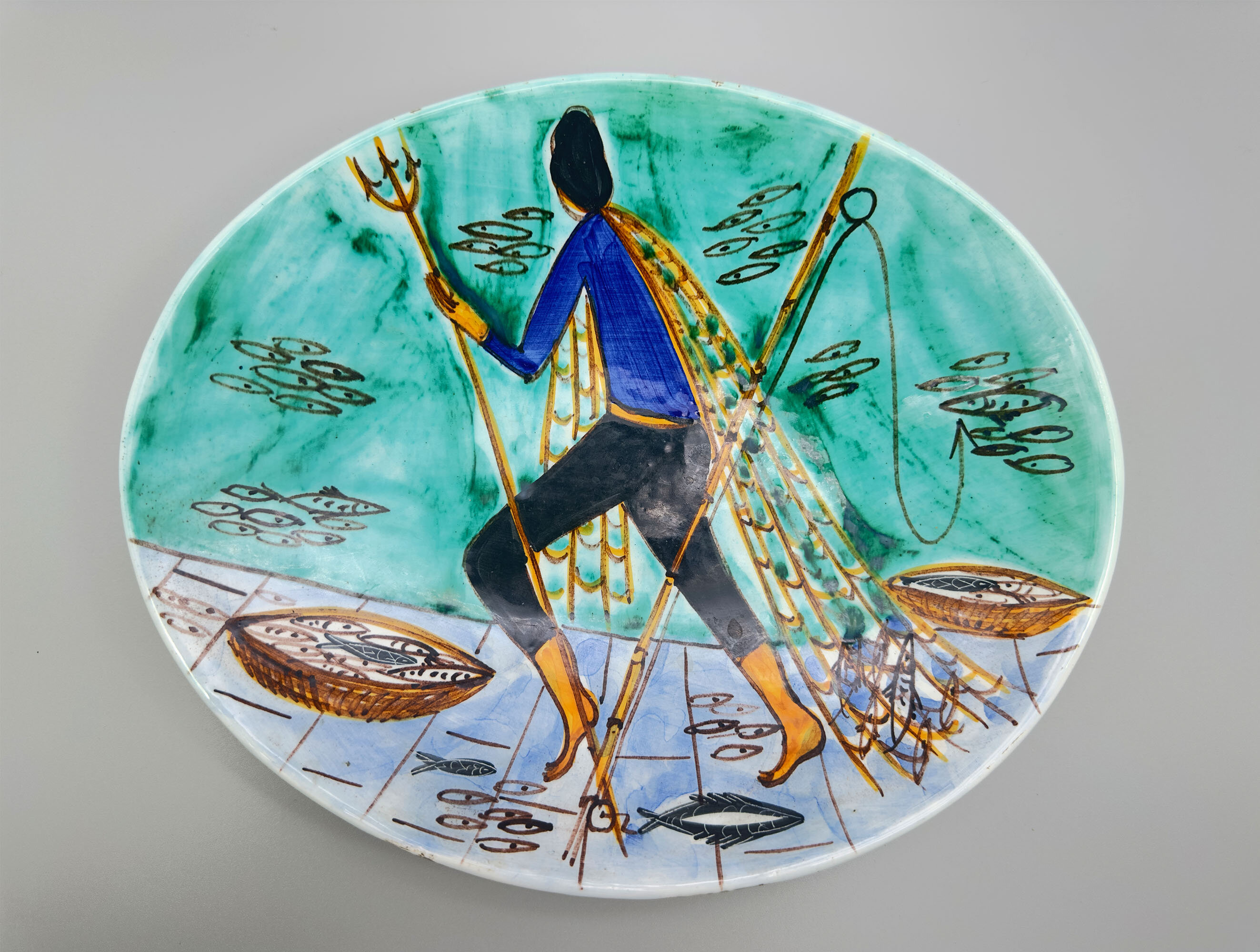
Italian oval dish decorated with a fisherman, S.IC.A. Vicenza, mid C20th
Price: £25There are similar plates found, all marked ‘Italy’ to the reverse and some with the lettering ‘SICA’ on the front. This stands for the ‘Società Italiana Ceramica Artistica’ which was founded in Nove, in the province of Vicenza, by G. Battista Cogo, Giovanni Grappiglia, Stefano Guzzo, and Angelo Perin in 1946 and concentrated on the production of modernist domestic earthenware. The style of decoration here and the bright colourings used are typical of the 1950s and this plate most likely dates to that time. There is a naif charm here which is most attractive and this decorative piece could also be used today for serving at the dinner table.
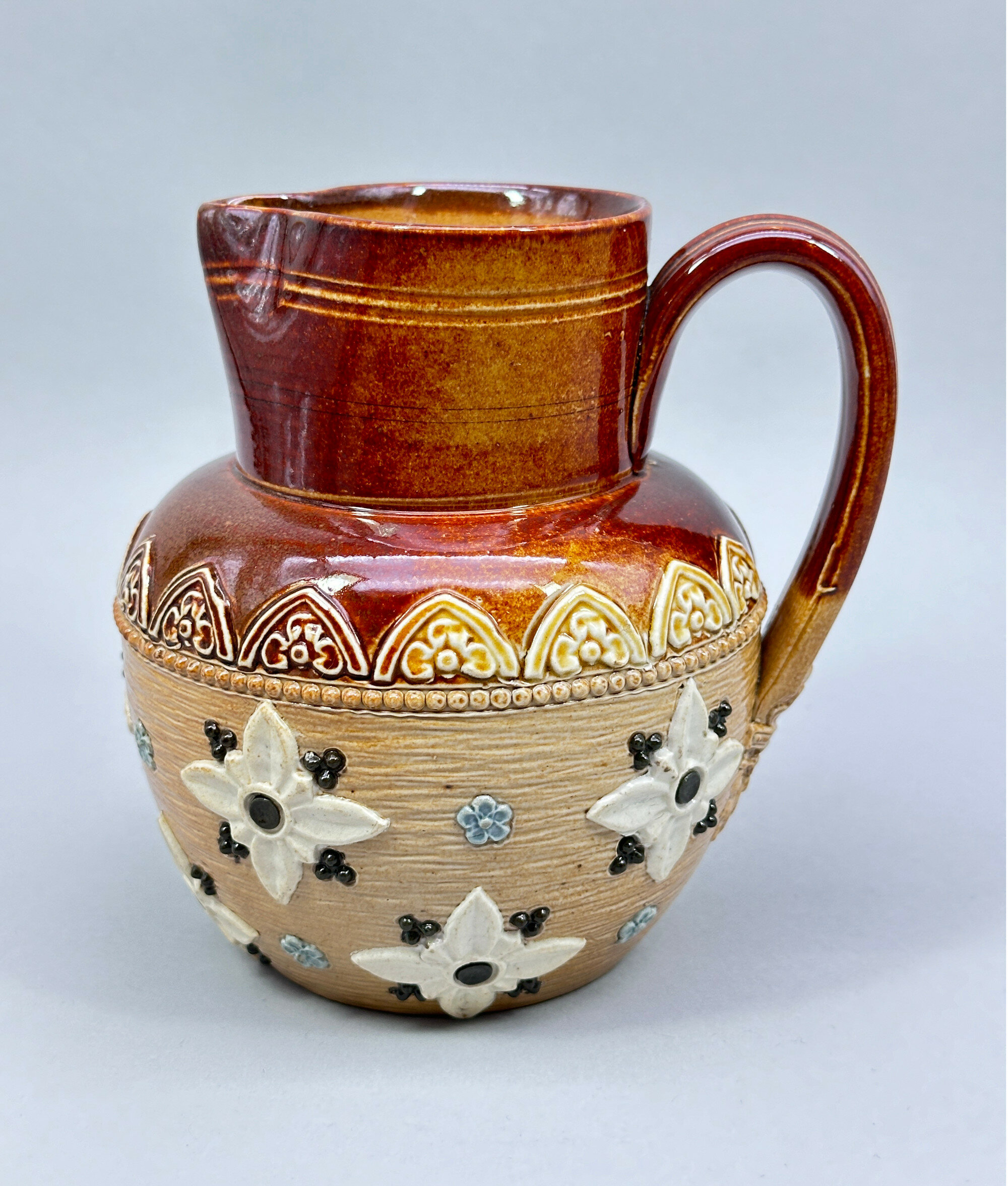
Doulton Lambeth Stoneware Jug circa 1900
Price: £45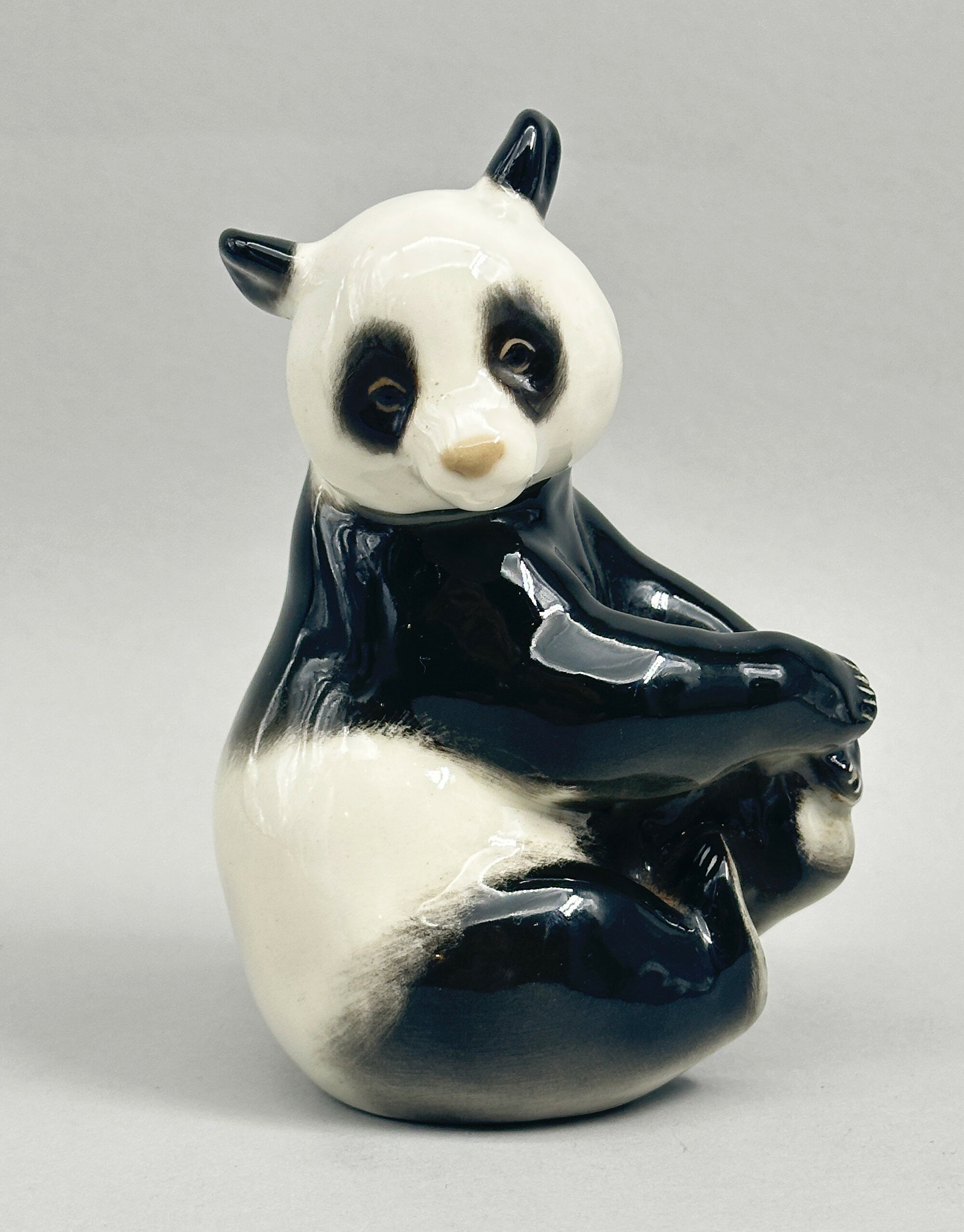
Porcelain Figure of a seated Panda, Lomonosov, USSR late C20th
Price: £25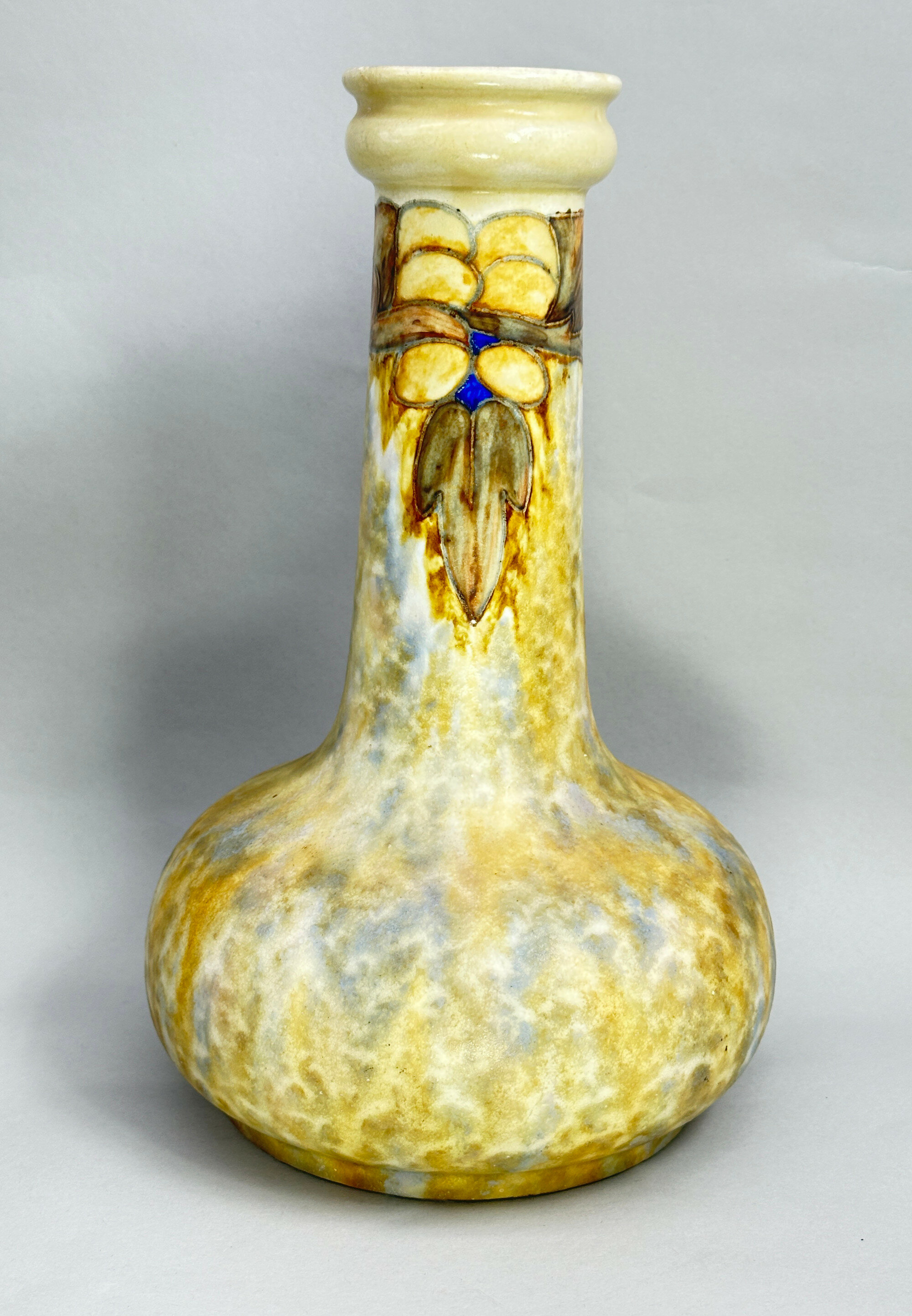
Cranston Ware Art Nouveau Style Vase, early C20th
Price: £95Cranston Ware was one of the ranges produced by the Pearl Pottery Company, based in Hanley, Stoke on Trent. Founded in 1892, the firm produced a varied selection of ceramic wares, often following contemporary fashions, until its closure in 1947. This vase is demonstrably in the Art Nouveau style and would have been produced when it was at its zenith in the early 1900s. The pattern was known as ‘Tukan’ ware and some of the pieces, but not all, have an impressed mark displaying this. This is an excellent example of the type with the glazes and decorative detail well rendered and certainly deserves the attention of collectors of Art Nouveau.
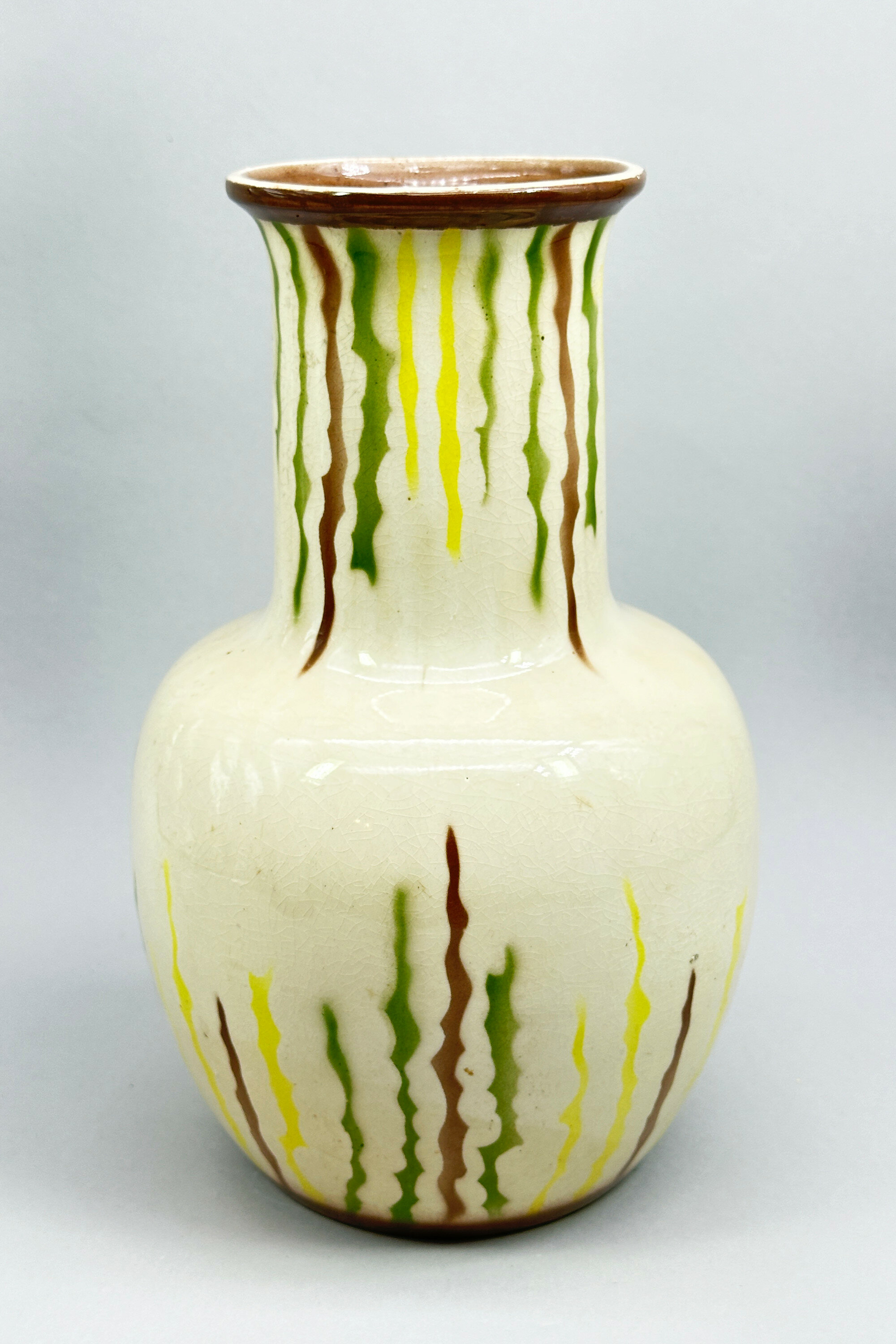
Art Deco style Vase signed E.Radford, mid C20th
Price: £75There were, in fact, two craftsmen working in the C20th British pottery industry with the name Edward Radford, father and son. Radford senior worked for Pilkington’s Royal Lancastrian Pottery in Manchester from 1903 until his retirement in 1936, acting as their main thrower. Radford junior joined his Father in 1905, but the First World War intervened, in which he won a Military Cross for his actions at Passchendaele in 1917 and afterwards he settled in Stoke on Trent, the heart of Britain’s pottery industry. An association developed with H.J.Wood’s Alexandra Pottery in Burslem who produced a range of wares bearing his name in the 1930s, although Radford himself may have acted as more a salesman than the designer. Production continued after the war and even after Radford’s retirement in 1948. The form of mark used here implies the later dating but may have been used earlier. The impressed figures indicate model number. Even if this vase is post war, the style is emphatically that of pre war Art Deco period with the simple lines of the form accompanied by semi abstract decoration vaguely reminiscent of Clarice Cliff combining to produce a piece of timeless attraction.
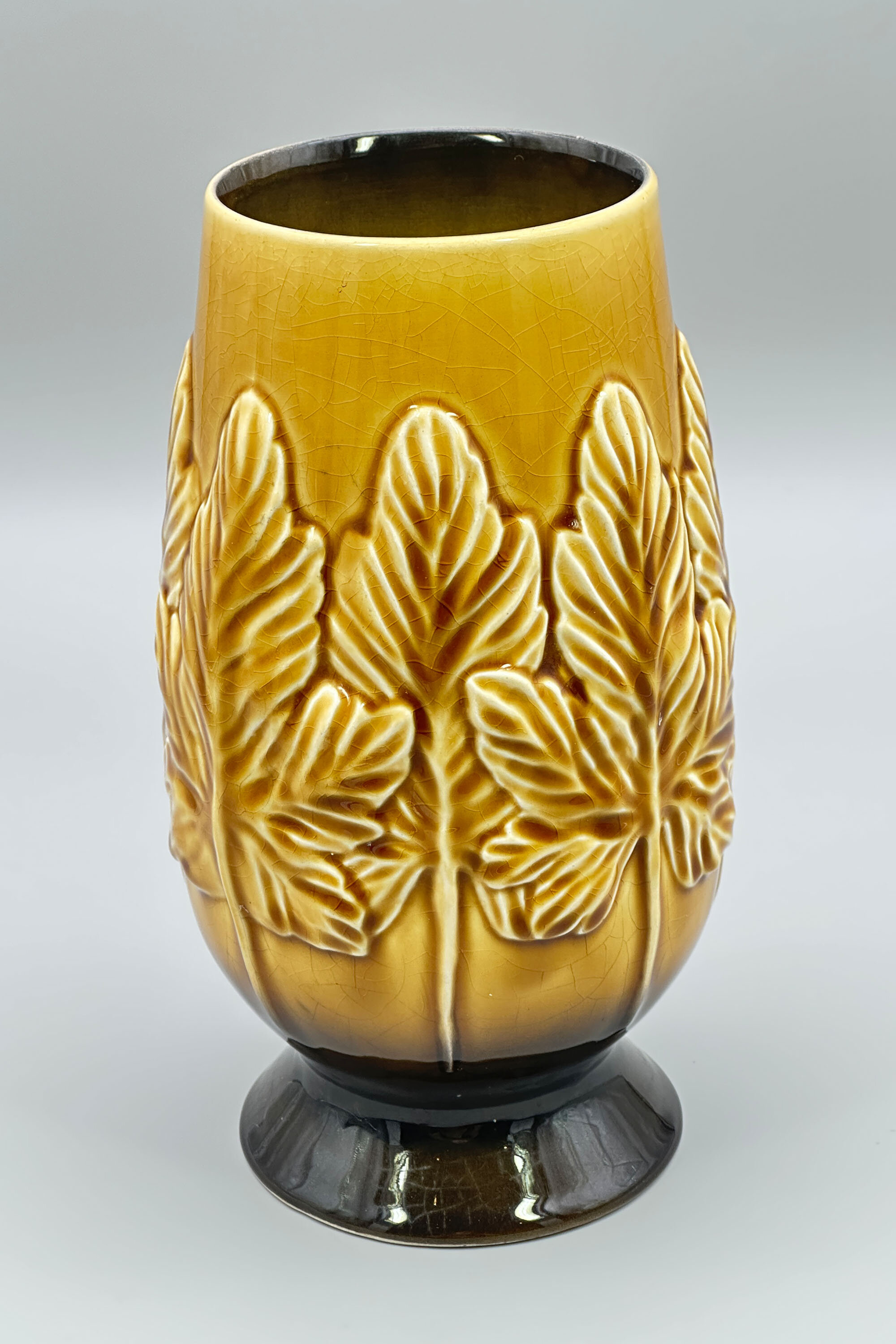
Sylvac sycamore leaf Vase, mid C20th
Price: £25This is an example of the naturalistic designs produced by Sylvac in the 1950s and 1960s. While they often chose to imitate tree bark, here they take their inspiration from the leaves themselves. The model occurs in various sizes and glazes including green and dark brown but the mustard colourings are, perhaps, the most pleasing. The smaller versions seem to be marked ‘4215’ as opposed to the numbers seen here ‘4206’.
‘SylvaC’ (the name was written with a capital ‘C’ after registration of the trademark in 1938) was a trade name of Shaw and Copestake, a company formed by Mr. William Shaw and a Mr. Copestake around 1900. Mr. Copestake sold his shares to a Mr. Richard Hull after about six months of business and this partnership continued until Mr. Hull’s death in 1935. He was succeeded by his son, Mr. Richard Hull junior. In the following year, the business became a limited company. Various mergers and acquisitions followed and in the 1950s new premises were built and production expanded considerably continuing until the early 1980s when changing markets and increased competition forced the company into liquidation.
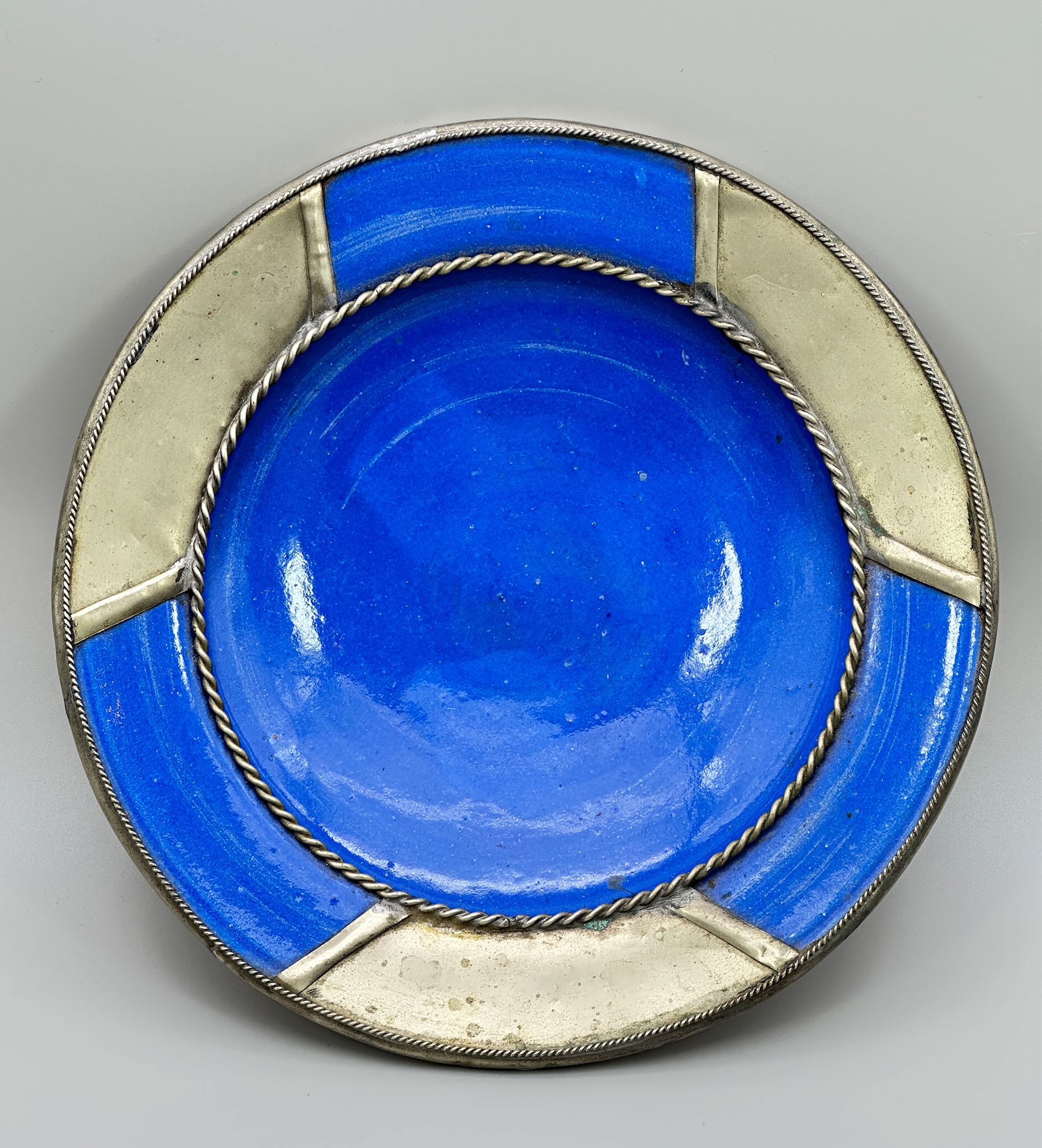
Morrocan safi ware Dish, silver metal bound, signed La Médina Paris, modern
Price: £45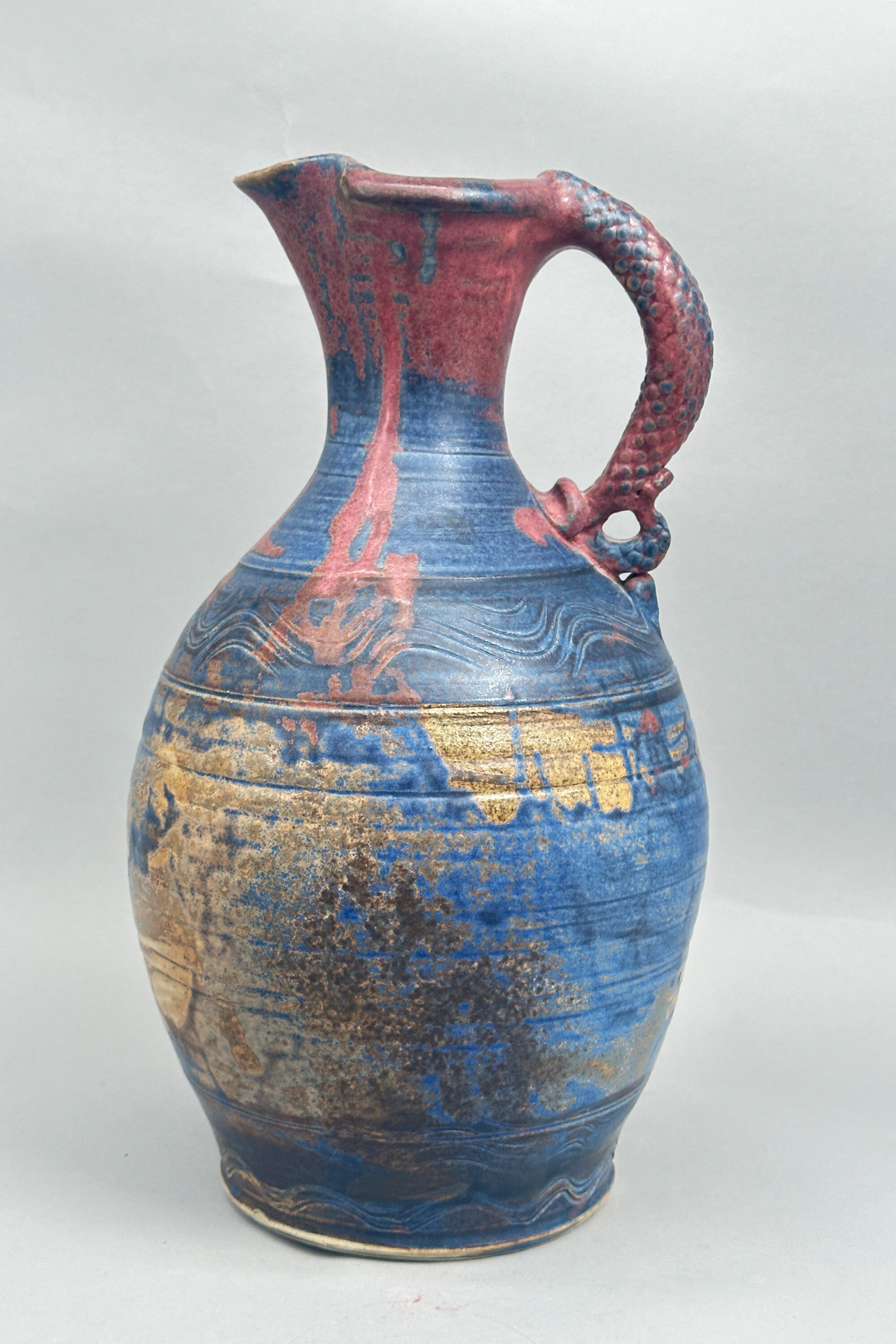
Studio Pottery Jug, Michael Kennedy, signed, late C20th
Price: £75Both the incised mark at the base and the small round sticker (see image 9) show this to be the work of the distinguished Irish Potter, Michael Kennedy who established his first studio at Sligo, Co Sligo, in 1979 and then a second studio at Gort, Co Gallway. Kennedy was a prolific and popular ceramic artist who was also happy to pass on his skills guiding many young potters at the start of their careers, some of whom went on to open successful potteries of their own. His work at Sligo was distinguished by the imaginative use of purple, pink and blue glazes of which this jug is an excellent example. There are various forms of his signature but the one here, possibly mainly used on his earlier works, is perhaps the most typical, a stick figure within a circle followed by the letters ‘Kennedy’. Michael Kennedy sadly died unexpectedly in 2021, but his works live on and can be seen in homes and galleries in Ireland and abroad.
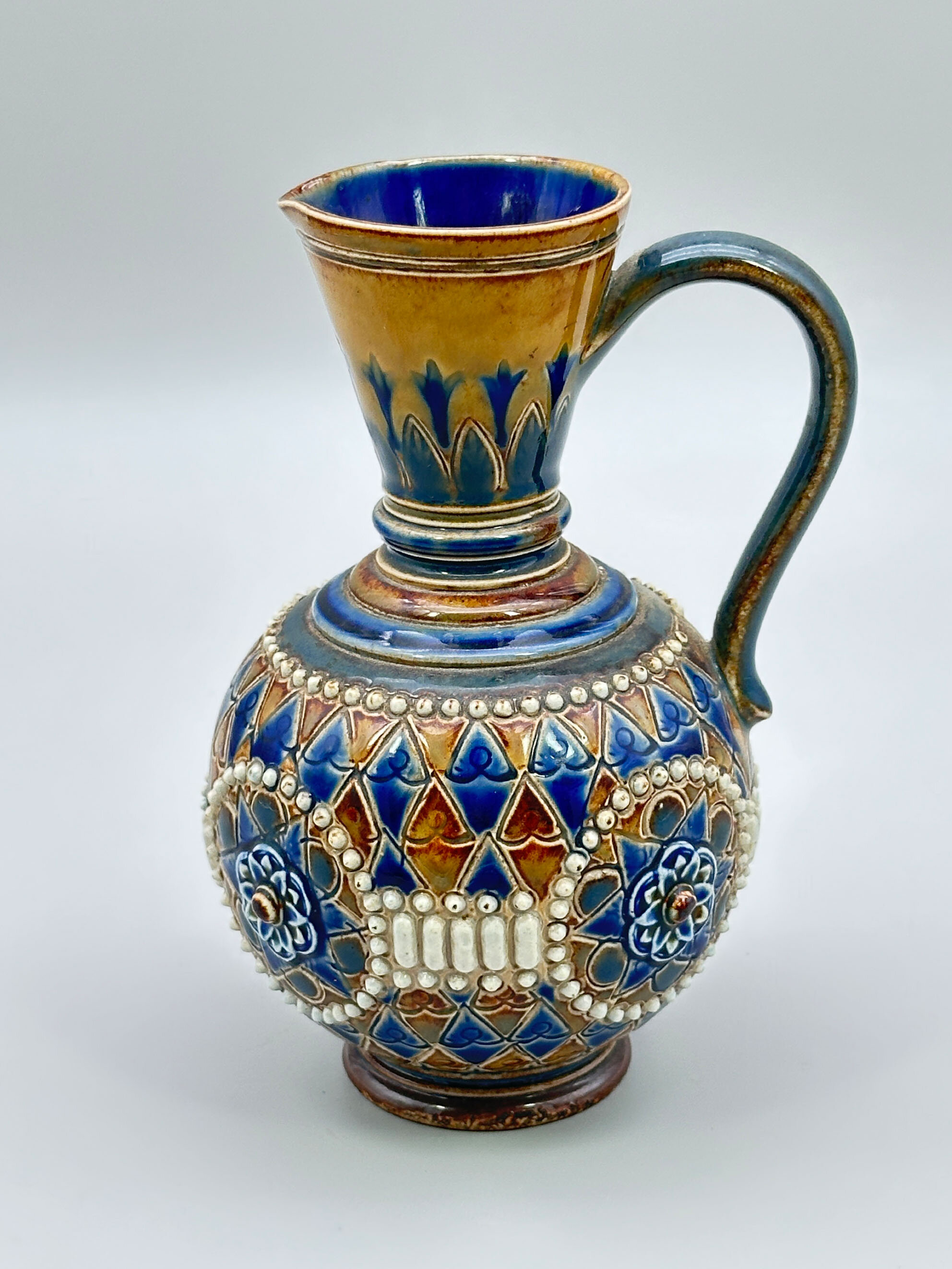
Doulton Lambeth Ewer, marked, late C19th
Price: £55
Gilt decorated English porcelain powder box and cover, probably mid C20th
Price: £15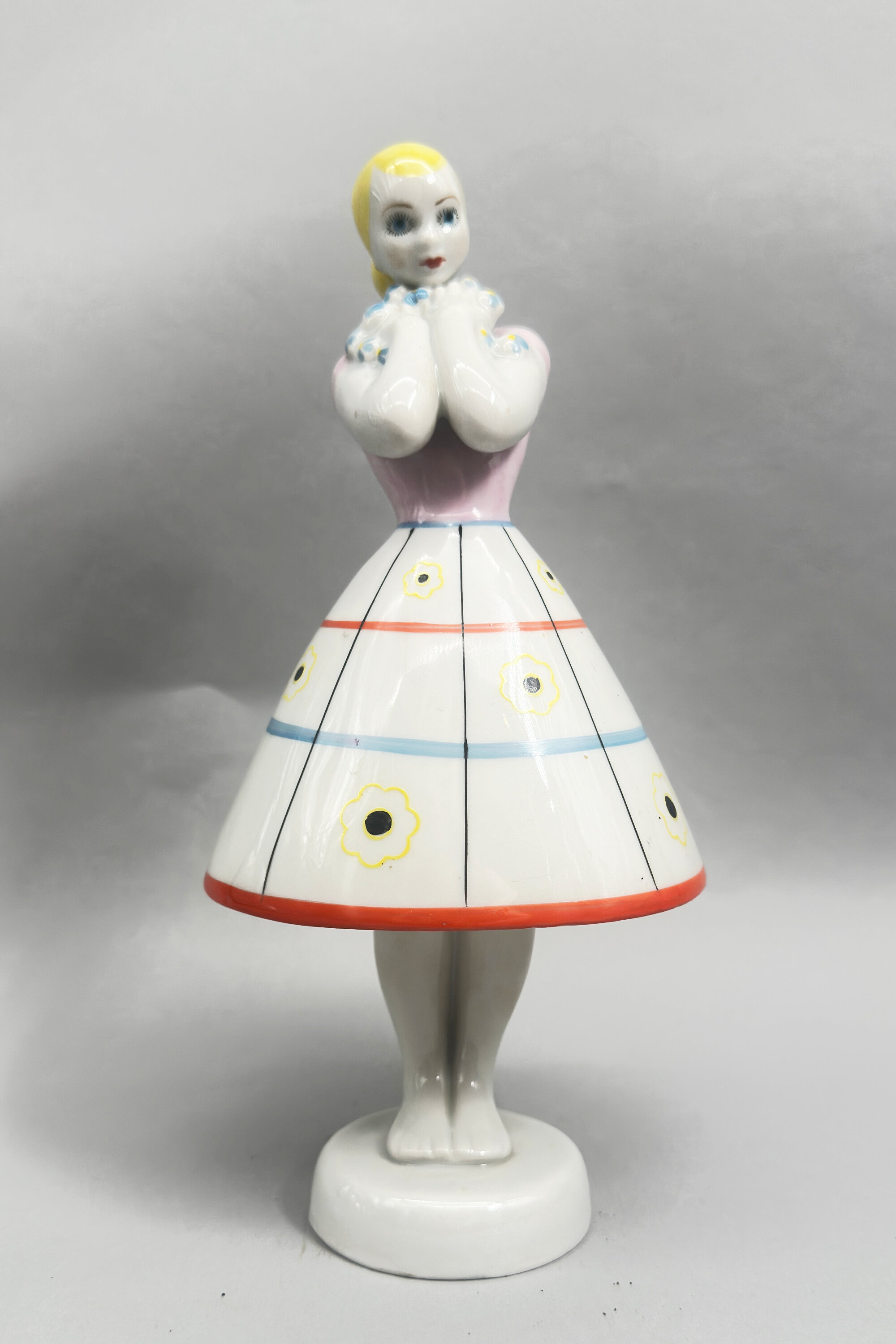
Figurine of a girl, Baranivka Ukraine, 1950s
Price: £55The Baranivka Porcelain Factory, one of Ukraine's oldest porcelain manufacturers, was founded in 1802-1804 by Mykhailo Mezer. Situated at Baranivka, at the time in Poland but now part of Ukraine, the factory was considerably assisted in its development by the discovery of rich clay deposits in the area. Production was continuous even during the Soviet era until the early twenty first century. Both the angular modelling and the abstract decoration of this piece point to a dating in the 1950s when production would have revived after the second world war and more contemporary styles adopted.
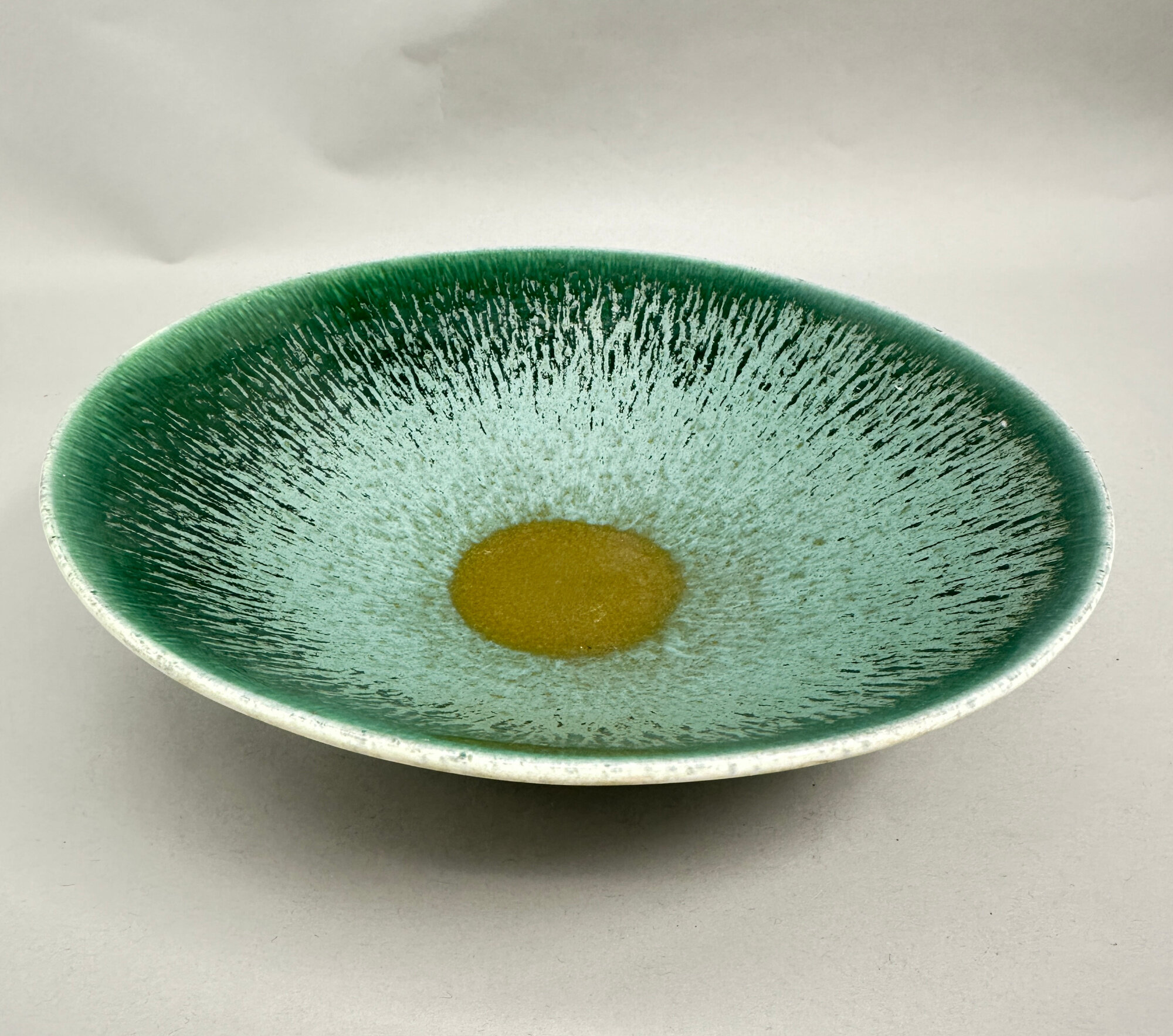
Poole Pottery Studio Bowl with splash glazes, 1960s
Price: £45Both the form and some of the glaze effects here reflect much earlier Chinese ceramic pieces which is fully consistent with the ‘studio pottery’ style of this piece. Poole Pottery established an art pottery studio within their factory in 1958 which, following the Scandinavian model, produced high quality studio ceramics alongside designs for new ranges until 1966 when they were replaced by the new Delphis, Atlantis and Aegean pottery lines which began production a year later. Dating here is therefore fairly precise and this bowl is an excellent example of ‘studio’ wares produced which could often equal the work of other independent studio potteries.