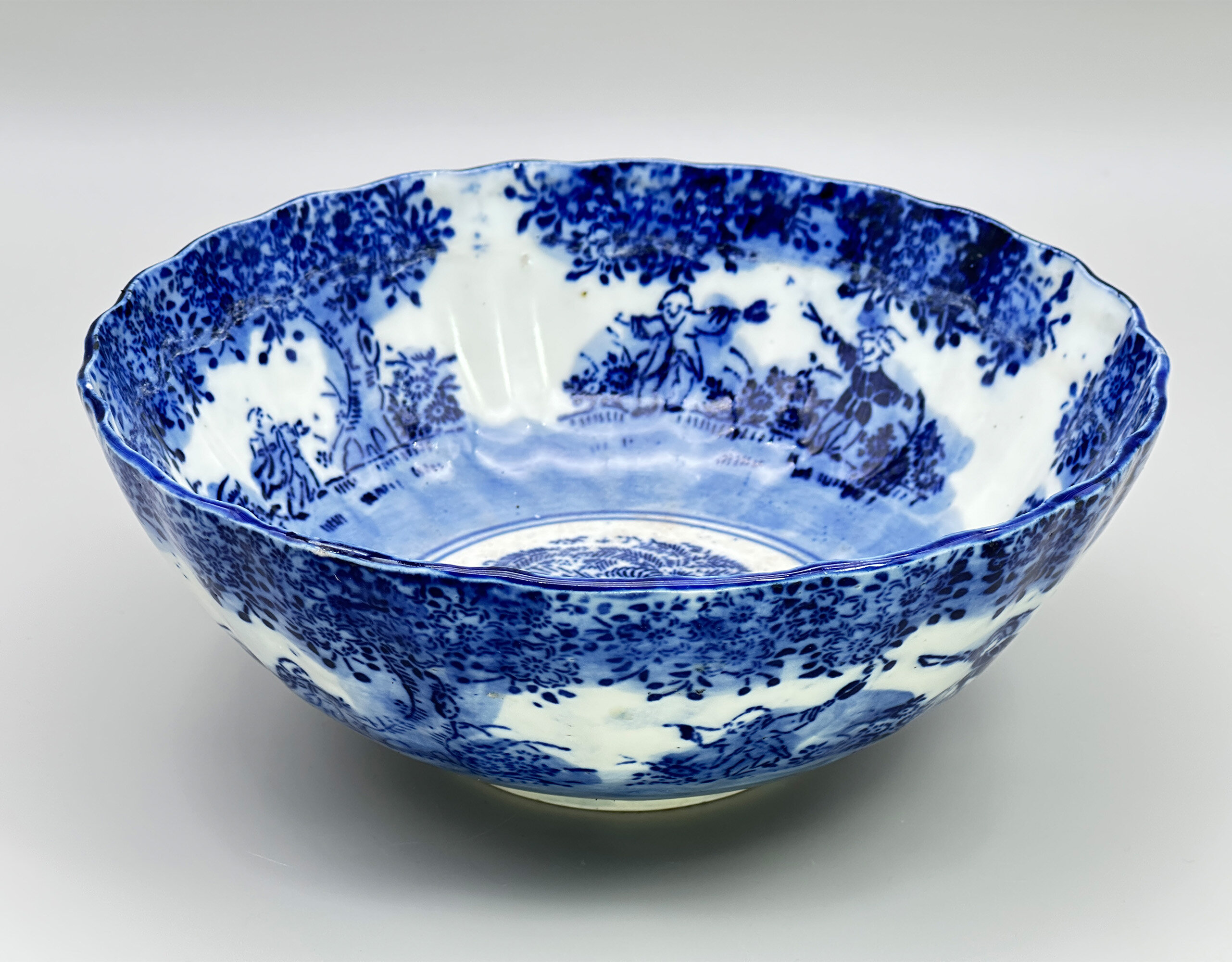
Japanese Arita blue and white stencil decorated Bowl, early C20th
Price: £45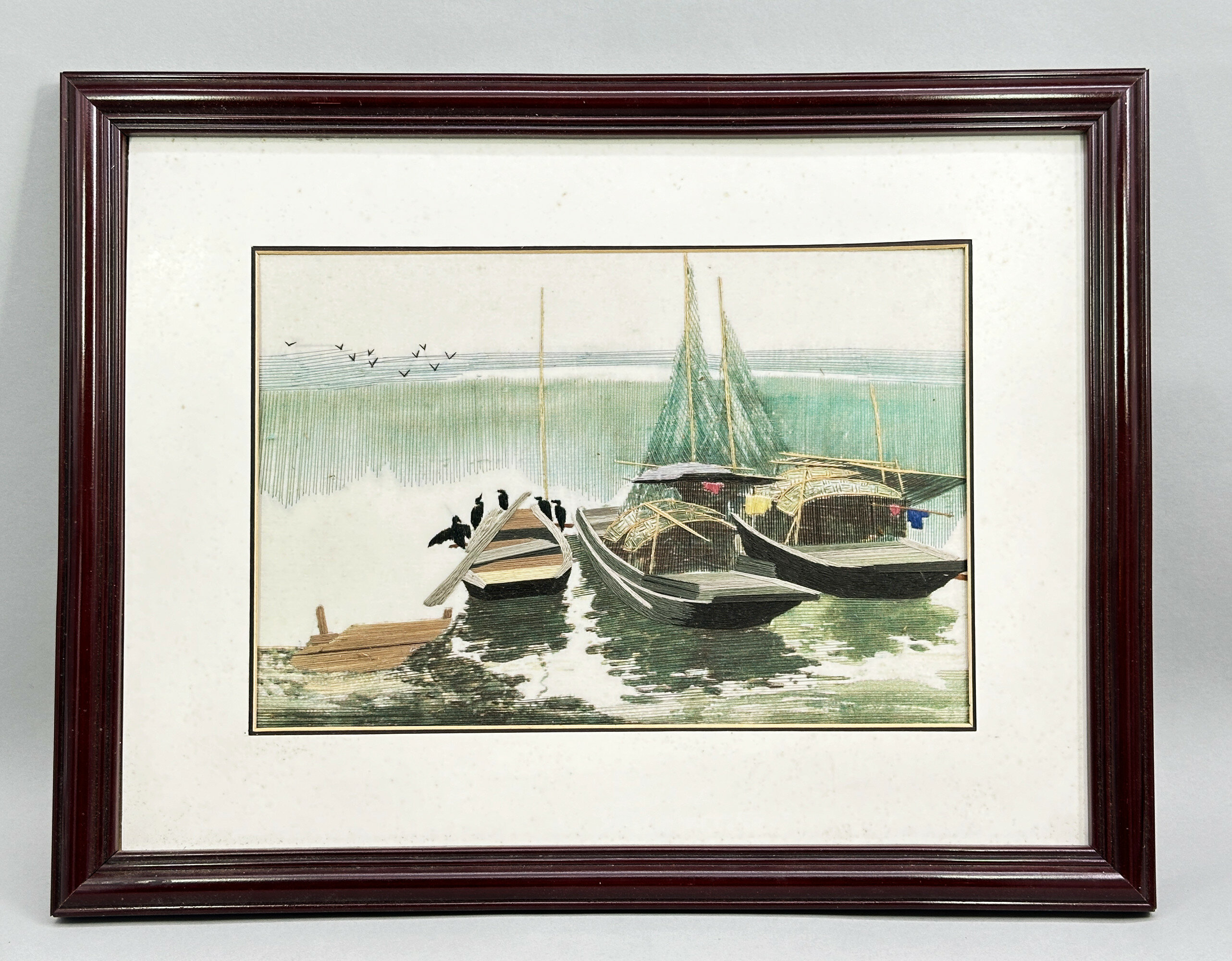
Chinese Straw Thread Picture on Silk, framed in original box, late C20th
Price: £45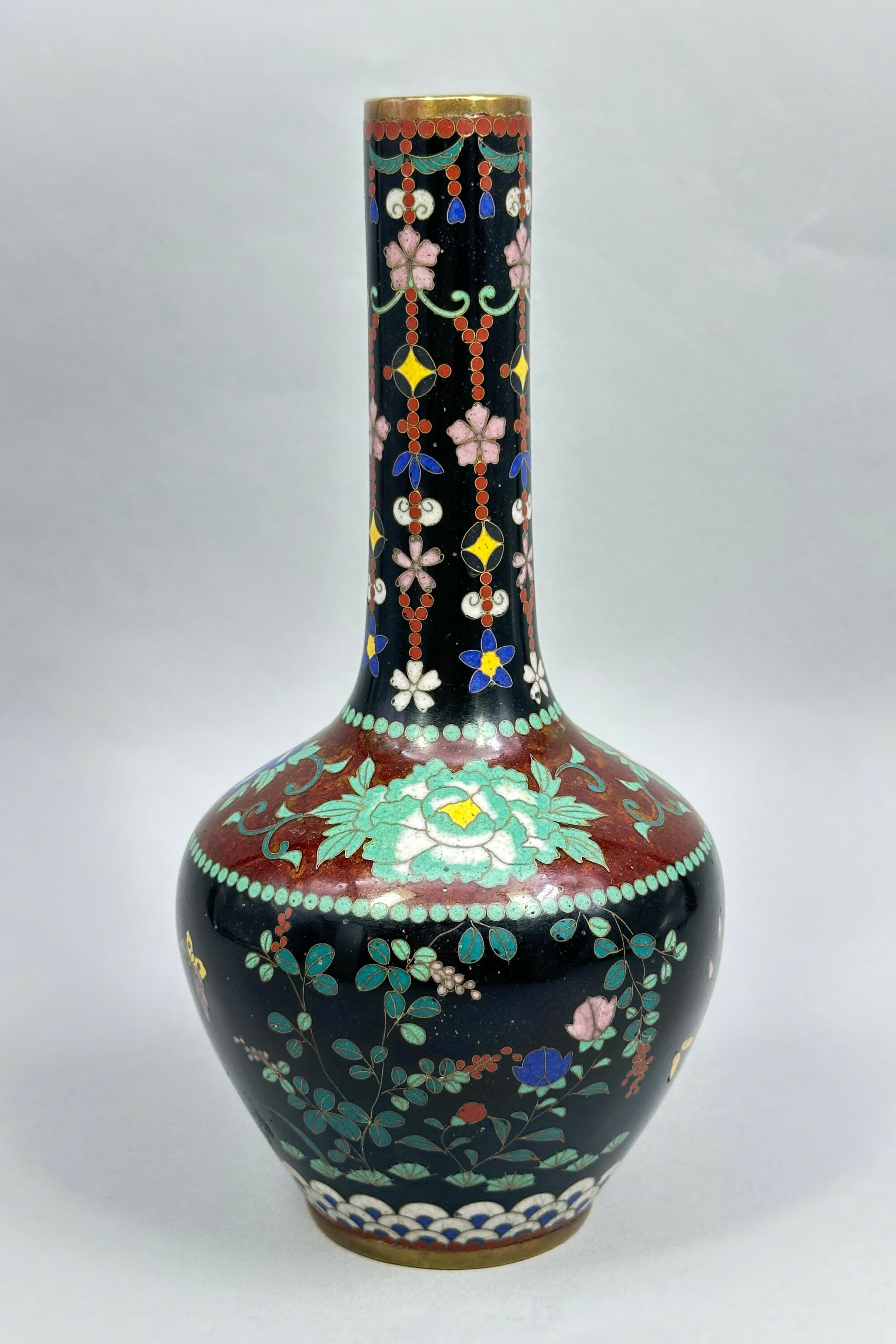
Fine quality Japanese Cloisonne bottle form Vase with black ground, late C19th
Price: £45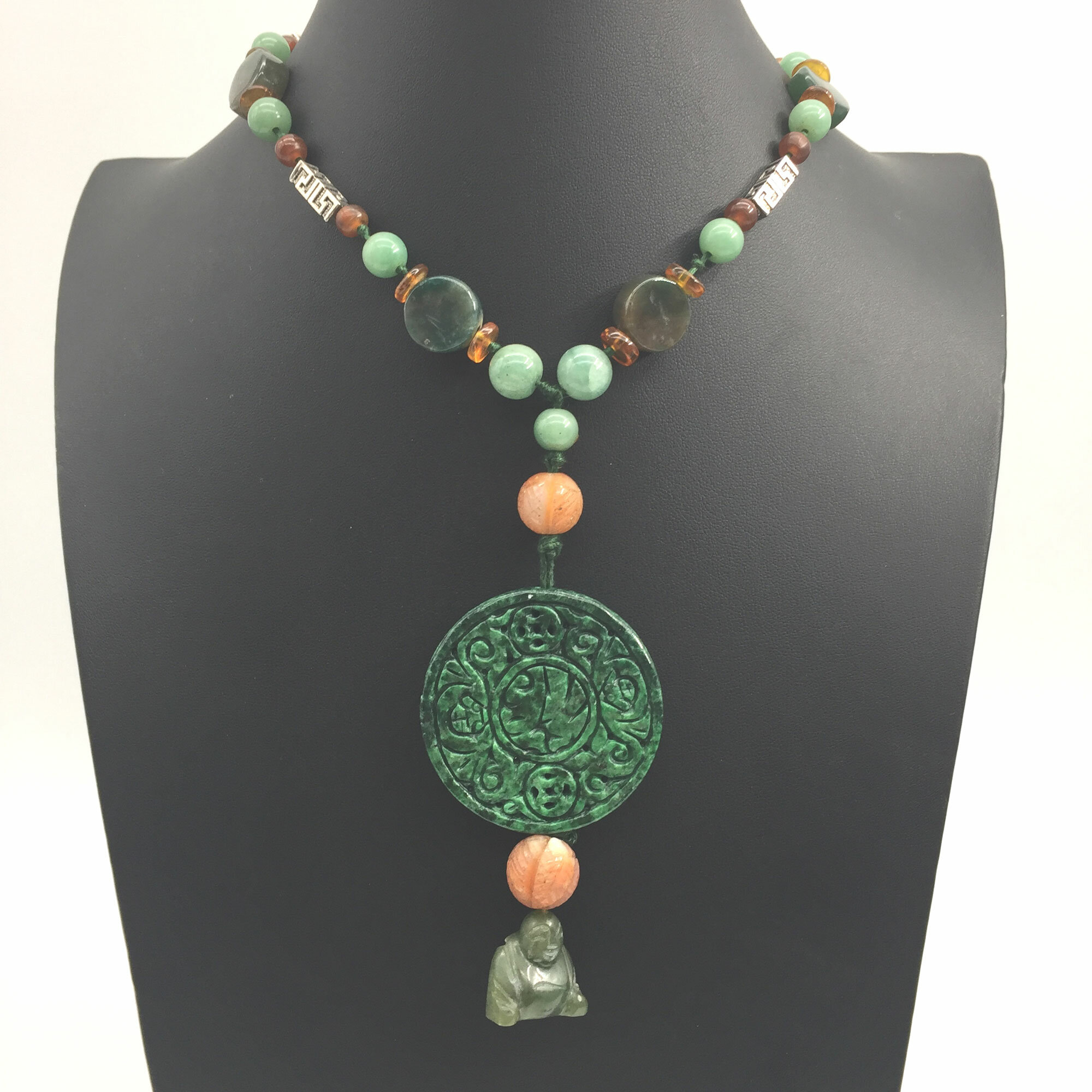
Long Art Deco necklace with spinach jade 1930s
Price: £100
Chinese carved hardwood frame, 1920s
Price: £55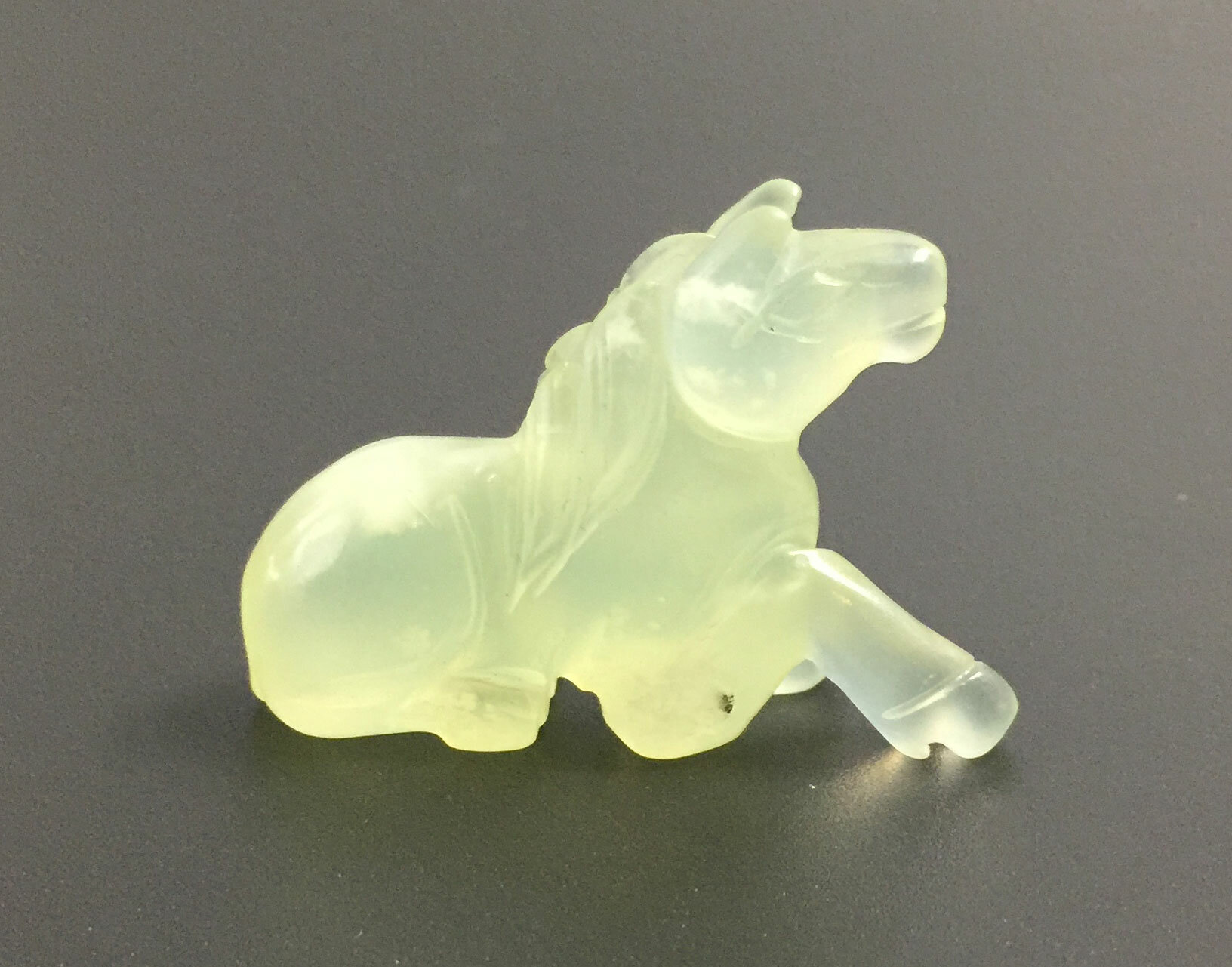
Translucent celadon jade recumbent horse
Price: £25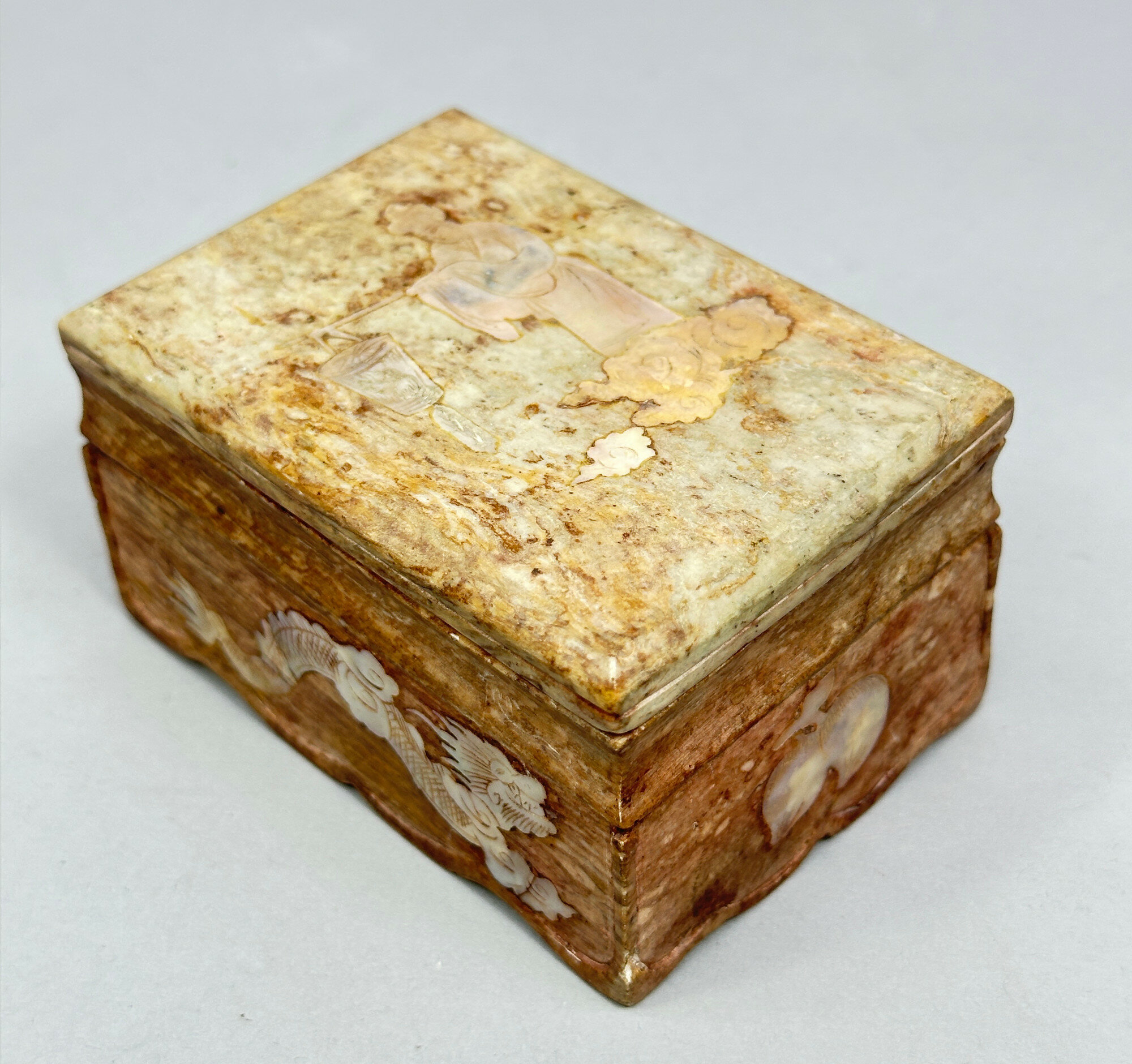
Chinese Soapstone Box and Cover with Mother of Pearl Inlay, C20th
Price: £55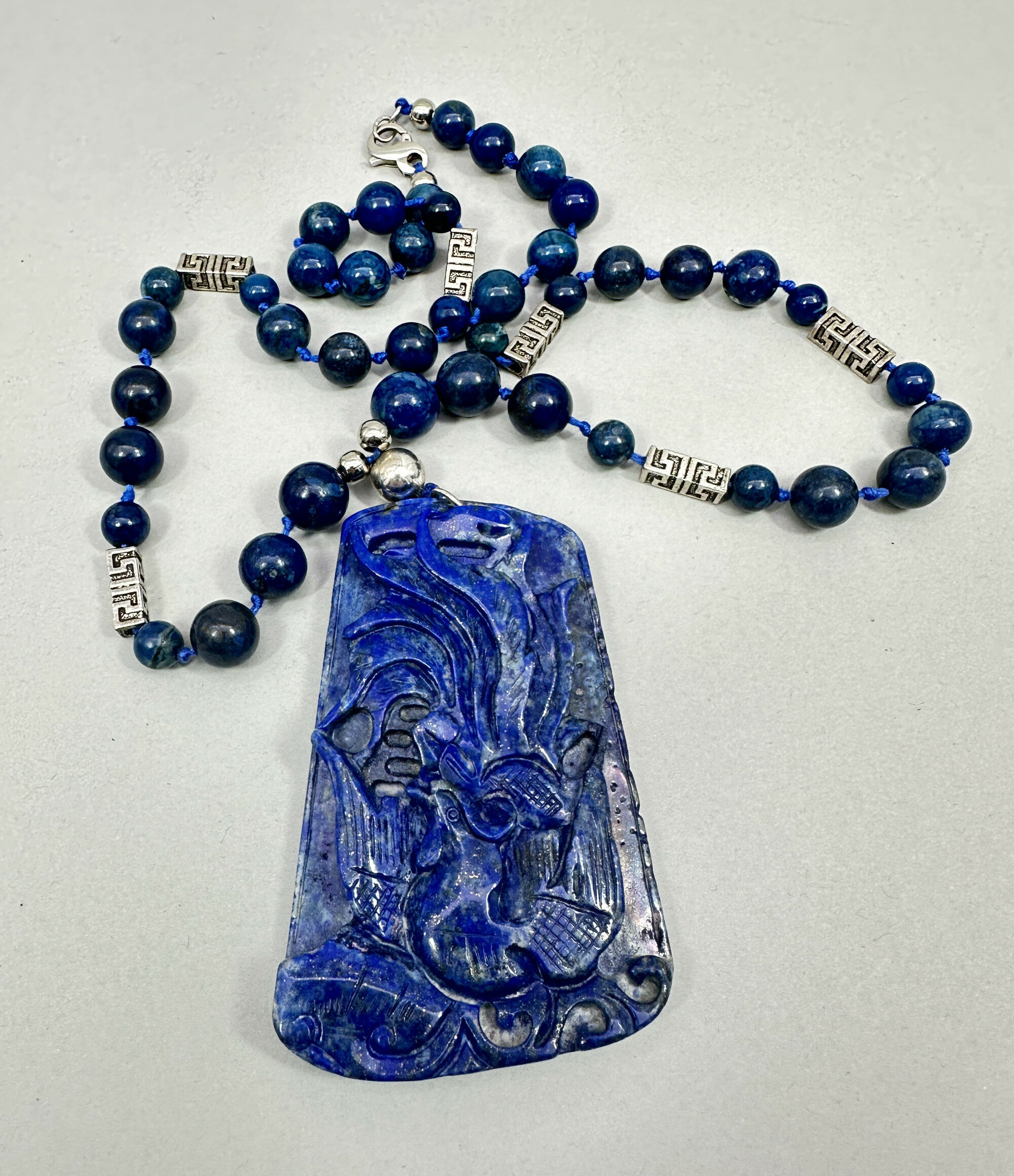
Massive lapis lazuli carved pendant necklace
Price: £125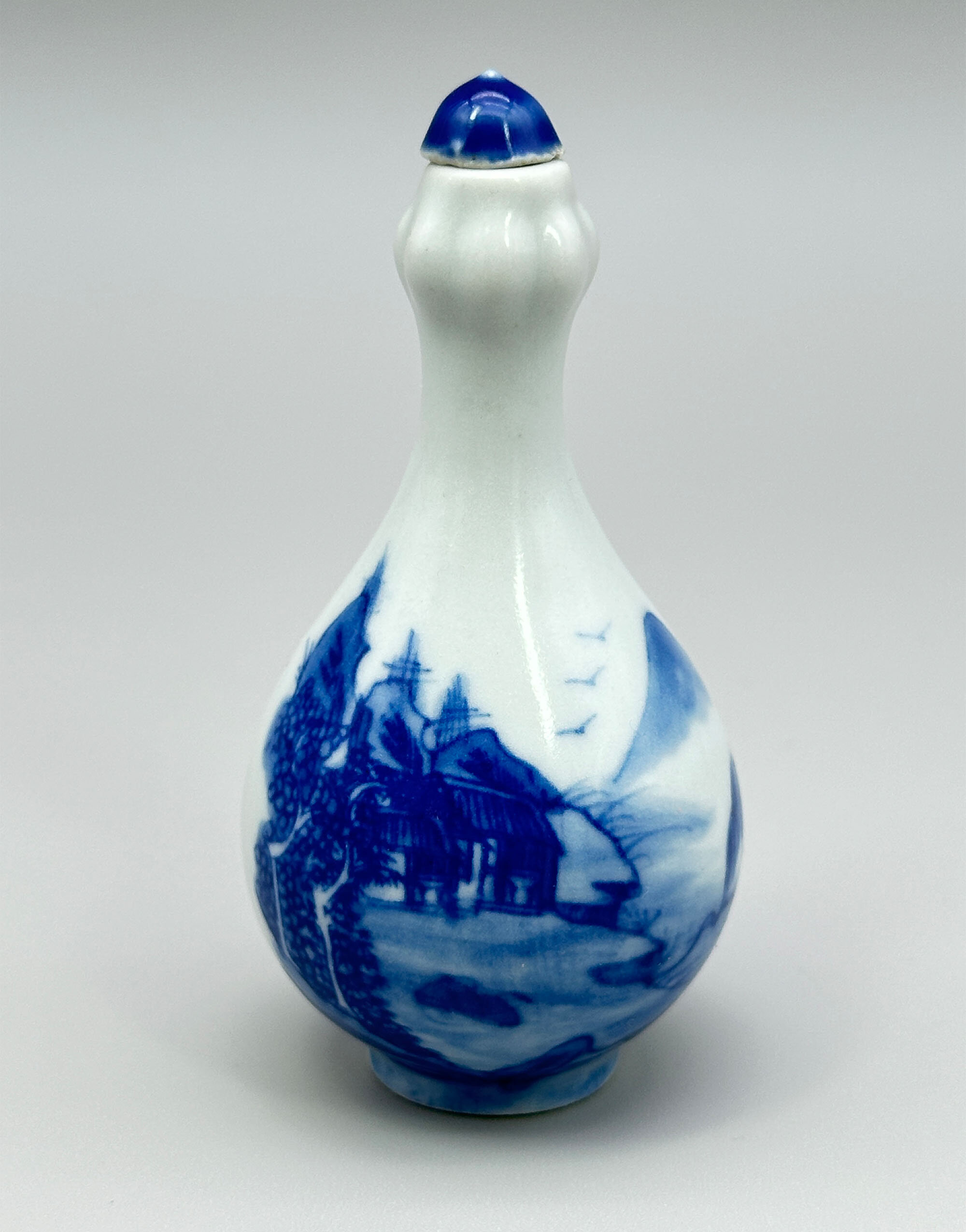
Chinese Blue and White Snuff Bottle and Stopper, early C20th
Price: £45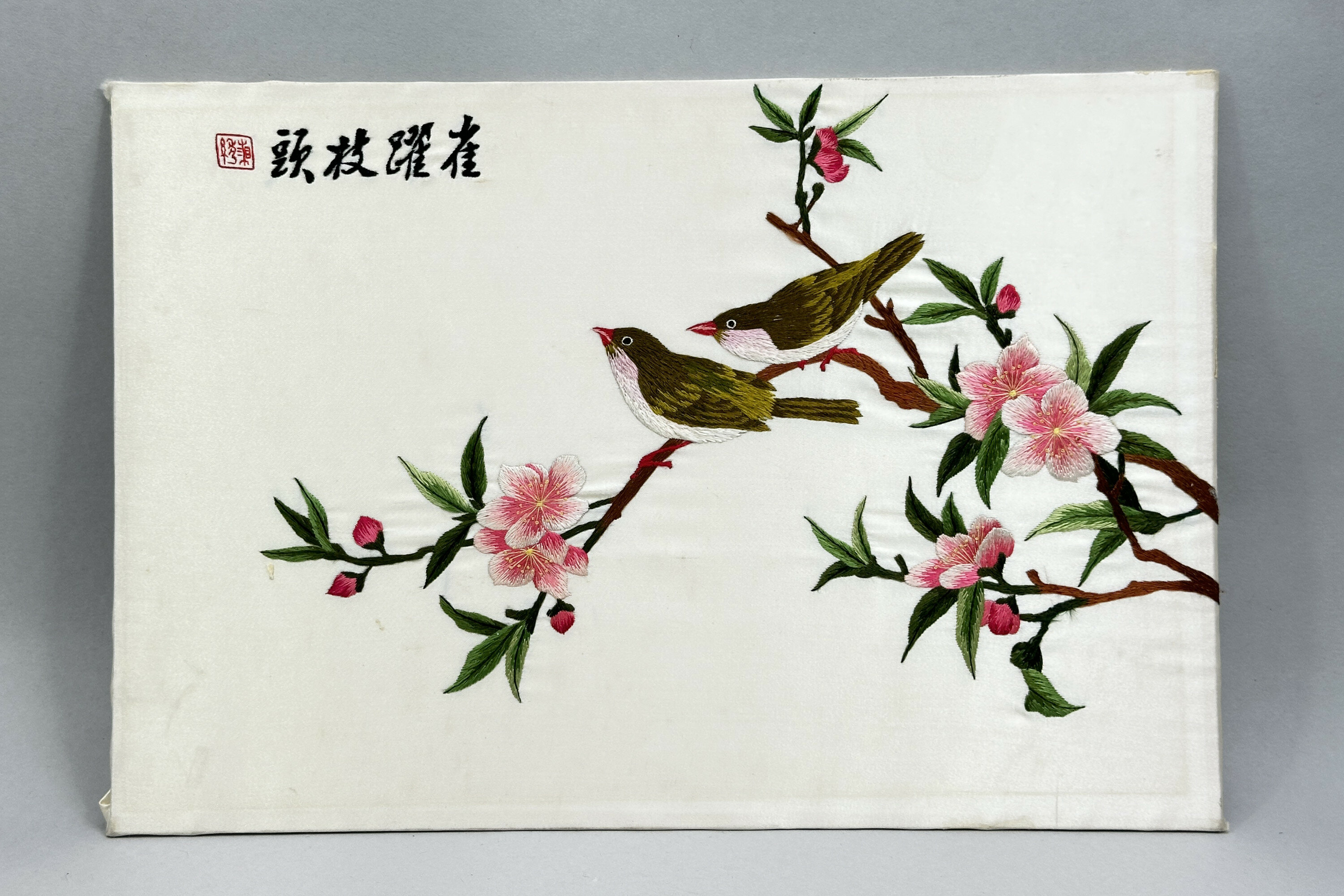
Chinese Silk picture of Two Birds and Flowering Plum Blossom, signed, C20th
Price: £25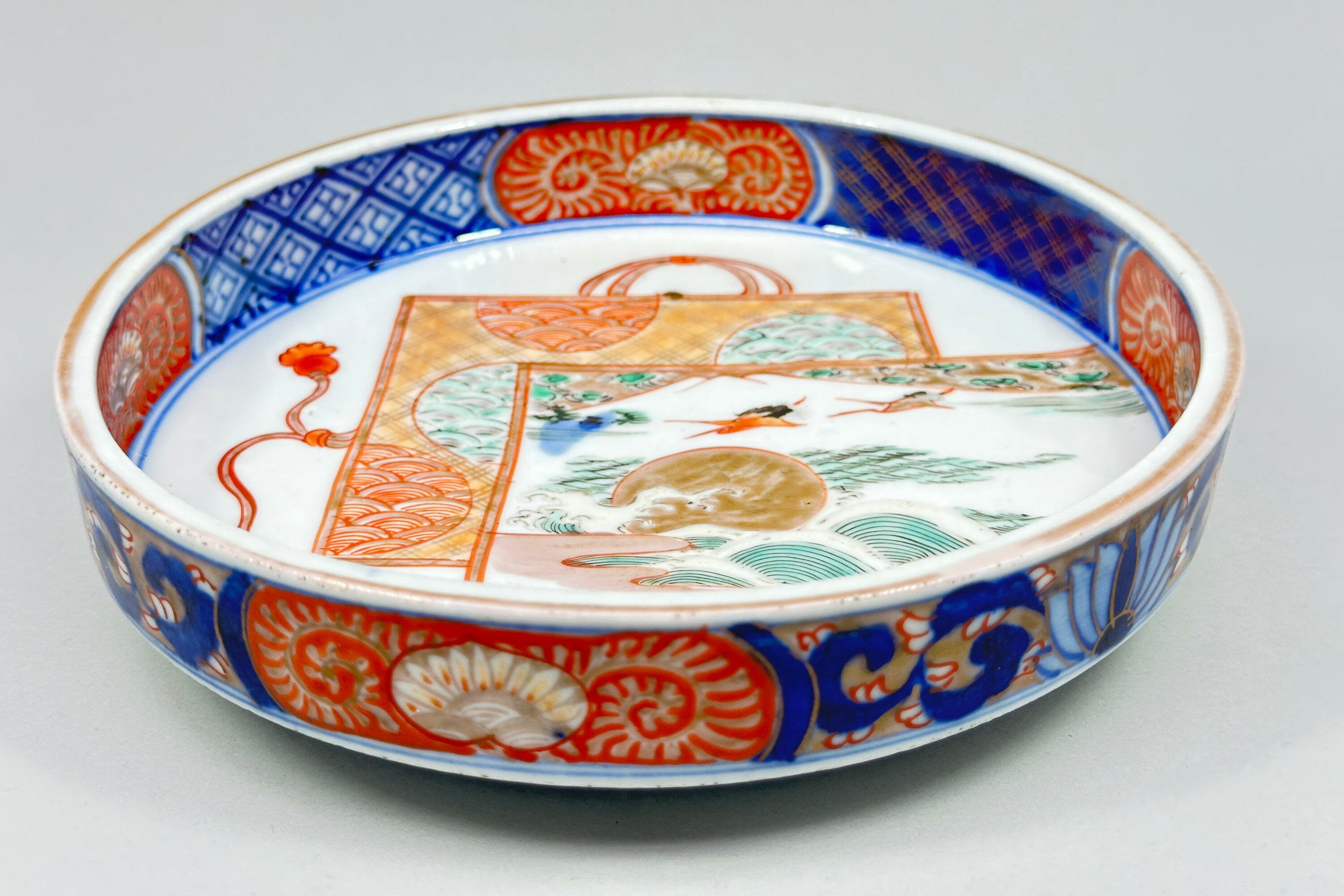
Japanese Arita shallow Bowl circa 1880
Price: £55The town of Arita in the former Hizen Province, northwestern Kyūshū island, was a major centre for the production of porcelains in Japan. Best known for blue and white pieces it also produced polychrome wares as well, including the familiar Imari colourings. While similar to Imari, the wider palette of colours used here is usually termed ‘Arita’ and this bowl employs not only the colourings but also many of the decorative elements found in these wares. The angular form, though, is unusual. Dating is to the Meiji era (1868-1912) probably around 1880.
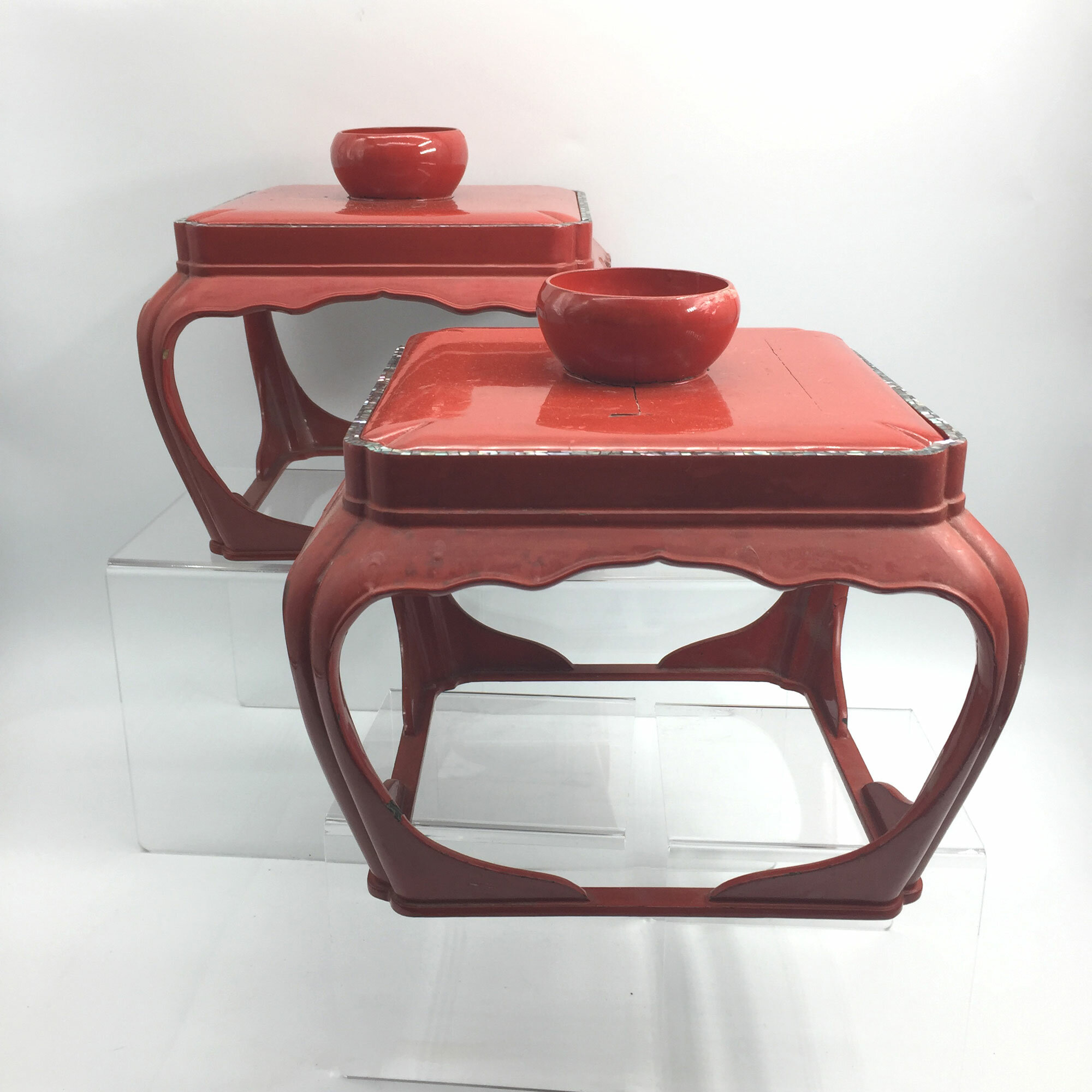
Pair of Japanese red lacquered low stands, Taisho period
Price: £150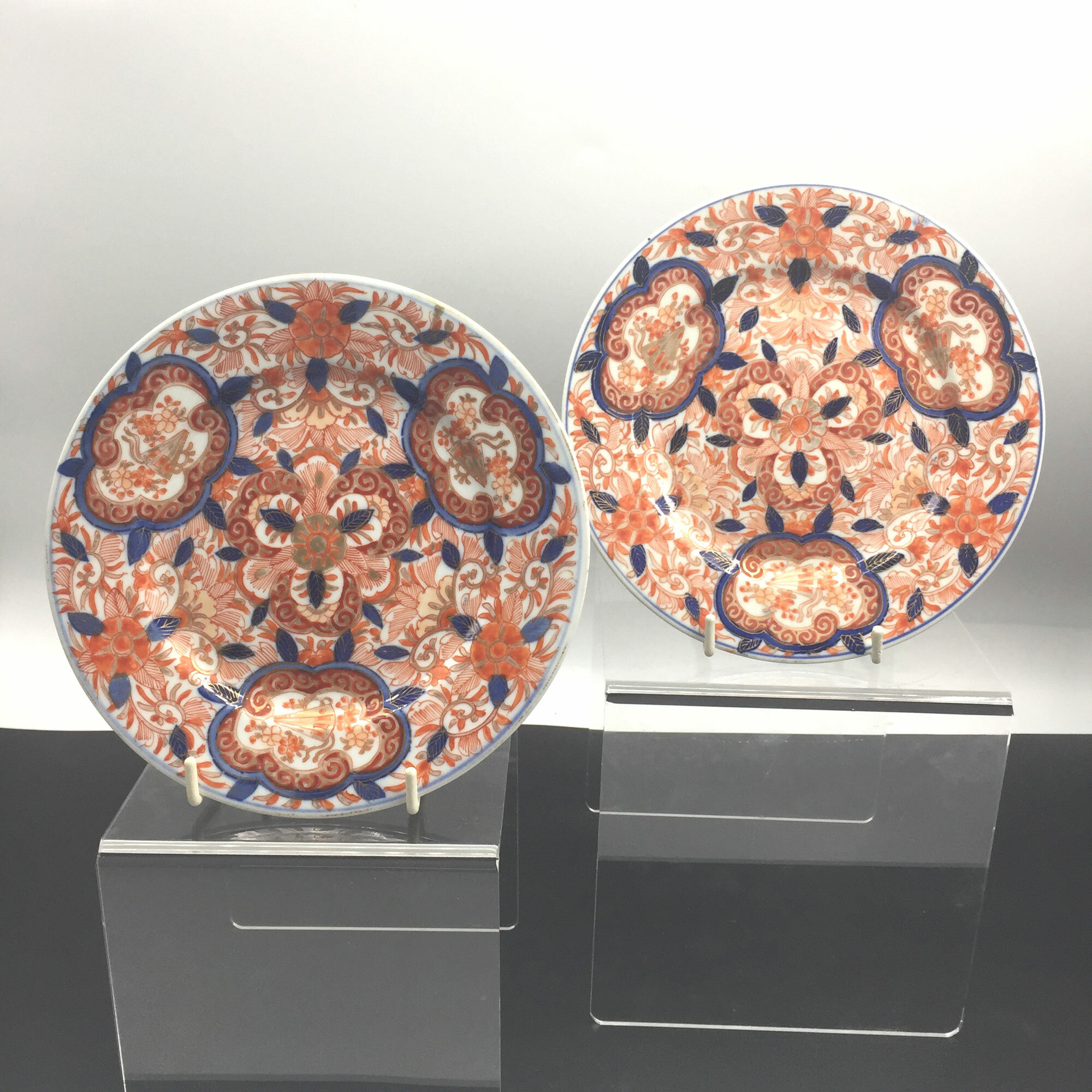
Pair of Japanese Imari Plates, Meiji Period circa 1880
Price: £150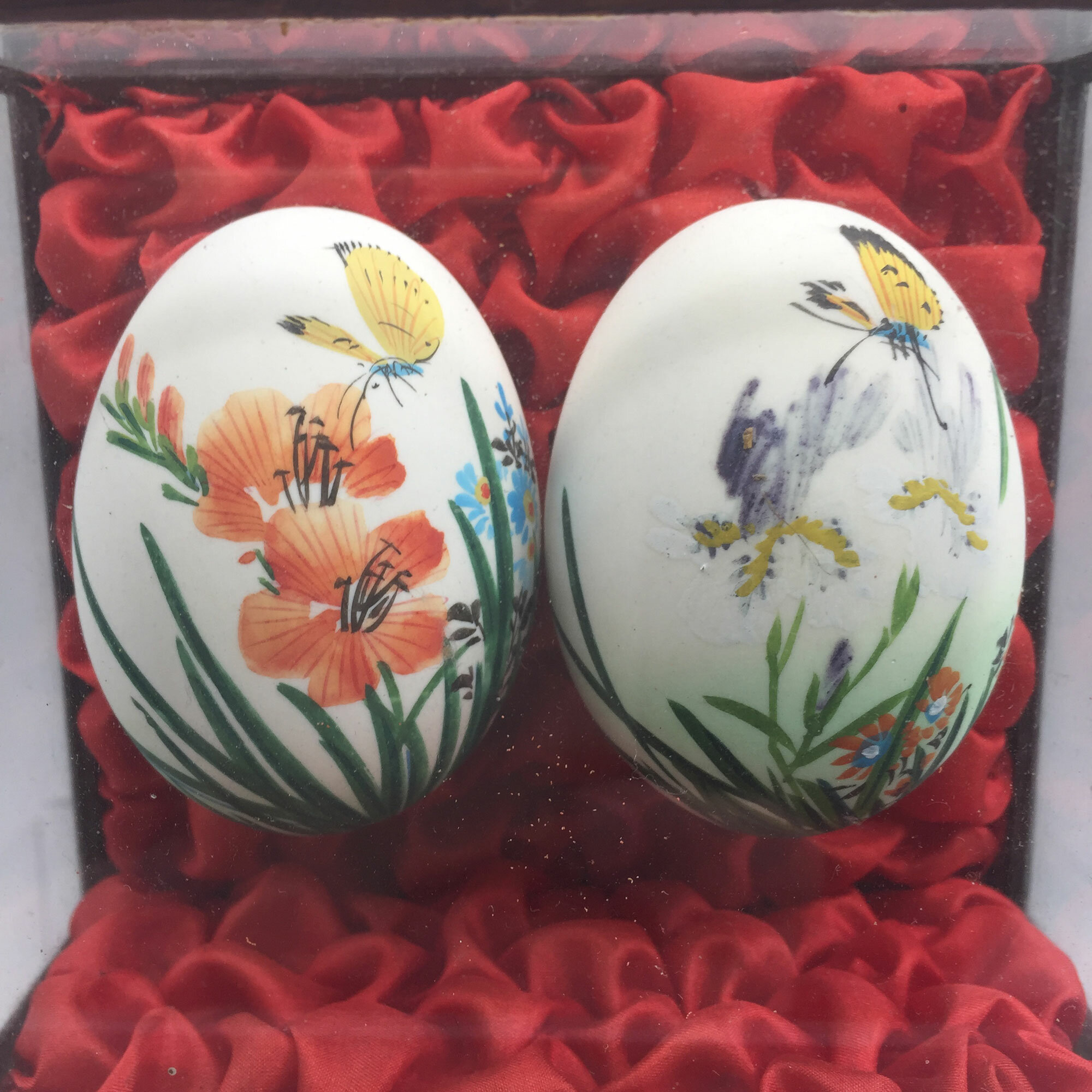
Set of two vintage Chinese painted eggs in glass display boxes
Price: £25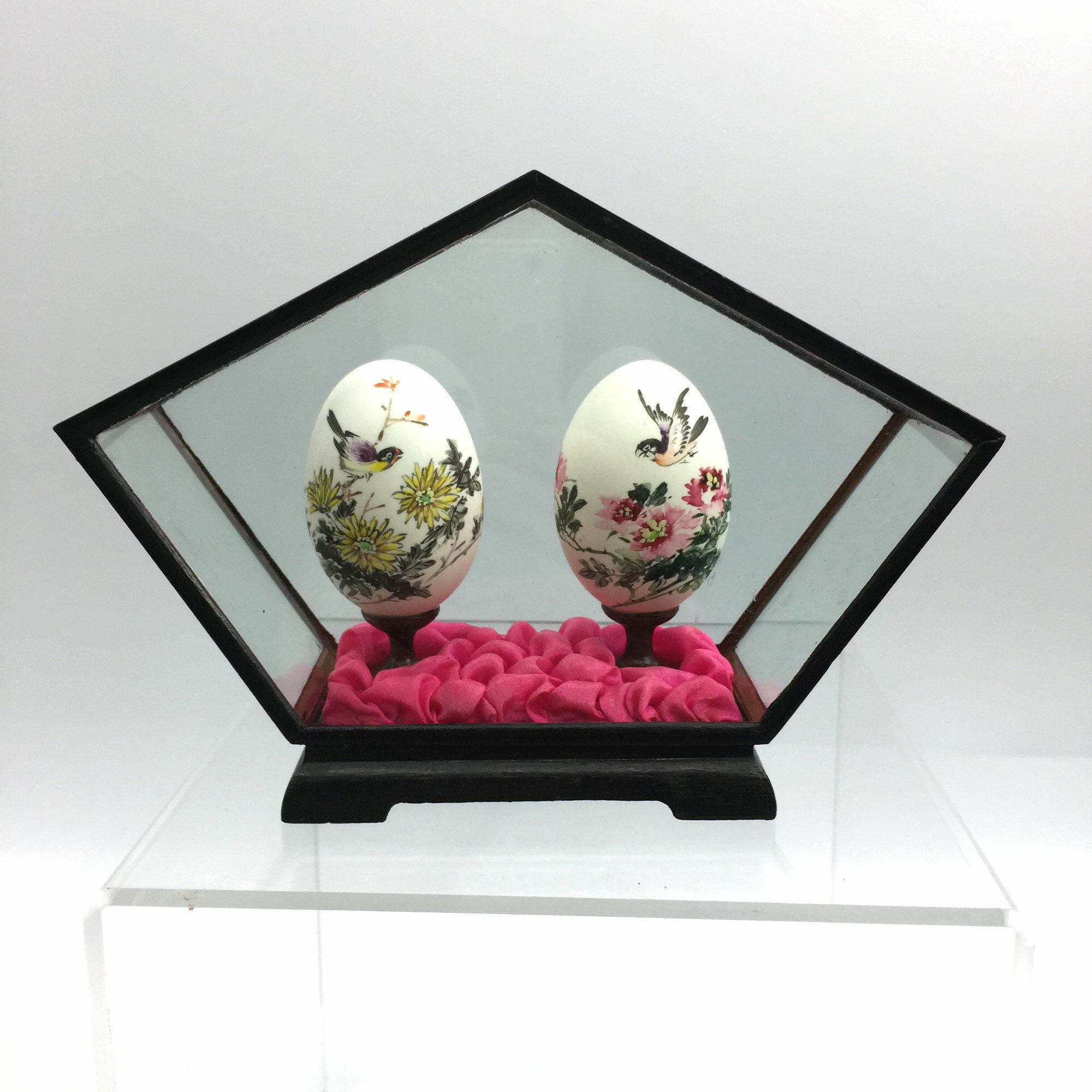
Very fine pair of vintage Chinese painted eggs in a pentagonal glass case
Price: £25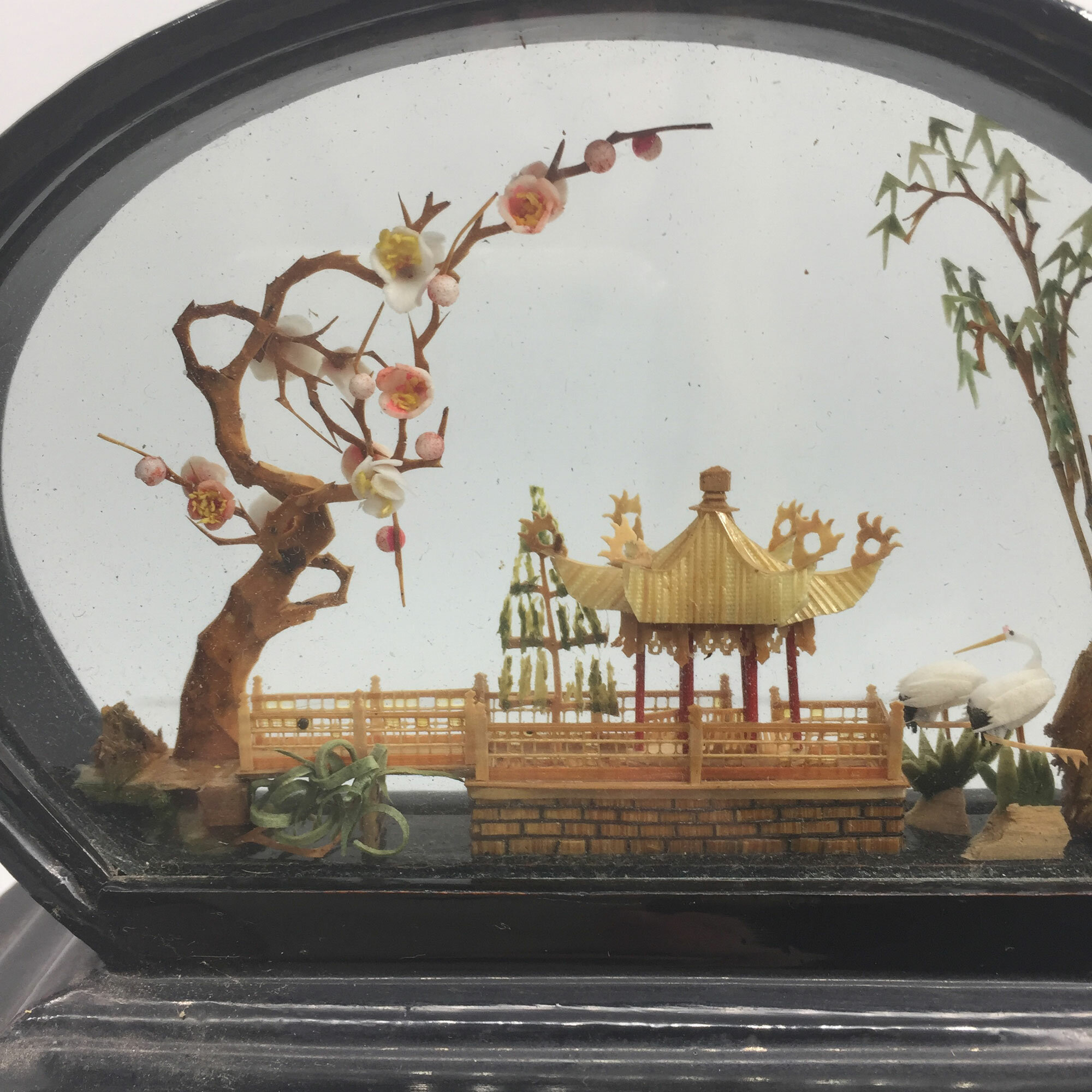
Lot of two vintage Chinese miniature Cork Groups
Price: £25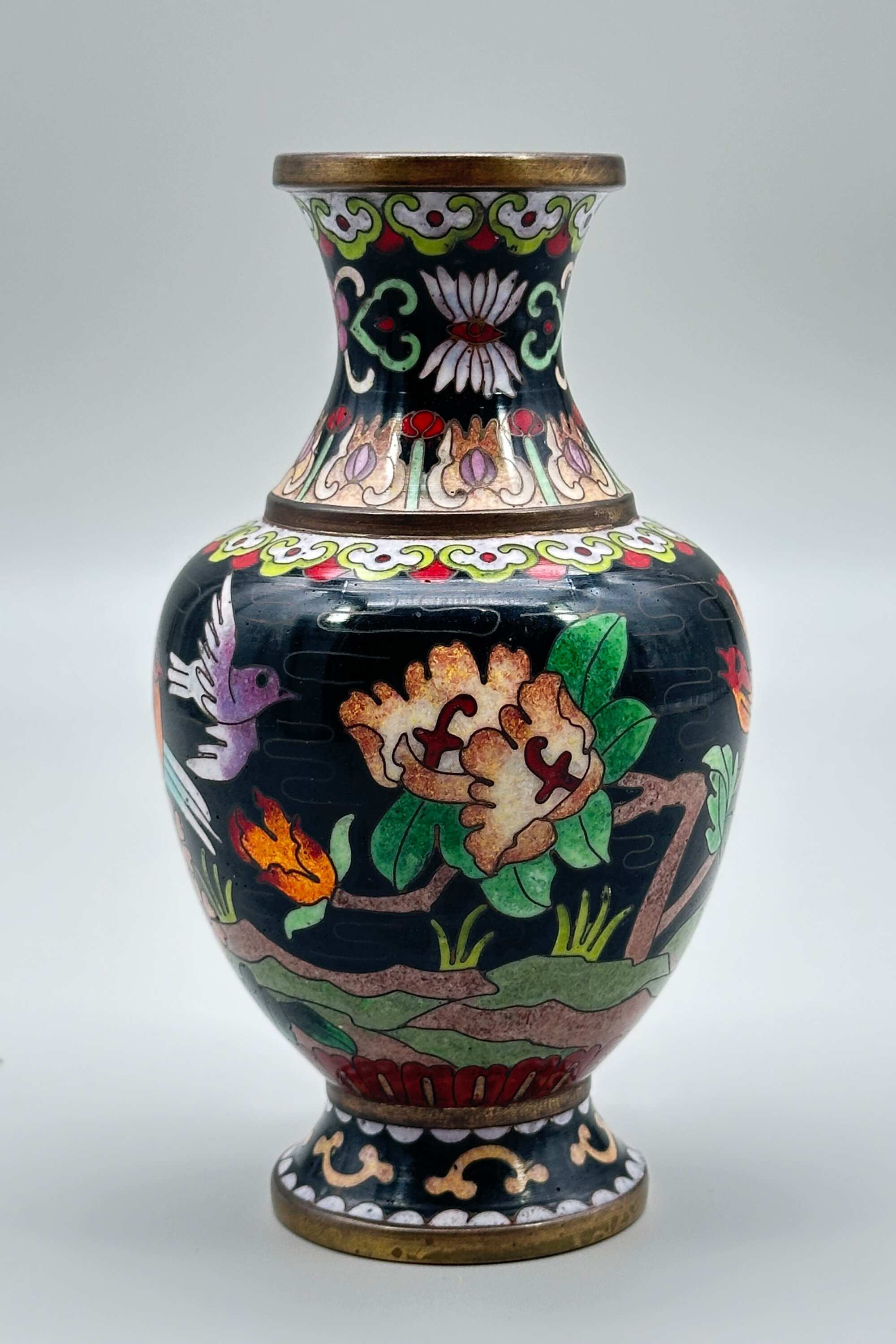
Chinese cloisonné Vase decorated birds, C20th
Price: £25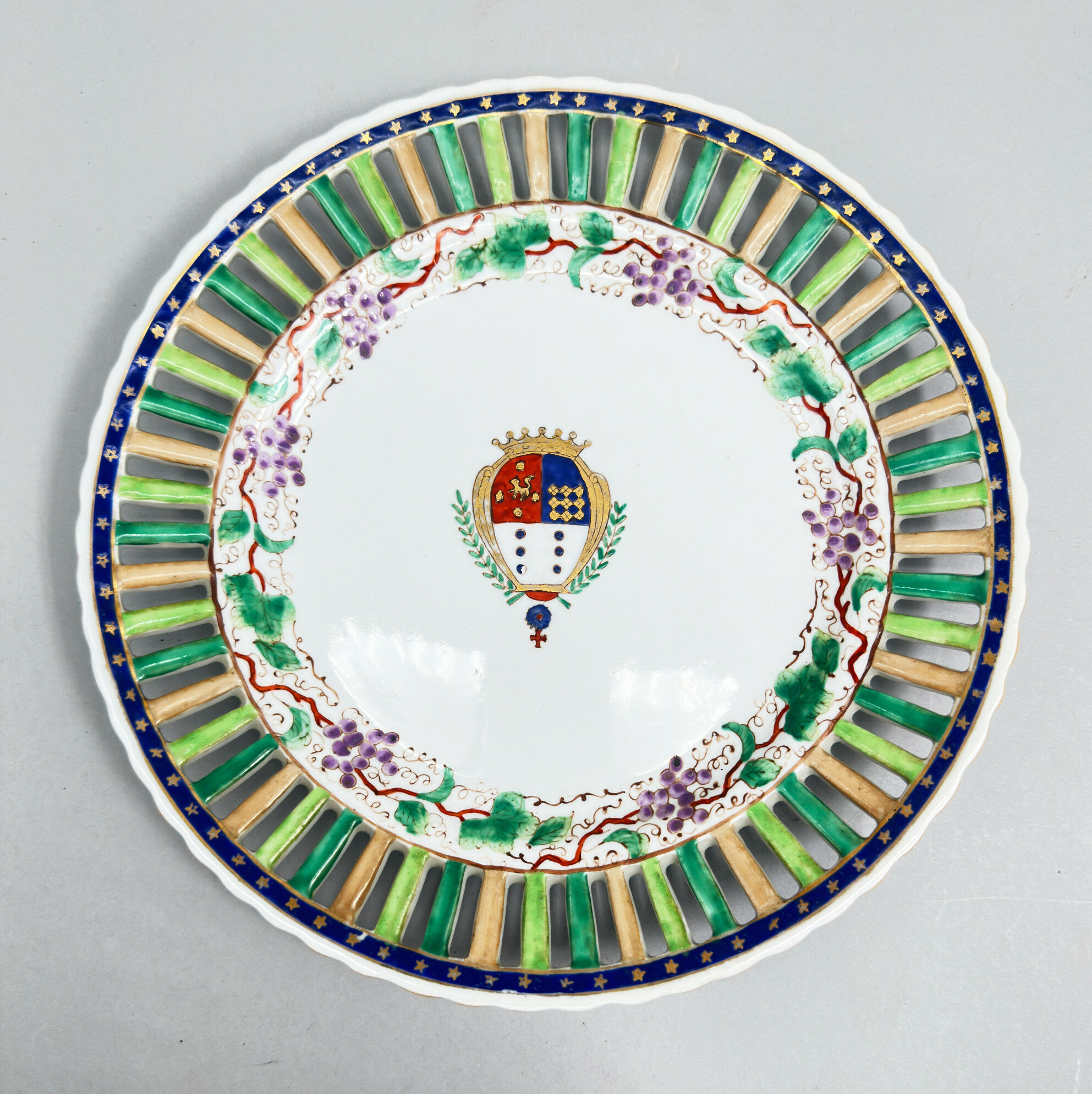
Compagnie des Indes style reticulated edge Armorial Plate, Chinese C20th
Price: £45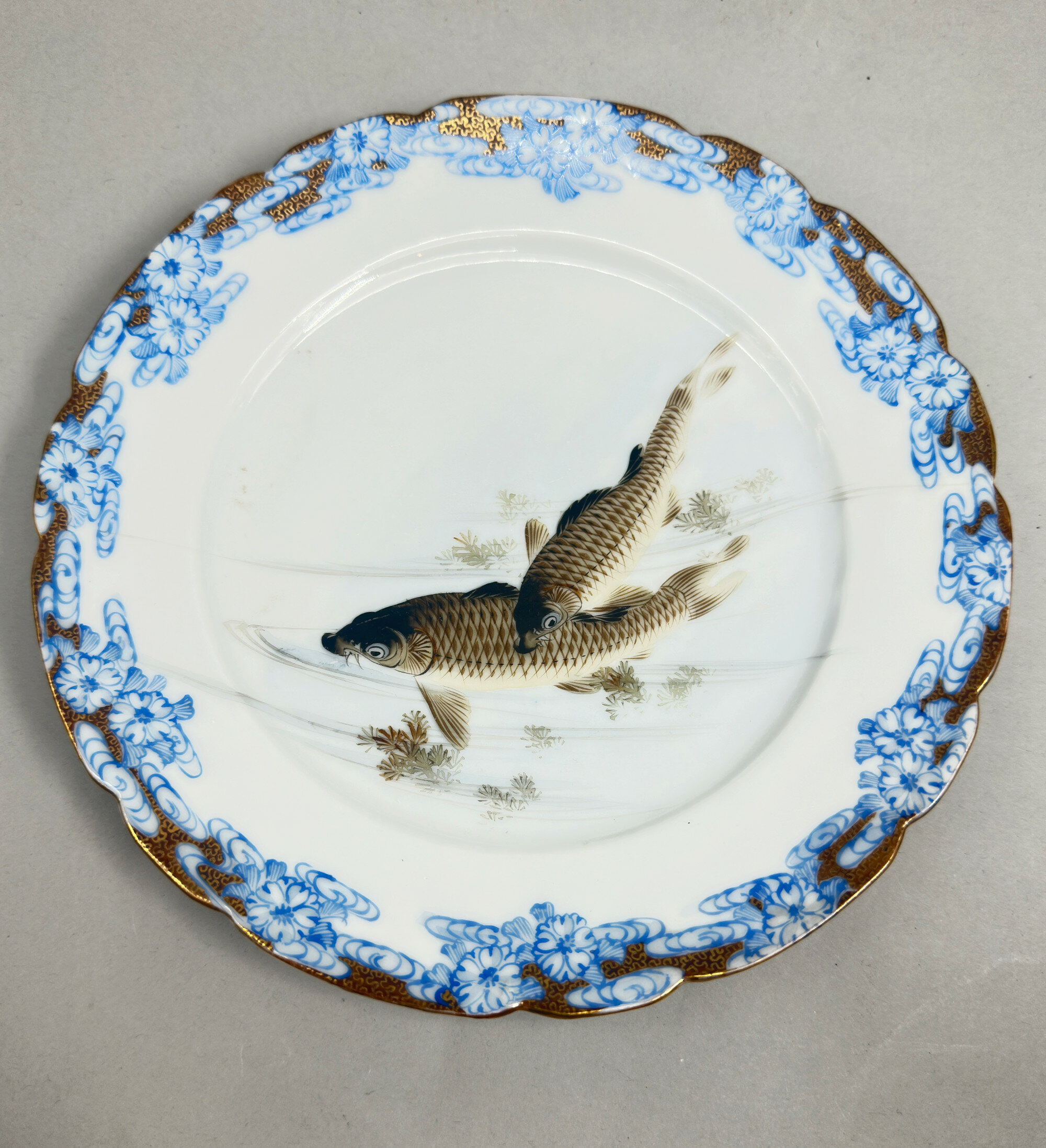
Fine Quality Japanese Plate decorated Carp, signed, early C20th
Price: £25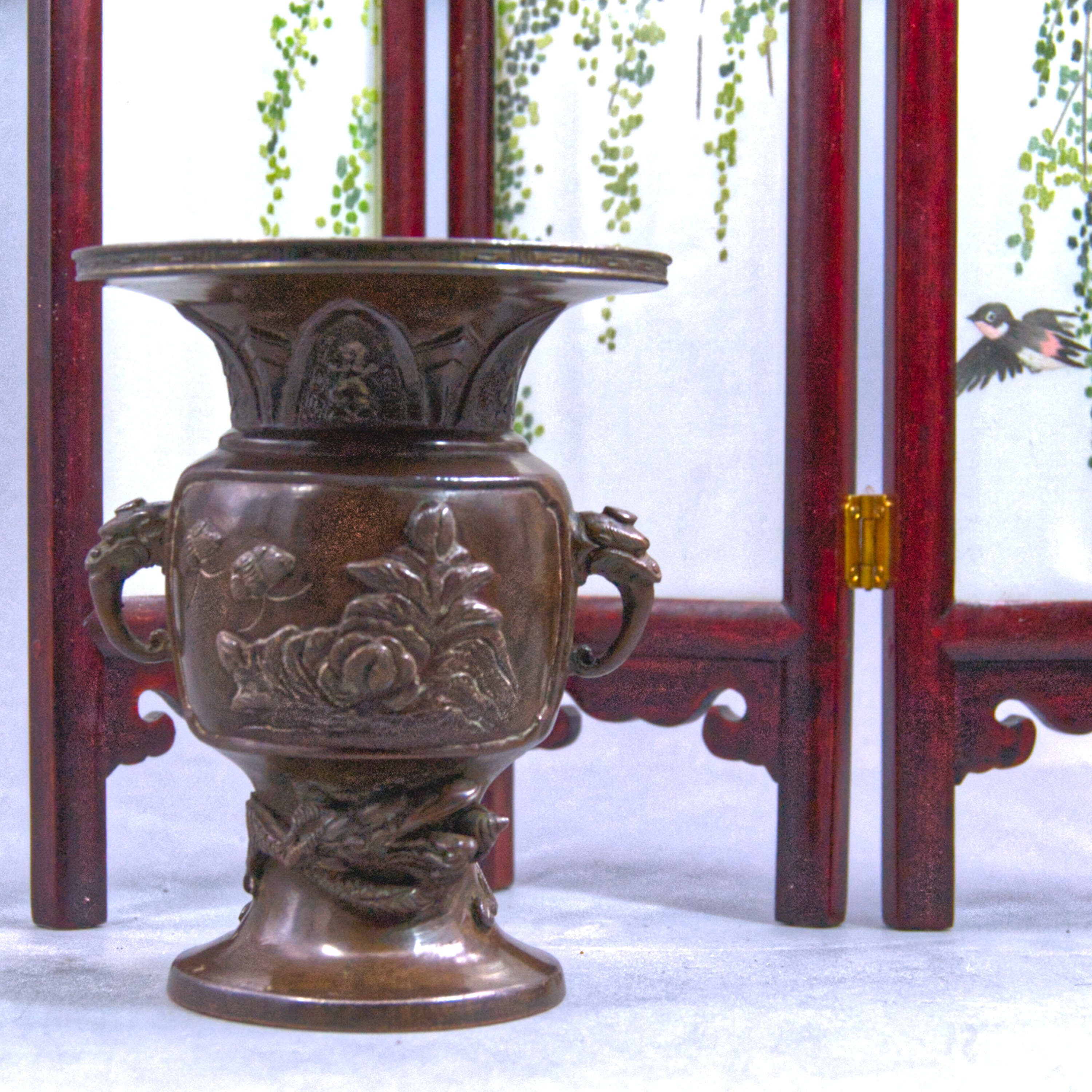
Small Chinese Bronze Vase of Ku Form with Elephant Head Handles, Qing Dynasty circa 1800
Price: £75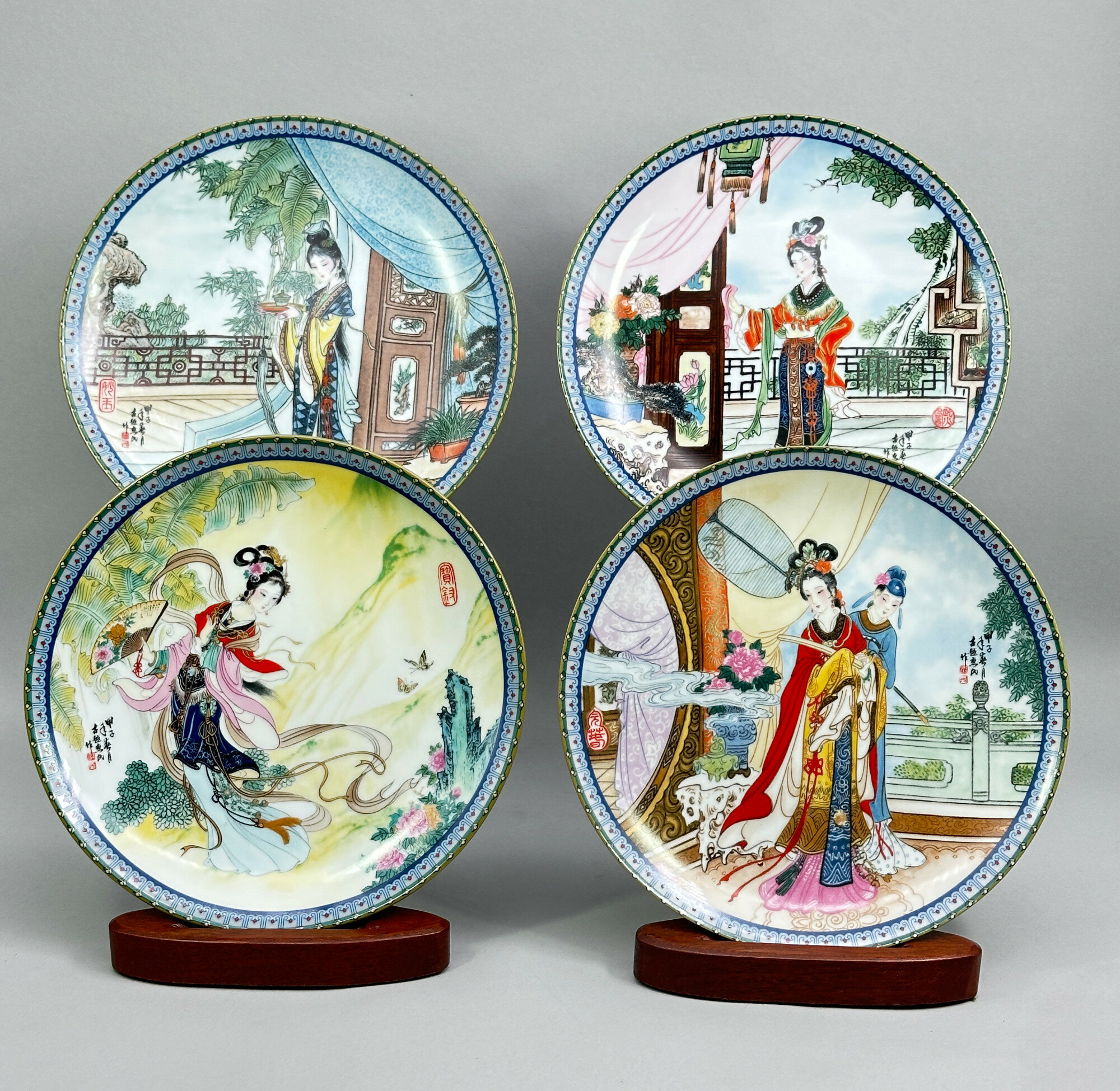
Set of Four Chinese Plates, Beauties of the Red Mansion, Jingdezhen, 1980s
Price: £75Please note that the stands are for display purposes only.
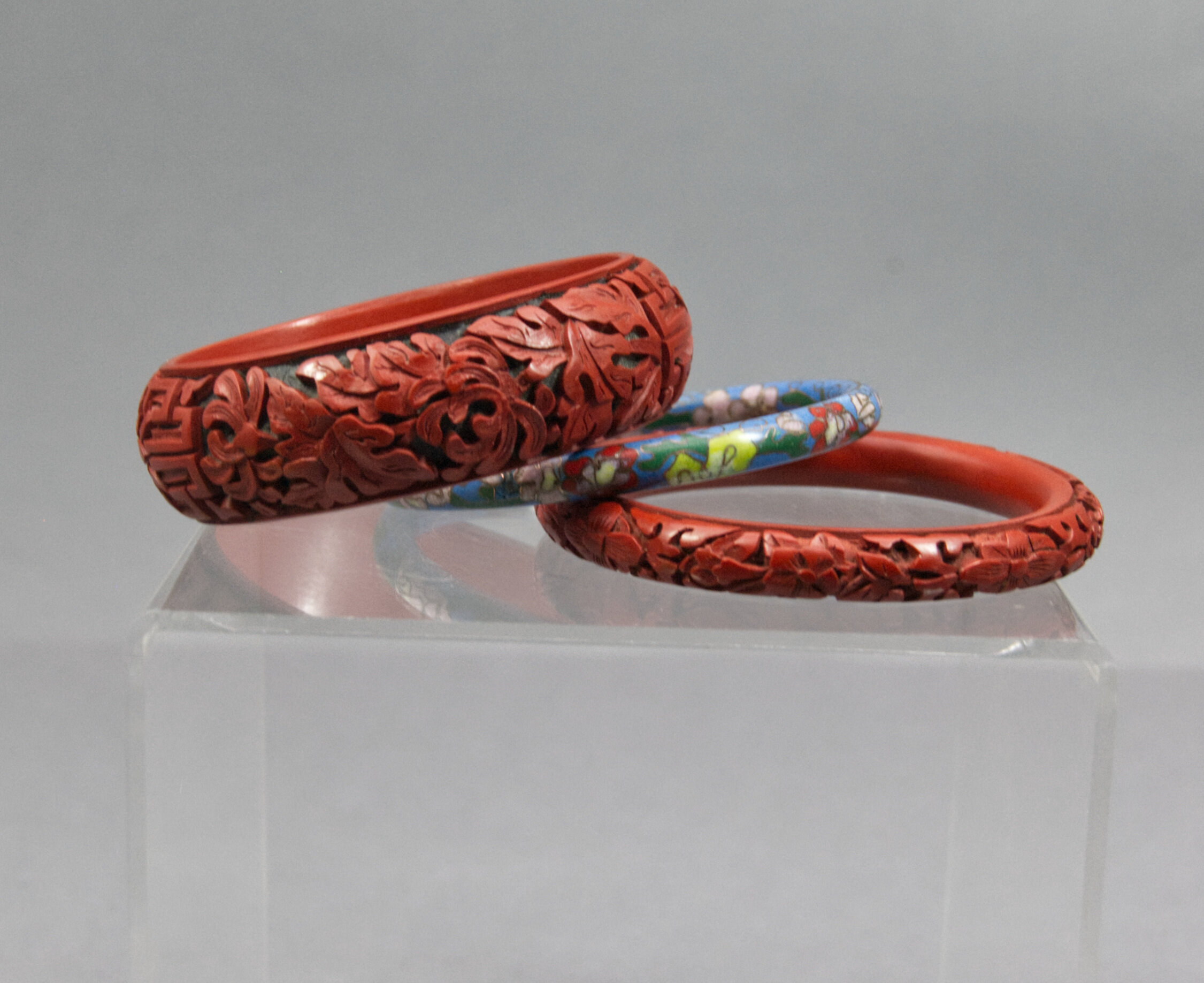
Lot of 3 Chinese bangles
Price: £35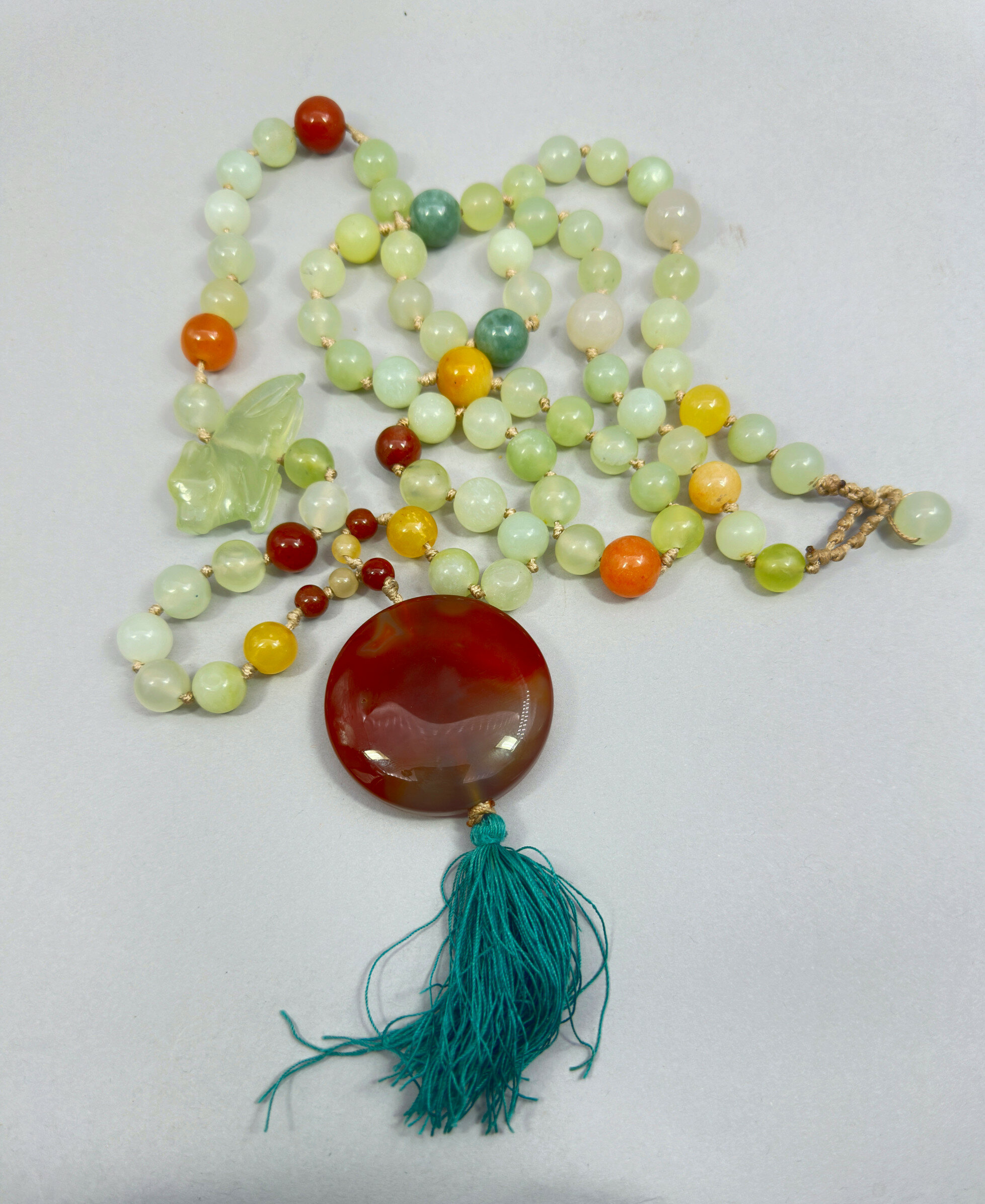
Incredible long jade necklace with large carnelian pendant
Price: £135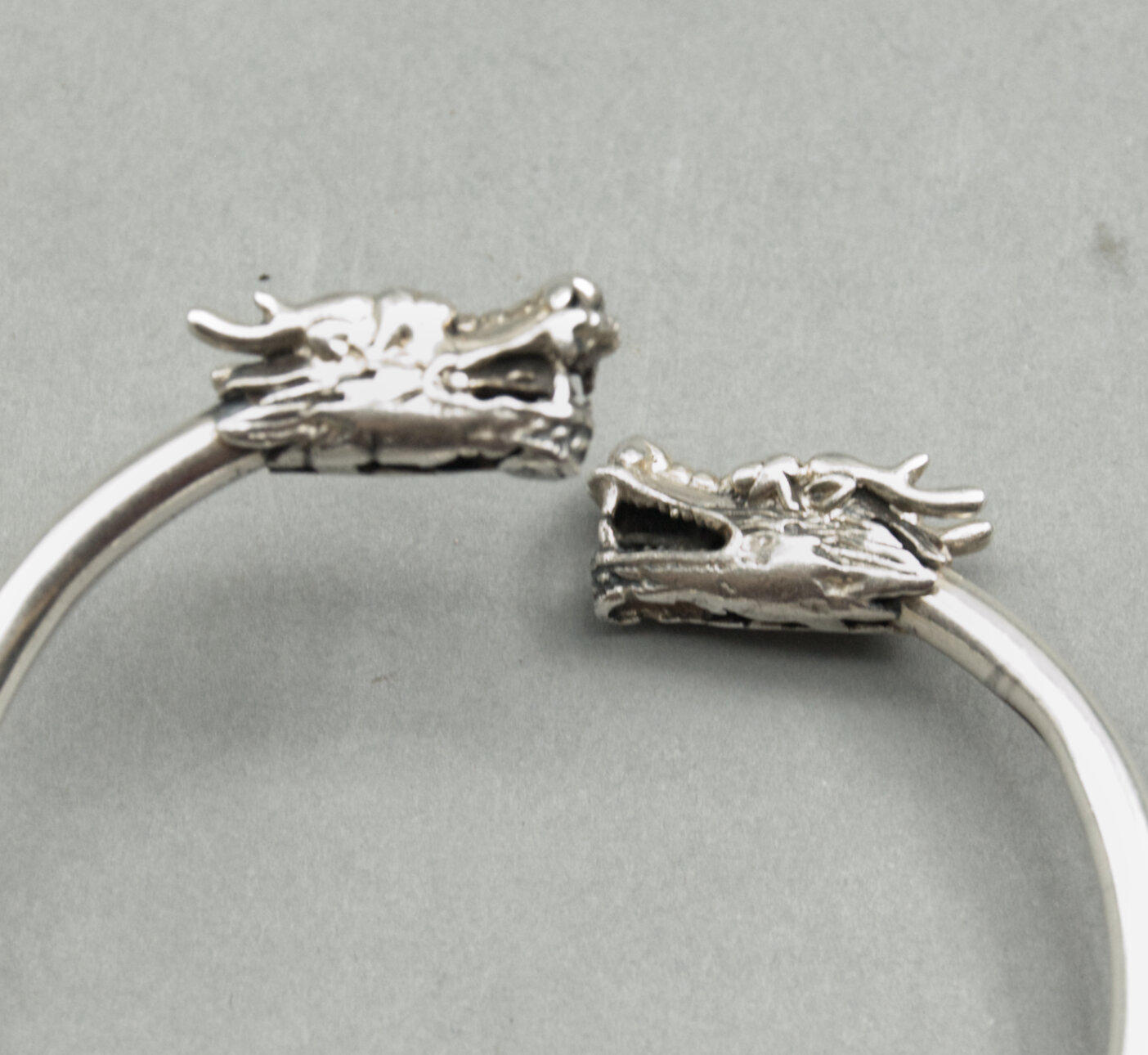
Chinese Silver Bangle with Dragon Heads, C20th
Price: £45
Tibetan amulet necklace featuring Buddhist deity c1900
Price: £25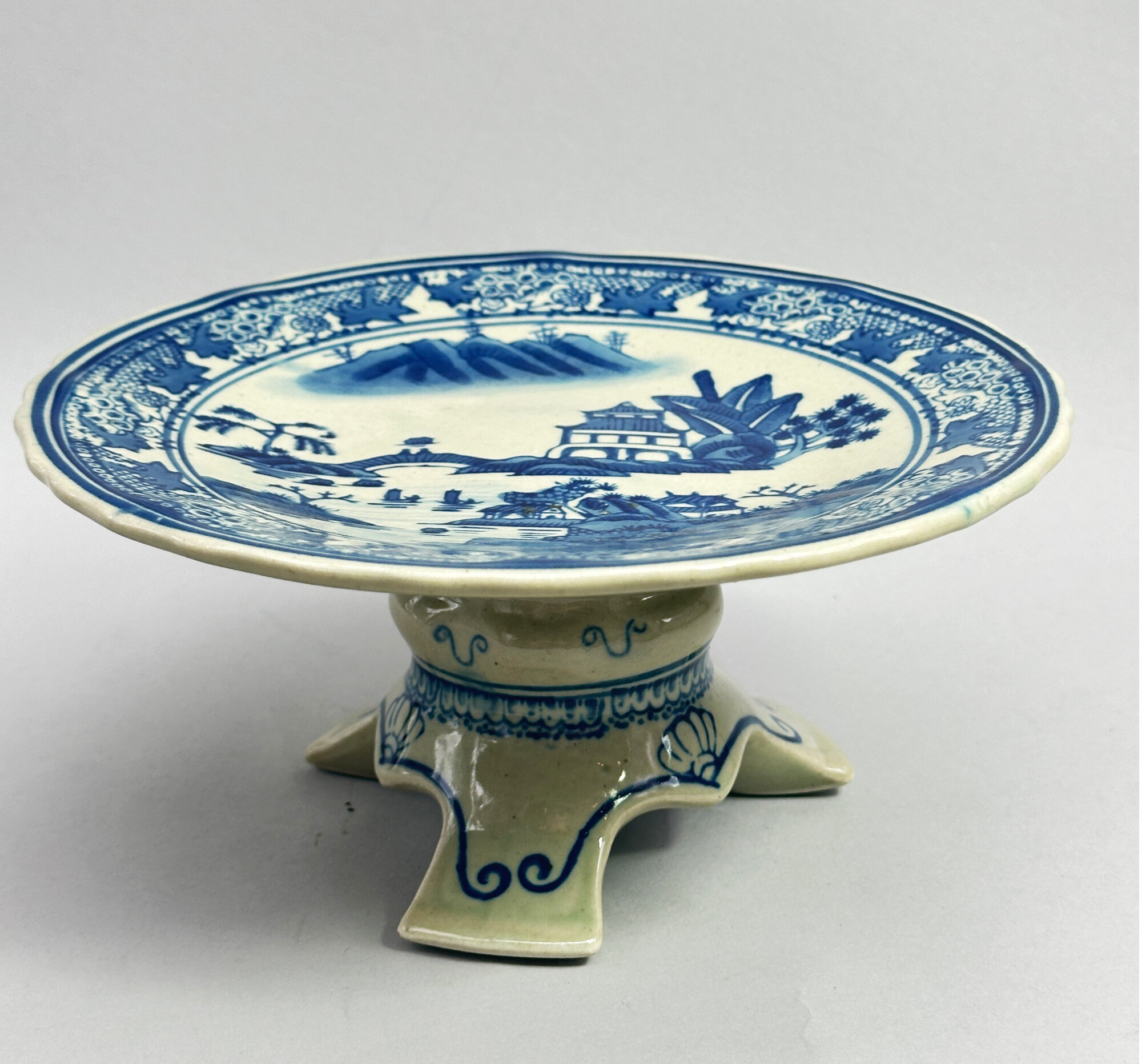
Japanese Celadon Ground Tazza with Chinese Nanking decoration, late C19th
Price: £25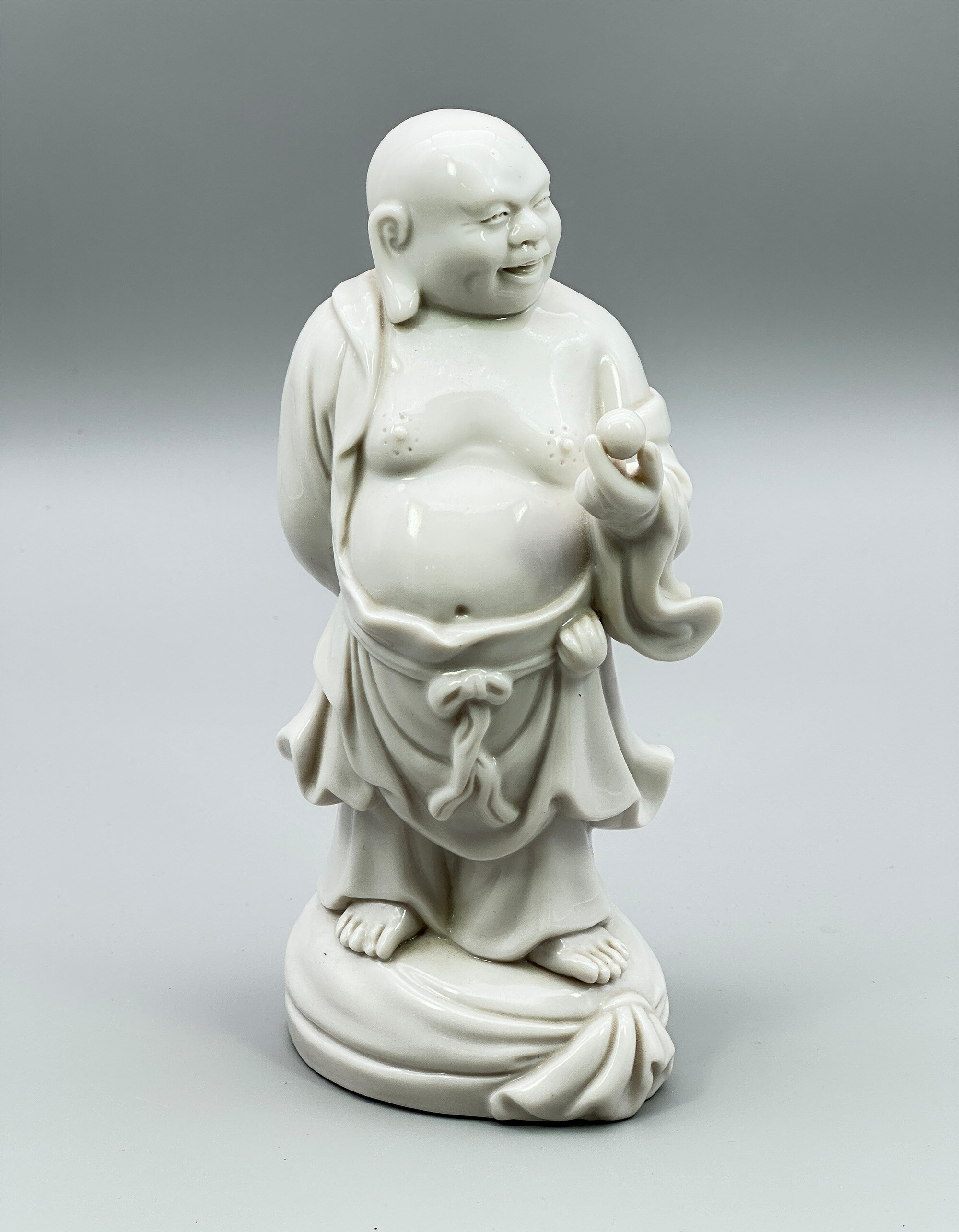
Chinese Blanc de chine figure of Budai, late C20th
Price: £35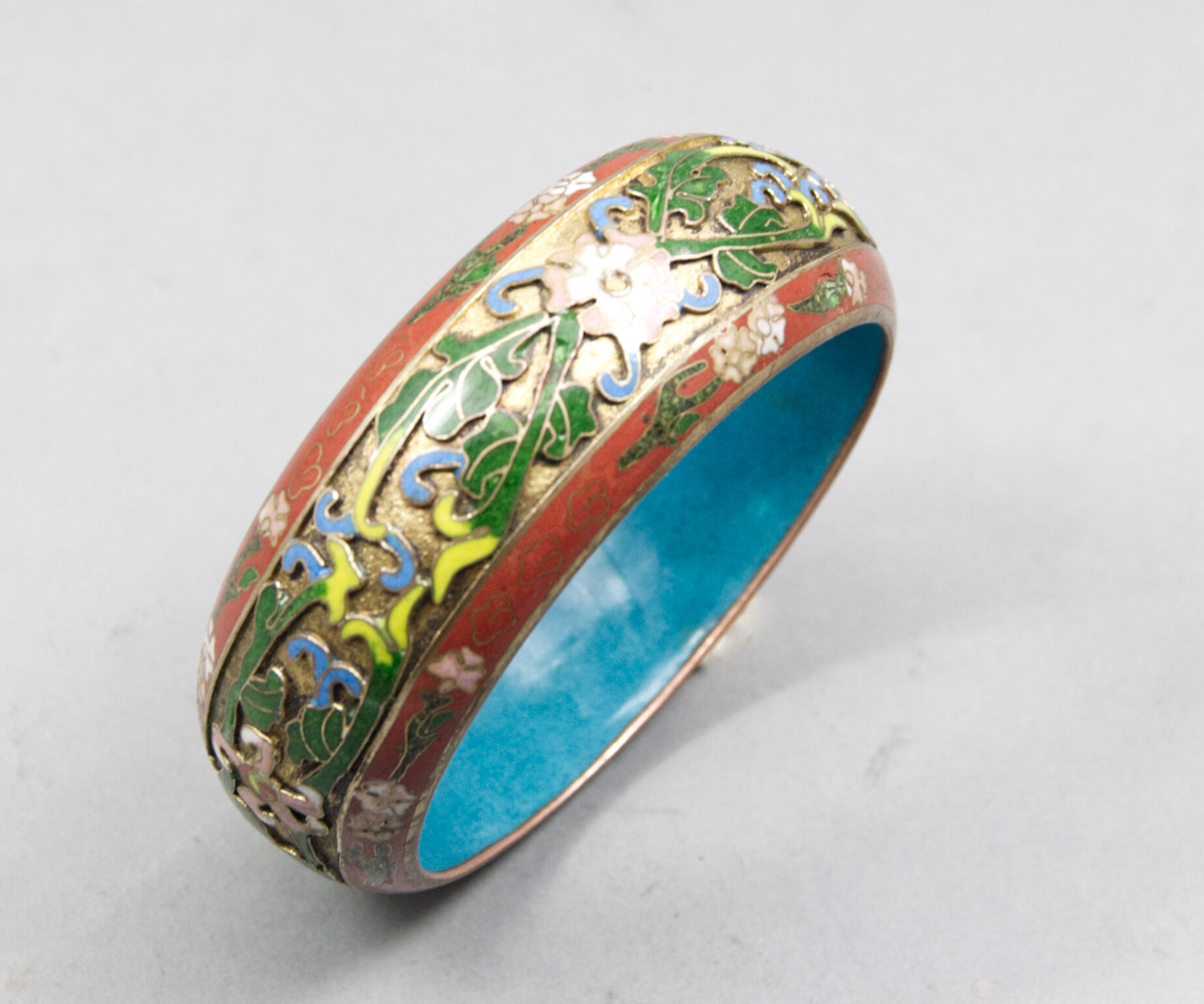
Chinese cloisonne bangle with raised enamel decoration circa 1900
Price: £35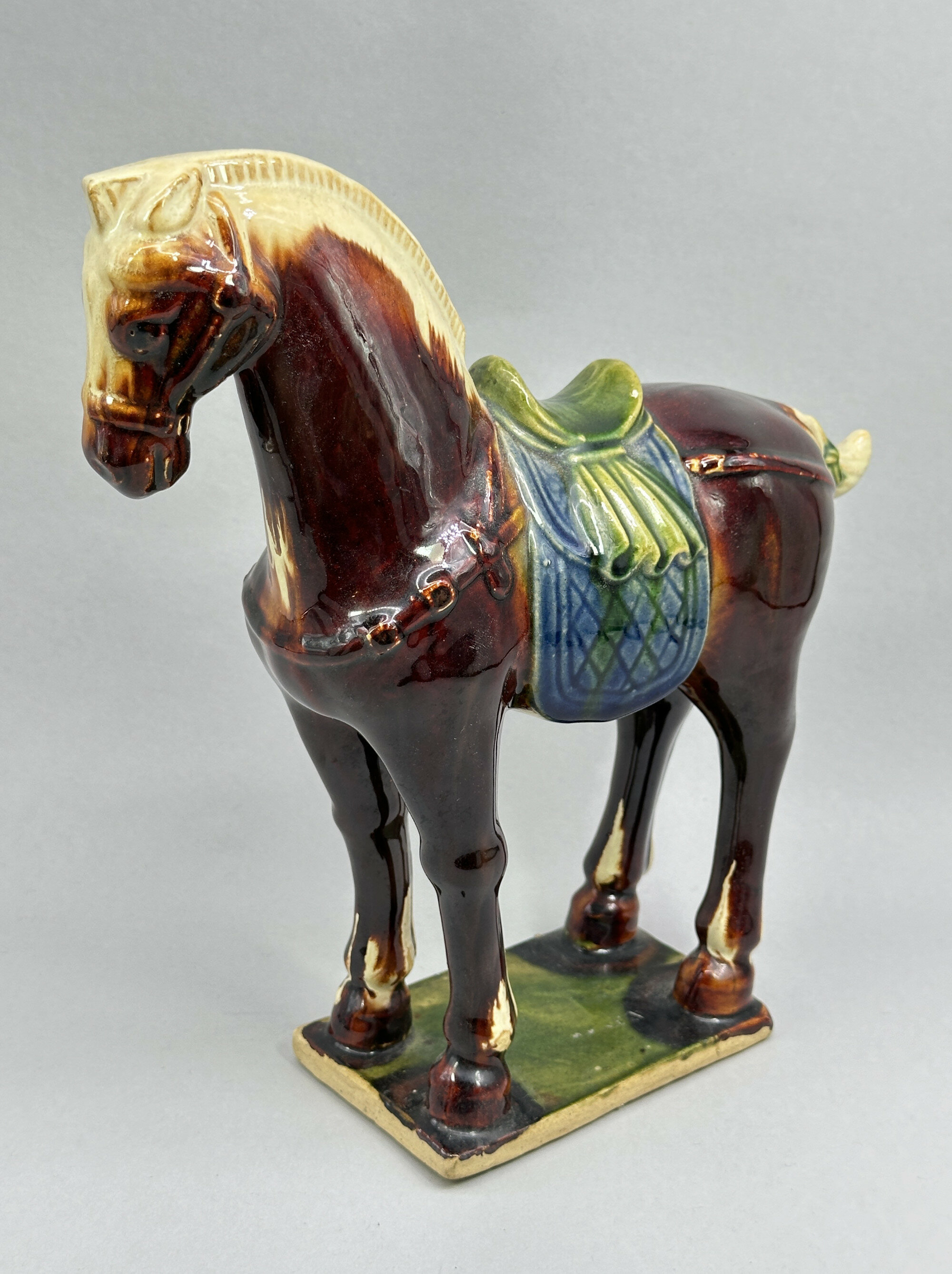
Chinese Sancai Glaze Model of a Horse in the Tang Dynasty Style, 20th Century
Price: £45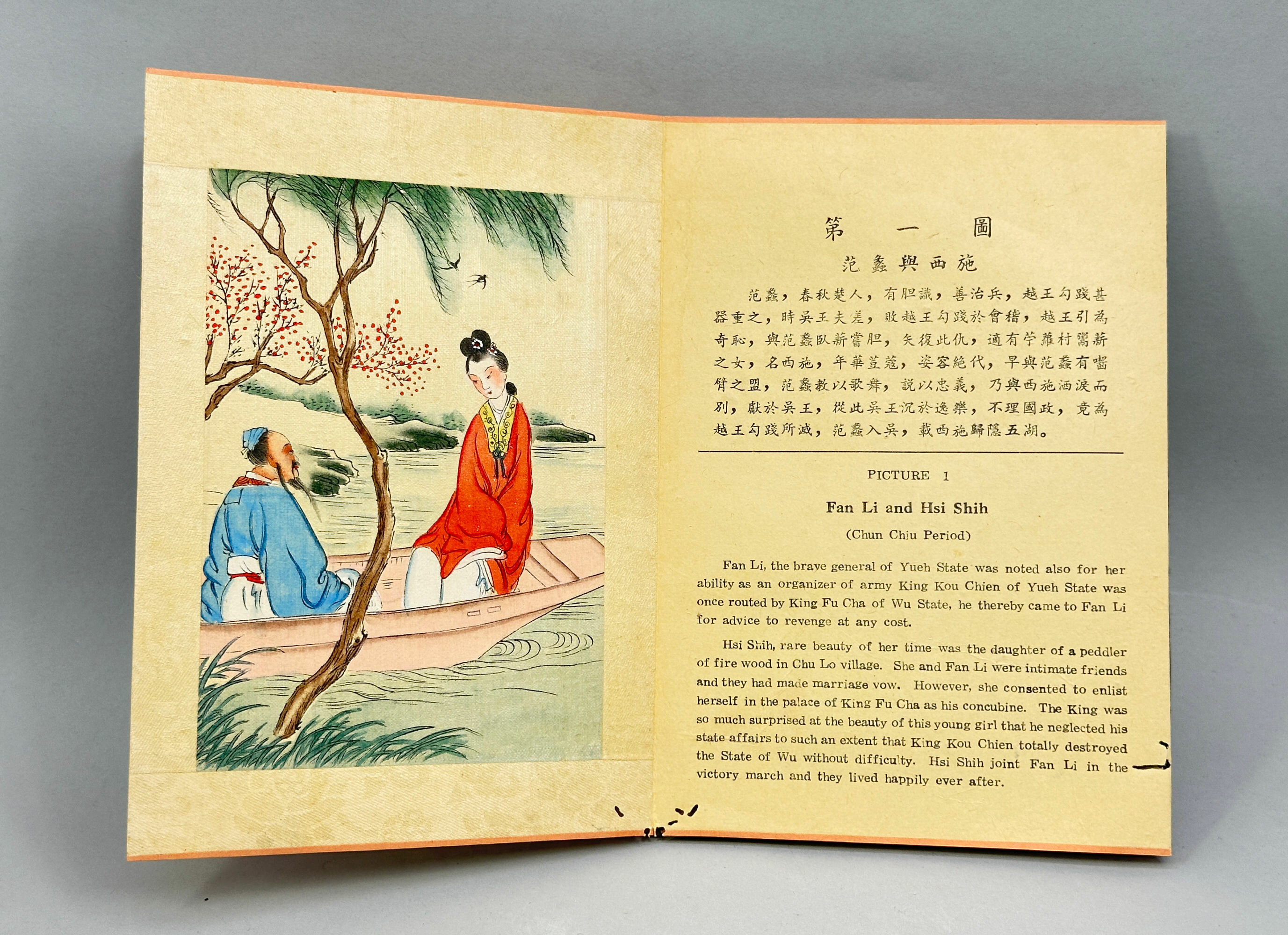
The Braves and the Fair Men of Letters and Women of Fame of Old China circa 1900
Price: £75Each of the ten characters are described in a double page spread, the right hand containing texts in both Chinese and English and the left hand with hand coloured illustrations on silk , delicately rendered. All ten ‘couples’ represent the Confucian of harmony between husband and wife. The book 'works' from right to left and the reverses of the pages are left blank. At each end are fabric covered boards, the front board with a pasted paper inscription in Chinese with a small red seal mark. Other examples are finished with boards in wood, but these are, perhaps, not original or a more deluxe version of the volume. In addition there are other books in a near identical format and presumably issued by the same publisher including ‘Stories of Ancient Chinese Noted Beauties’ and ‘Eight Fairies Festival’.
The illustrations are in excellent condition with the colours still bright. The yellow finish to the paper is original and perhaps intended to give an 'antique' effect. Each of the end boards are very slightly scuffed at the borders. Some of the pages, including the title page and the two end papers, suffer from varying degrees of 'worm hole' perforation. There are also various small tears. A full set of illustrations can be seen above and further images (and a more detailed condition report) are, of course, available on request. But these condition issues should not necessarily detract from the charm of the item which is an attempt to present some of the folk lore of China for Westerners keen to know more about the culture of a country which had attracted such popular interest during the Victorian period.
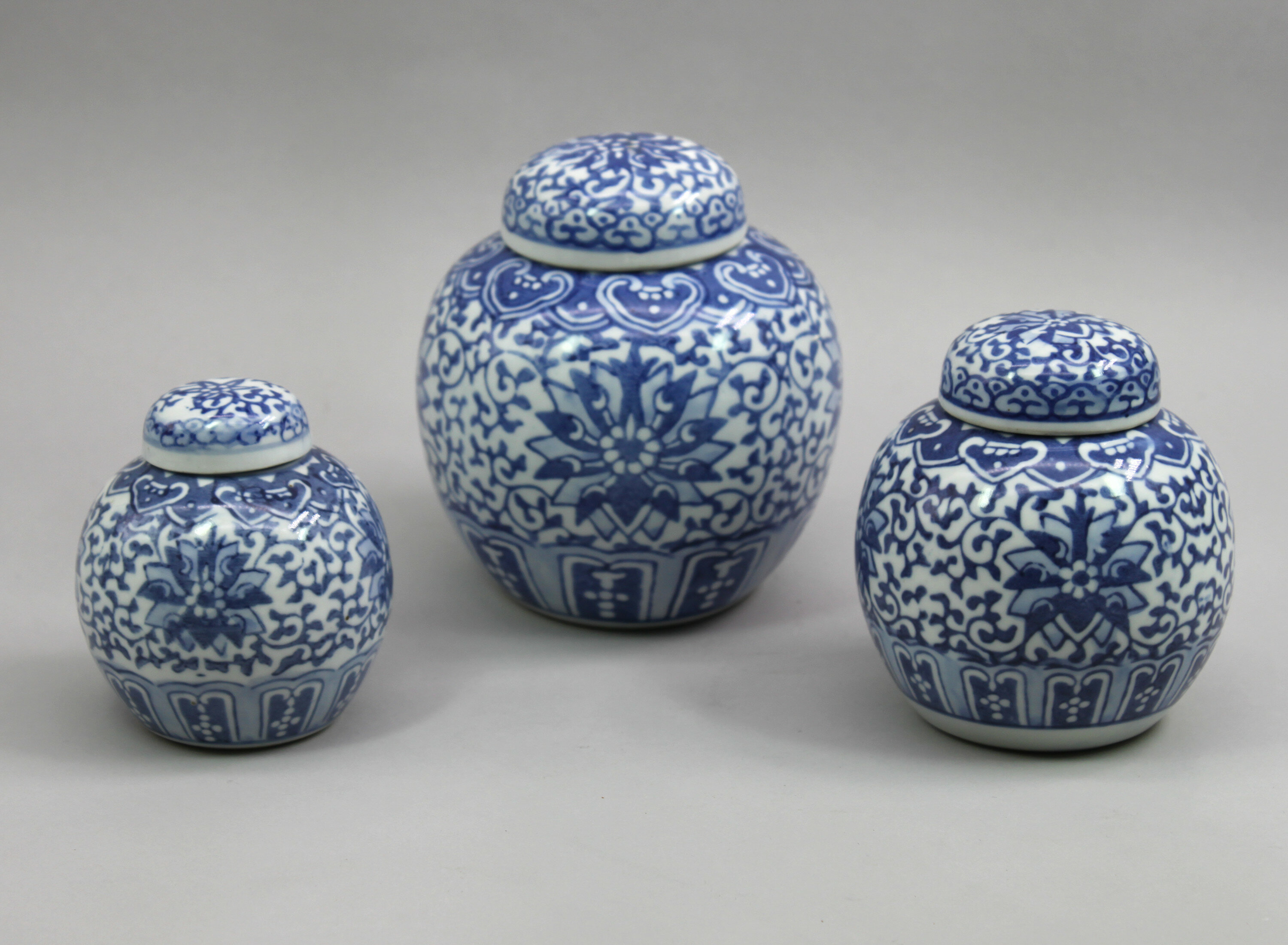
Graduated set of Three Chinese Blue and White Ginger Jars and Covers, 20th Century
Price: £45Although of relatively recent manufacture, the quality of these pieces continues the Chinese ceramic productions of the late nineteenth century and together they form an attractive decorative ensemble for the contemporary interior.
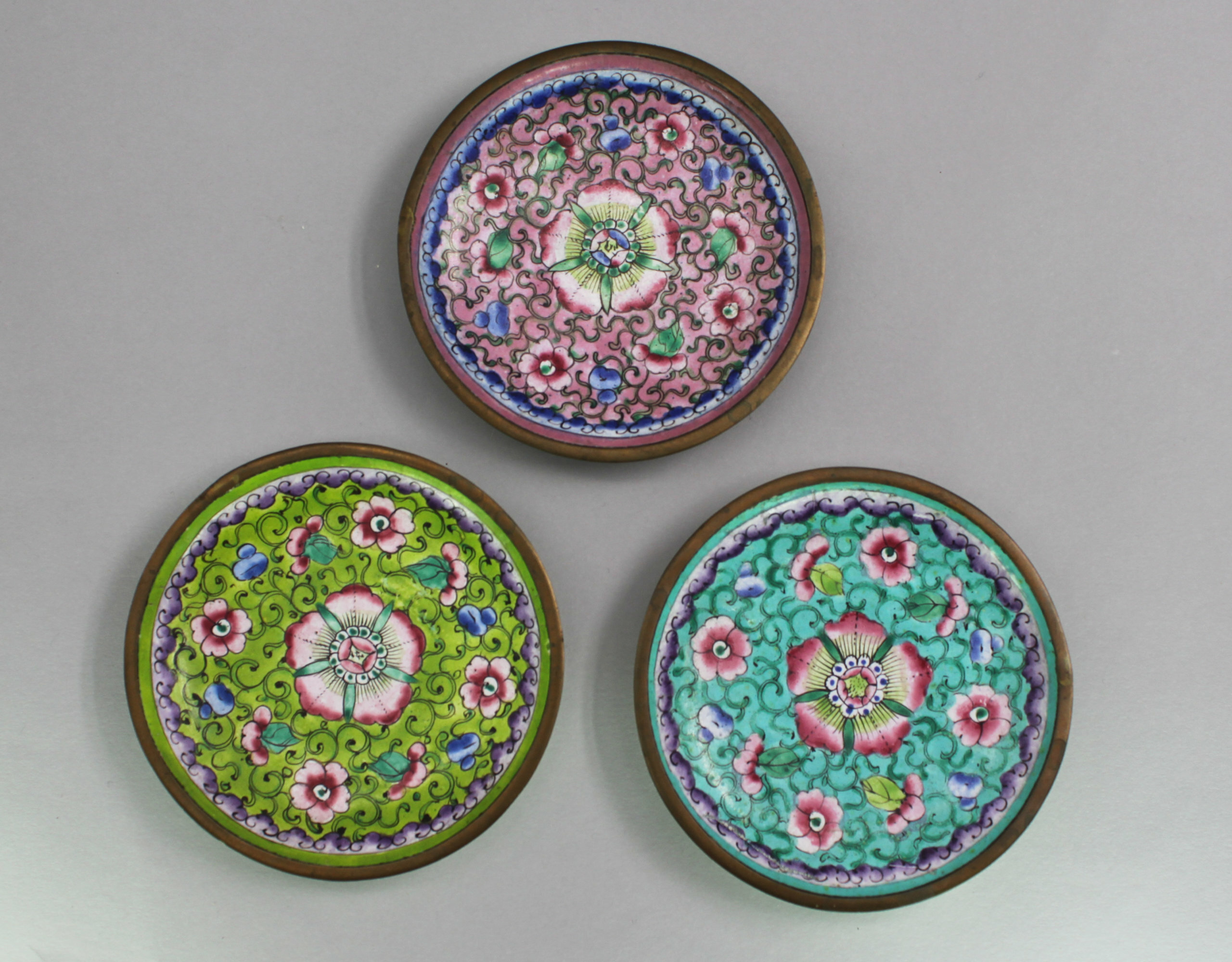
Three Chinese Canton Enamel Dishes, Nineteenth Century
Price: £45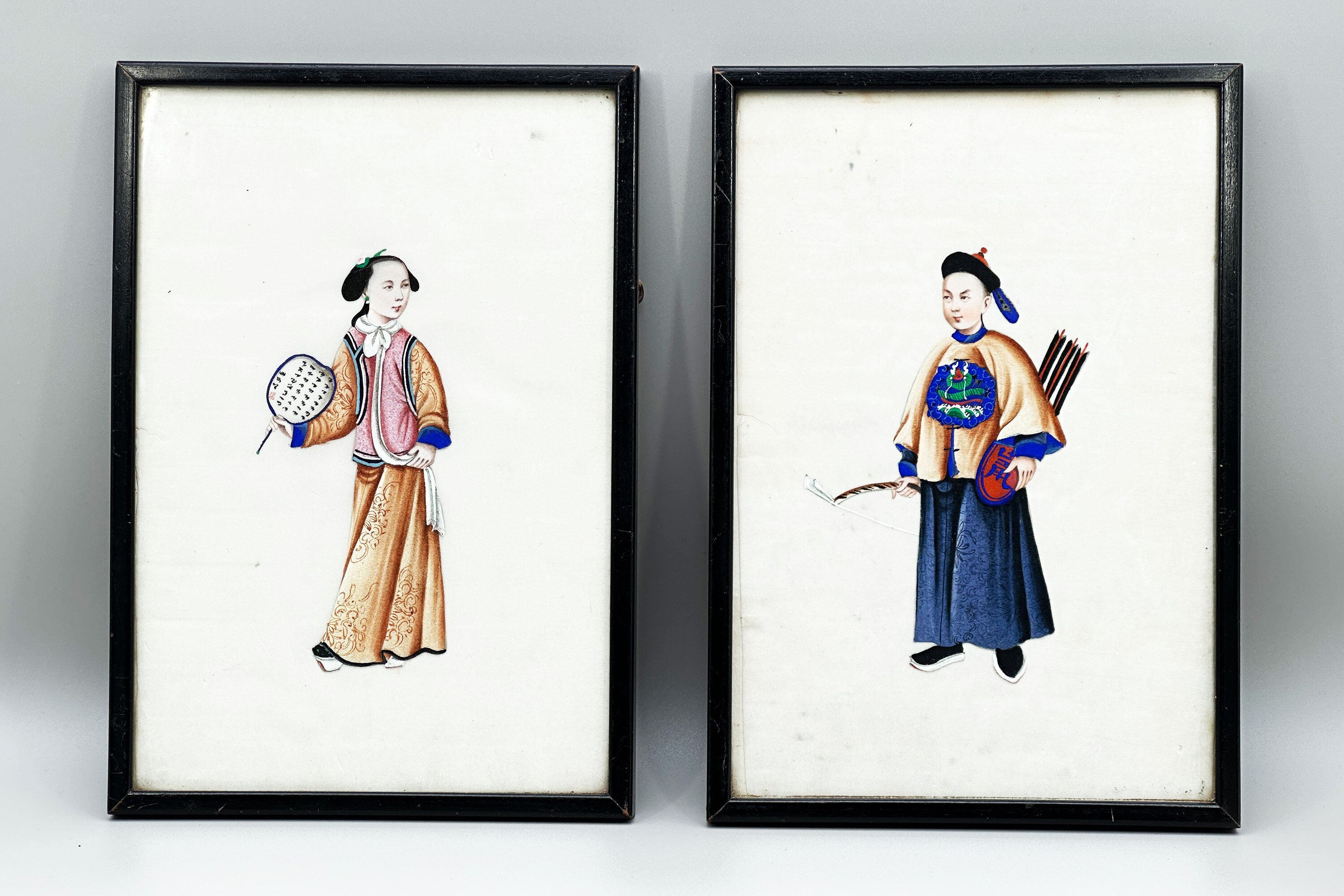
Pair of Chinese Paintings on rice paper, C19th, later framed
Price: £110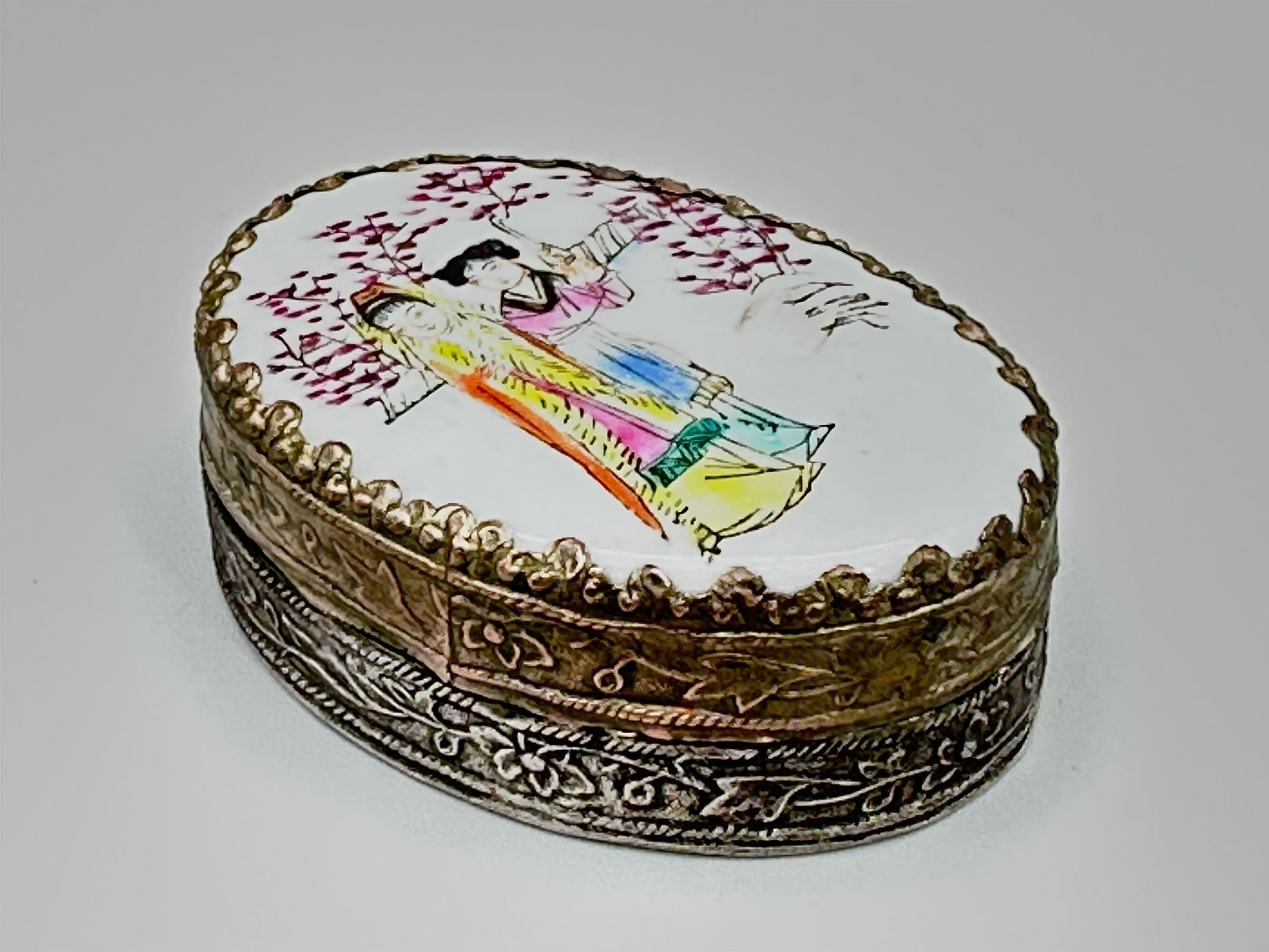
Chinese silver plate Trinket Box with ceramic plaque, C20th
Price: £25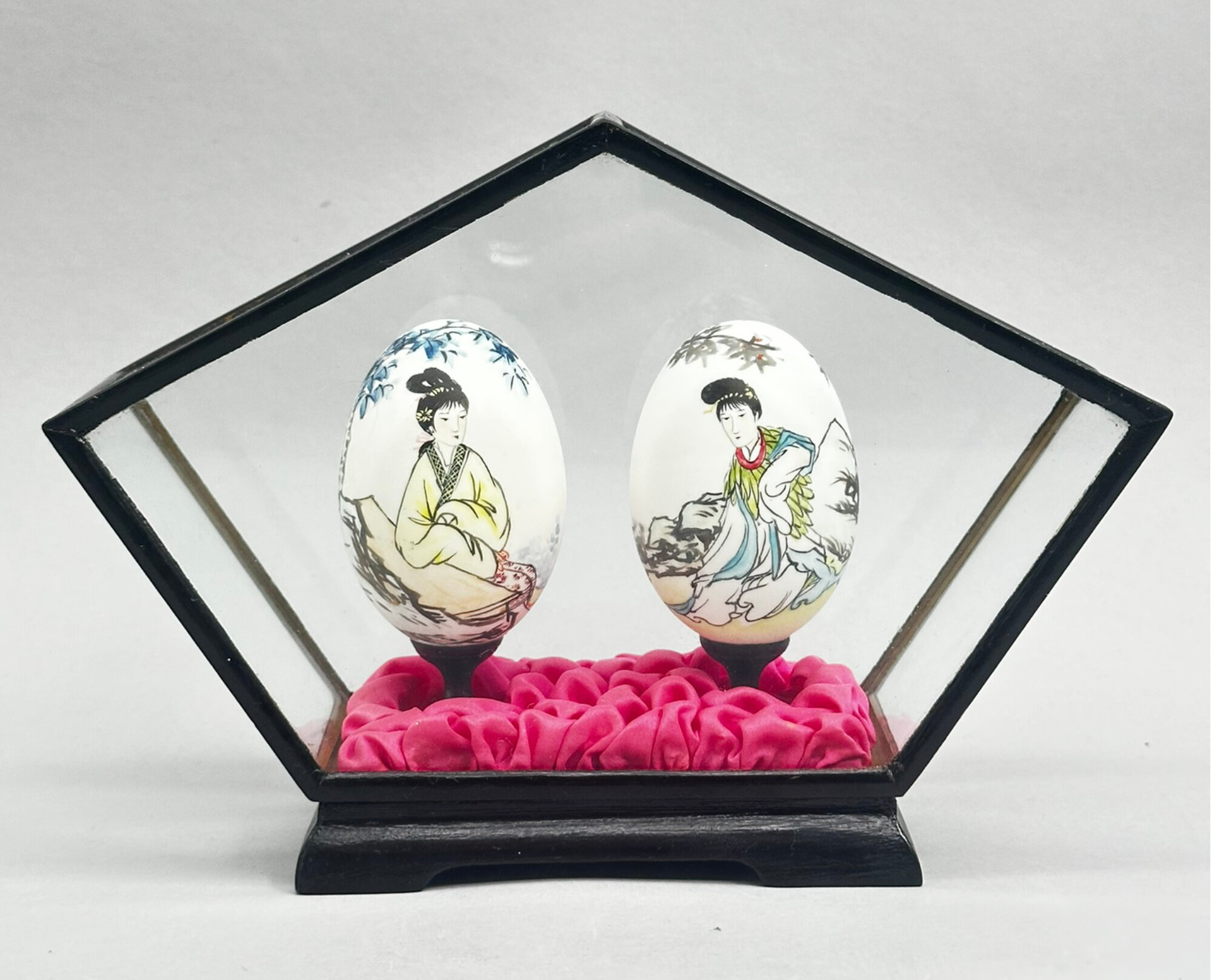
Pair of Chinese Hand Painted Eggs in Case, 1970s
Price: £25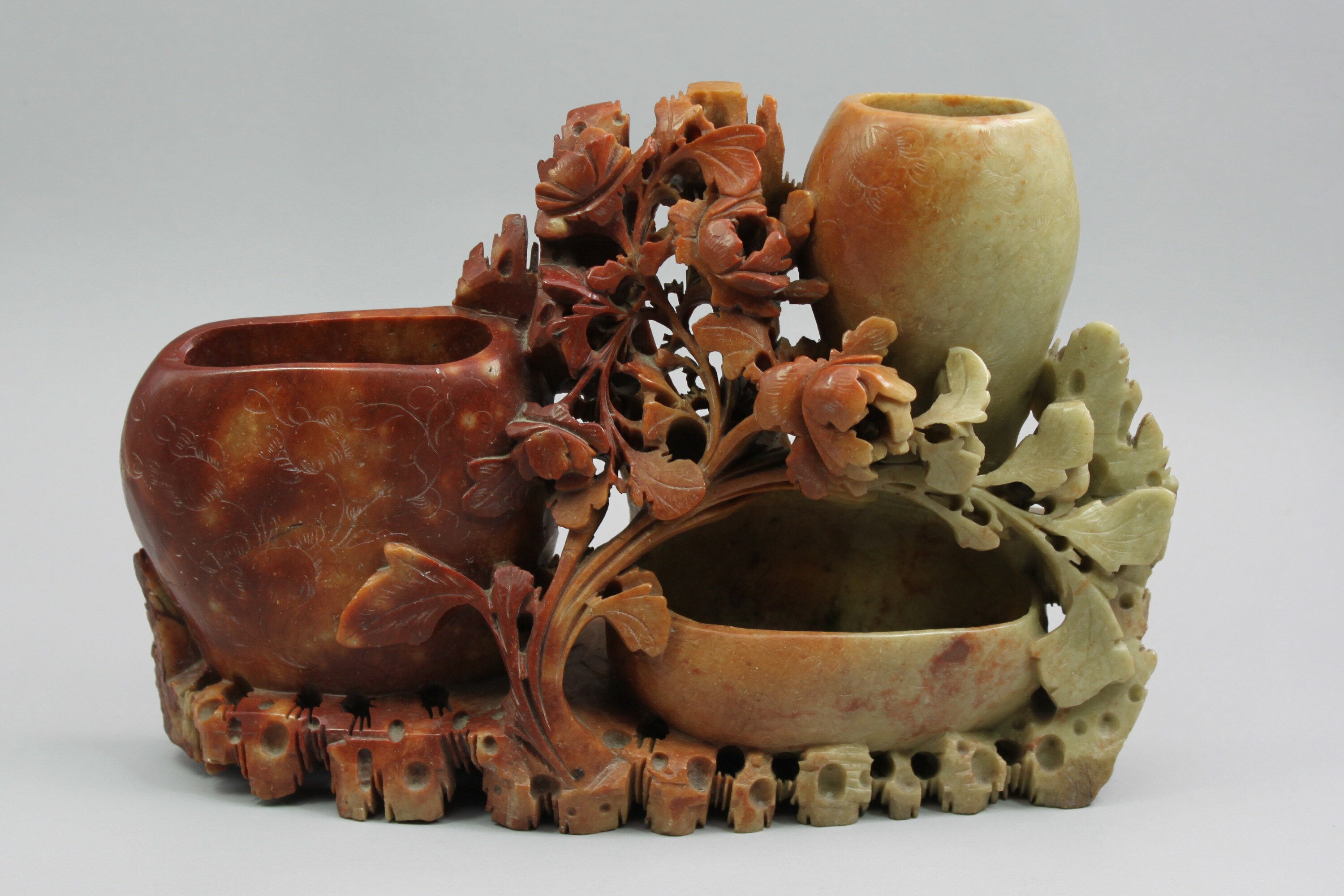
Chinese Soapstone Brushwasher decorated with flowering Lotus, early 20th Century
Price: £45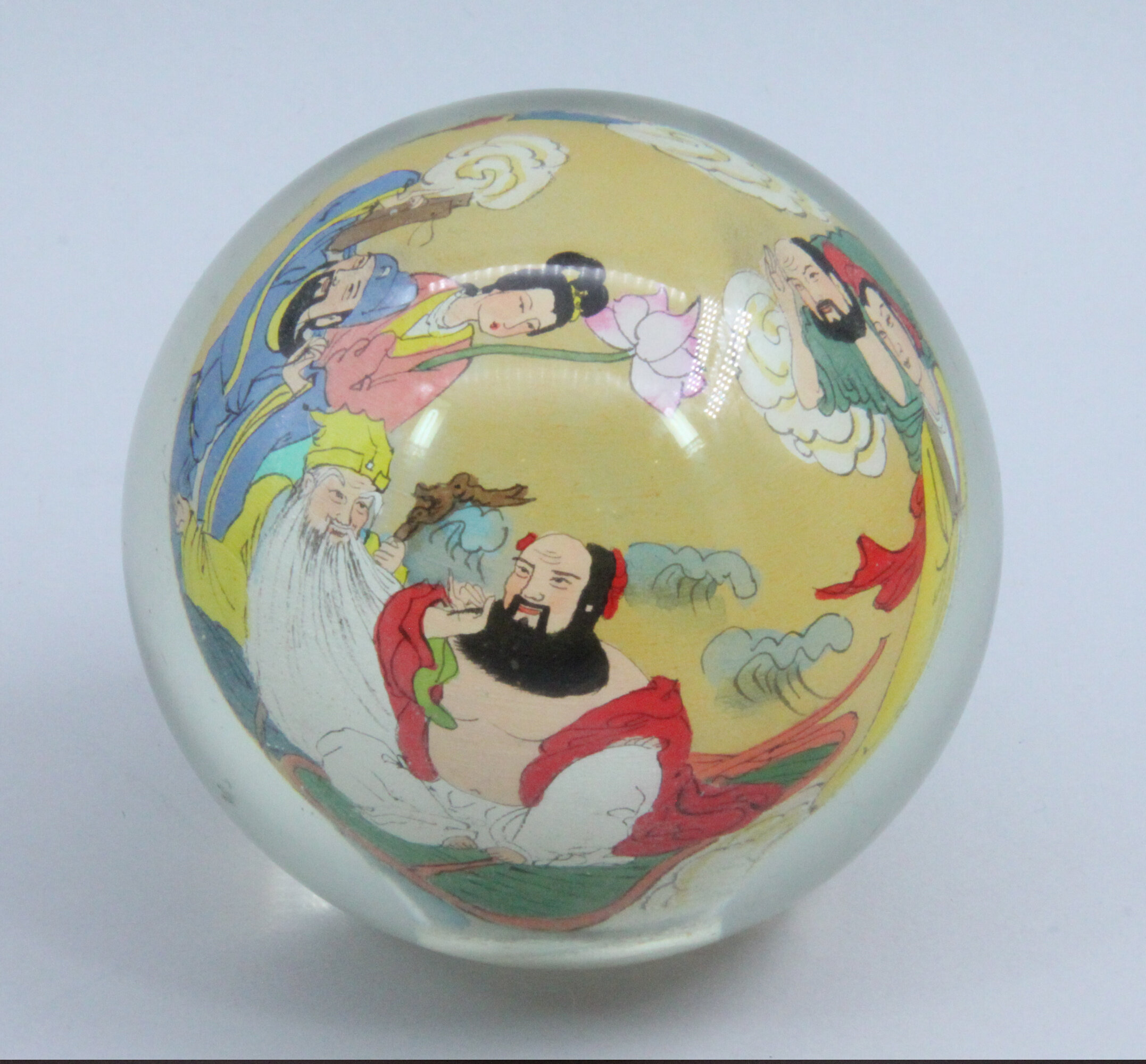
Chinese Reverse Painted Glass Globe depicting deities and attendants, Modern
Price: £45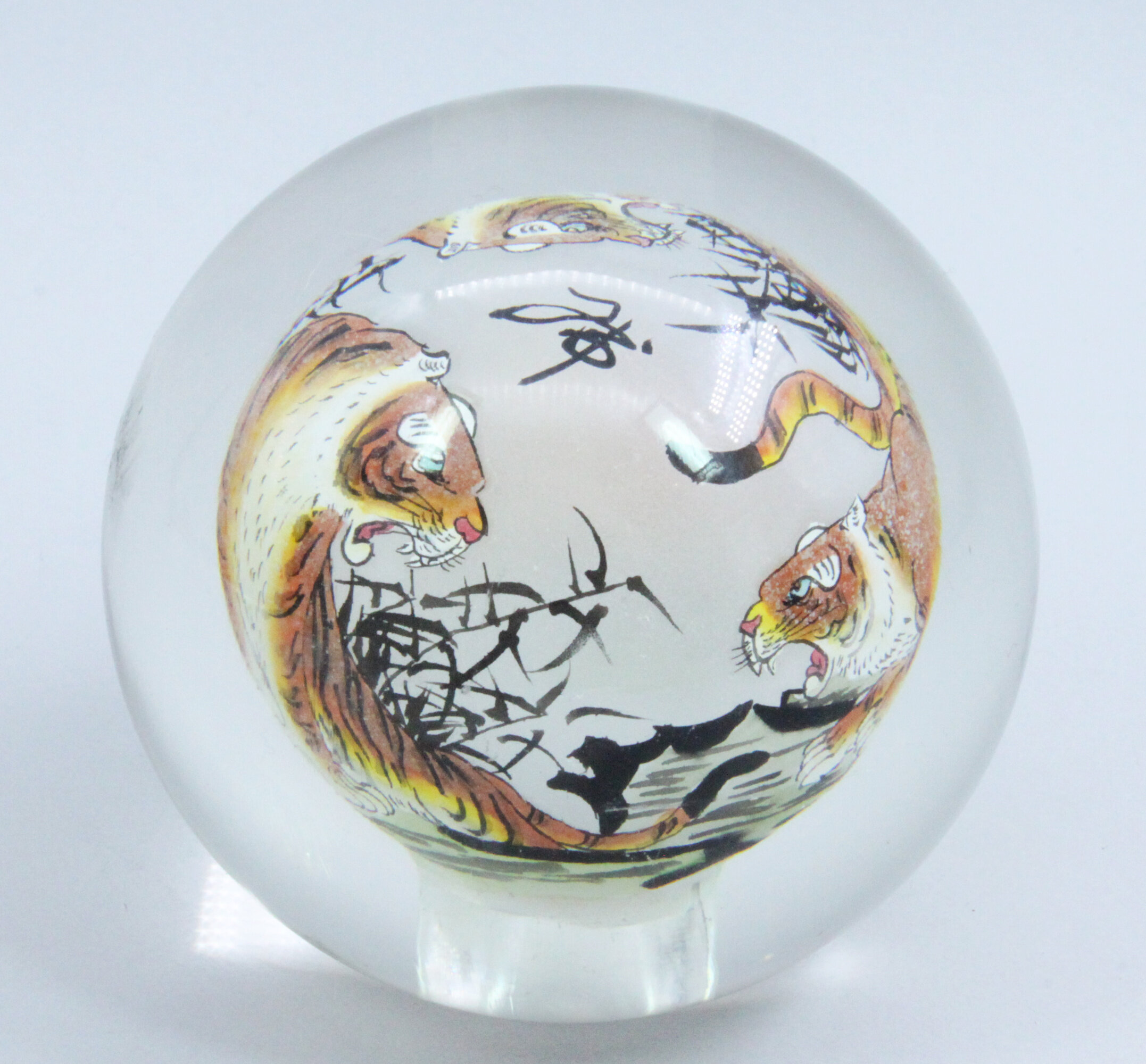
Chinese Reverse Painted Glass Globe depicting tigers, Modern
Price: £45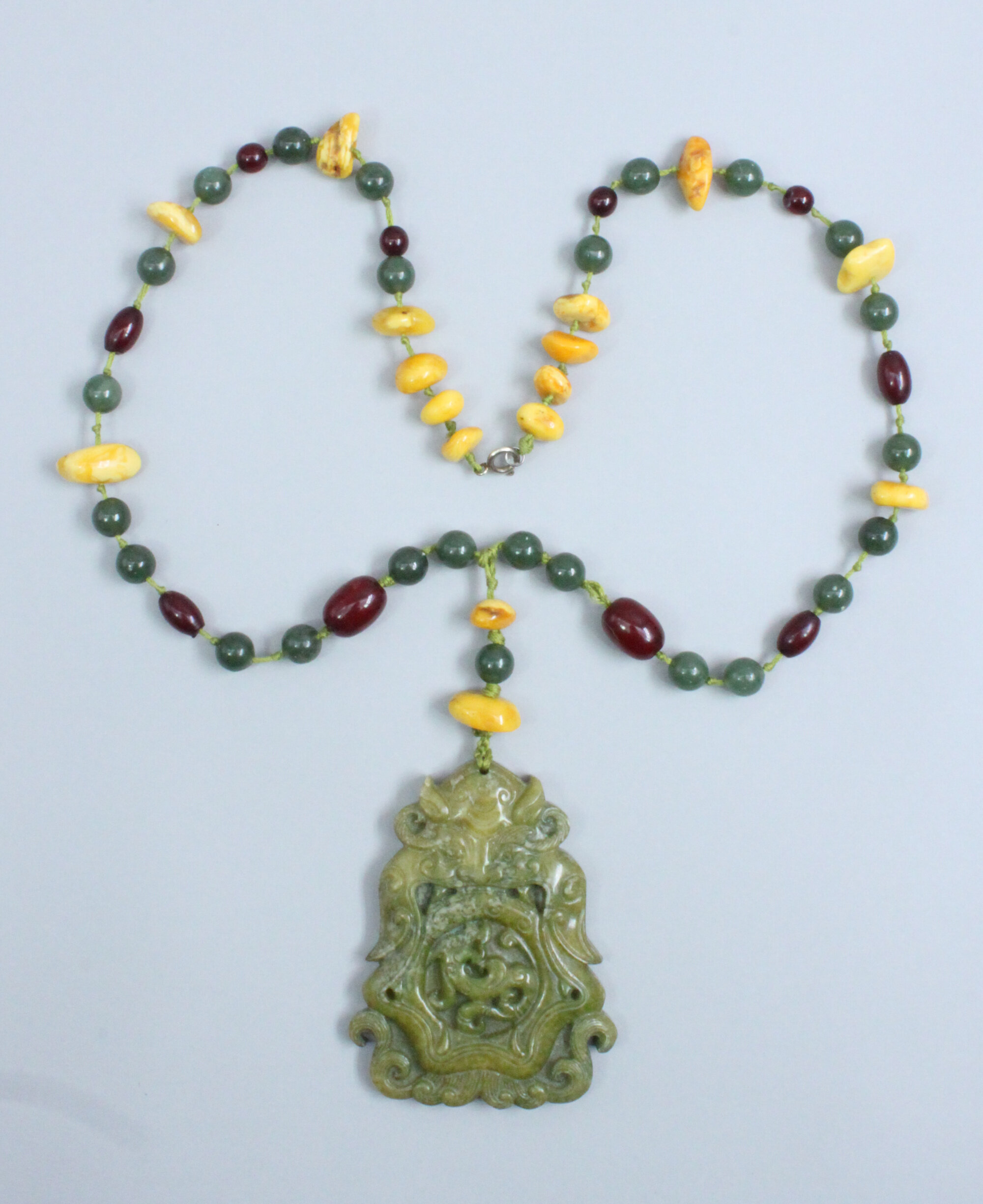
Constructed necklace with jade, egg yolk amber and cherry amber, C20th
Price: £250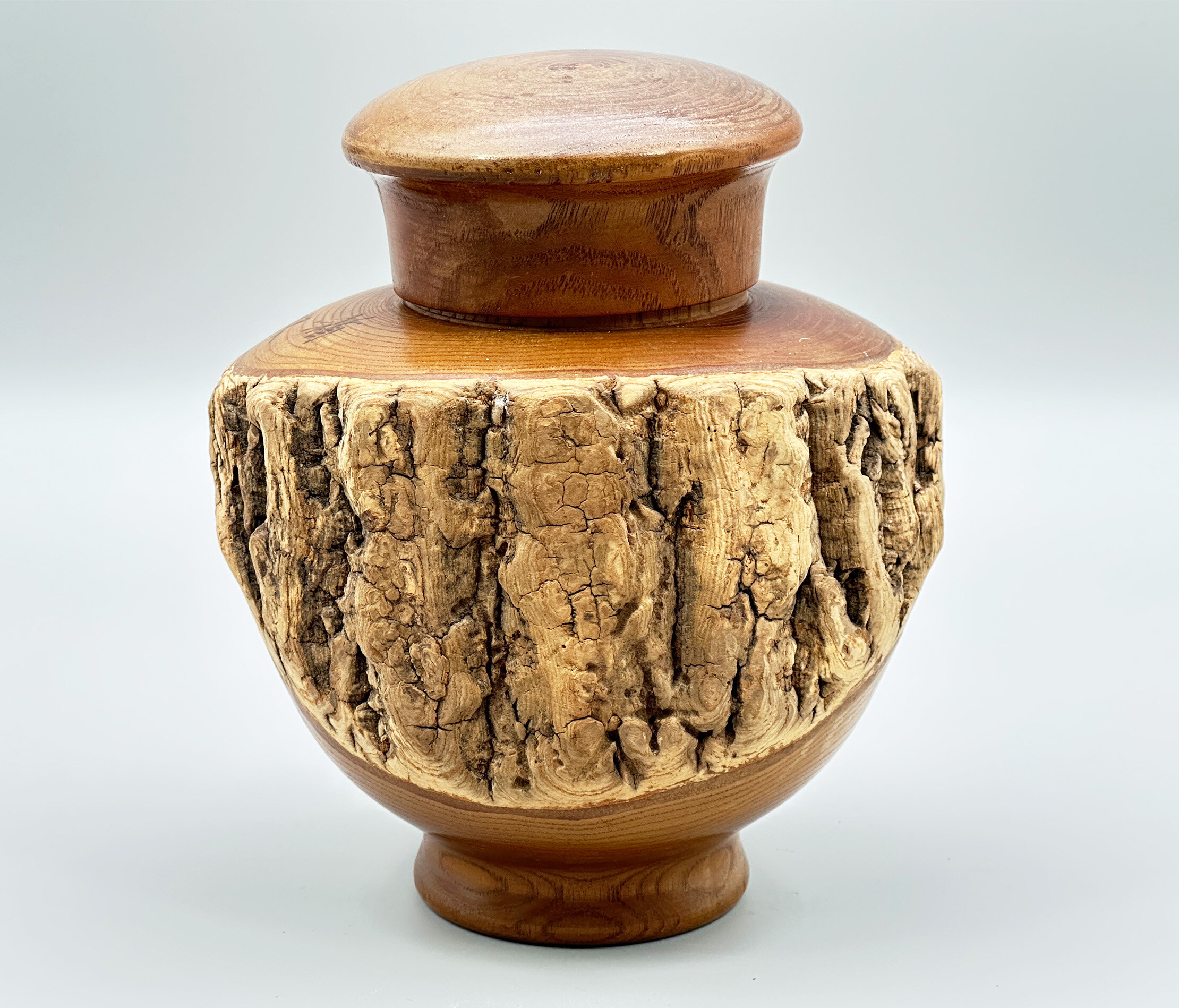
Japanese turned wood tea caddy, chazutsu, mark for Hakone, C20th
Price: £45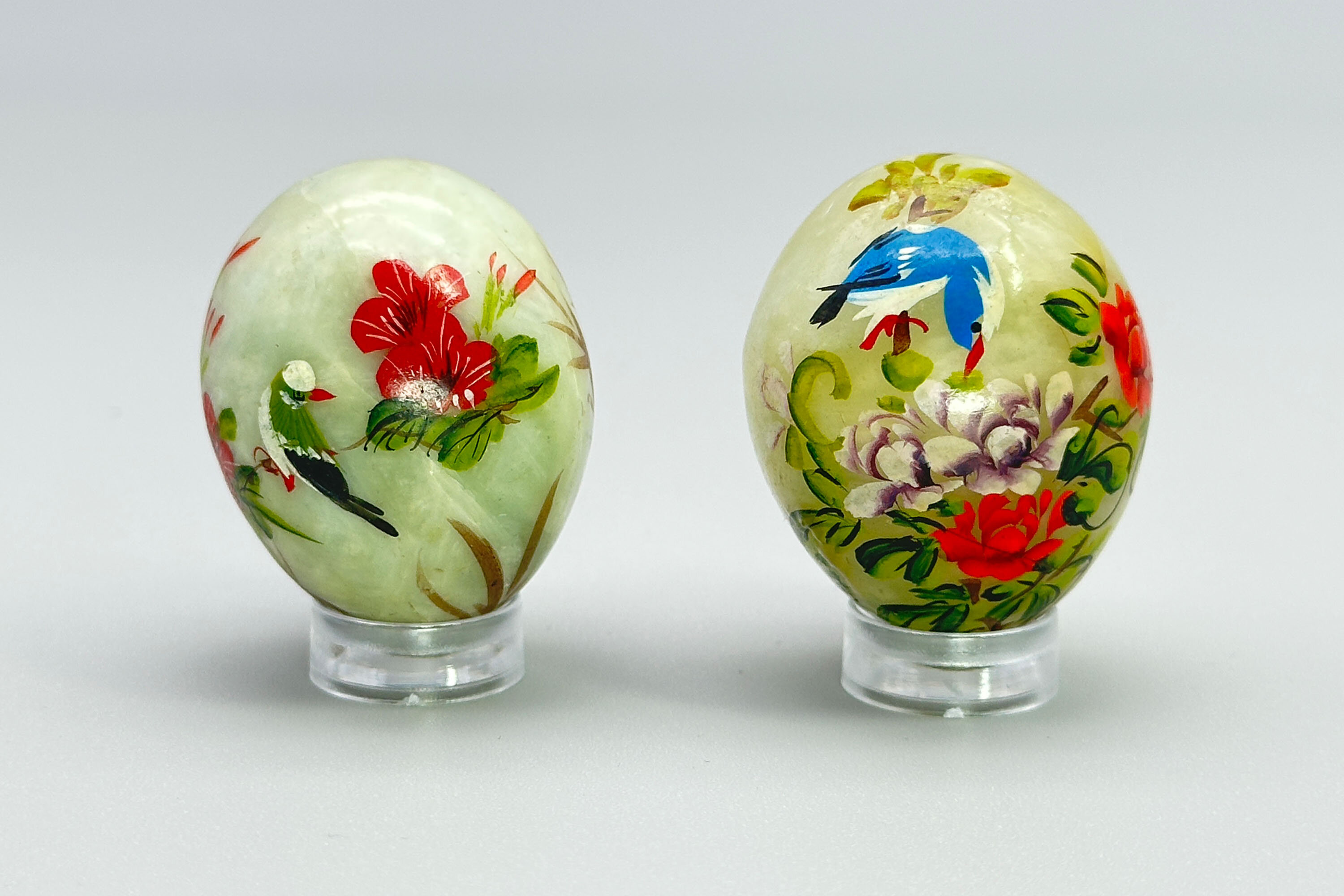
Pair of Chinese hand painted jade Eggs with modern stands
Price: £25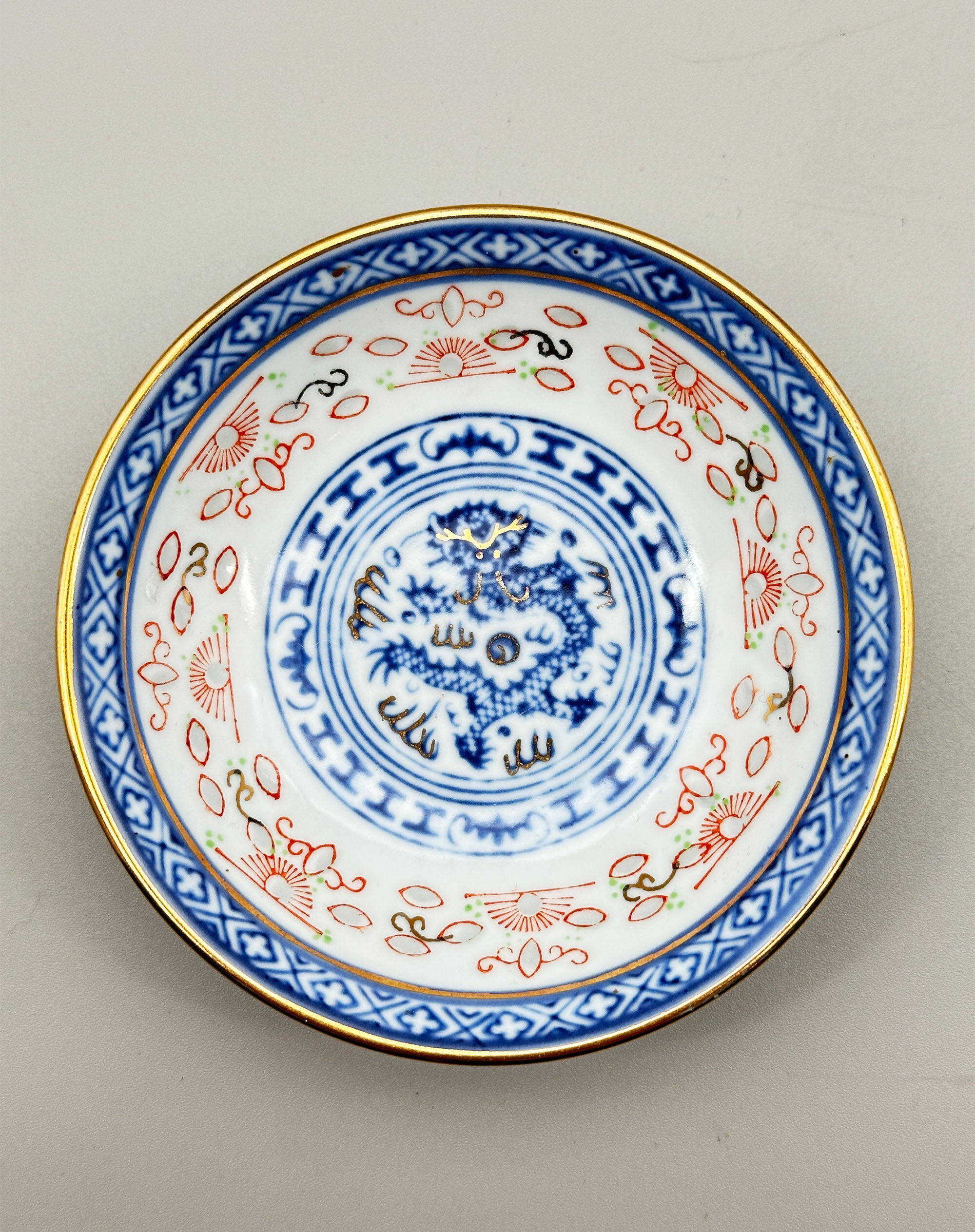
Chinese rice grain Dish with Jingdezhen Mark, late C20th
Price: £35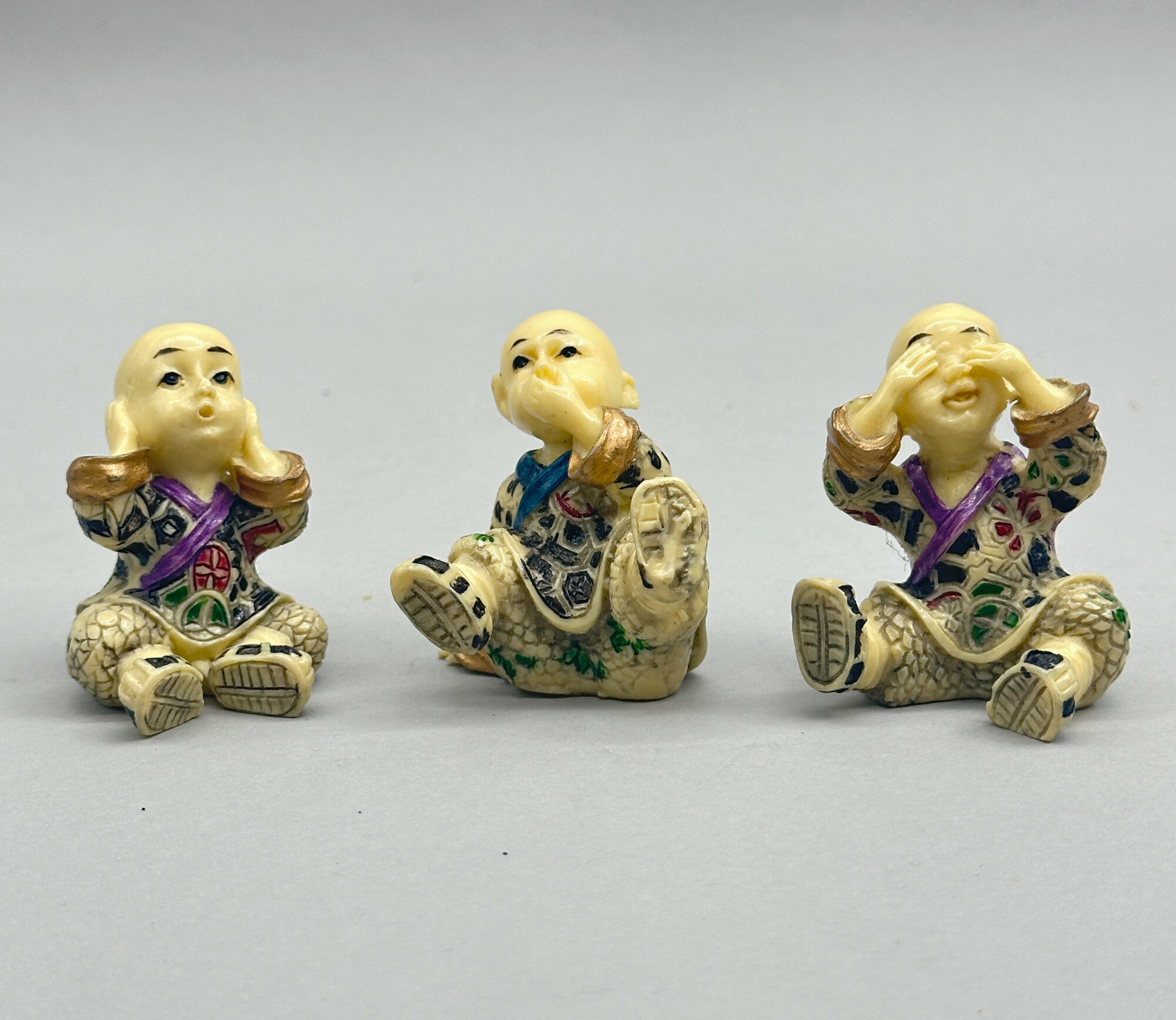
Set of Three Celluloid Figures of Monks, Japanese, first half C20th
Price: £45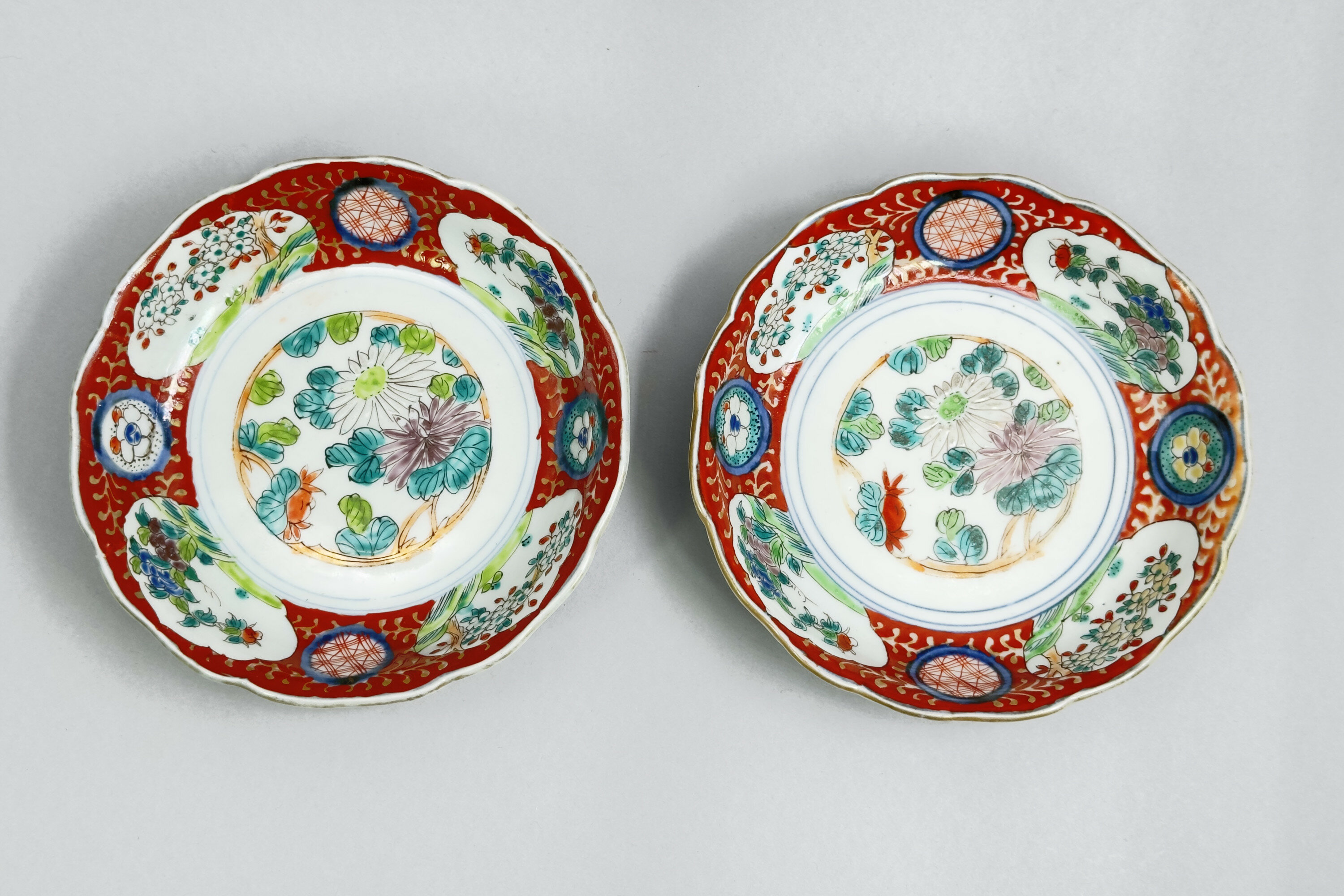
Pair of Japanese Arita Shallow Bowls circa 1880
Price: £75The town of Arita in the former Hizen Province, northwestern Kyūshū island, was a major centre for the production of porcelains in Japan. Best known for blue and white pieces it also produced polychrome wares as well, including the familiar imari colourings. While similar to Imari, the wider palette of colours used here is usually termed ‘Arita’ and the decorative appeal of the style is clear. These bowls probably come from an original set of five and their quality is much above average. Dating is to the Meiji era (1868 - 1912) probably around 1880.
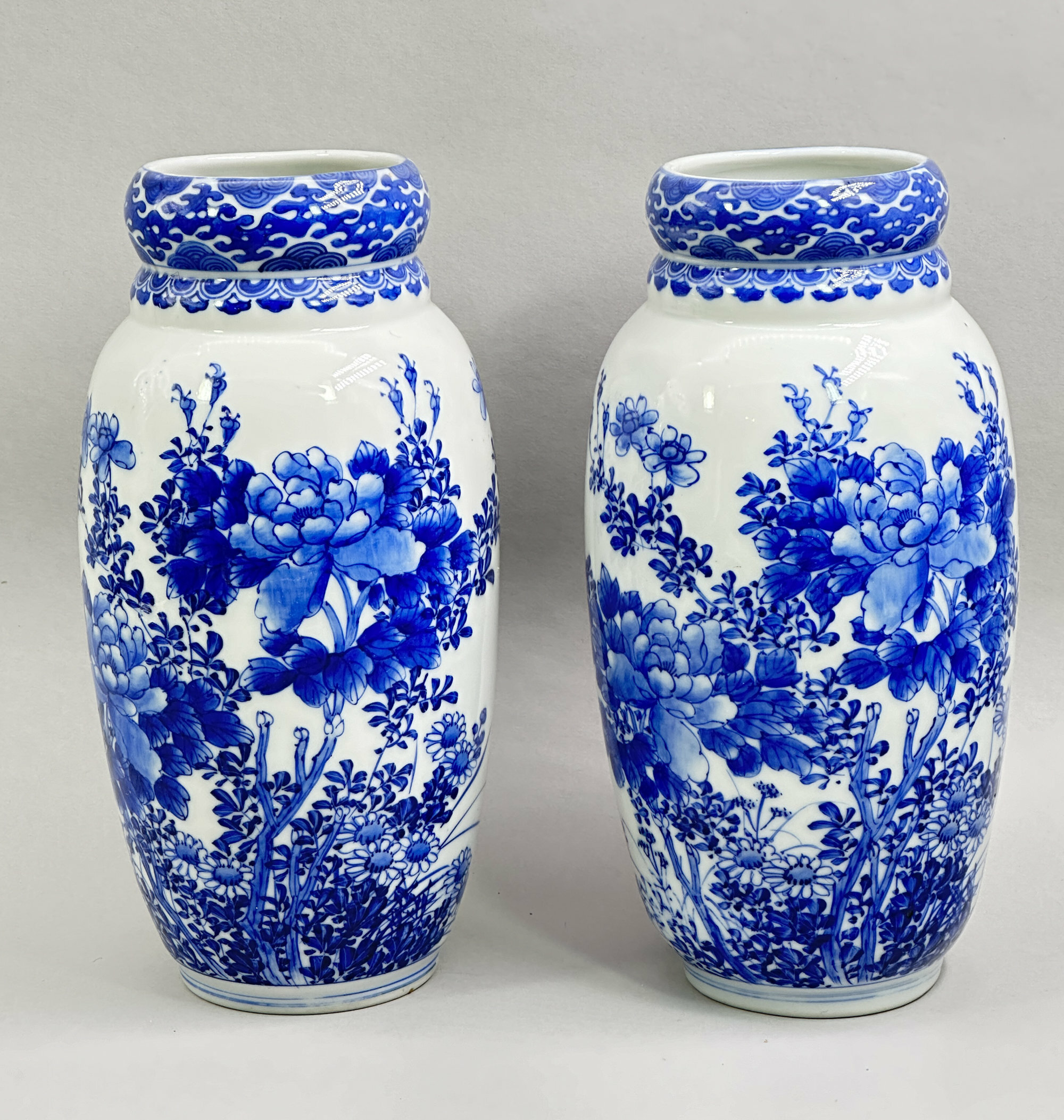
Pair of Japanese Blue and White Seto Ware Vases, early C20th
Price: £240The finely drawn brushwork here and the distinctive bright blue are characteristics of pieces made at Seto in Japan in the 19th and early 20th centuries. The city of Seto is located in the Aichi Prefecture and was the location of one of the Six Ancient Kilns of Japan. Pottery was produced there from the 13th century onwards. The kilns took part in the export of decorative wares to the West from the second half of the nineteenth century onwards producing a wide variety of forms, in particular pairs of vases, but with a speciality in flat plaques and table tops, for which they gained something of a monopoly. Their pieces are usually marked, to include the characters for Seto, and this pair of vases may have originally been signed themselves but with the marks partially obliterated in the firing process. The quality here matches anything else produced by the factories but the light weight and thinly potted body suggests a dating to the early 20th century rather than before, probably during the Taisho period (1912-1926). Nevertheless the skill in craftsmanship is obvious and contributes to a highly attractive pair of ornaments for a contemporary interior.
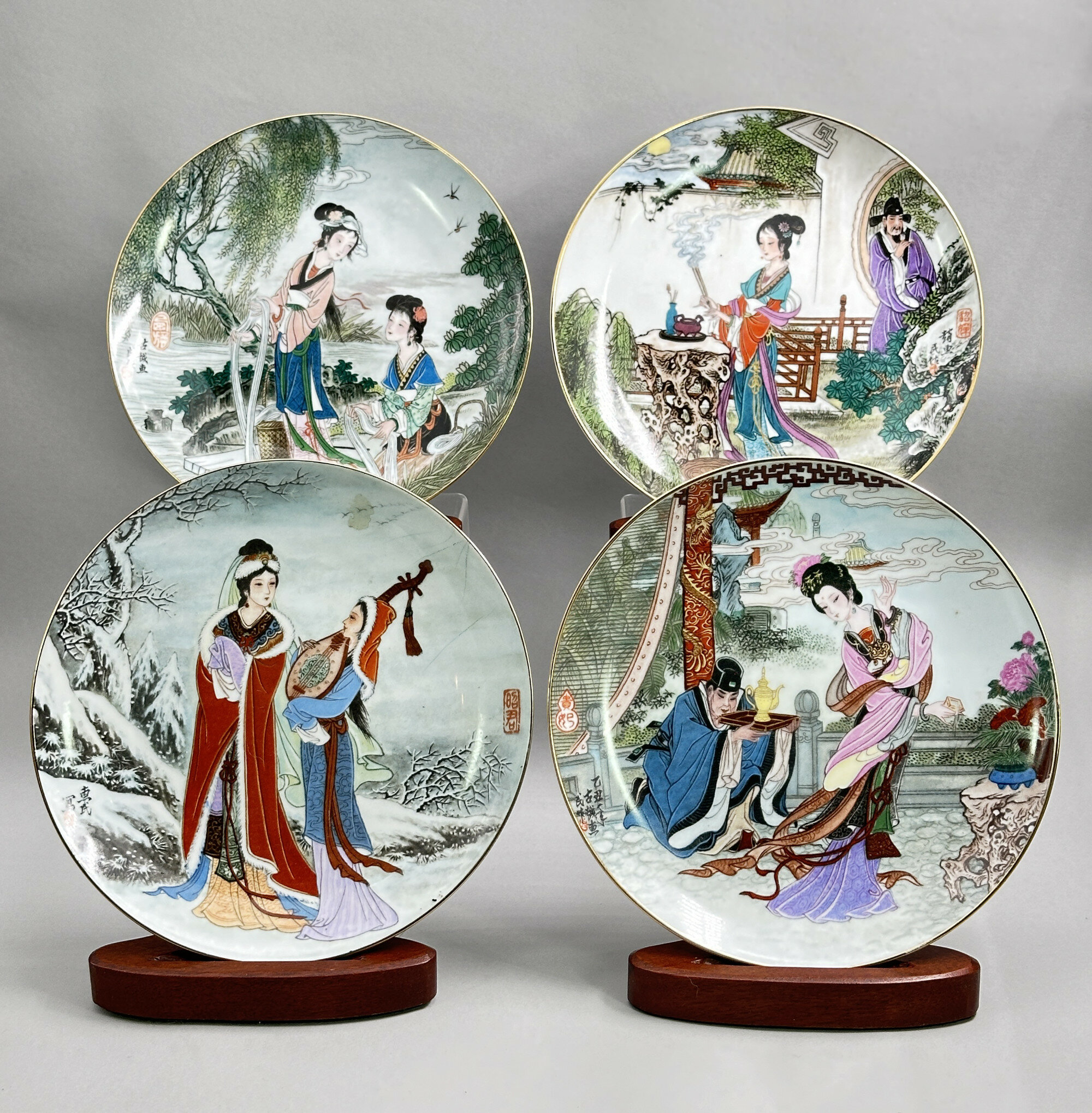
Set of Japanese Plates decorated with Geisha in landscape scenes, late C20th
Price: £40Please note that the stands are for display purposes only.
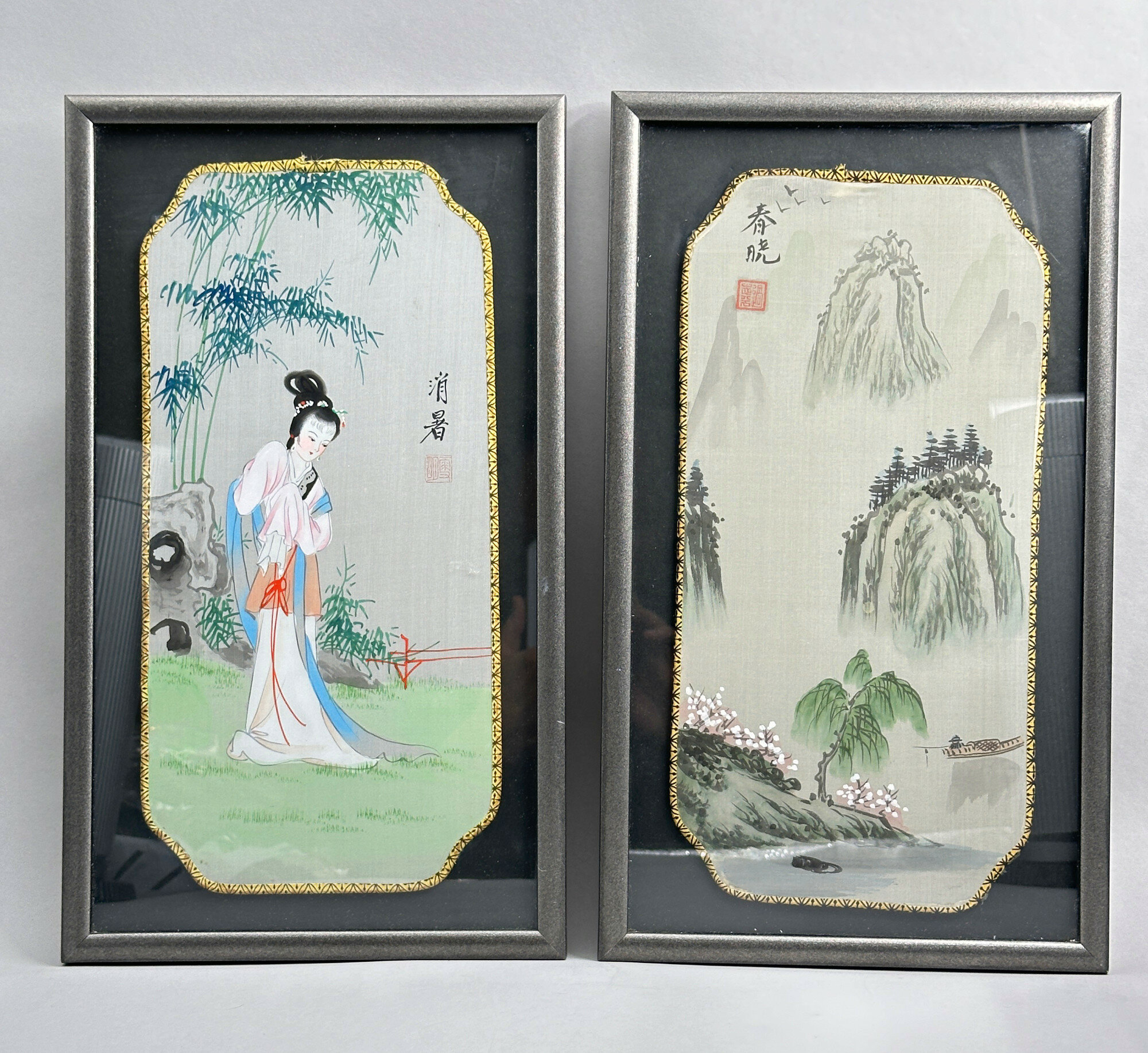
Pair of Chinese Paintings on Silk, framed, C20th
Price: £45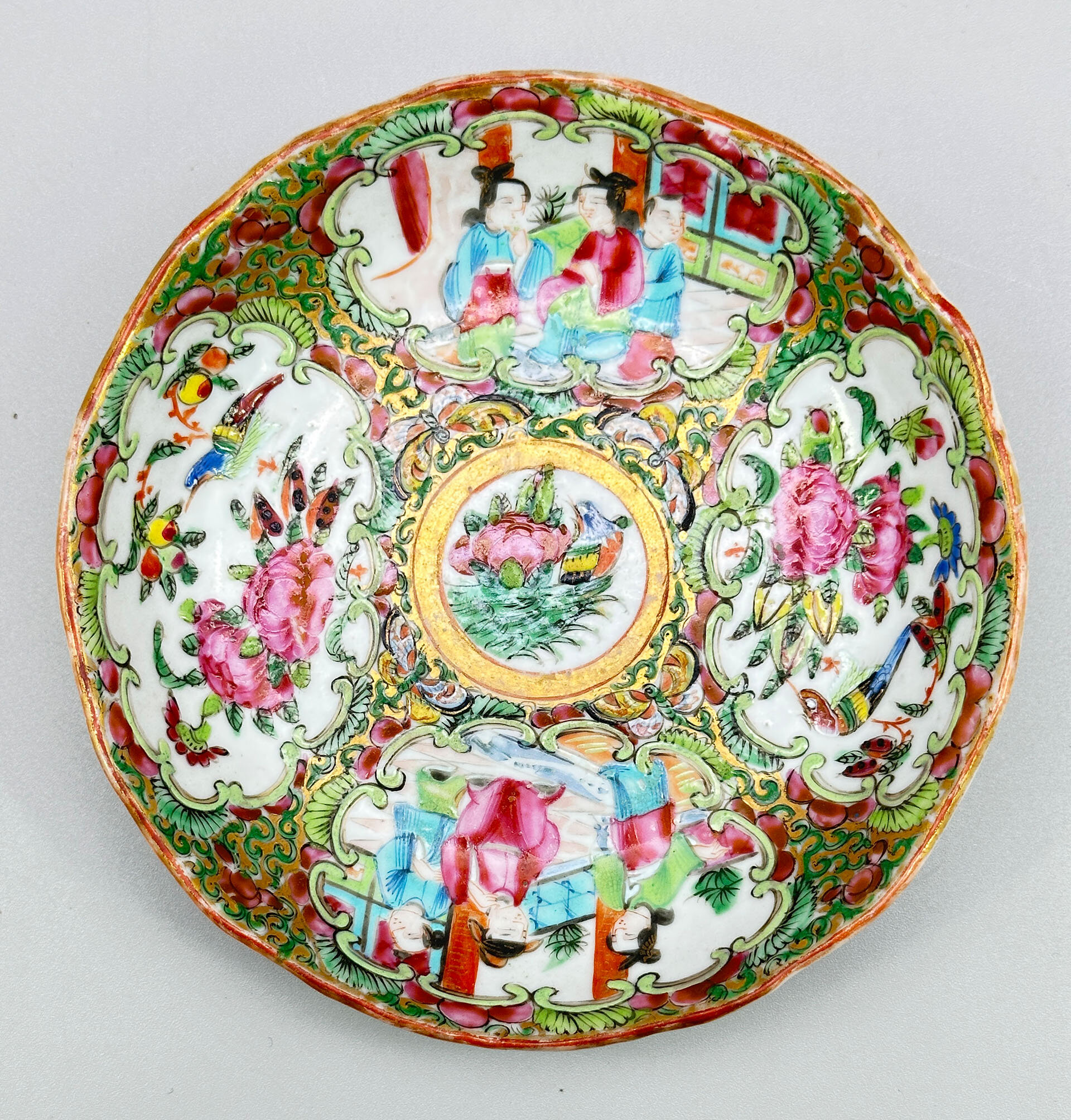
Chinese Rose Medallion Saucer circa 1860
Price: £45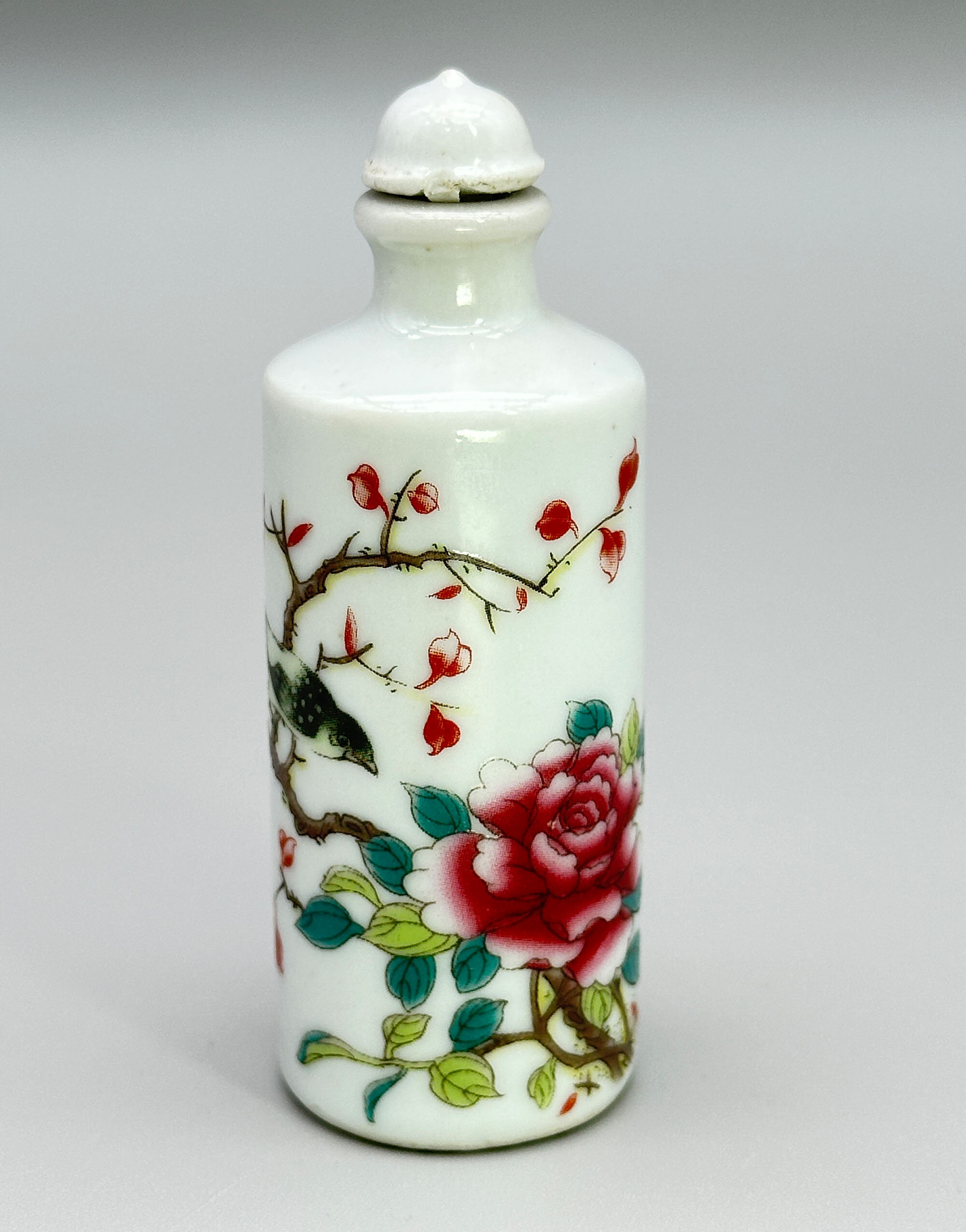
Chinese Famille Rose Snuff Bottle and Stopper, early C20th
Price: £45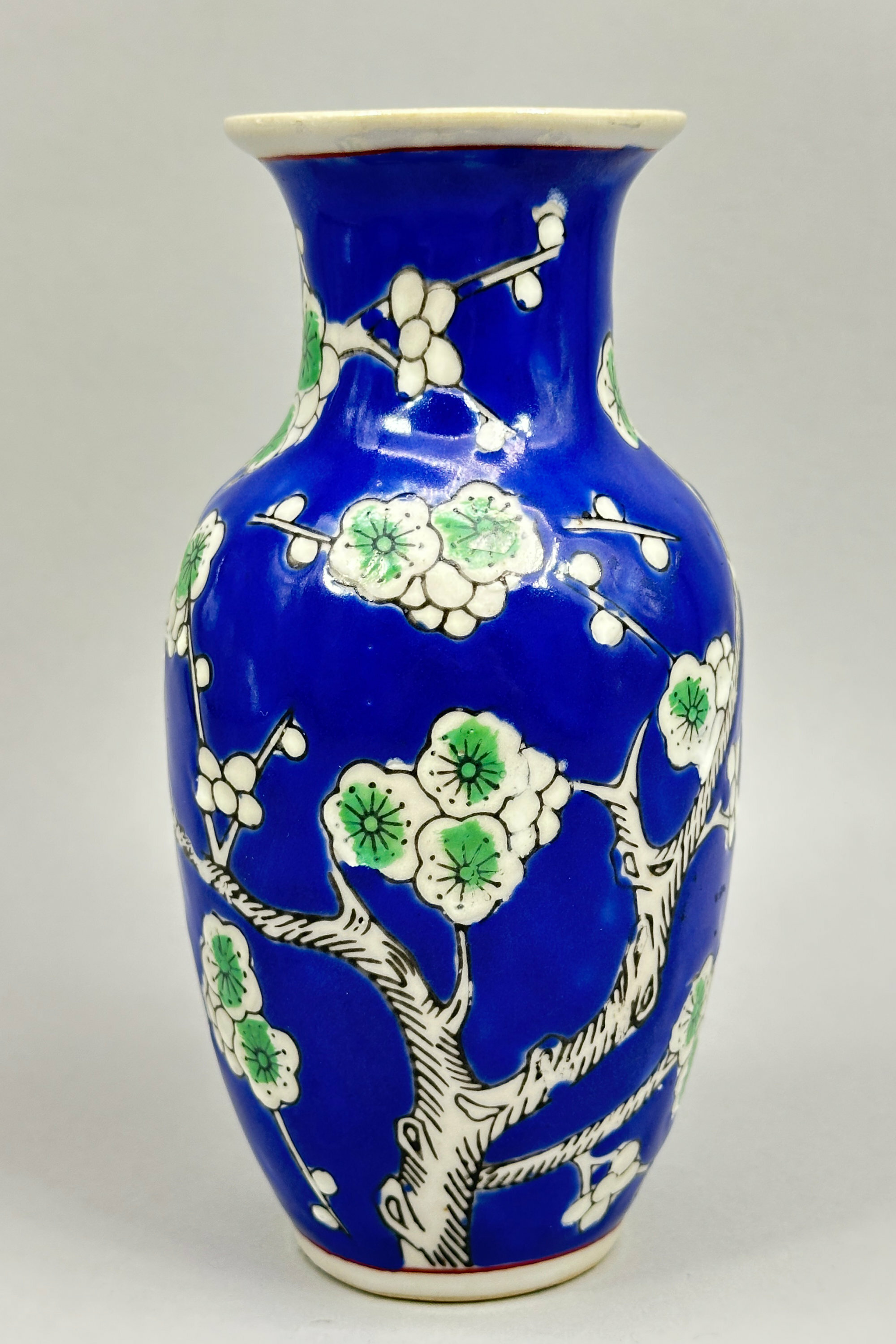
Chinese blue ground Vase decorated Prunus, late C20th
Price: £25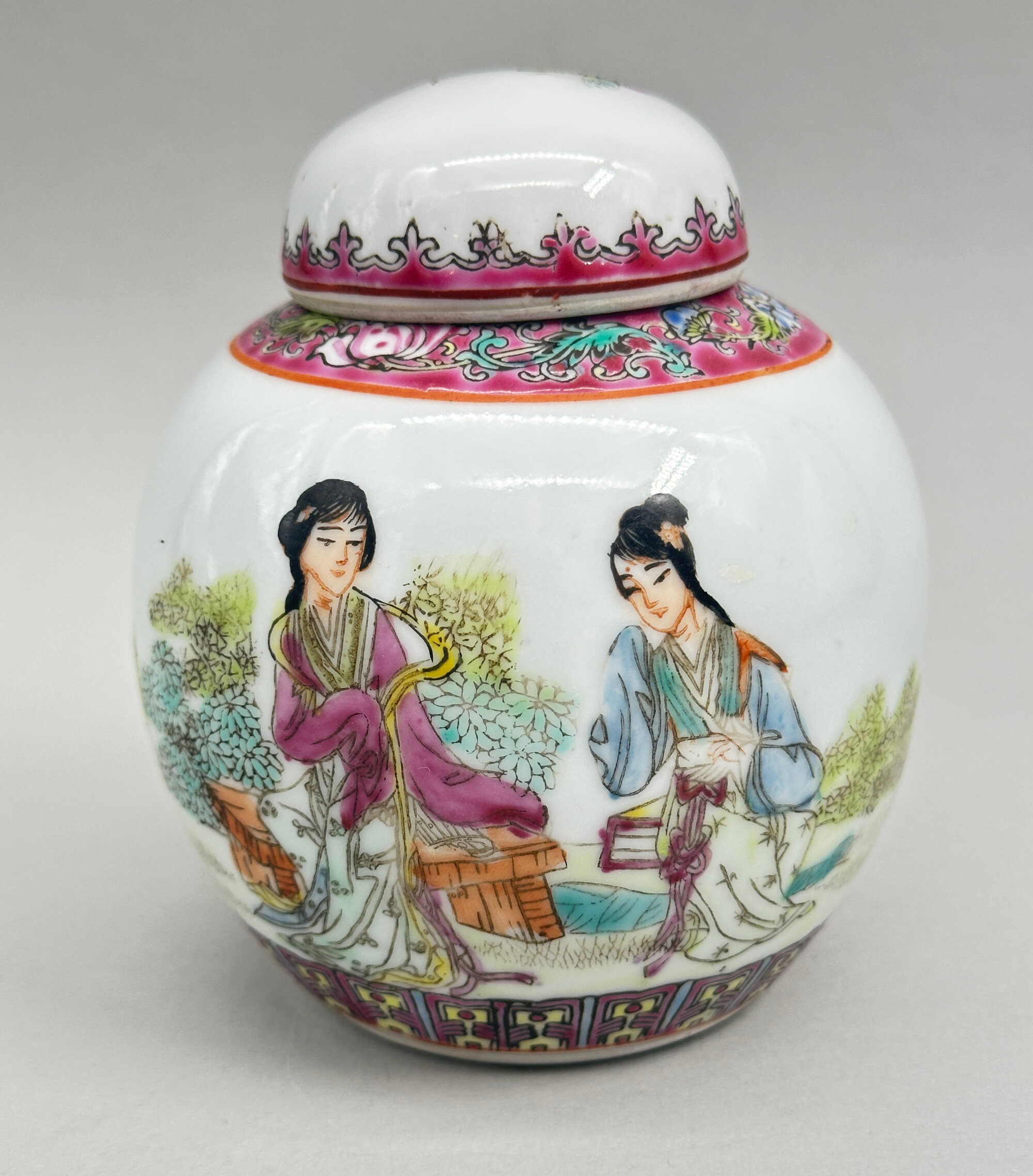
Chinese Republican Style small Famille Rose Ginger Jar and Cover, late c20th
Price: £20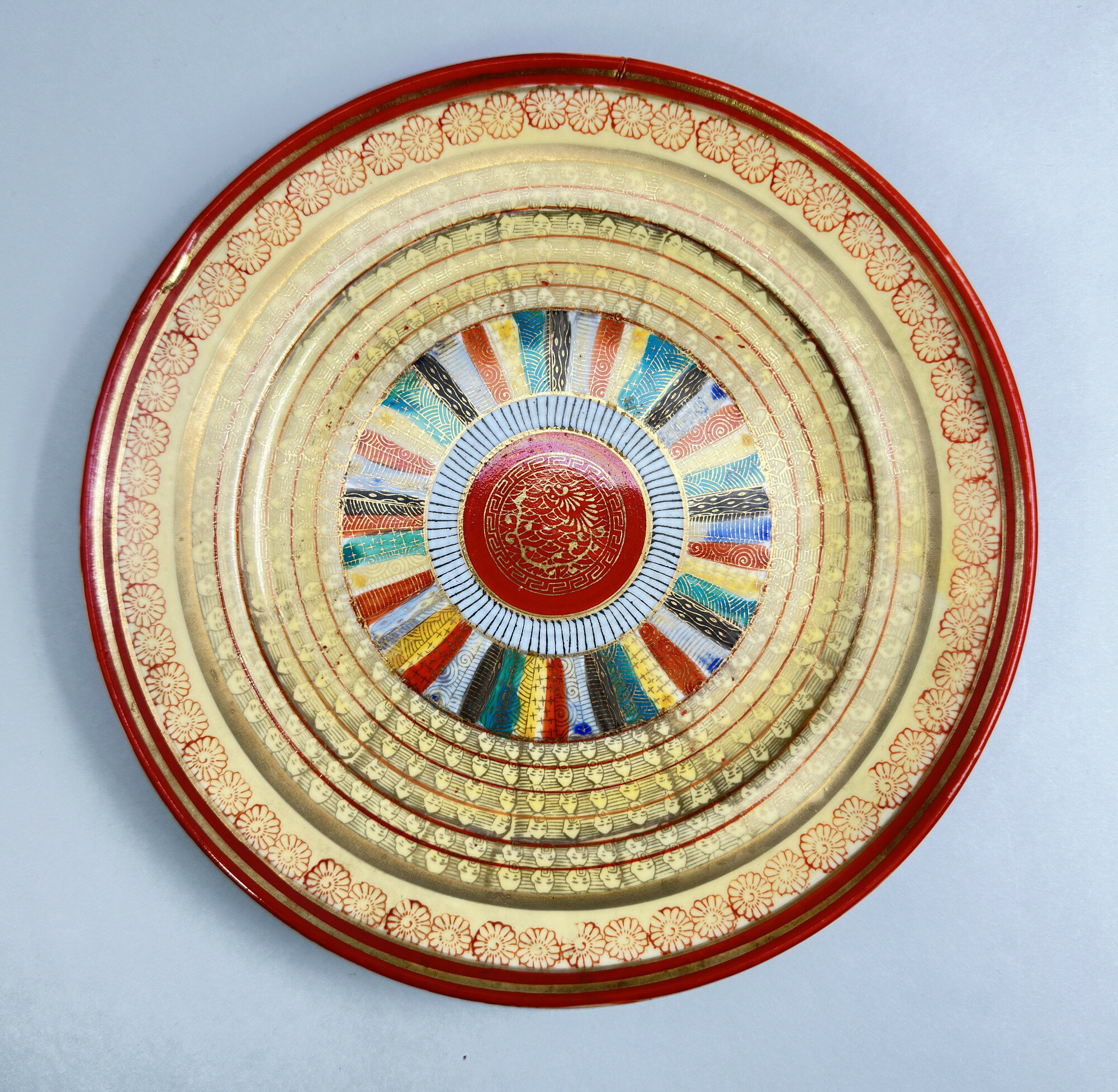
Japanese Kutani Dish decorated with the Thousand Faces pattern, first half C20th
Price: £45The colourings and style of work here clearly indicate the workshops of Kutani (the word means 'nine valleys') in the former Kaga province of Japan. By the nineteenth century the majority of their pieces were decorated in iron red and gold but sometimes with other colours in addition, as here. The ‘thousand faces’ pattern (an apocryphal term and this cataloguer has not attempted to count the number of faces appearing here) seems to have been evolved around the end of the nineteenth century and then continued in production until the mid twentieth. Both plates in various sizes and even tea sets are found in the design. The mark ‘Made in Japan’ was usually employed after 1941 (in the previous twenty years ‘Japan’ was the norm) but there are exceptions and the paste of the foot rim here does suggest a slightly earlier date, perhaps around 1930. In perfect condition, with very little wear to the decoration, this piece is a fine example of a rather eccentric decorative patttern.
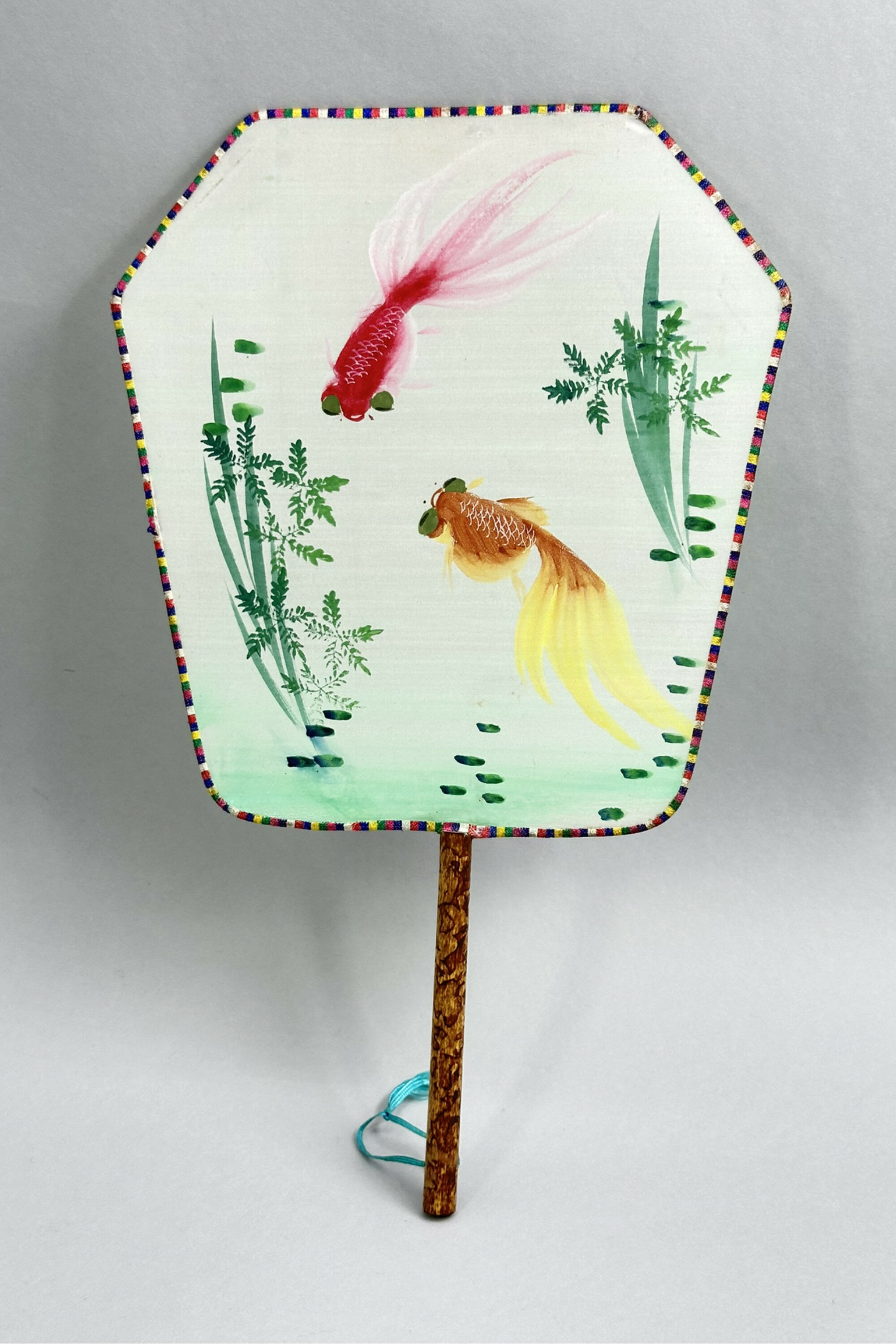
Chinese Fan, painting on silk, 1960s
Price: £15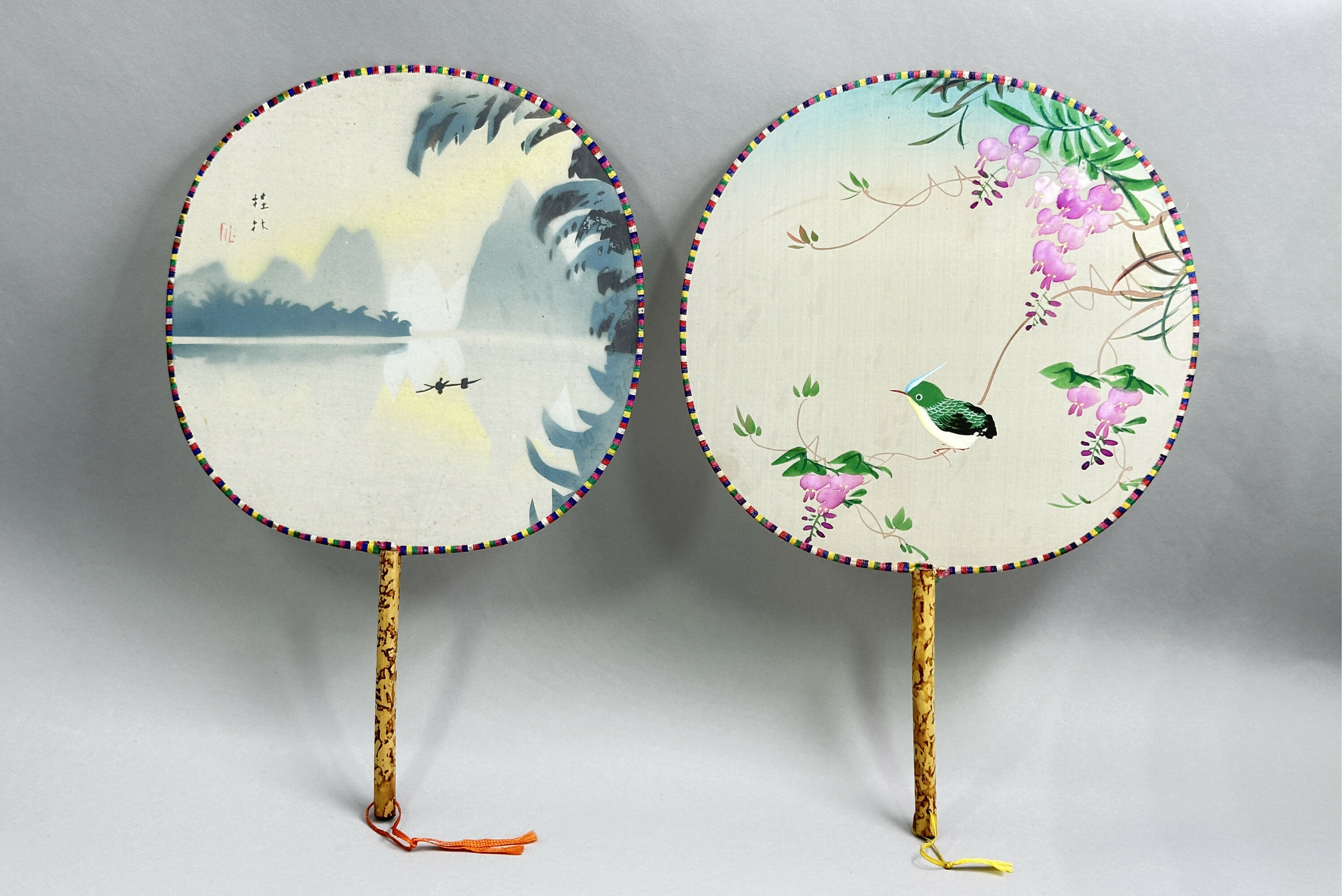
Two Chinese Fans, painting on silk, 1960s
Price: £15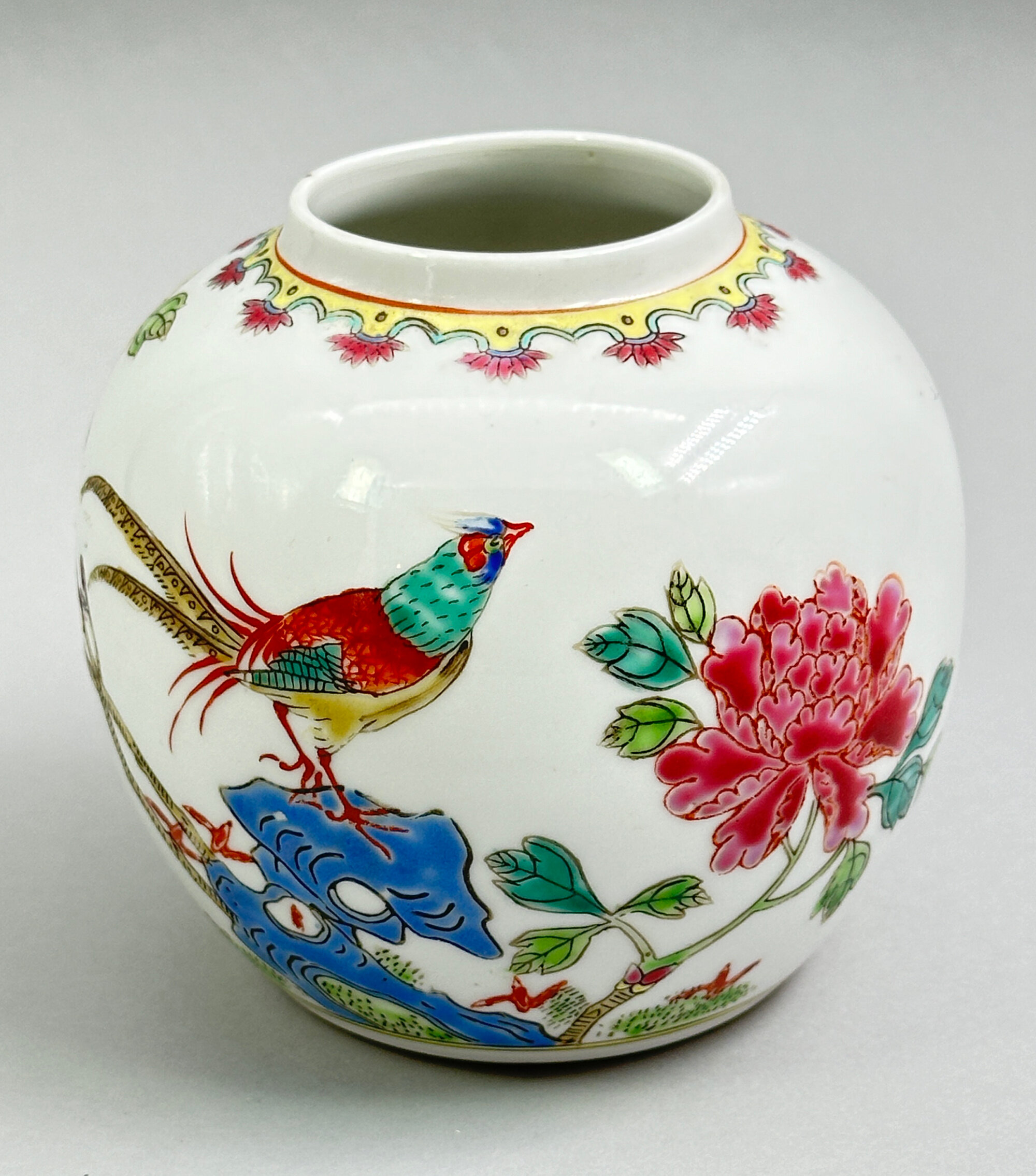
Small Chinese Ginger Jar decorated in Famille Rose enamels, second half C20th
Price: £25The stamped mark to the base reads ‘Zhongguo Jingdezhen Zhi (China Jingdezhen Made)’ with the letter ‘V’ between two lines. In the early 1950s almost all the factories in Jiangxi, the province where the kiln town Jingdezhen is situated, were merged into larger units, each made up of ten to fifteen previously independent factories. From this time factory numbers such as we have here (=V=) came to be used and many pieces are found with a wide variety of letters and numbers indicating the various cooperatives. The quality of the productions varied and it is a reasonable assumption that increasing years witnessed a decline. While other examples of this type of jar exist, some with their original domed covers, this piece is of the very best quality, indeed the work matches earlier pieces in the style very closely, and a dating to the mid 1950s seems quite plausible. It shows that the Chinese potters continued to produce to a high standard when they chose to do so and provides a pleasing memento of the closing era of a tradition of porcelain production stretching back long into the past.
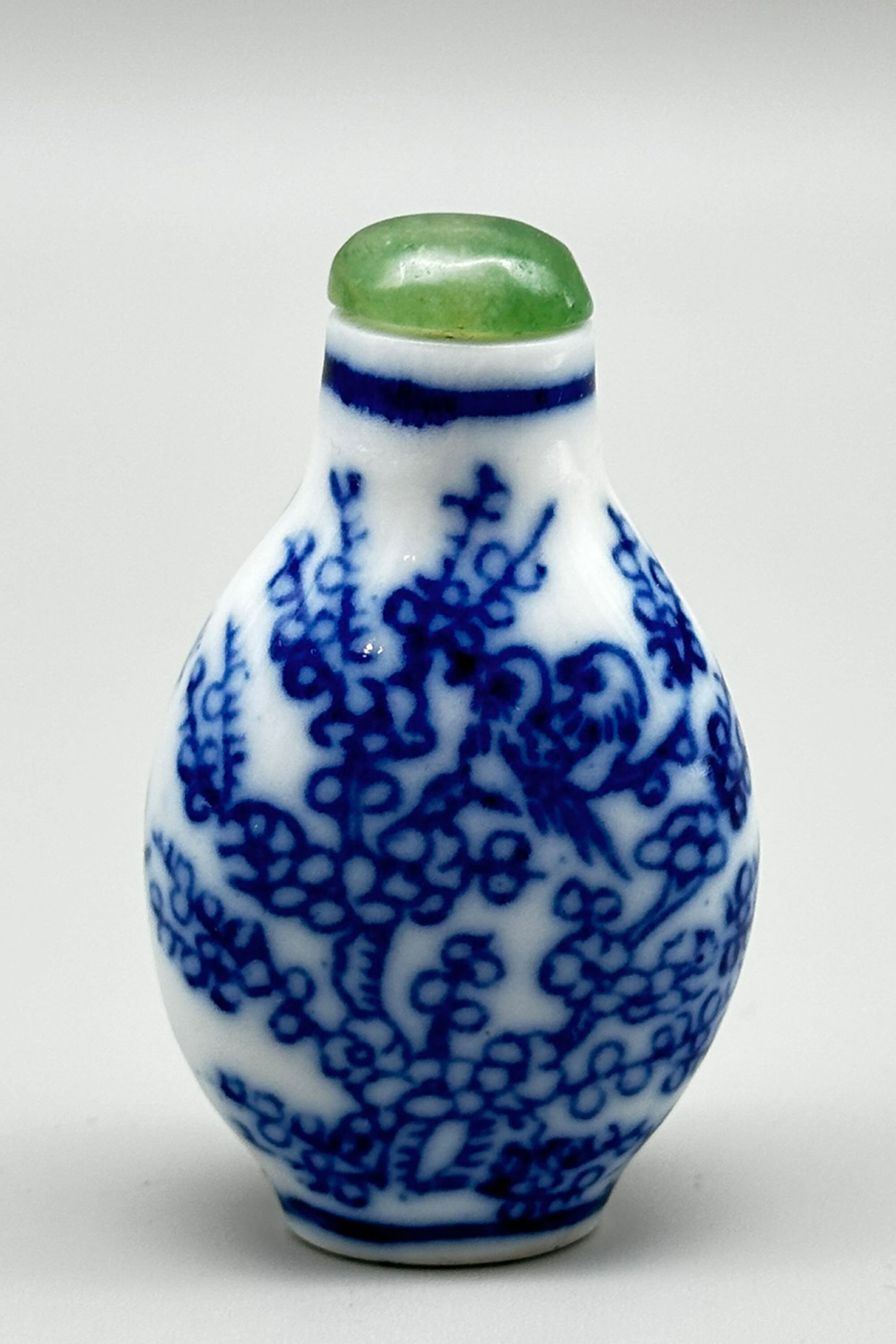
Chinese Blue and White Snuff Bottle with Jade stopper, early C20th
Price: £45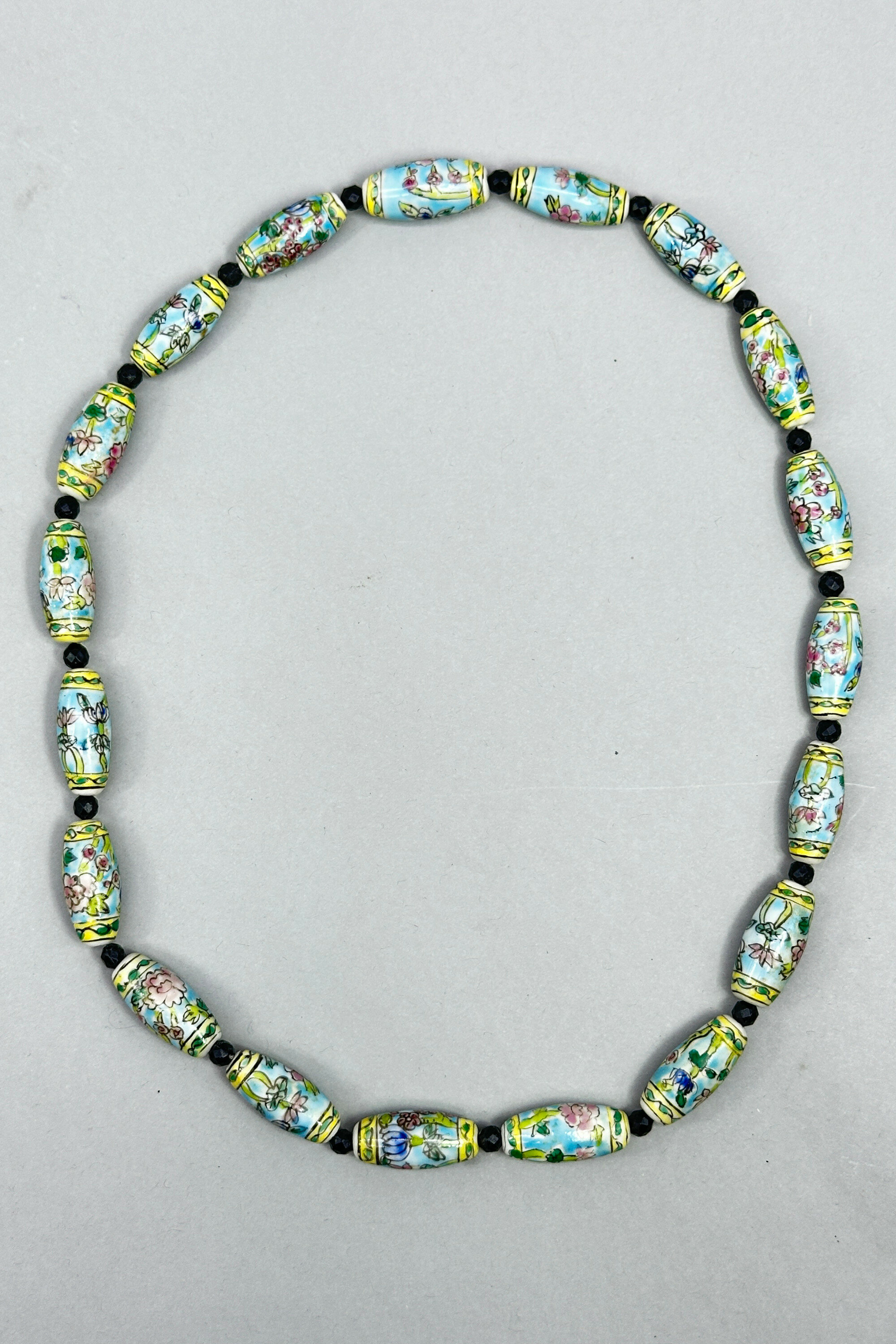
Strand of Chinese ceramic beads c1950
Price: £25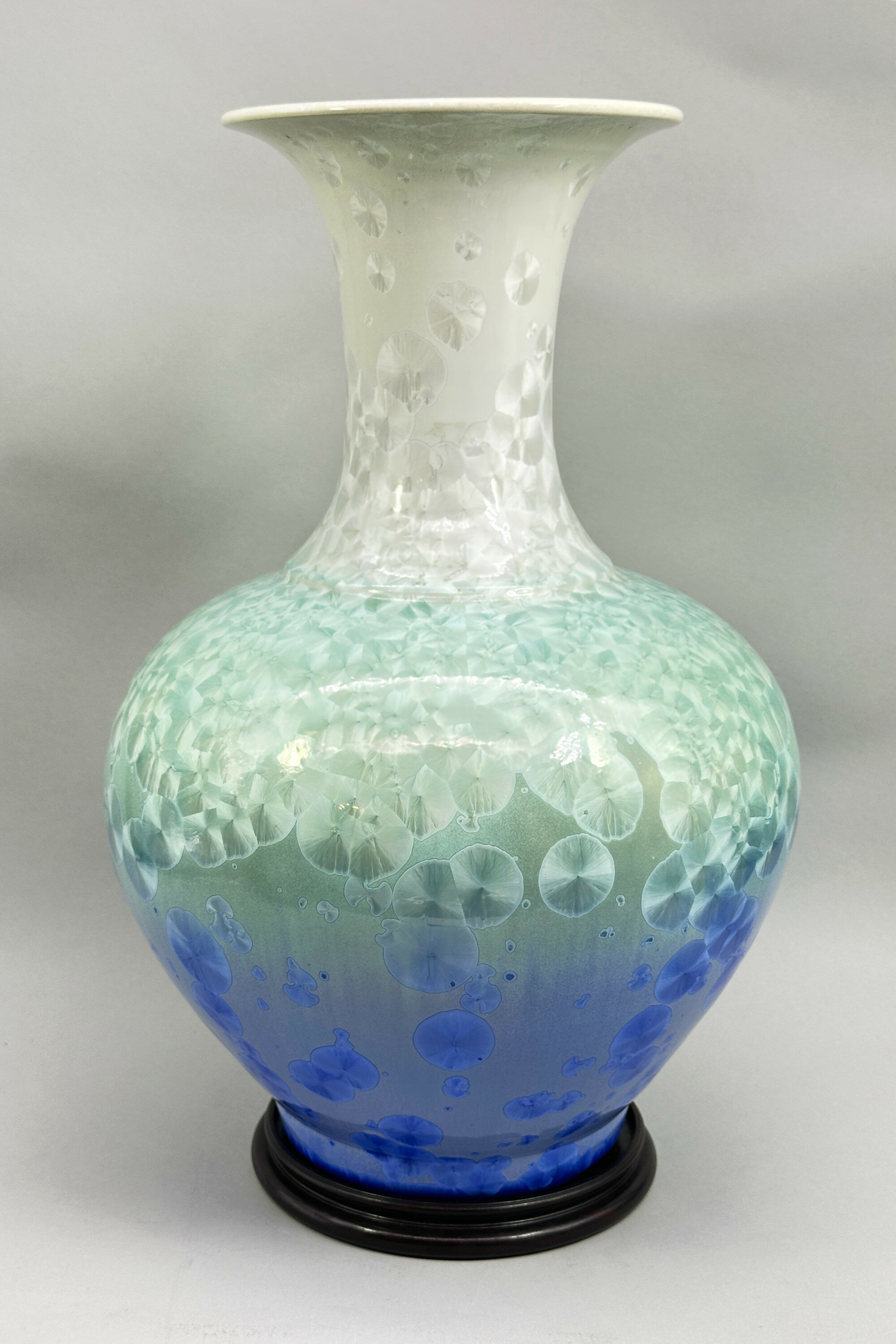
Impressive Chinese crystalline glaze bottle Vase, Jingdezhen mark, second half C20th
Price: £350The striking glaze effects seen here are usually attributed to the kilns at Shiwan, a district of the provincial town Foshan which is located near to Guangzhou, better known in the West as Canton, in the Guangdong province. But the place of manufacture is here clearly advertised by the mark on the base which attributes it to the well known potteries of Jingdezhen, for centuries one of China’s most prolific producers of porcelains for both the domestic and export markets. This particular glaze, though, seems to be a late twentieth century creation with no obvious precedents from the past. Just possibly it derived from an accident of the firing process which was then deliberately imitated. Certainly, the ‘look’ is modern and the interior of the neck reveals one of the hallmarks of the very late pieces made at Jingdezhen where the small but regular potting rings indicate manufacture by machine rather than the hand of a potter (see image 8). The sandy and slightly coarse paste of the foot is fully consistent with this.
By repute, similar vases were bought new in the 1980s so there is, at least, a degree of age here and the overall effects combine sophisticated techniques with inventive decoration to produce a piece of considerable and striking appeal.
(As sometimes happened with the manufacture of larger ceramic items, this vase emerged from the kiln with a slight ‘lean’ when viewed from certain angles, probably due to irregular shrinkage of the clay body during the firing process. Images (11) and (12) are intended to highlight the ‘fault’ but the final image (13) shows how this can easily be corrected with the addition of a wood stand built up inside to provide corrective support.)
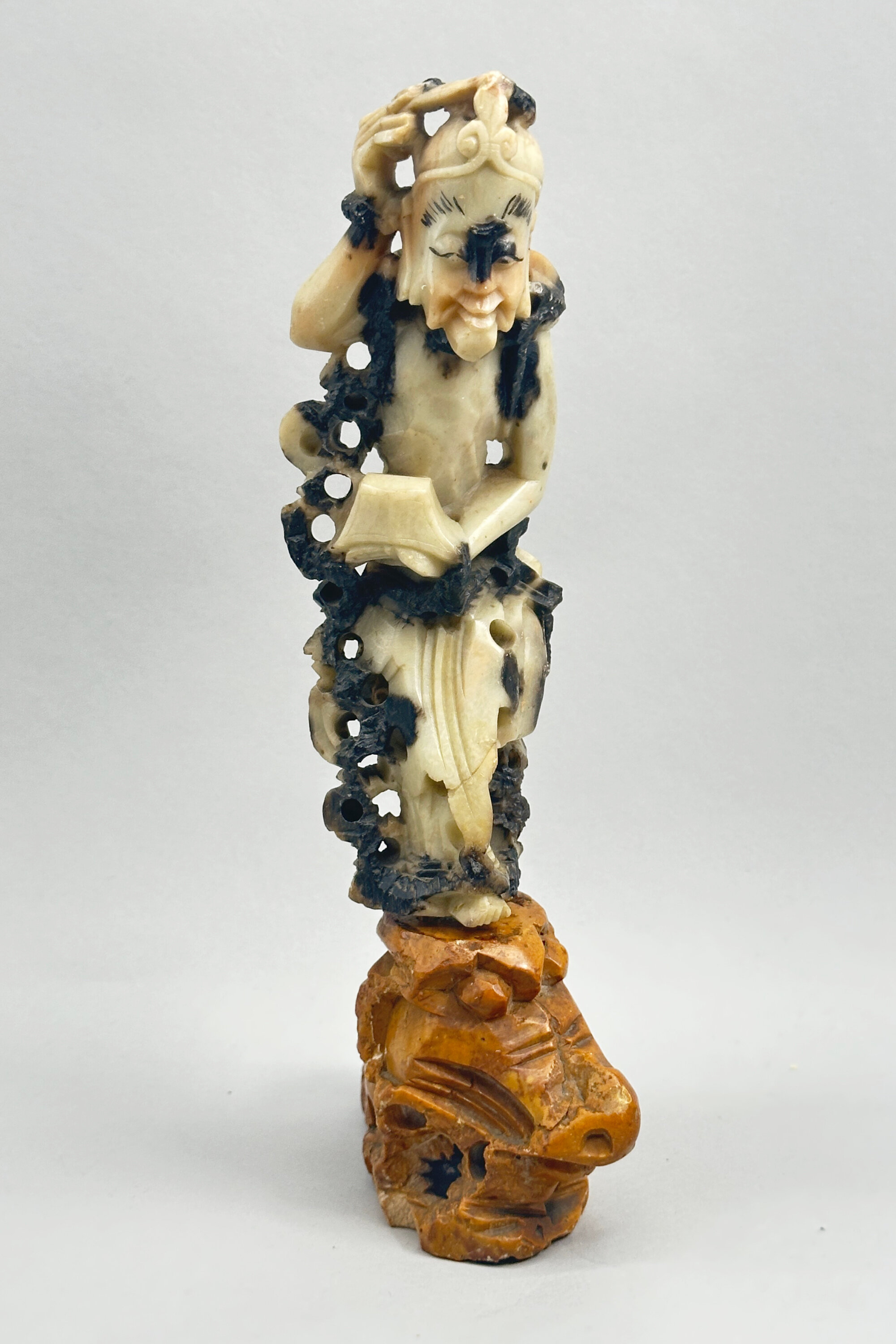
Chinese carving of a Beggar, possibly Shoushan stone, Soapstone stand, C20th
Price: £55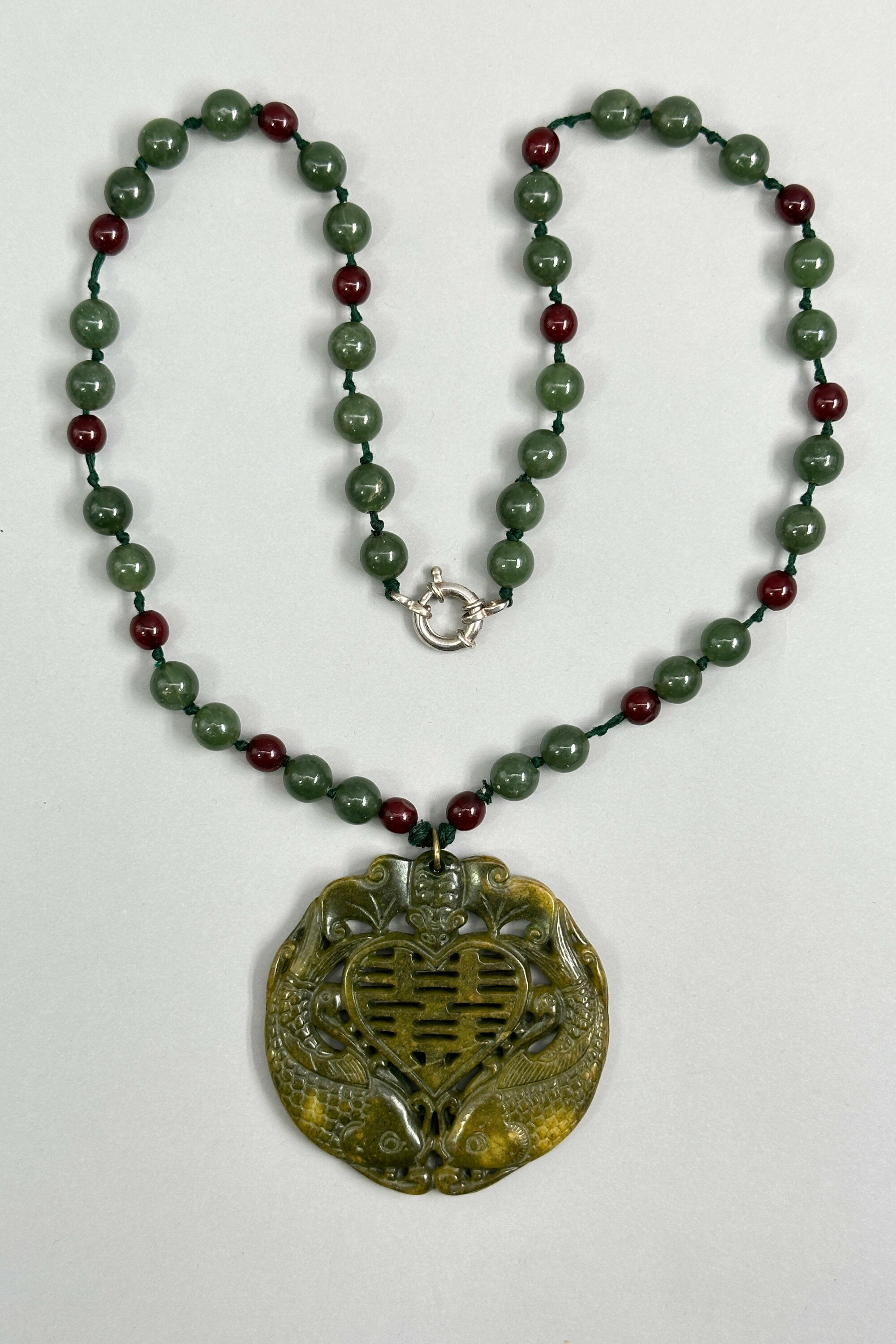
Very finely carved soapstone pendant necklace
Price: £175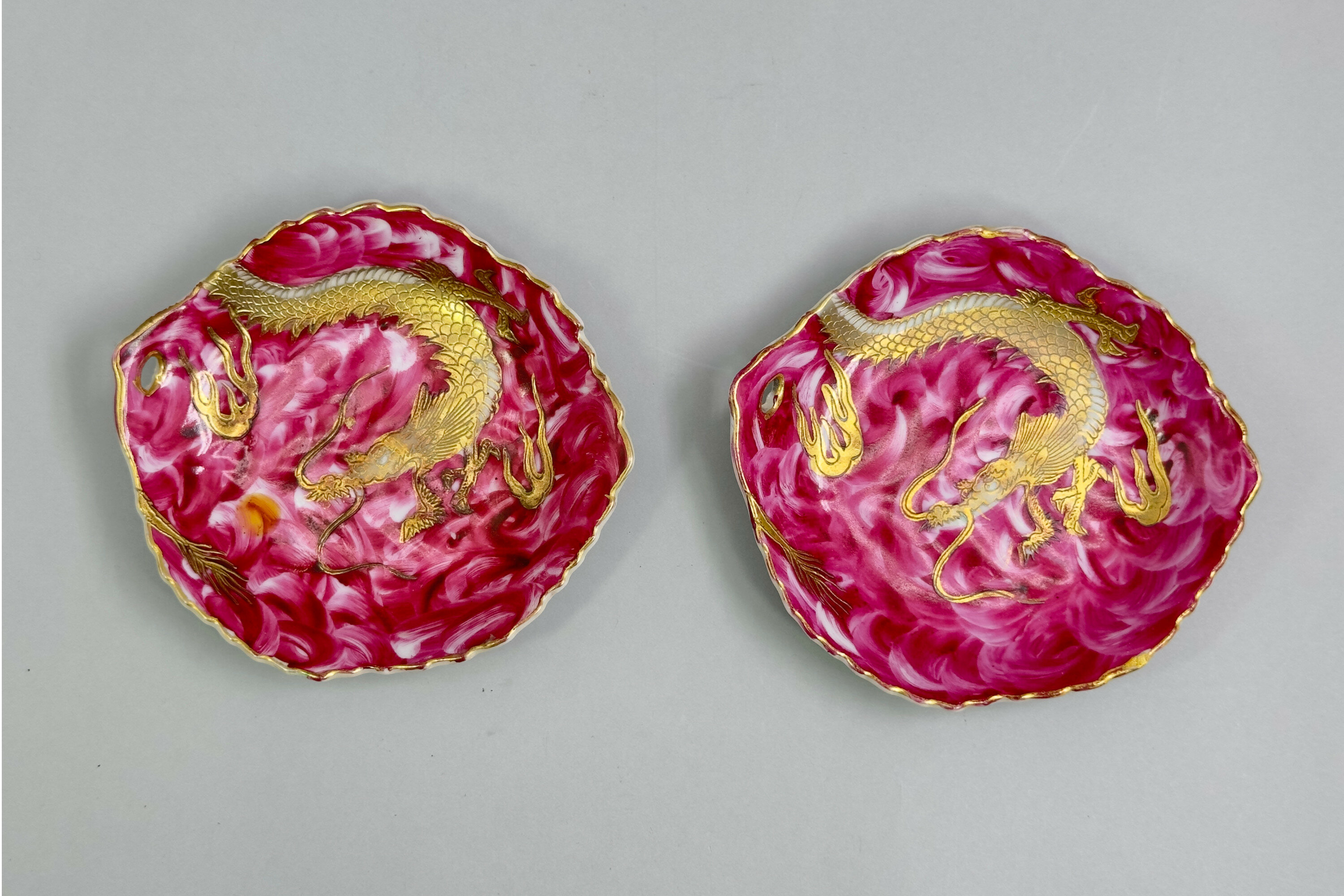
Pair of Japanese Shaped Saucer Dishes, Maruku China, 1940s
Price: £25The Maruku factory seems to have operated in Japan after the second world war producing modest but good quality wares for export, rather in the style of Noritake pieces. Usually their pieces are marked in addition ‘Made in Japan’ but for some reason not here. The forms, colourings and designs here are quite unusual and while modest, these are good quality decorative items suitable for a contemporary interior.
PLEASE NOTE THAT THERE IS FREE UK SHIPPING ON THIS ITEM. For international buyers the shipping cost will be reduced by the UK shipping cost, so don't worry if you are outside the UK, you still receive this benefit!
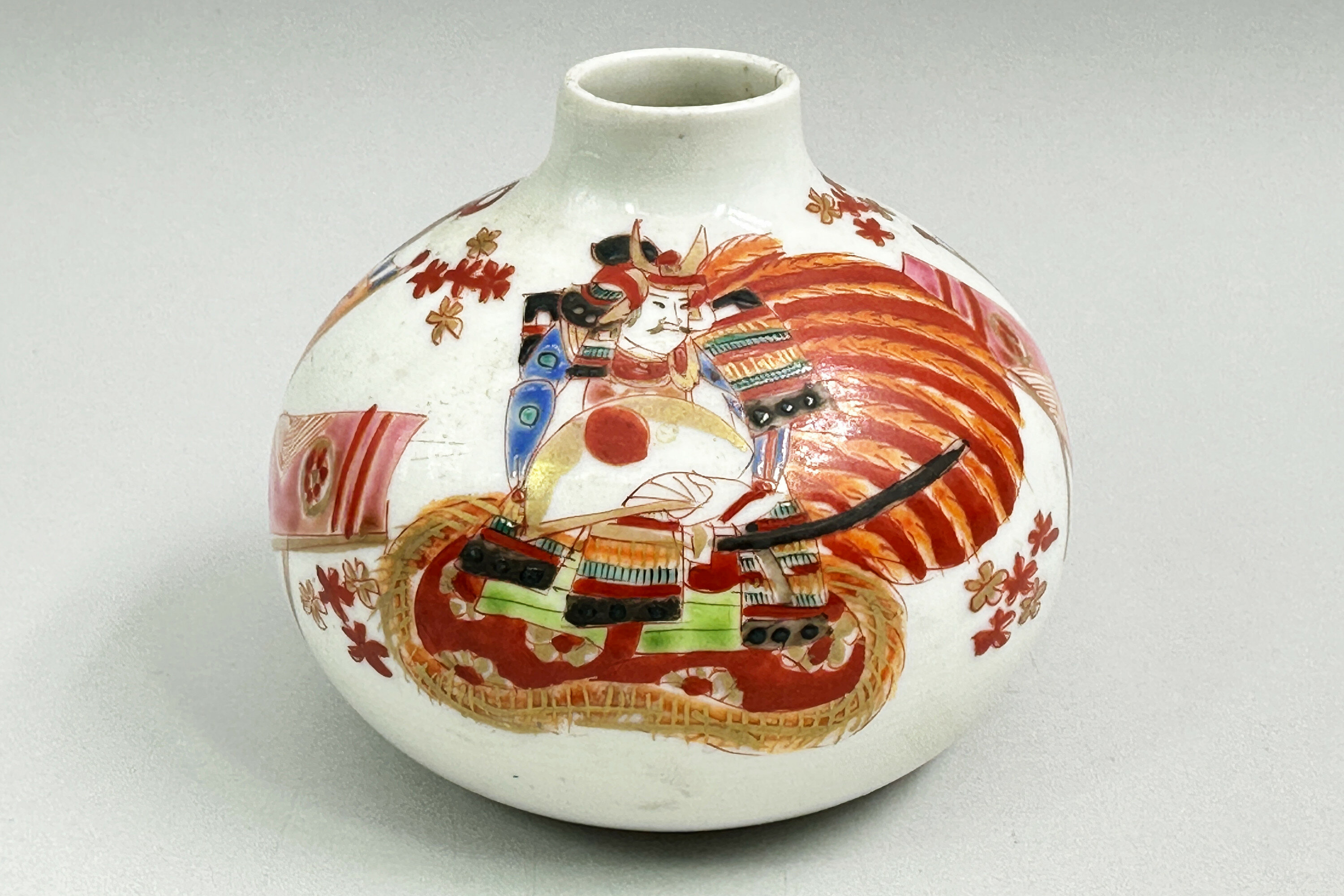
A Japanese Hichozan Shinpo Brushwasher circa 1880
Price: £25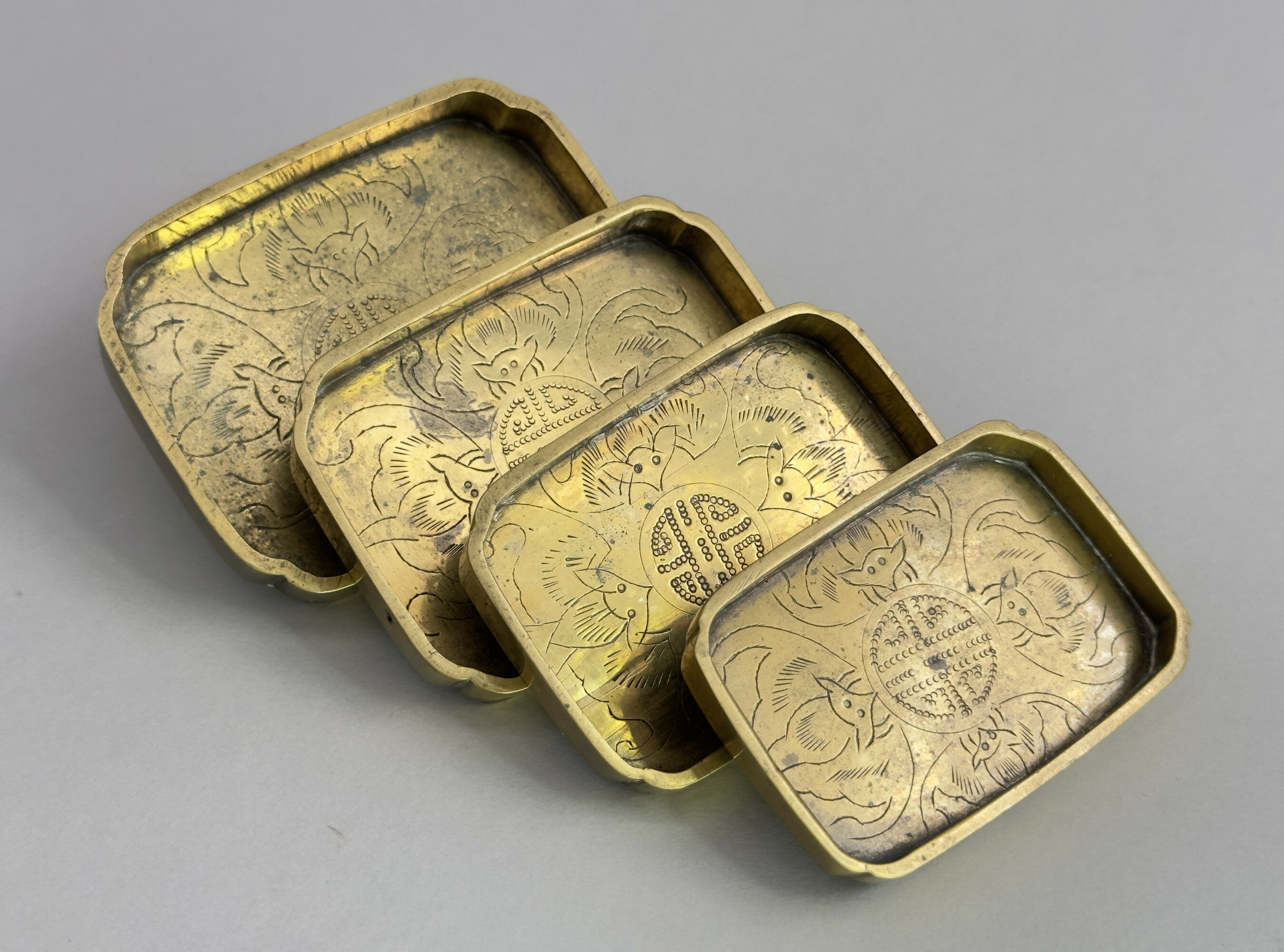
Nesting Set of Four Small Brass Trays with an engraved designs of Bats, Chinese C20th
Price: £30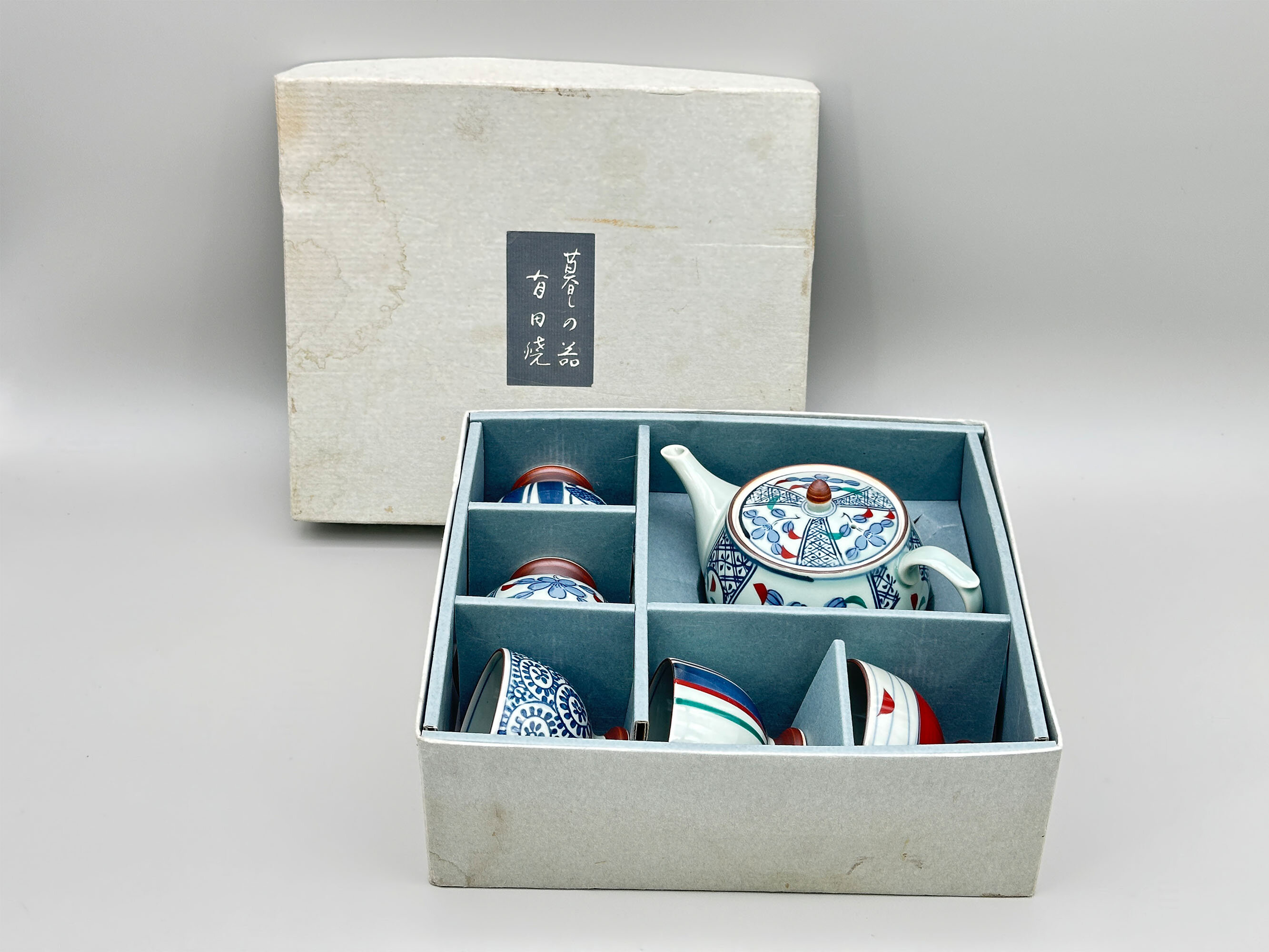
Japanese Arita Tea Set, boxed, late C20th
Price: £55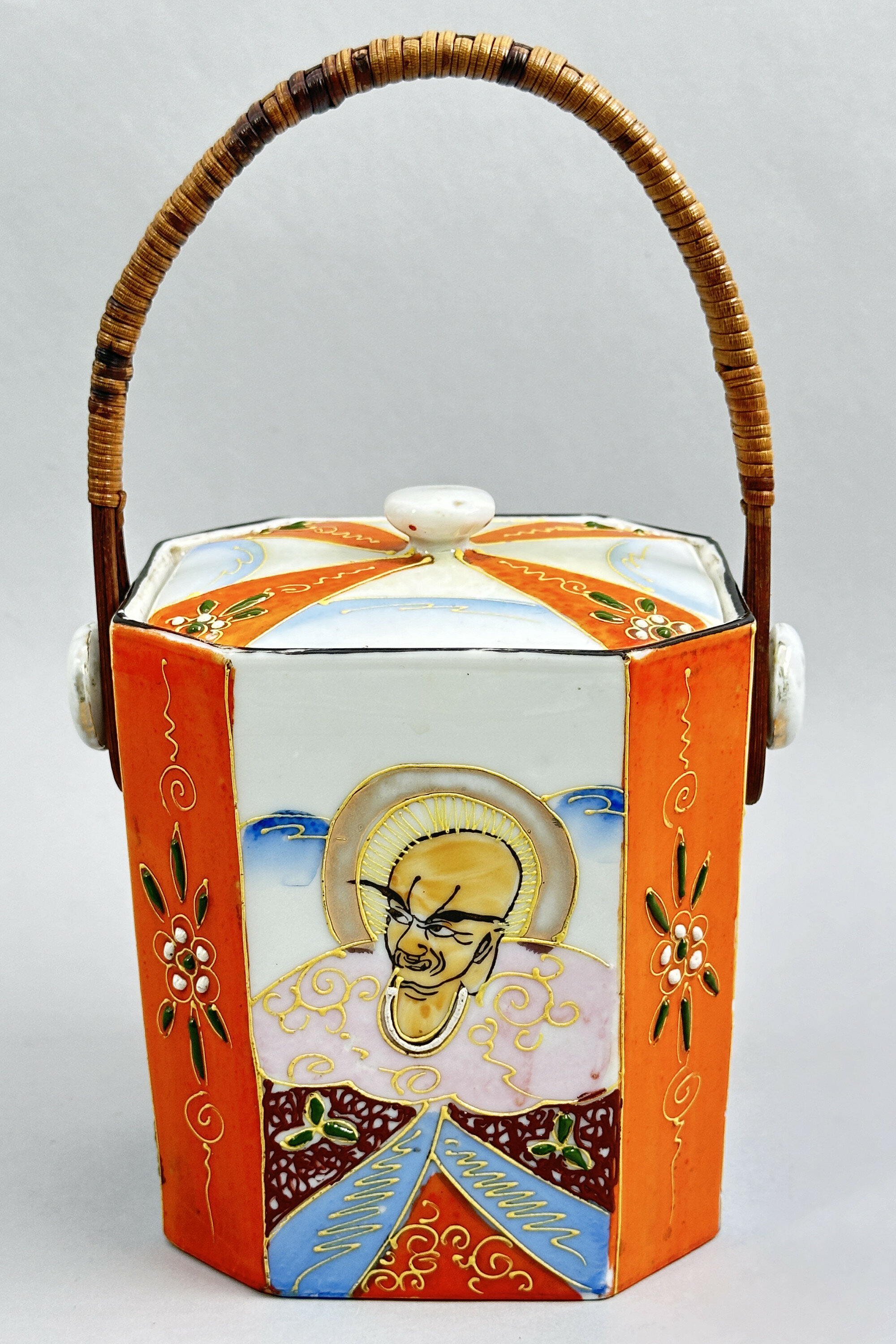
Japanese Samurai China Biscuit Box and Cover, C20th
Price: £25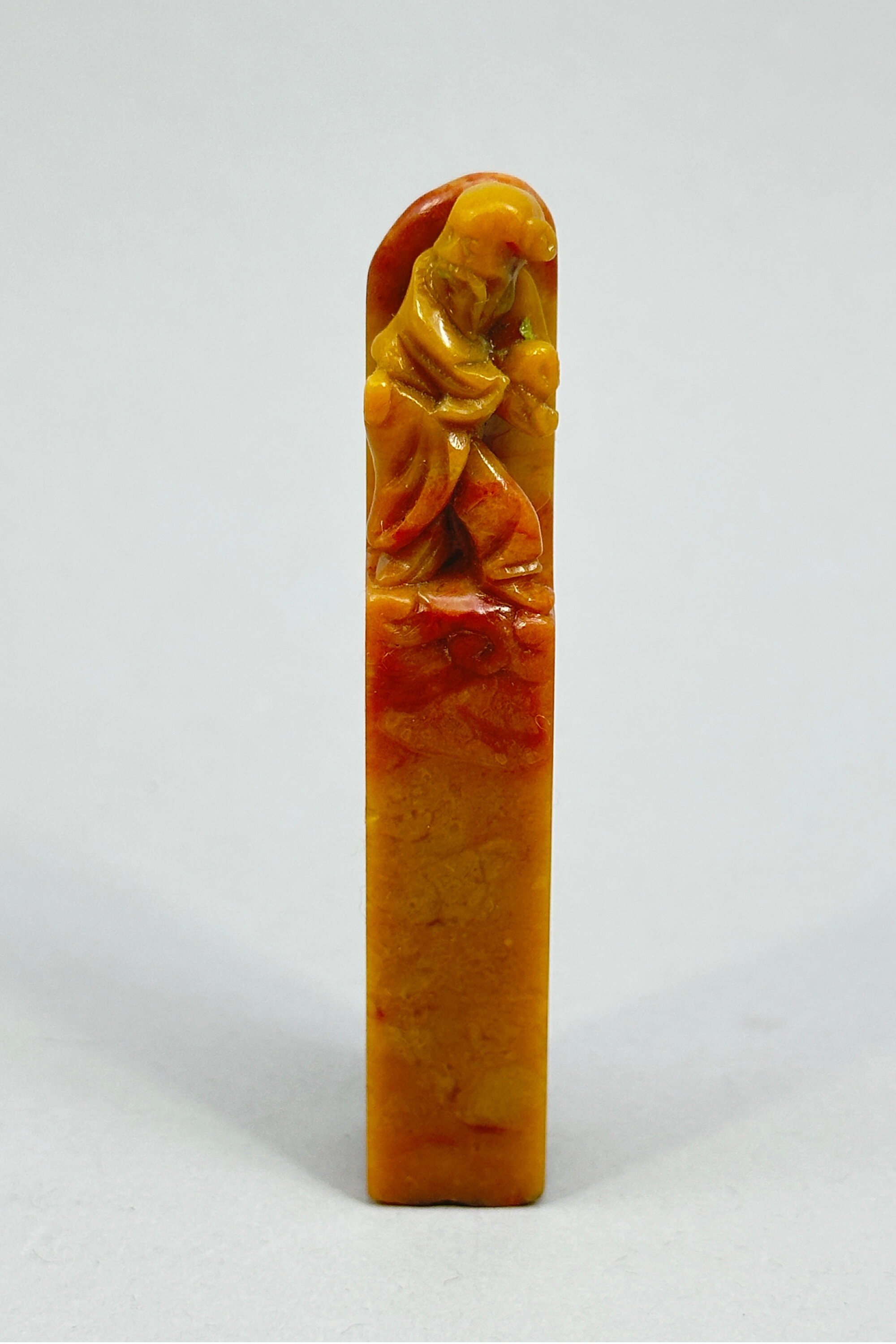
Chinese Shoushan Soapstone Seal with the characters A.H., C20th
Price: £45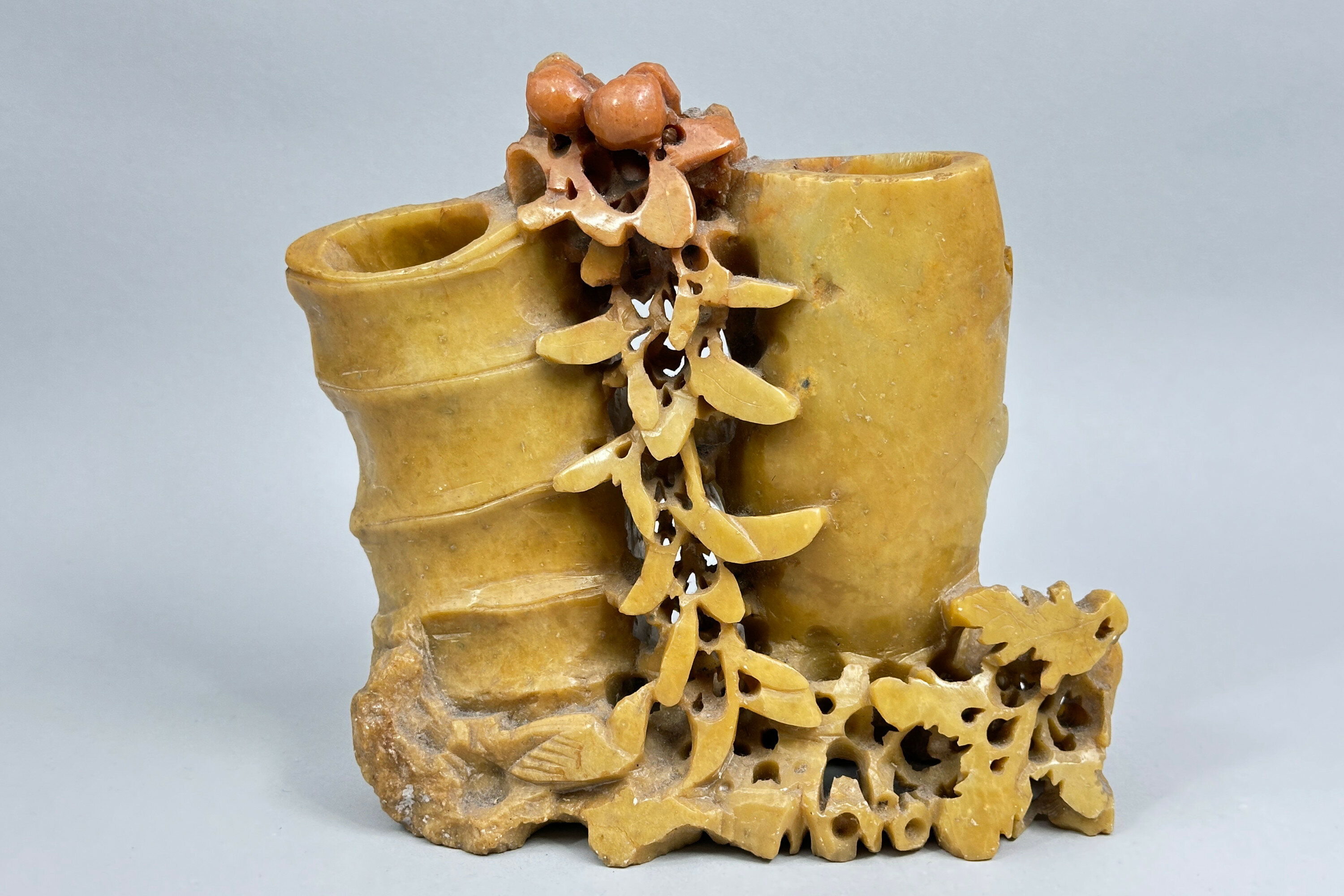
Chinese Soapstone Double Brushwasher, C20th
Price: £45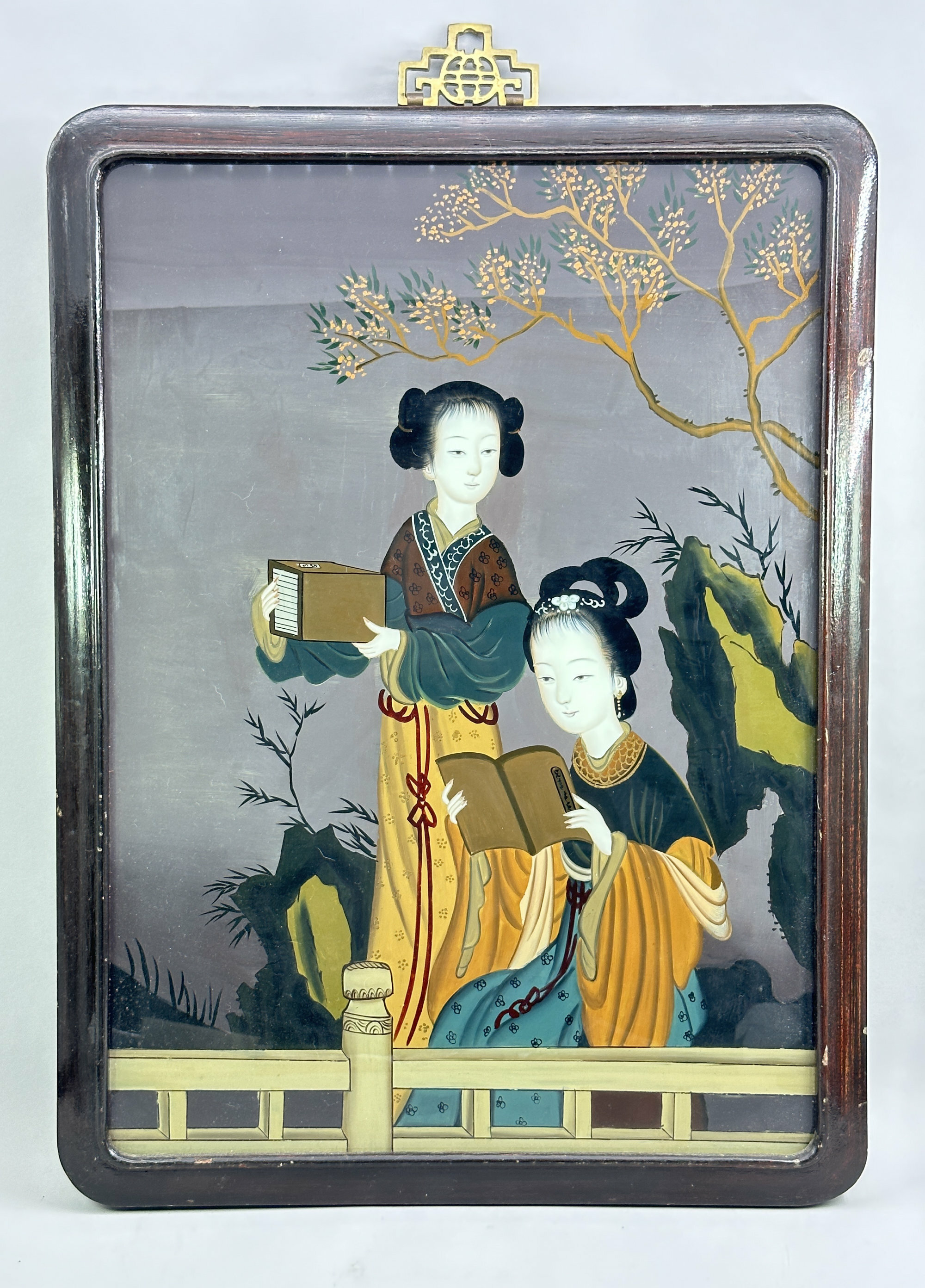
Chinese Reverse Glass Painting of Two Ladies on a Garden Terrace, first half C20th
Price: £240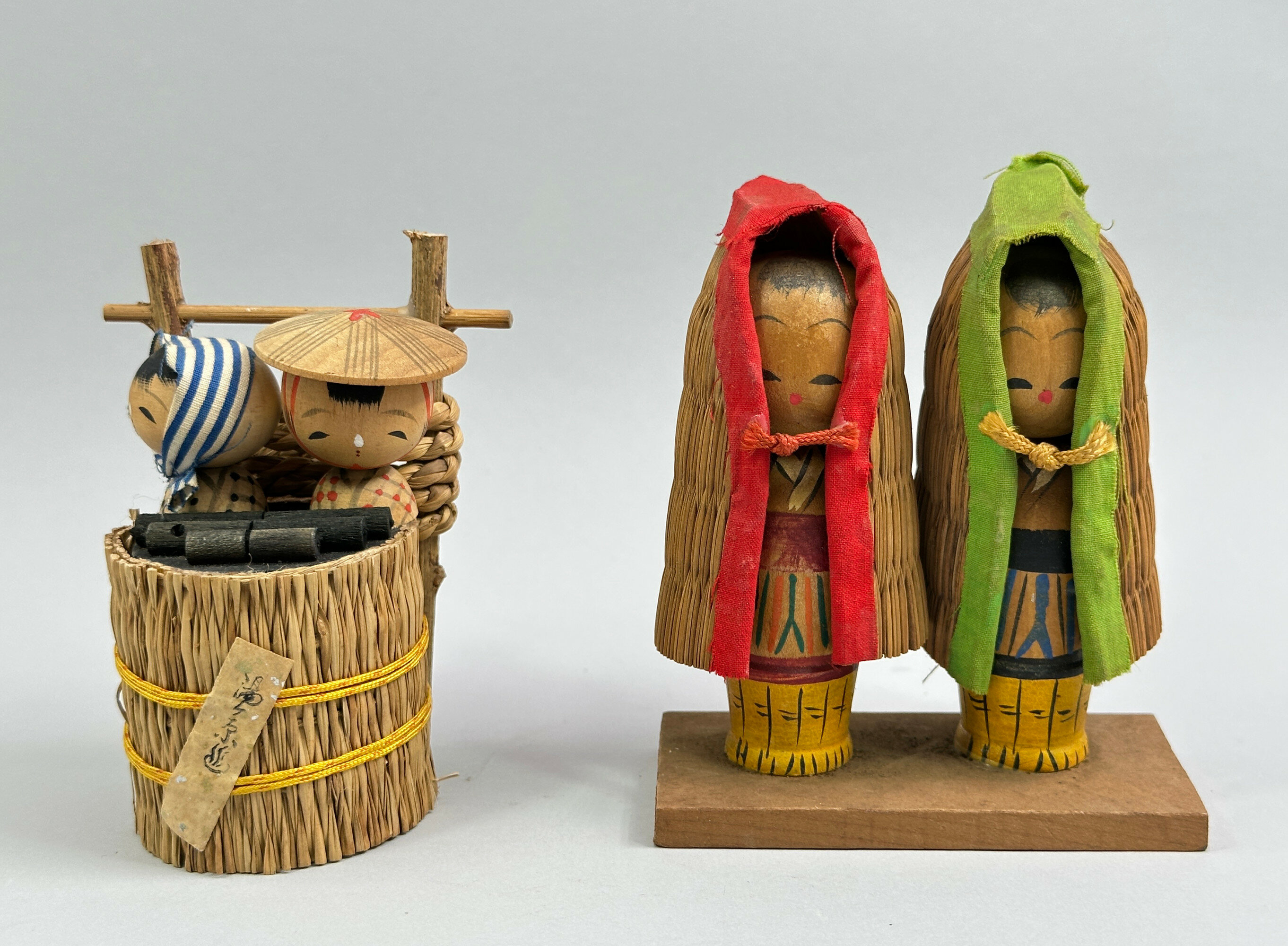
Two Vintage Japanese Kokeshi Doll Groups, C20th
Price: £25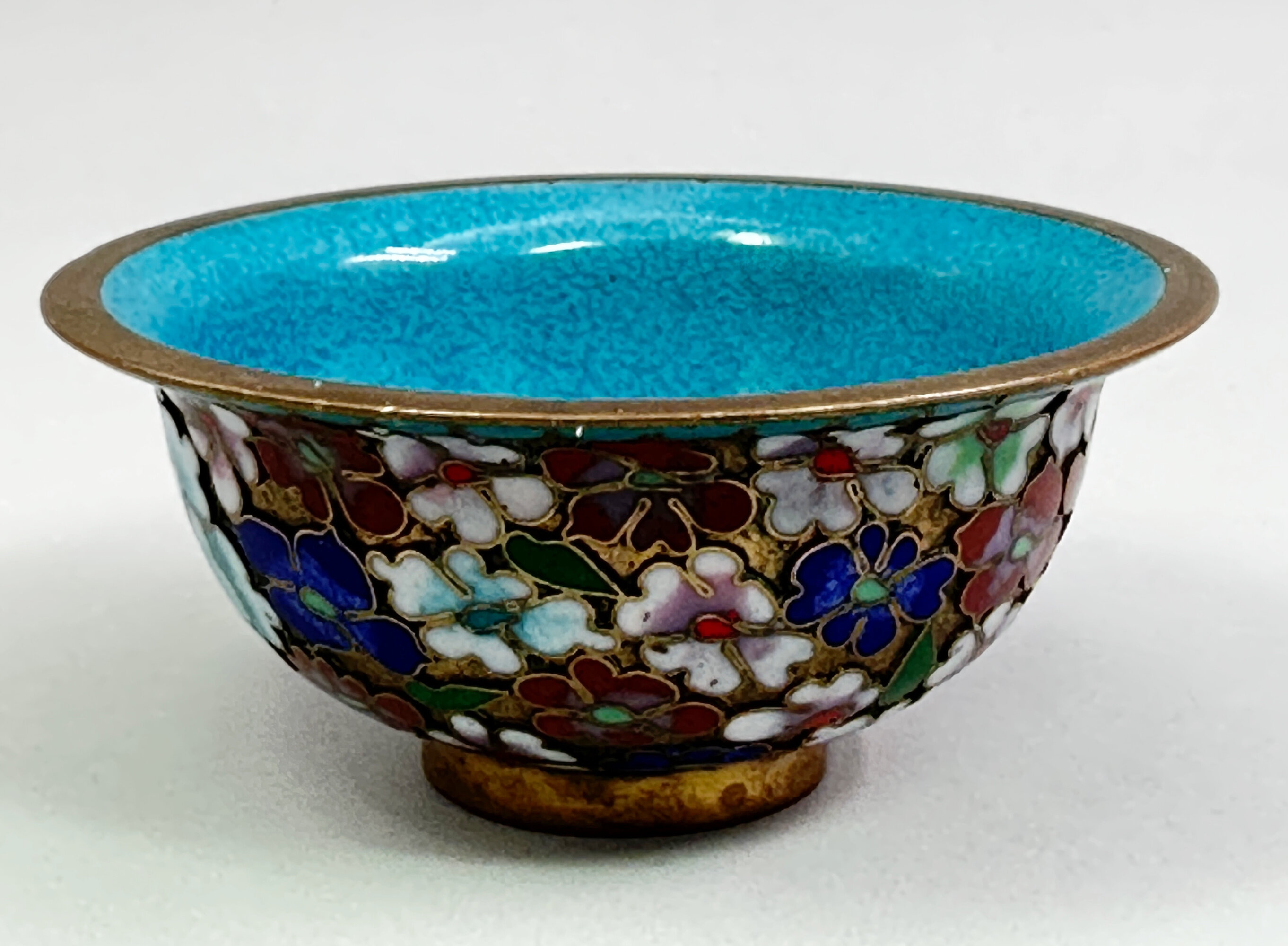
Small Chinese Gilt Ground Cloisonné Bowl, C20th
Price: £35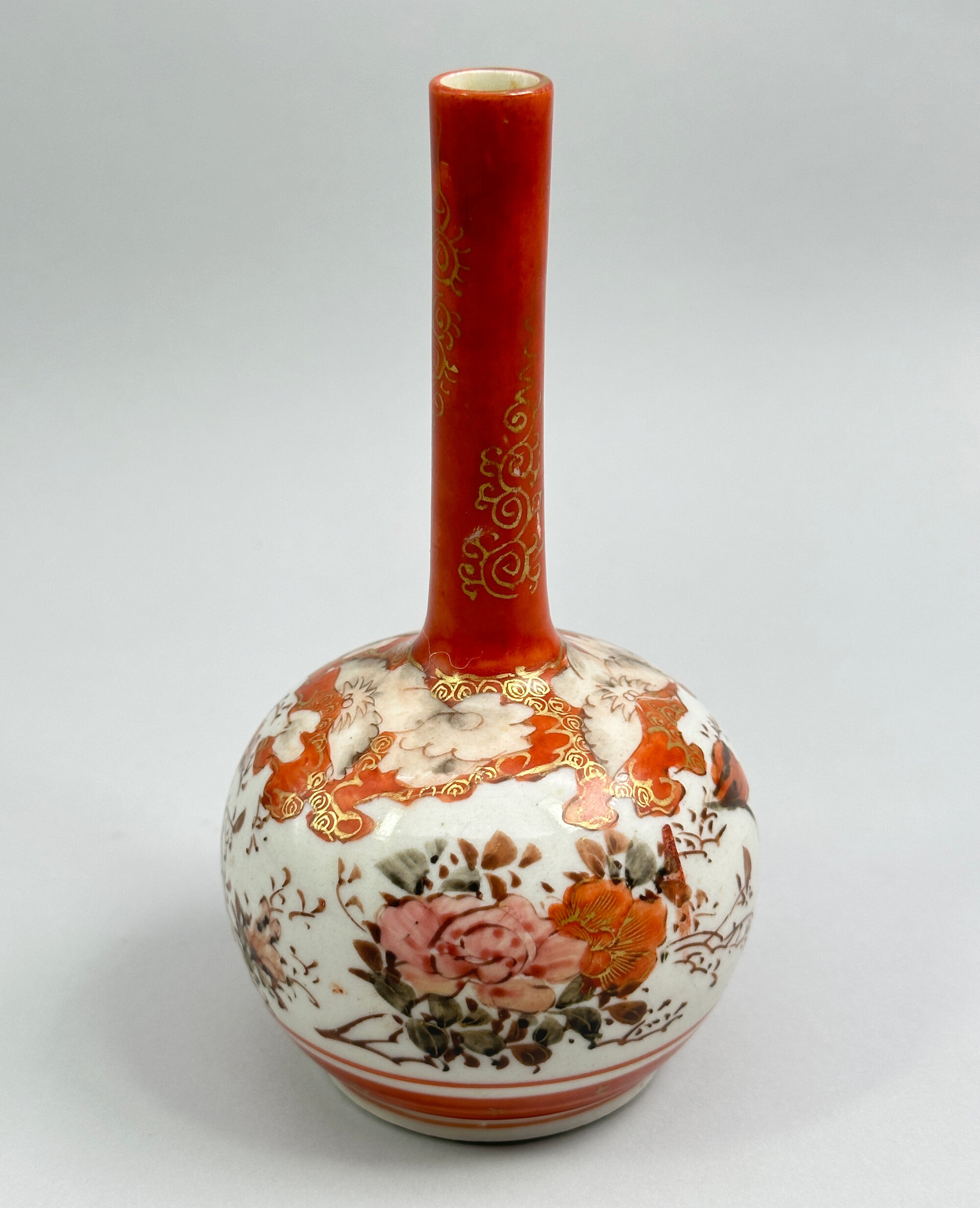
Japanese Kutani Vase of Water Dropper form, circa 1880
Price: £35Kutani (the word means 'nine valleys') porcelain was made at various factories in the former Kaga province of Japan. The earliest pieces were in a completely different style employing a palette of colours emphasising green, the so called 'Ko Kutani'. Production of this ceased around 1730, and manufacturing was not revived until the early nineteenth century when the more familiar colourings of iron red and gold were introduced. This small vase is typical of pieces exported to the West in fairly large quantities at the end of the nineteenth century. The form suggests a water dropper and is found in Imari colourings as well. Many of the Kutani pieces were marked, sometimes simply 'Ku' 'Tani' as here. The glaze was sometimes unstable with a tendency to craze as can be seen here, but this is original to the manufacture and does not detract from the piece's decorative appeal.
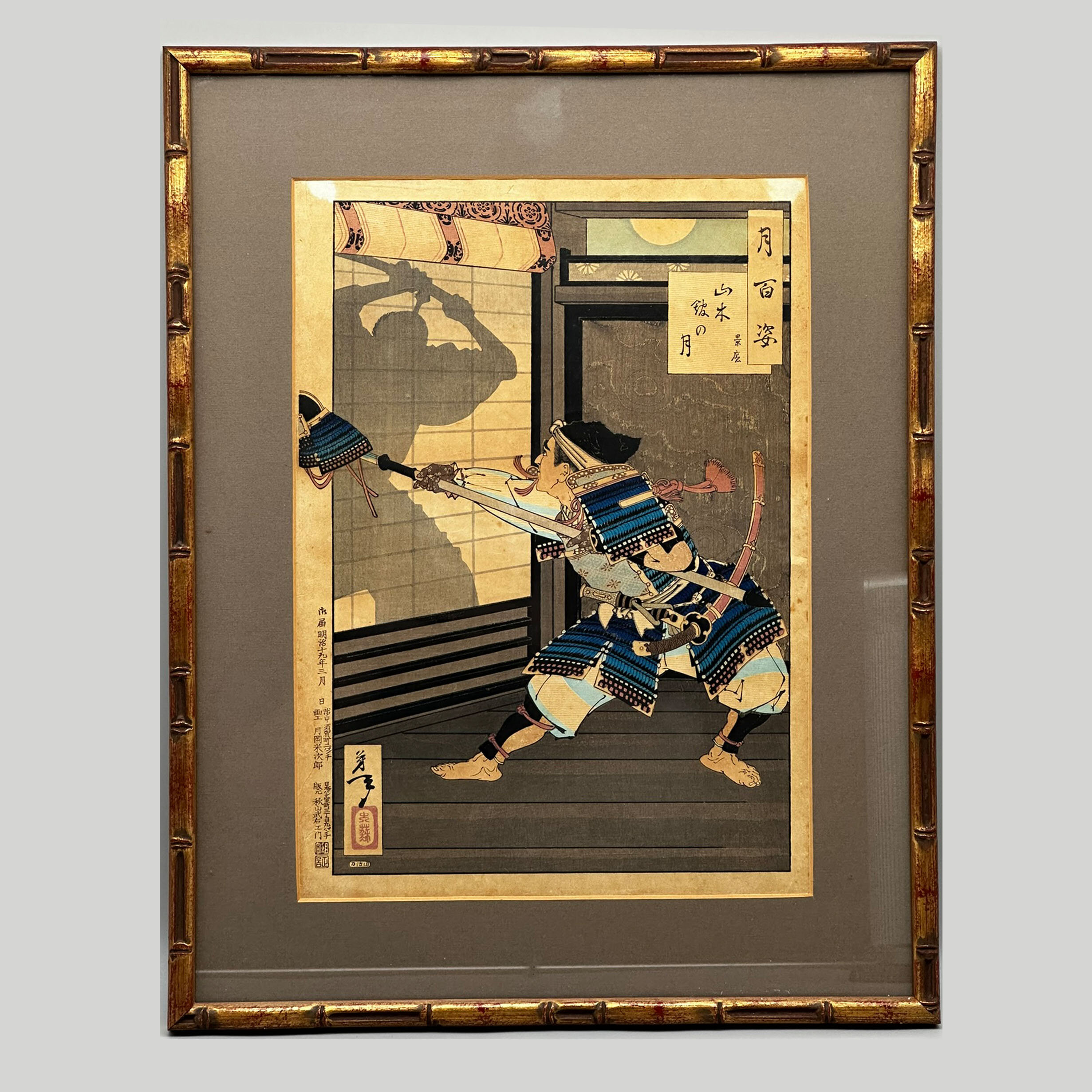
Japanese Woodblock Print - Kagekado, Moon of Yamaki Mansion, by Yoshitoshi Tsukioka
Price: £350…………………………………………………………………………………………..............................................…................................…
Yoshitoshi Tsukioka (1839-1892) was one of the last masters of ‘ukiyo-e’ (literally ‘images of the floating world’) a tradition of paintings and prints which flourished in Japan from the seventeenth to the nineteenth centuries. Known at first for his ‘Bloody Prints’ which concentrated on violence and the depiction of death, Yoshitoshi moved on to gentler themes later in his life, culminating in the series of one hundred prints entitled ‘One Hundred Aspects of the Moon’ which was published by Akiyama Buemon between 1885 and 1892, the final images appearing in the year of the artist’s death. The prints featured subjects from traditional Japanese and Chinese history and legend with the moon appearing in all but a few, giving a linking motif for the series as a whole. They were released singly or in groups every few months and proved to be enormously popular, with queues forming of collectors eager to purchase the new releases as soon as they became available.
This print was entitled ‘Kagekado, Moon of Yamaki Mansion’ and was issued in March 1886, therefore one of the earliest in the series. The scene depicted comes from the ‘Heike monogatari’ or ‘The Tale of the Heike’ an account complied before 1330 of the struggle between the Taira clan and Minamoto clan for control of Japan at the end of the 12th century in the Genpei War (1180–1185). Yoshitoshi’s audience would, no doubt, have been familiar with this. At the beginning of the conflict the head of the Minamoto clan sent his retainer, Kagekado, to kill the leader of the Taira clan, Kanetaka. We see here Kanetaka behind a screen, lit up by the moon, with his sword poised to strike. But Kagekado cunningly put his helmet onto the end of his spear causing Kanetaka to attempt to aim for it which left him exposed and allowed Kagekado to strike in turn a fatal blow and kill him. Yoshitoshi illustrates the moment just before Kanetaka’s death with Kagekado about to make the deadly thrust with his spear with deceptive helmet about to fall off. The detail is exceptional with particular attention given to the wood panel to the rear, created with an imitation woodgrain effect, where a woodblock’s natural grain is emphasized through soaking in water; in addition the black details have been burnished to imitate lacquer.
The artist's seal, ‘Taiso’, is printed in red relief within a rectangular cartouche to the lower left and his signature can be seen above (see image 4). The title, ‘Kagekado, Moon of Yamaki Mansion’, appears in the square cartouche to the upper right and the series title, ‘One Hundred Aspects of the Moon’, in the rectangular cartouche next to it (see image 5). On the reverse is affixed an identification note from the British Museum dated 1983 confirming the artist and the subject of the print which appears to have survived in a remarkably fine state of preservation.
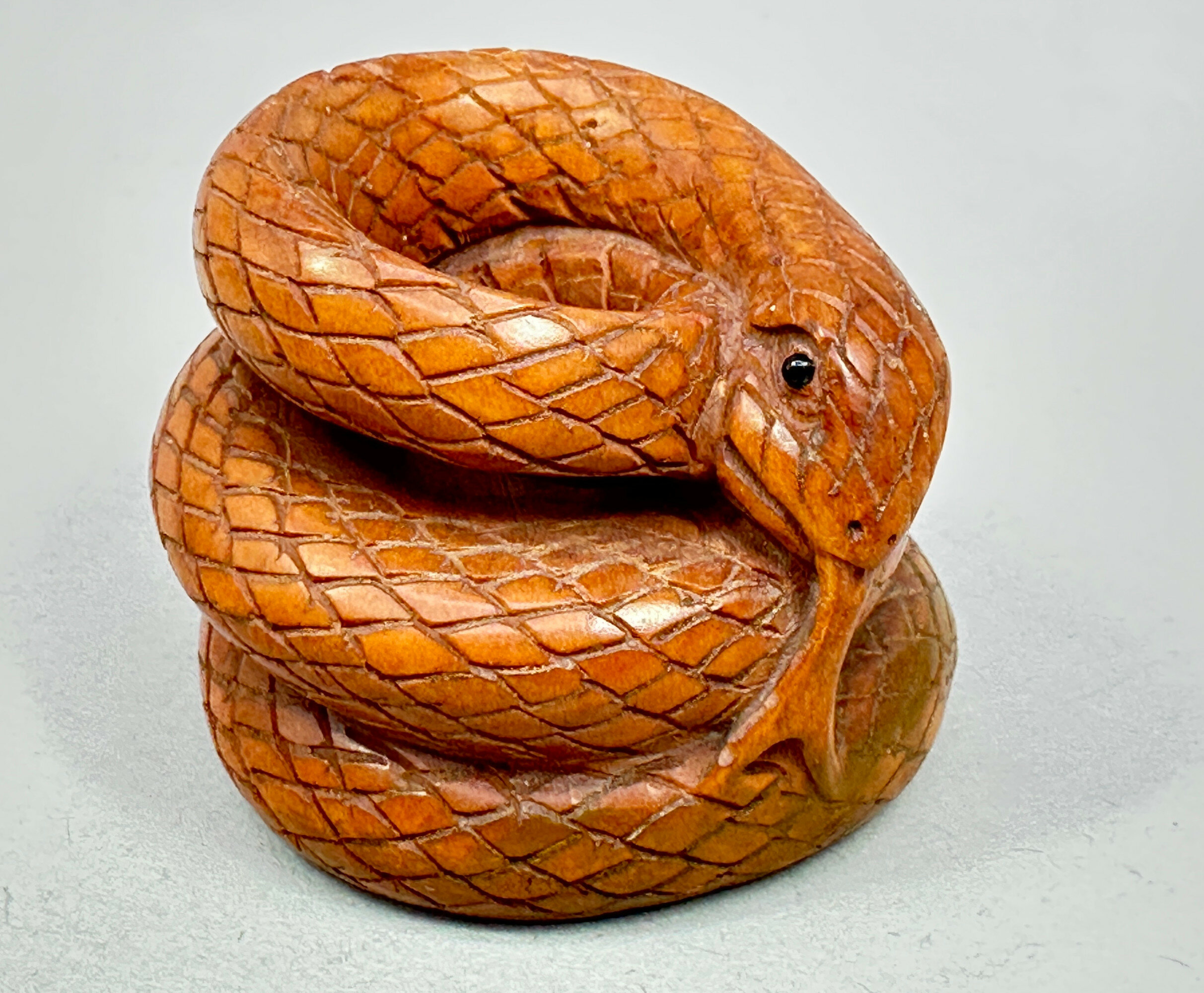
Japanese coiled Snake Netsuke
Price: £25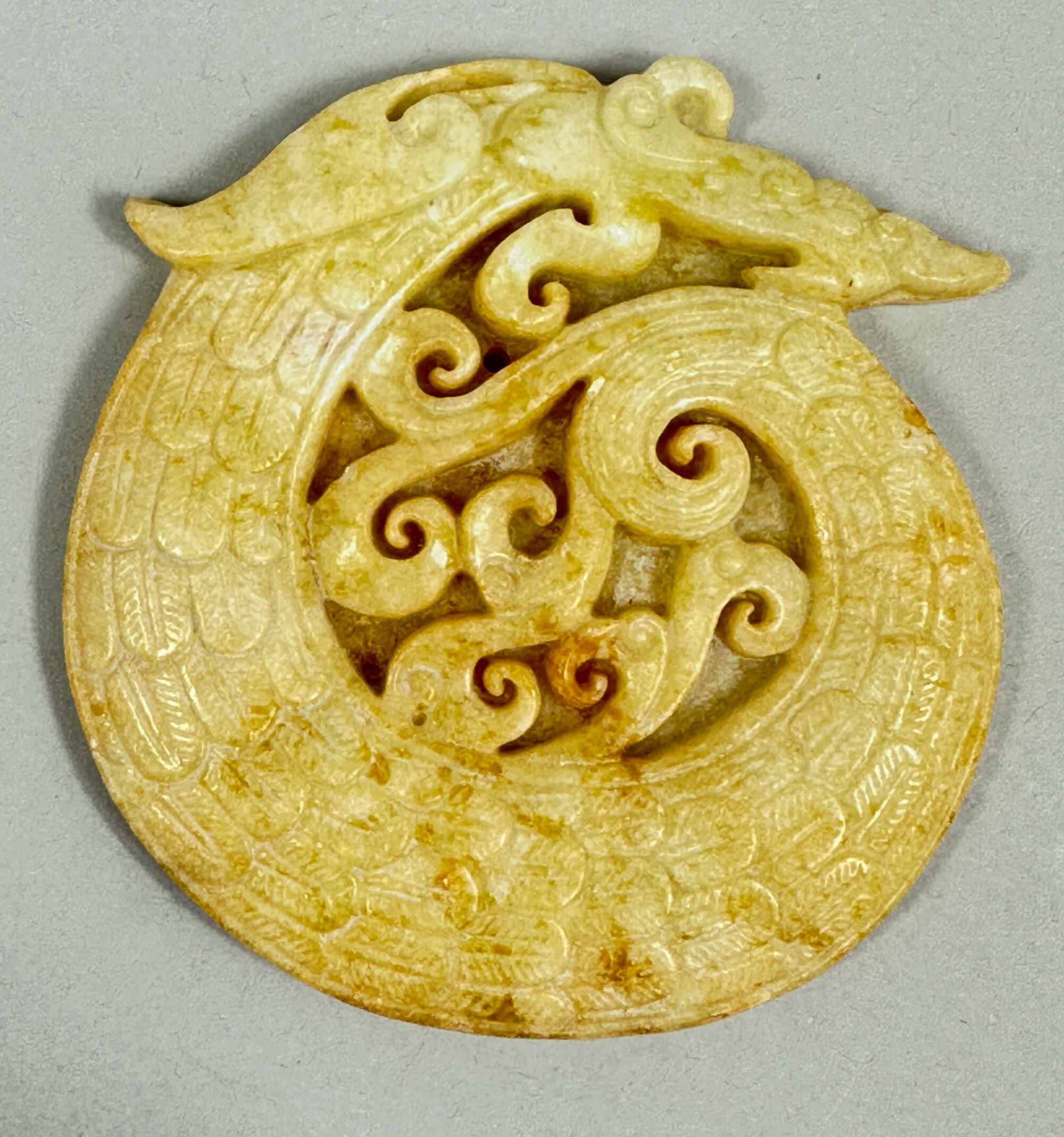
Chinese soapstone Amulet decorated with a coiled dragon, C20th
Price: £25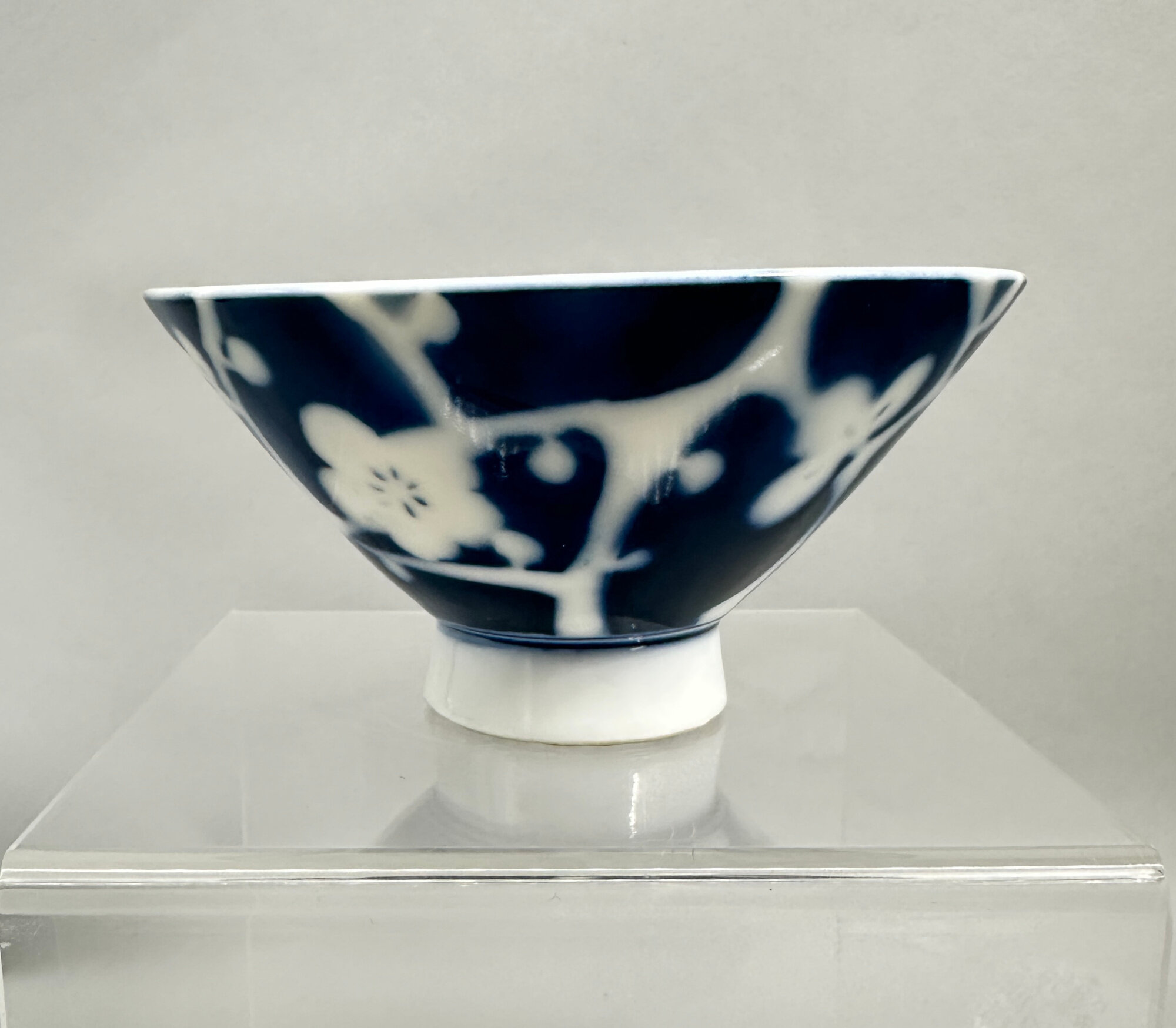
Japanese blue and white hat shape small Bowl with flowering prunus, C20th
Price: £25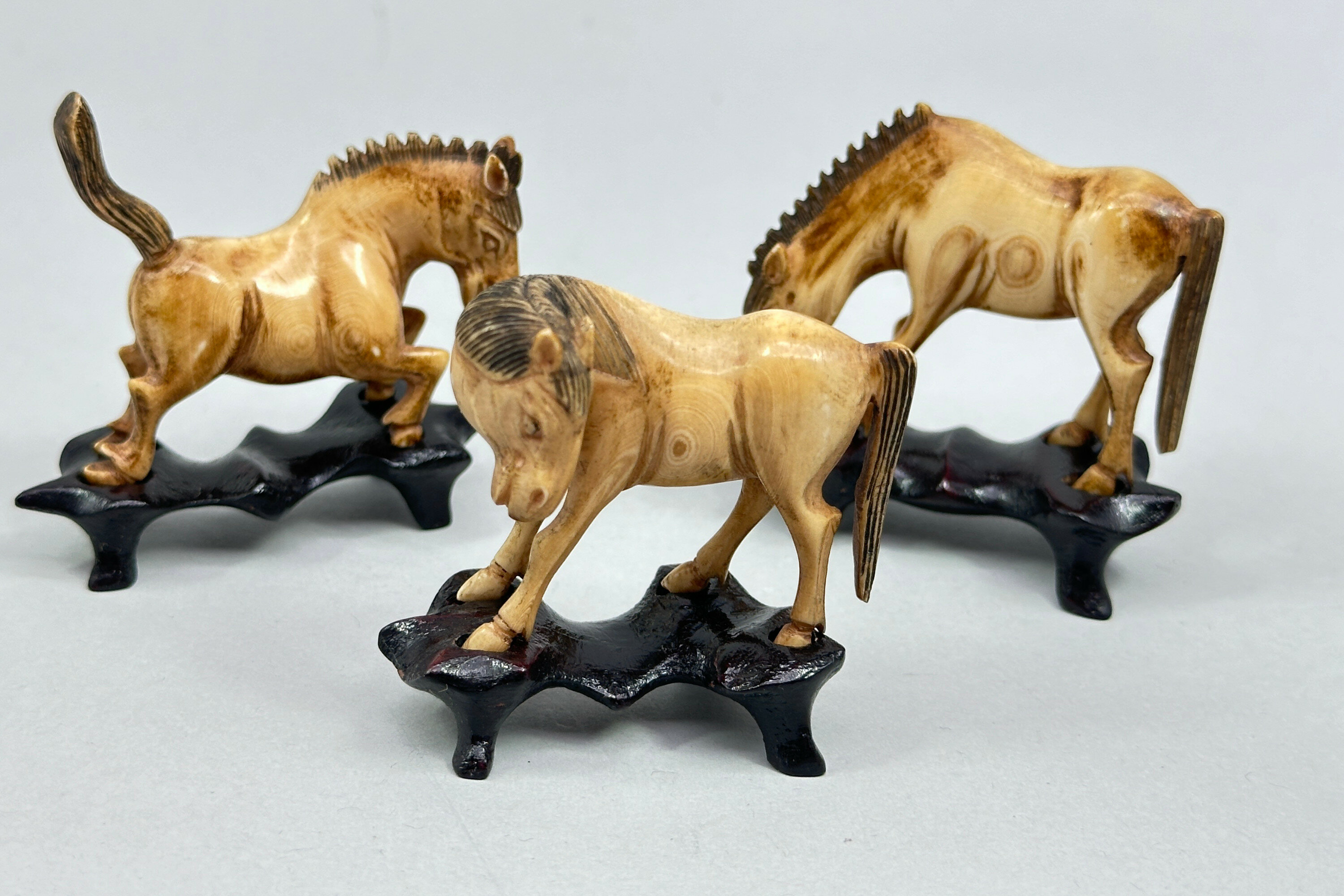
Group of Three Chinese carved bone Horses with wood stands, probably mid C20th
Price: £30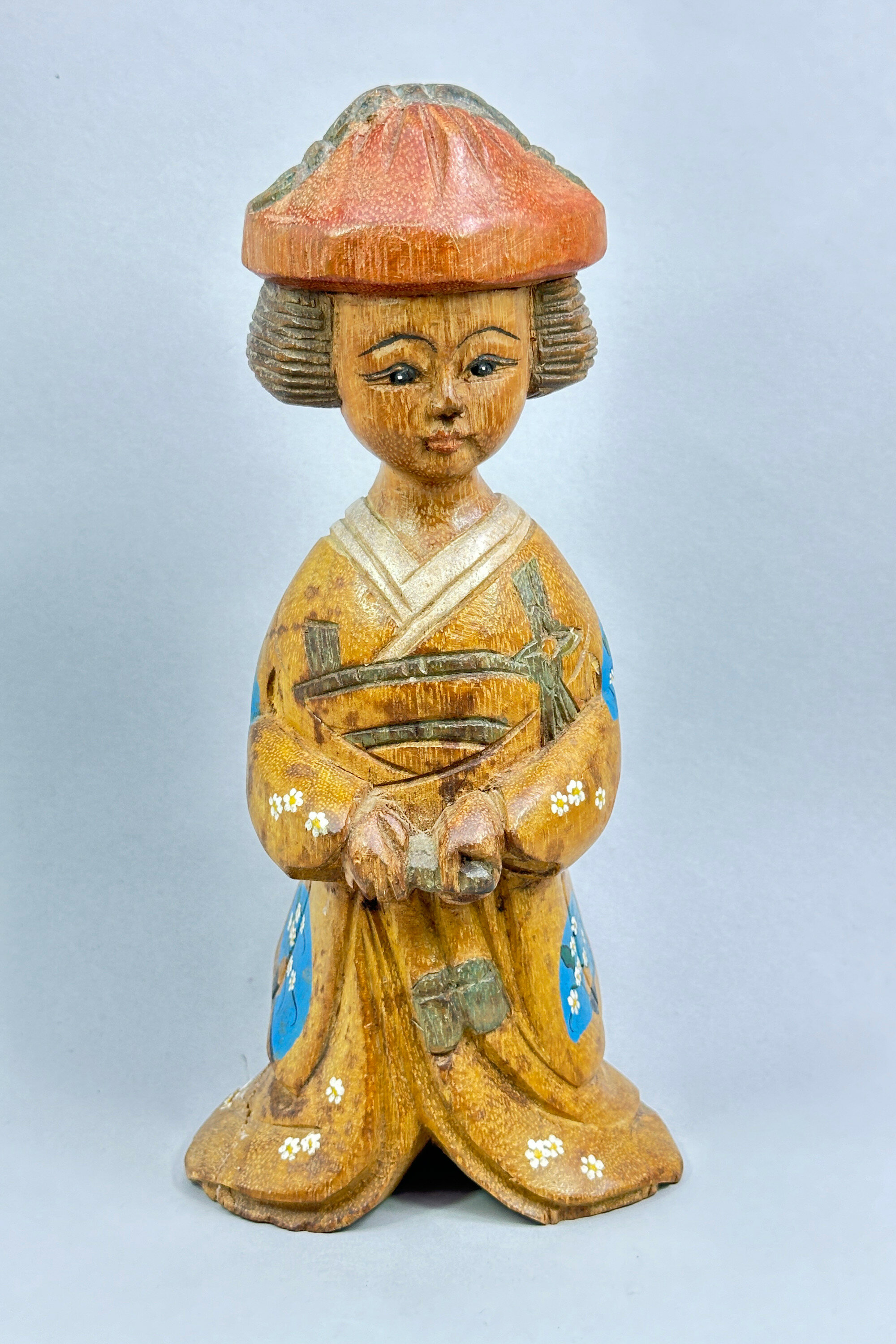
Japanese Carved Wood Figure of a Young girl, Kokeshi doll style, C20th
Price: £45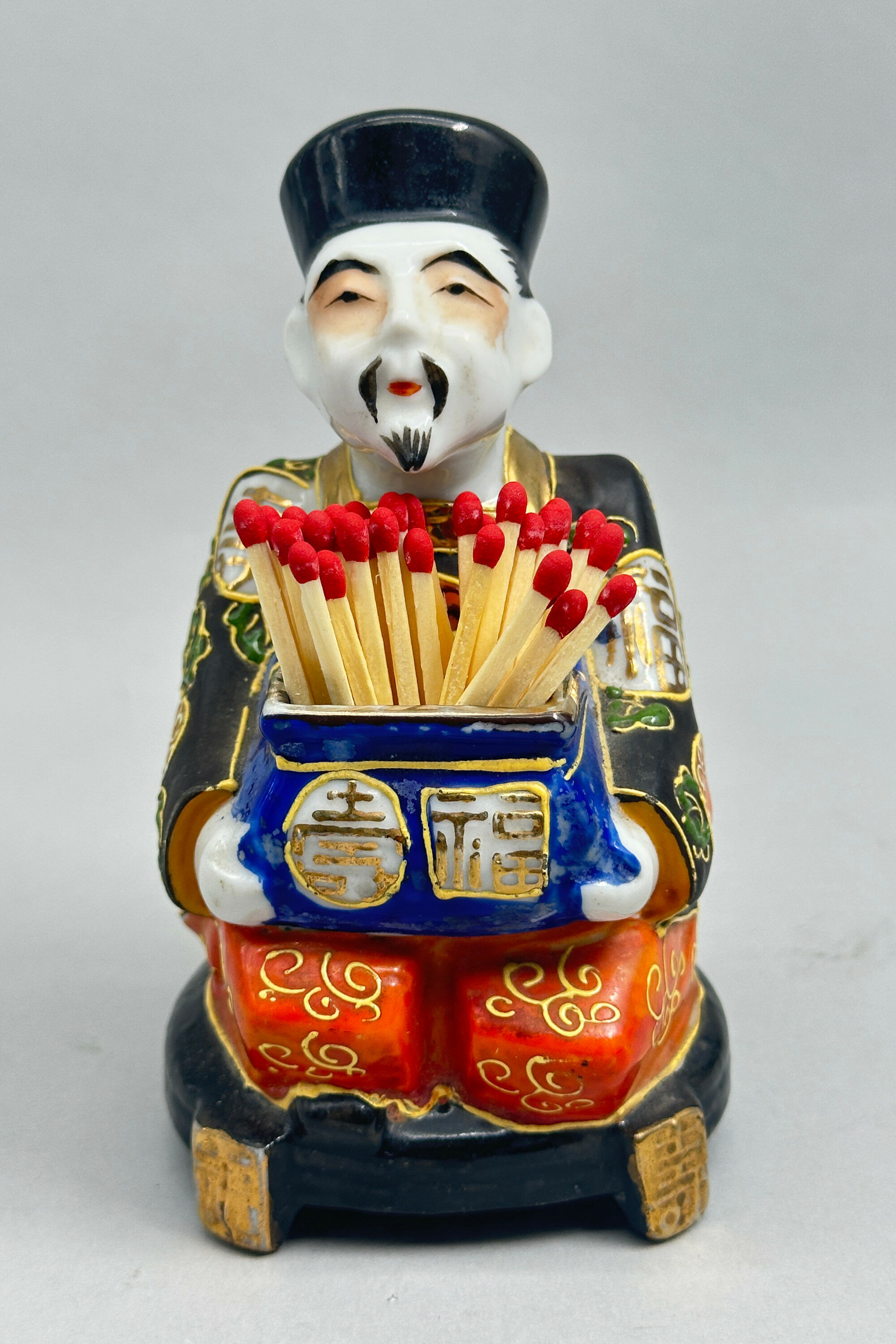
Japanese satsuma style match stick holder c1940
Price: £45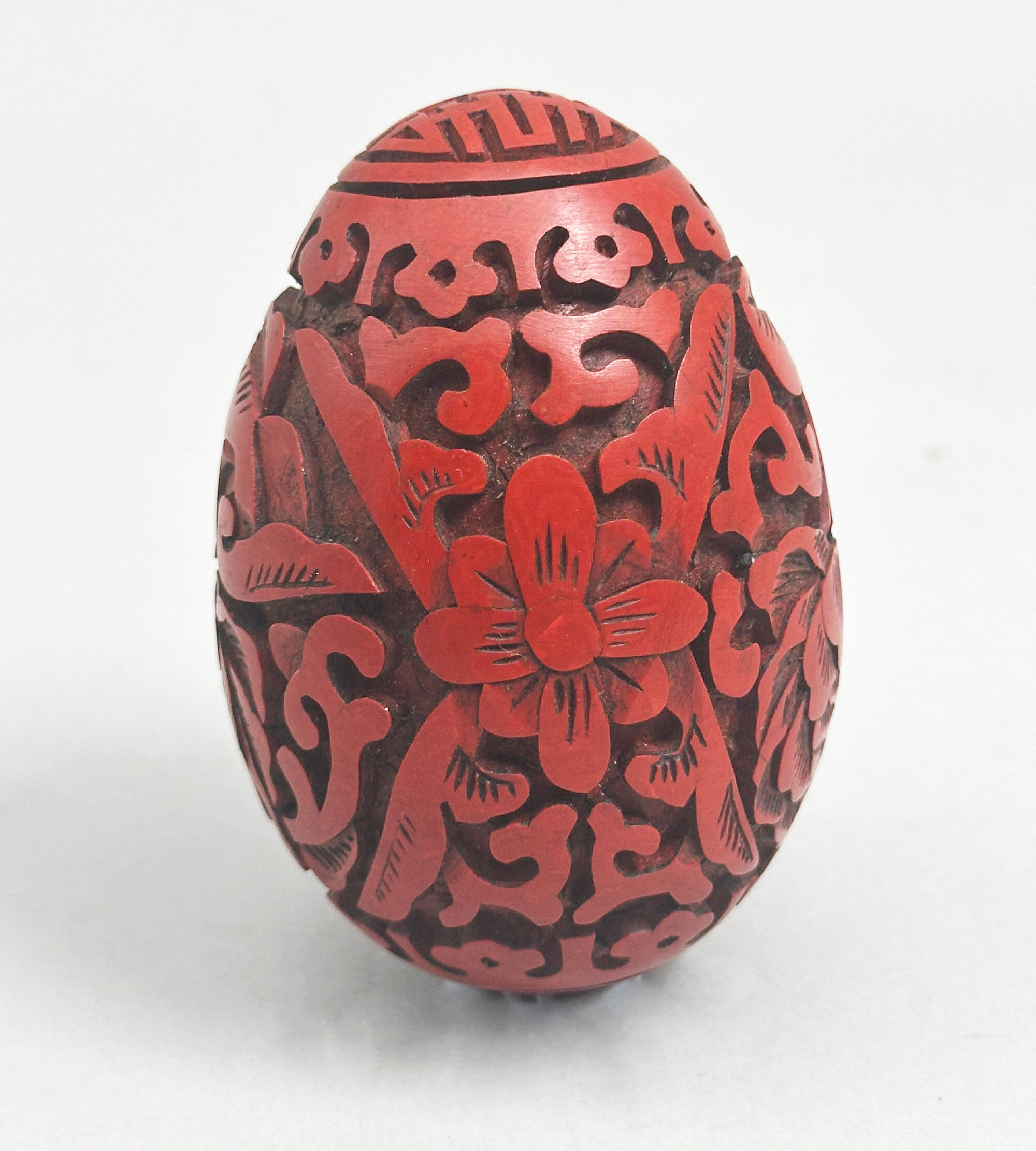
Chinese Cinnabar Lacquer Egg, C20th
Price: £55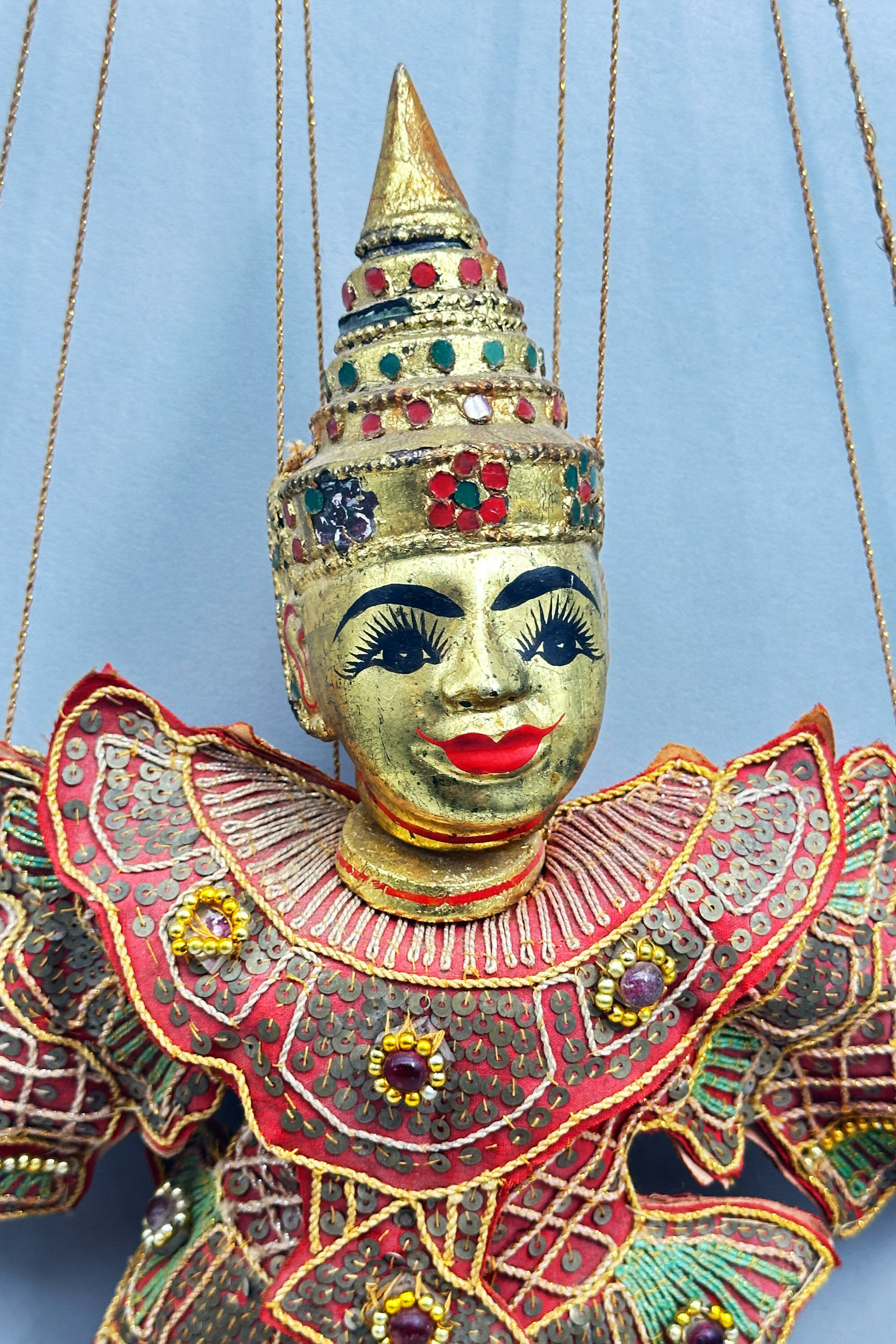
Marionette Figure of a Prince, probably Burmese mid C20th
Price: £45The style of the dress suggests Burma which has a tradition of marionette puppetry (marionettes are a specific form of puppet where the figure is controlled by strings or rods) dating back to the late eighteenth century and still popular today with visitors to the country, now called Myanmar. Termed ‘Yoke thé’, the Burmese marionette tradition allowed political commentary under the guise of of an entertainment display. The standard ‘troupe’ comprised twenty seven characters, both animal and human, and this male figure is probably the ‘King’ (‘Mintayar gyi’). Dating is probably to the mid C20th and a little earlier than the female marionette figure also included in this sale. This figure is rather more majestic as befits his regal status.
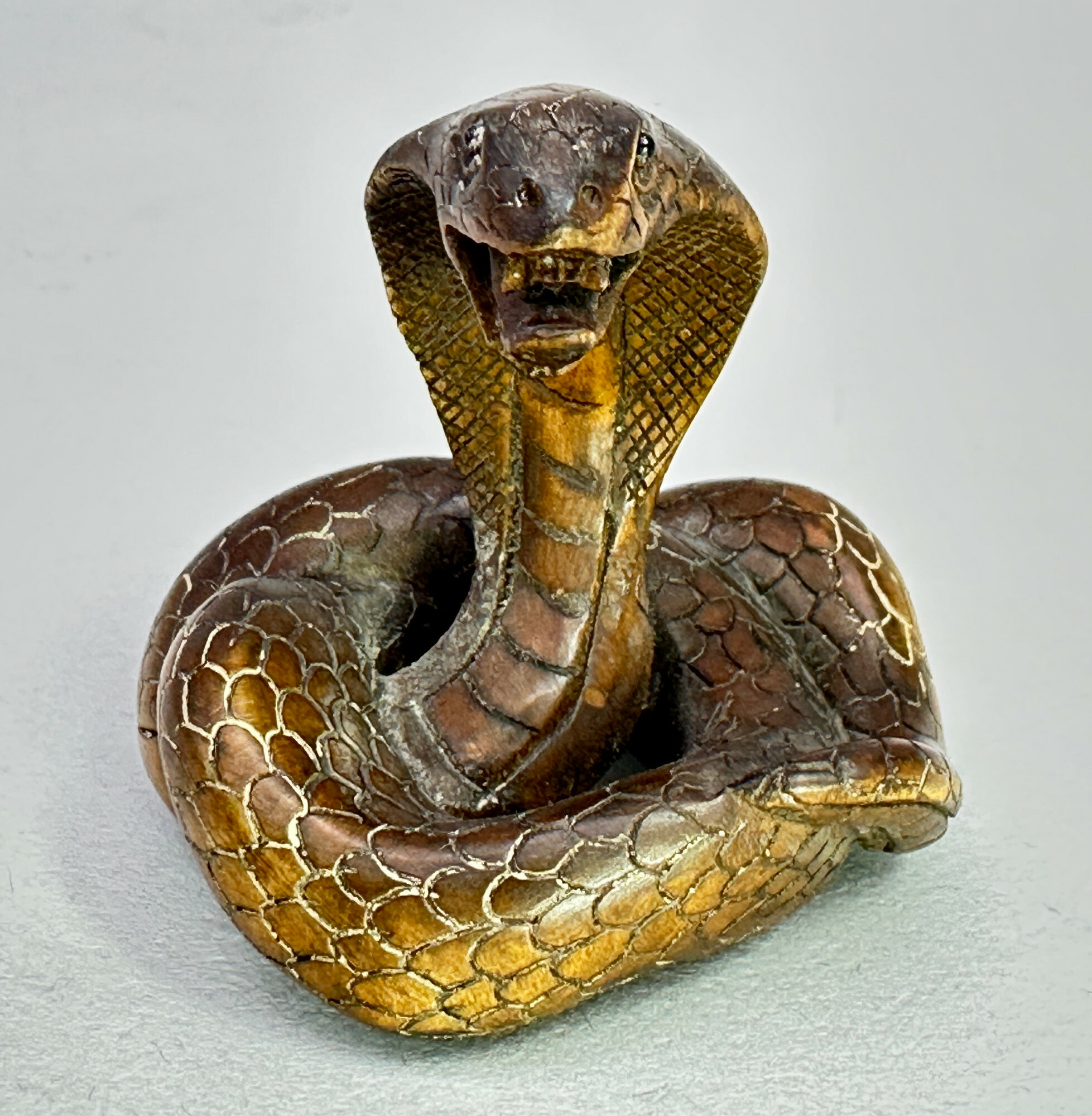
Japanese wood Netsuke of a Cobra, signed, C19th
Price: £45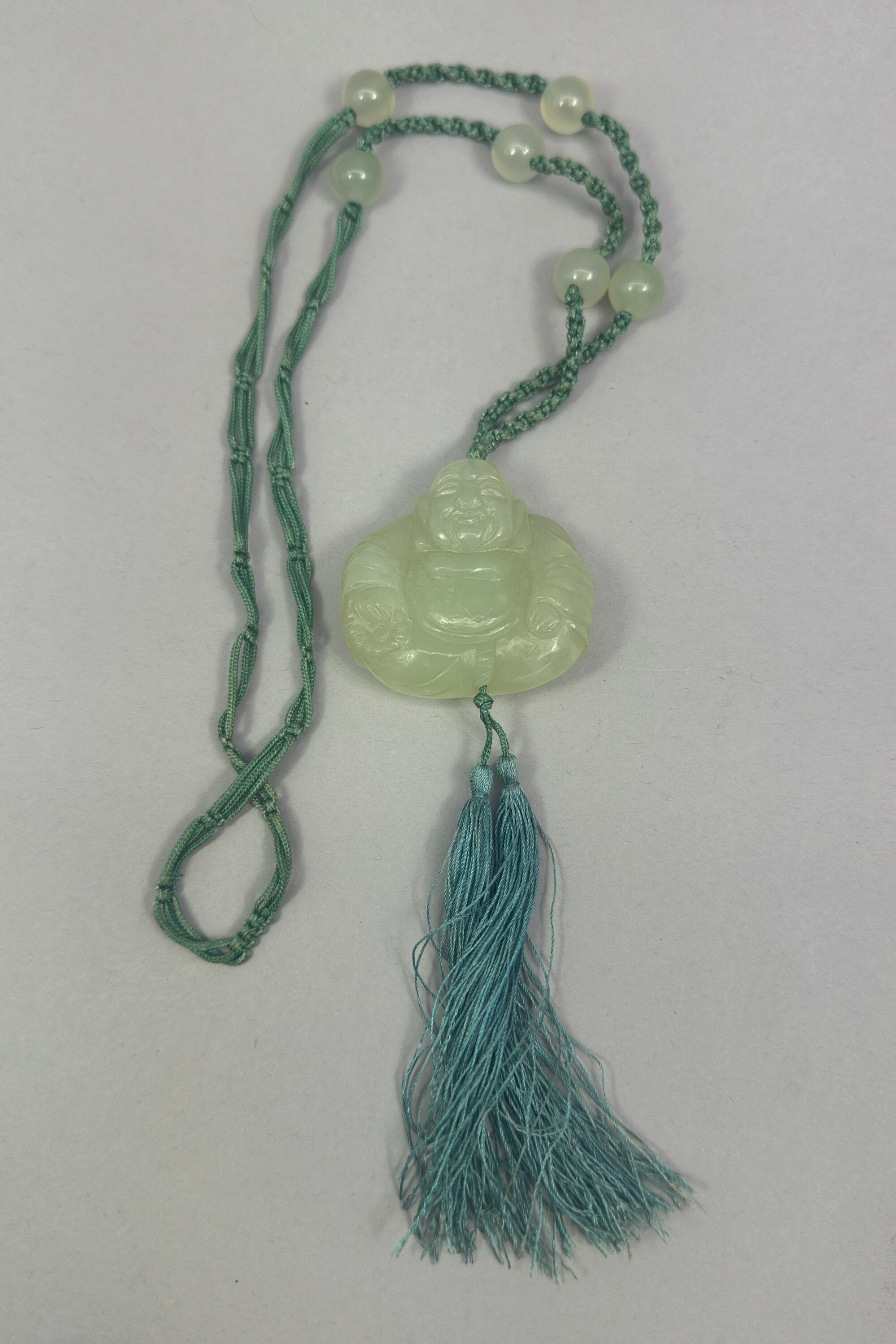
Carved celadon jade pendant Necklace c1920
Price: £95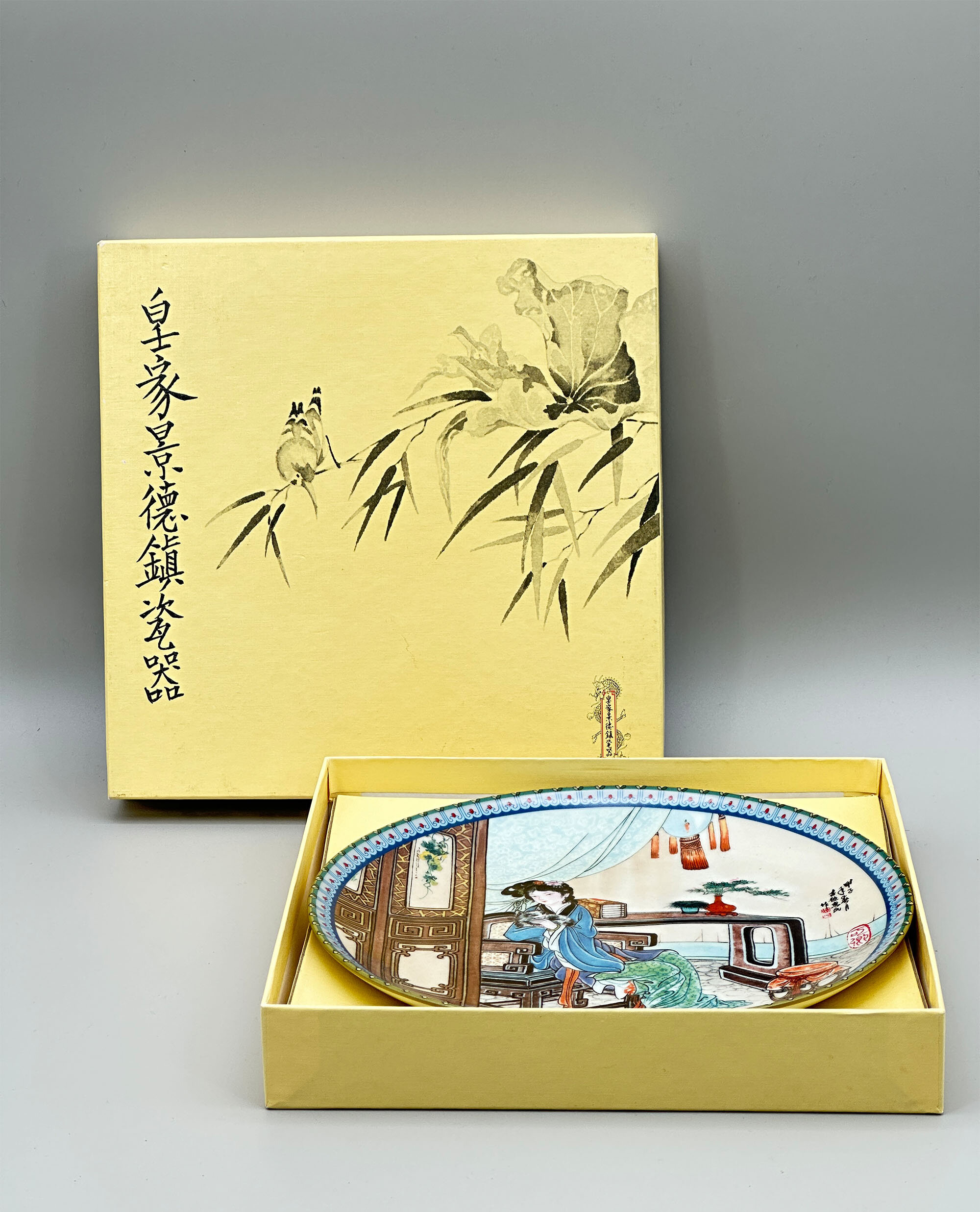
Chinese Plate No 9 from the series Beauties of the Red Mansion, Jingdezhen, 1988
Price: £35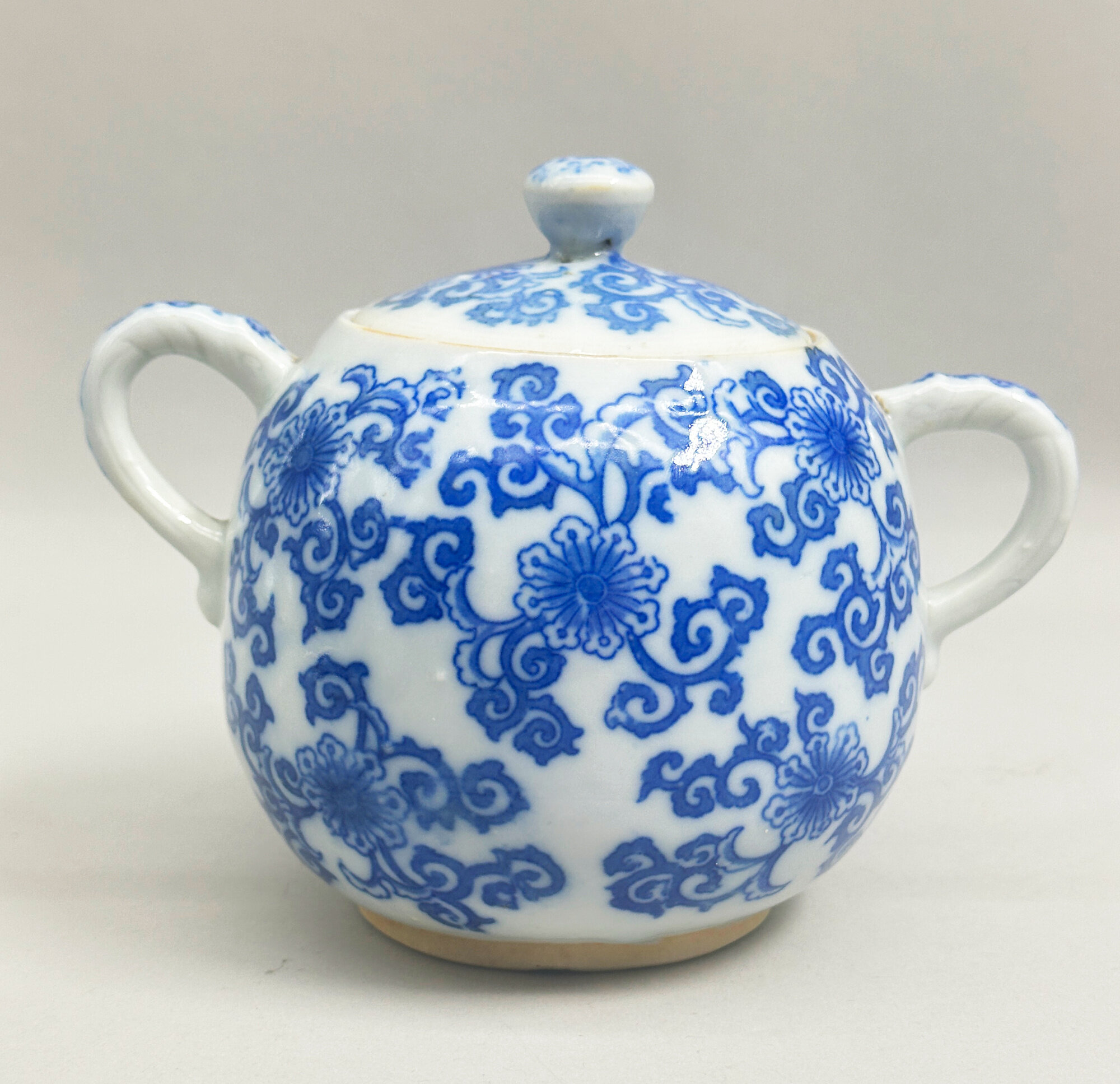
Japanese Blue and White Sugar Bowl and Cover, first half C20th
Price: £25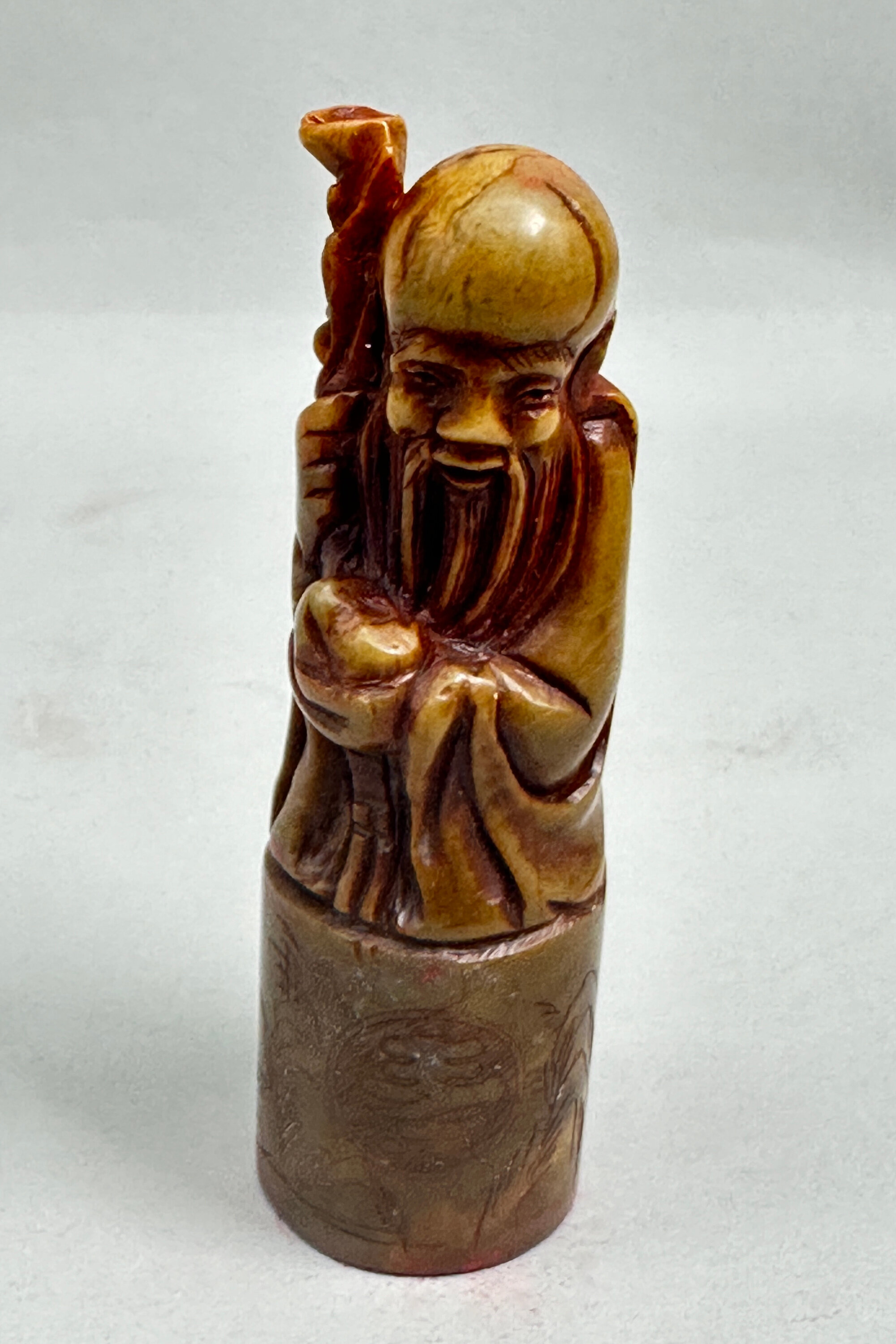
Chinese Soapstone Seal with Shou Lao, C20th
Price: £45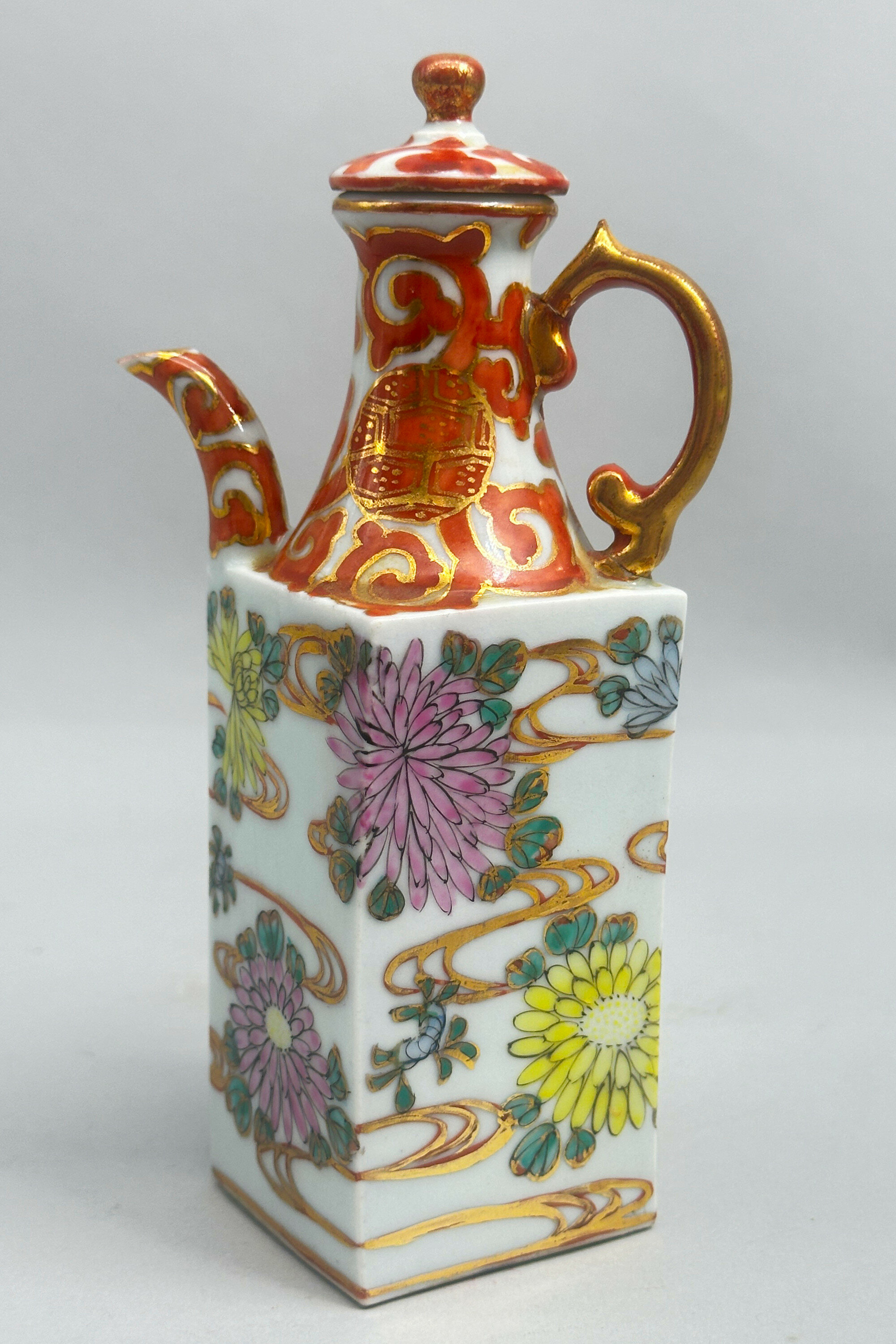
Japanese Arita Square Sake Flask and Cover decorated flowers, C20th
Price: £25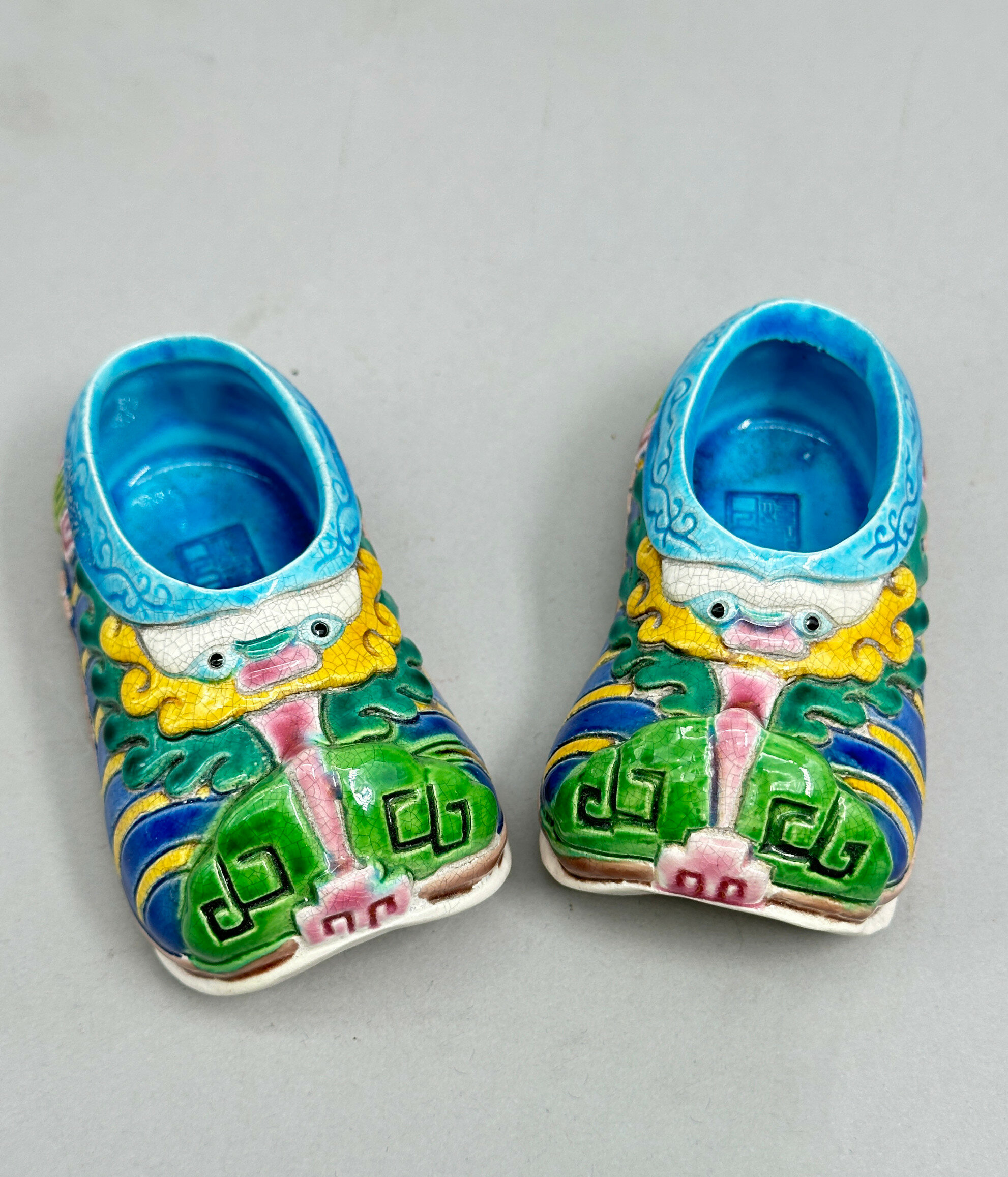
Pair of Chinese Ceramic Shoes, seal mark and with fitted box, C20th
Price: £55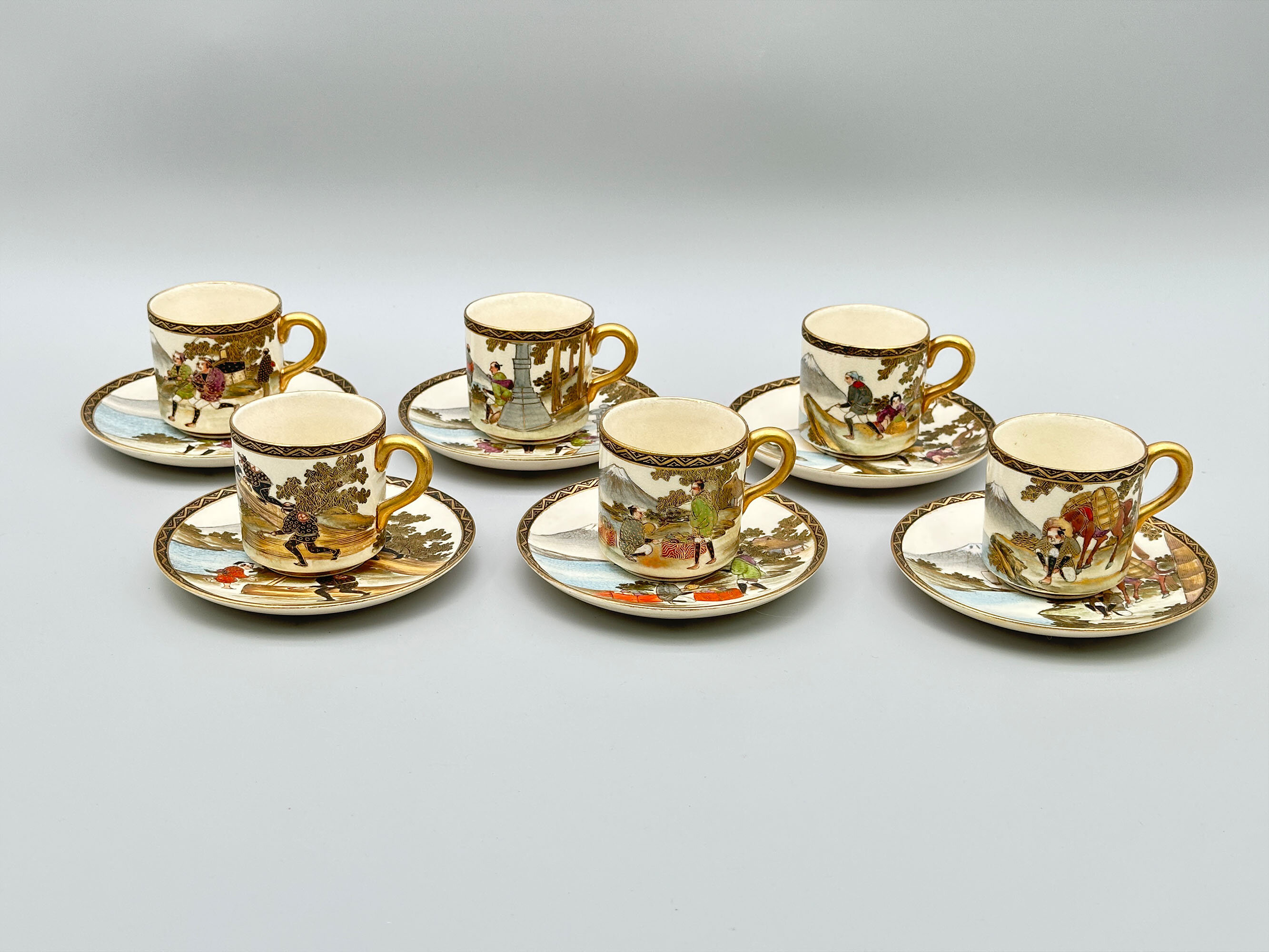
Set of six fine quality Satsuma cups and saucers, signed, early C20th
Price: £180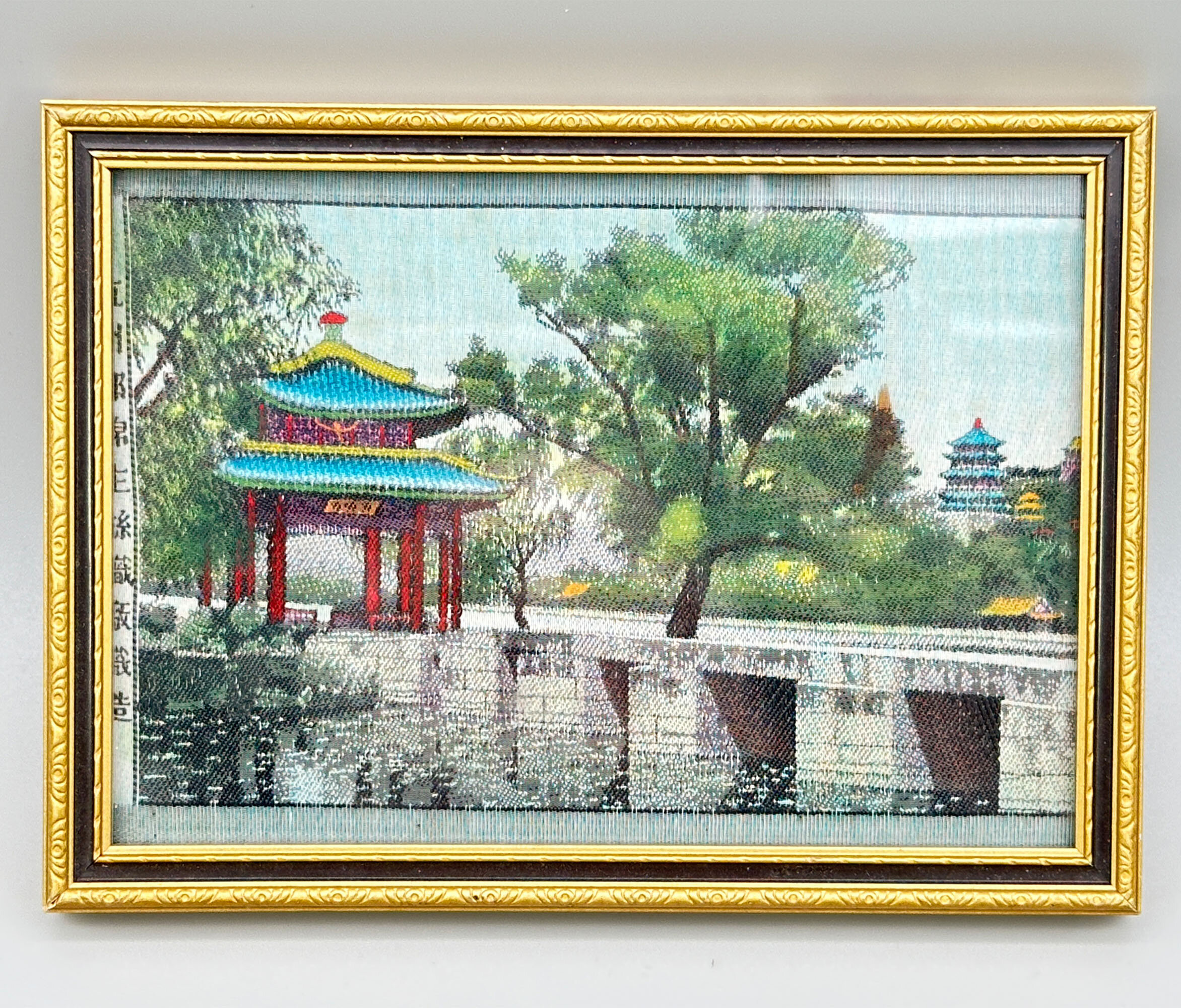
Chinese silk textile picture, Zhichun Pavilion, the Summer Palace, C20th
Price: £25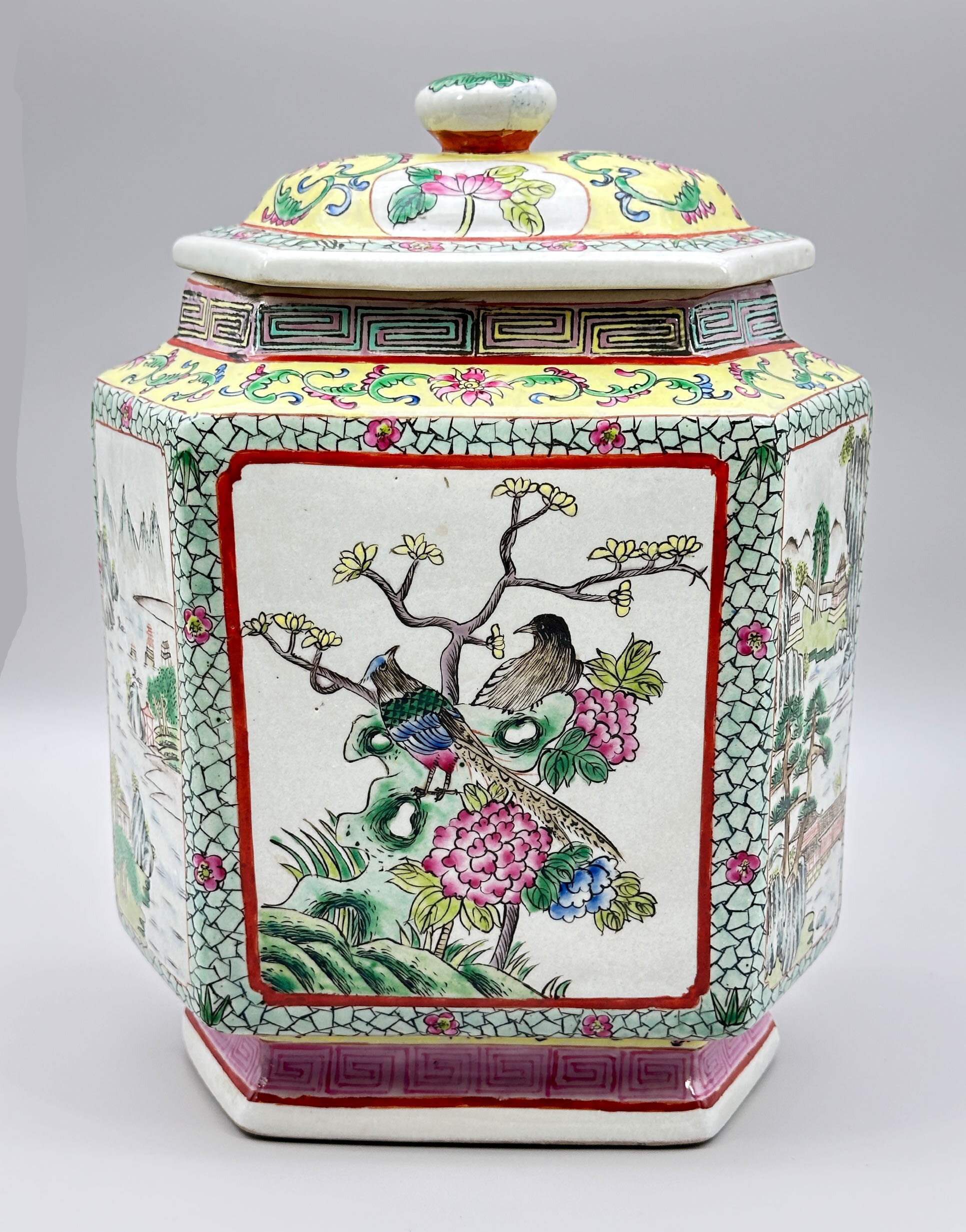
Chinese Cantonese style hexagonal Jar and Cover, C20th
Price: £150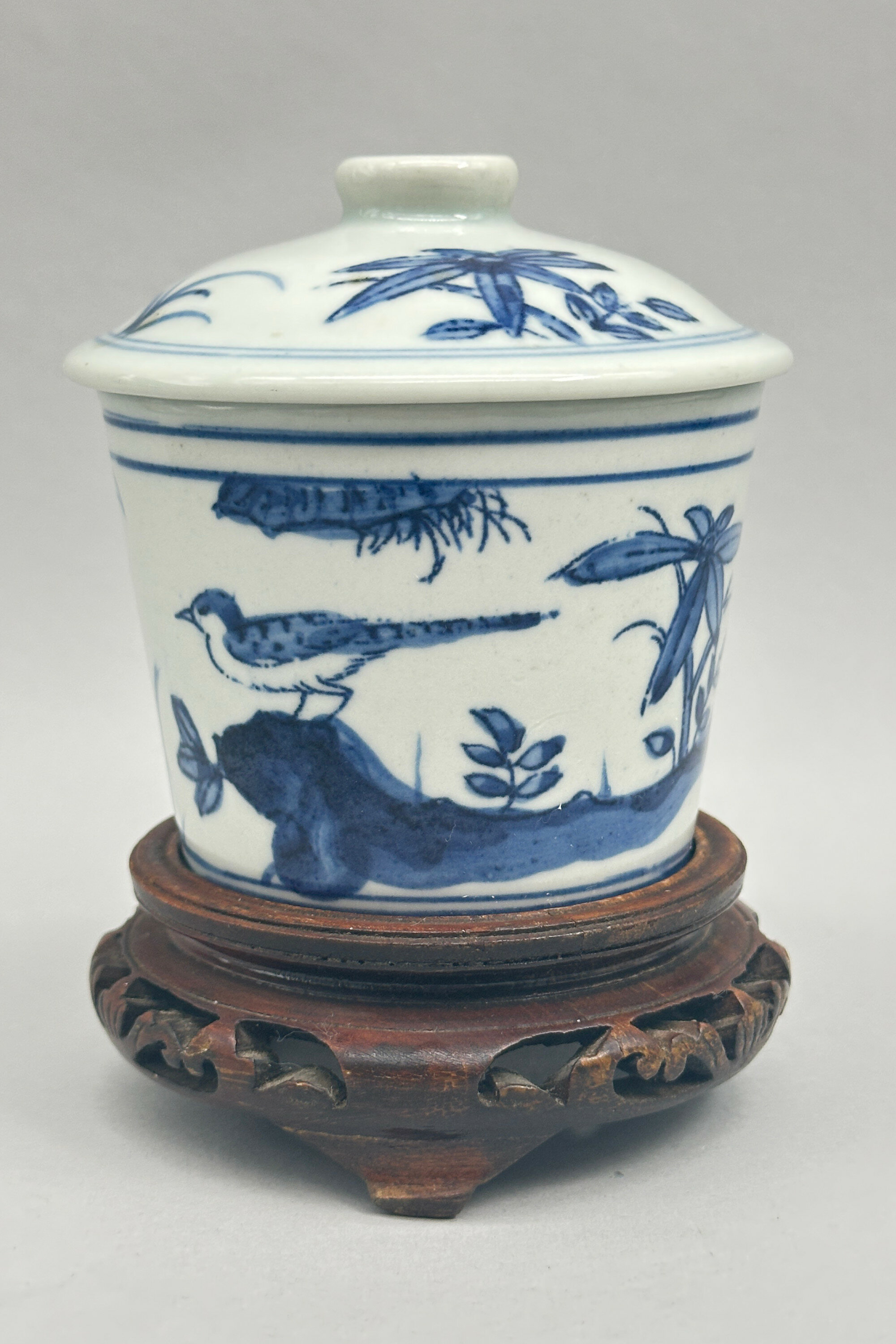
Chinese Small Blue and White Potiche and Cover with wood stand, late C20th
Price: £45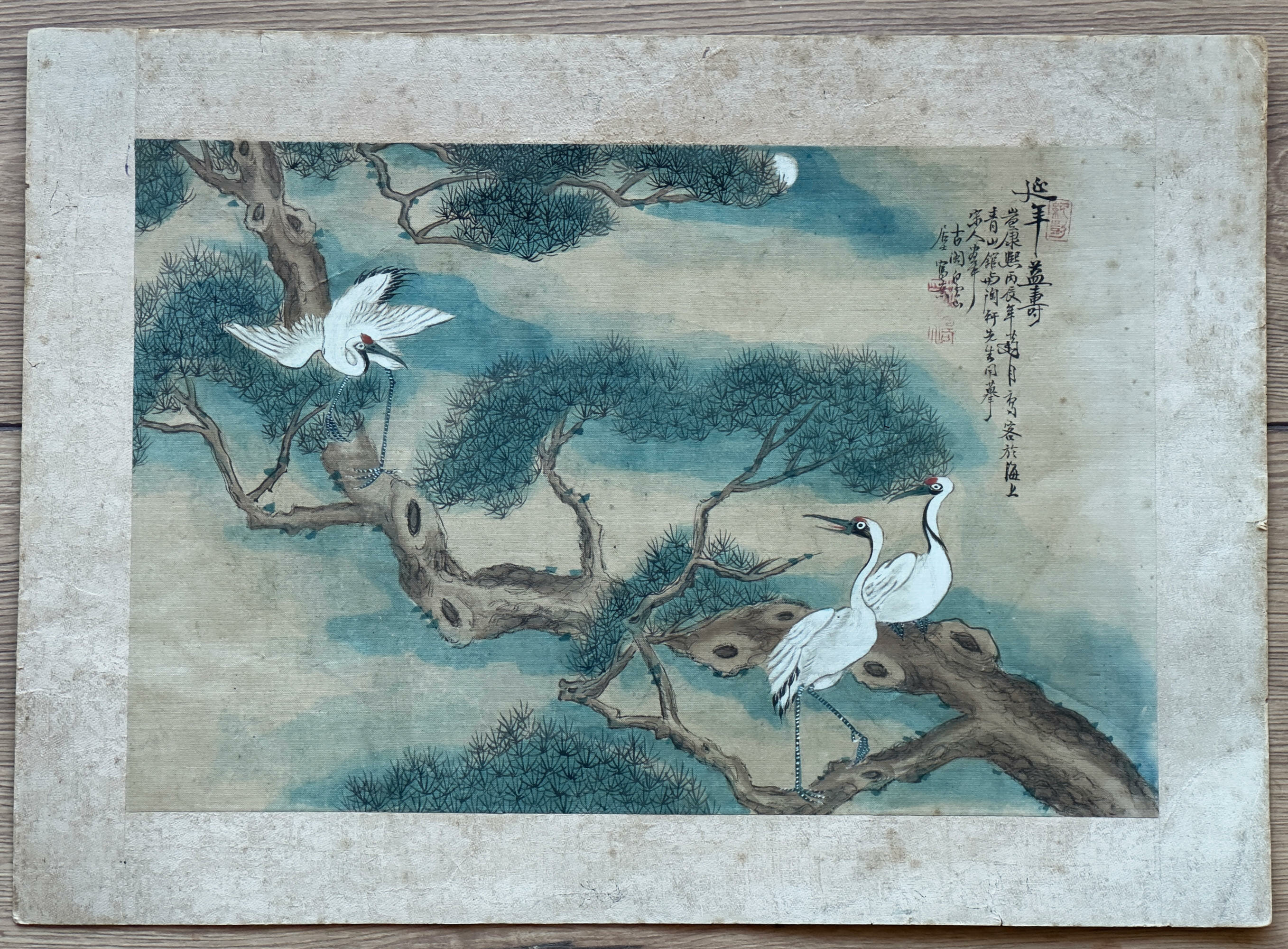
Chinese painting on Silk, Storks and Pine, circa 1900
Price: £25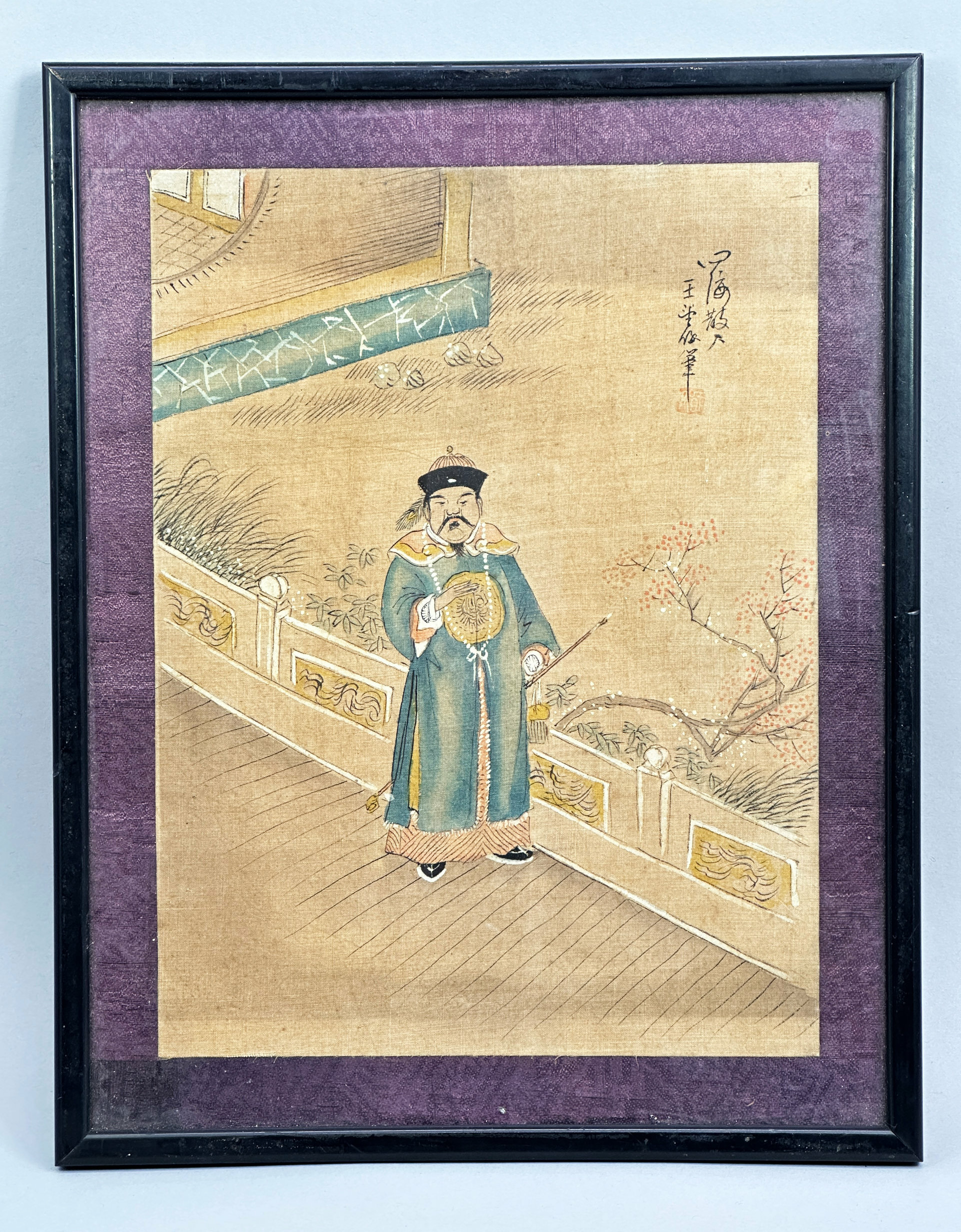
Framed Chinese Painting of a Court Official, C20th
Price: £45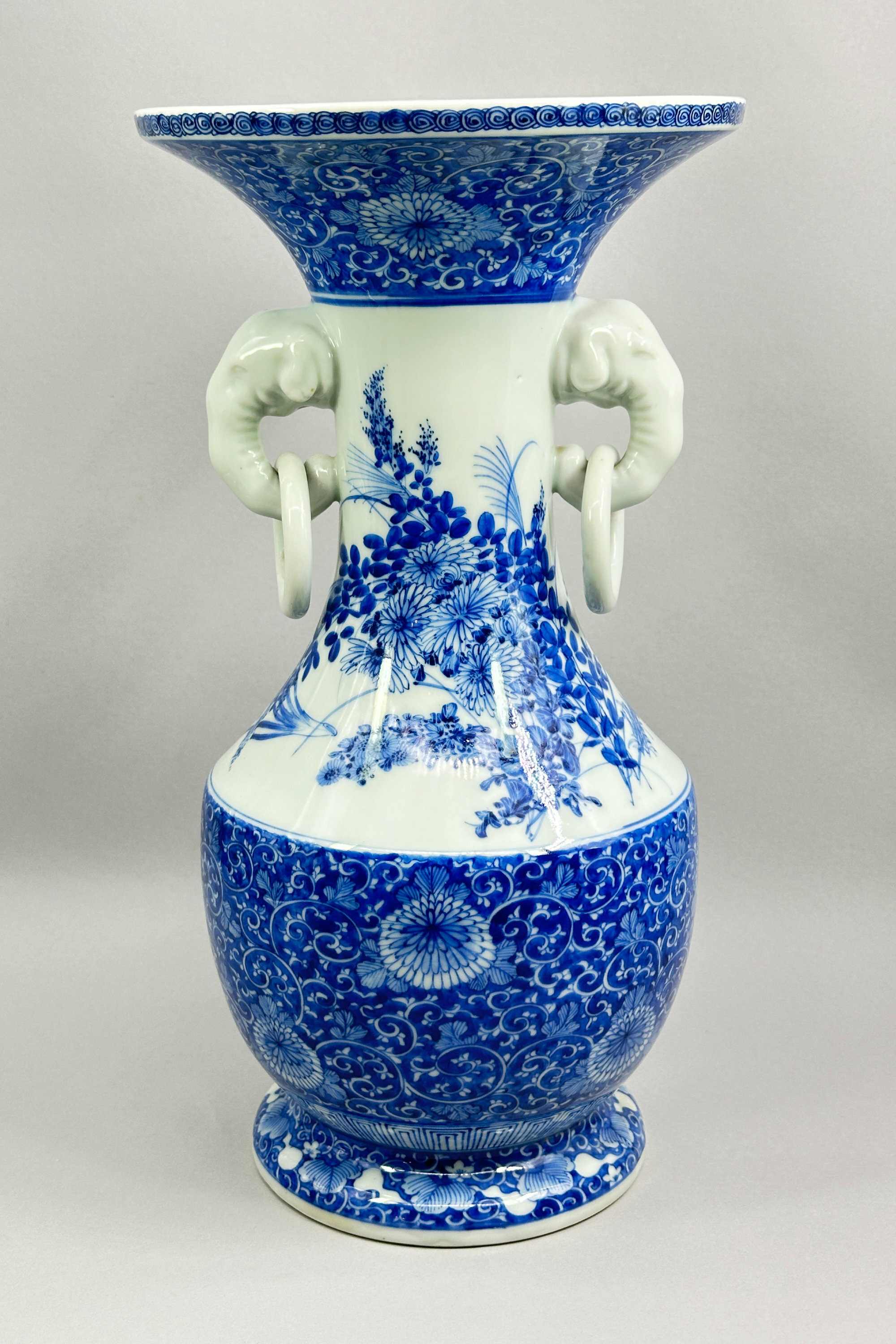
Japanese Seto Ware Blue and White Vase, late C19th
Price: £450A fine quality Japanese porcelain vase, the ovoid body with a curved flaring foot and rising to a tall concave neck with a well defined shoulder, applied elephant and ring handles to the sides and a galleried rim, decorated in bright underglaze blue with two bands of stylised flowering chrysanthemum at the top and bottom between a continuous scene of flowering peony and chrysanthemum, the top rim with repeating whorl design on the exterior and stylised leaf design inside, the stepped base glazed white.
The kilns at Seto in the Aichi prefecture of Japan and situated close to Nagoya form one of the traditional ‘Nihon Rokkoyo’, the six old kilns of medieval Japan. The location of Seto was ideal for the production of ceramics with an abundance nearby of both porcelain clay and forests to provide firewood for the kilns. Production began as early as the Heian period (794-1185) and continued without a break thereafter, the earlier pieces being more pottery forms copying Chinese wares. It was in the early nineteenth century that the kilns turned to producing porcelains decorated in underglaze blue and white, a development initiated by the potter Tamikichi Kato who went to Arita to learn the techniques of its production there, returning to Seto in 1807. Production grew and developed and was directed towards the export market in the Meiji period (1868-1912) with Seto wares being displayed at the European and North American exhibitions and fairs. Their delicately painted designs of birds and flowers proved to be immensely popular and were, in their time, to influence Art Nouveau and Art Deco designs. Some of the forms produced were truly virtuoso creations including, besides vases, screens, jardinieres and even ceramic tables.
Signed pieces are known and besides Tamikichi Kato the distinguished potters included the Kichiemon brothers, Kato Chuji and Kawamoto Jihyoe, and Kawamoto Hansuke. But not all the best pieces carried an artist’s signature as this vase well demonstrates. Formed from fine quality clay, as can be seen from the foot rim (image 10), the complex shape with its spreading base, angled shoulder and galleried rim would have been difficult to create. The handles show remarkable skill with the rings somehow formed so as to hang loose (presumably some form of kiln waster technique was used). The detail and artistry of the painting speaks for itself. Note in particular the shading effects on the peony flowers. While not perhaps an exhibition piece, this vase is definitely of exhibition quality and would be a worthy addition to a collection of nineteenth century Japanese ceramic art.
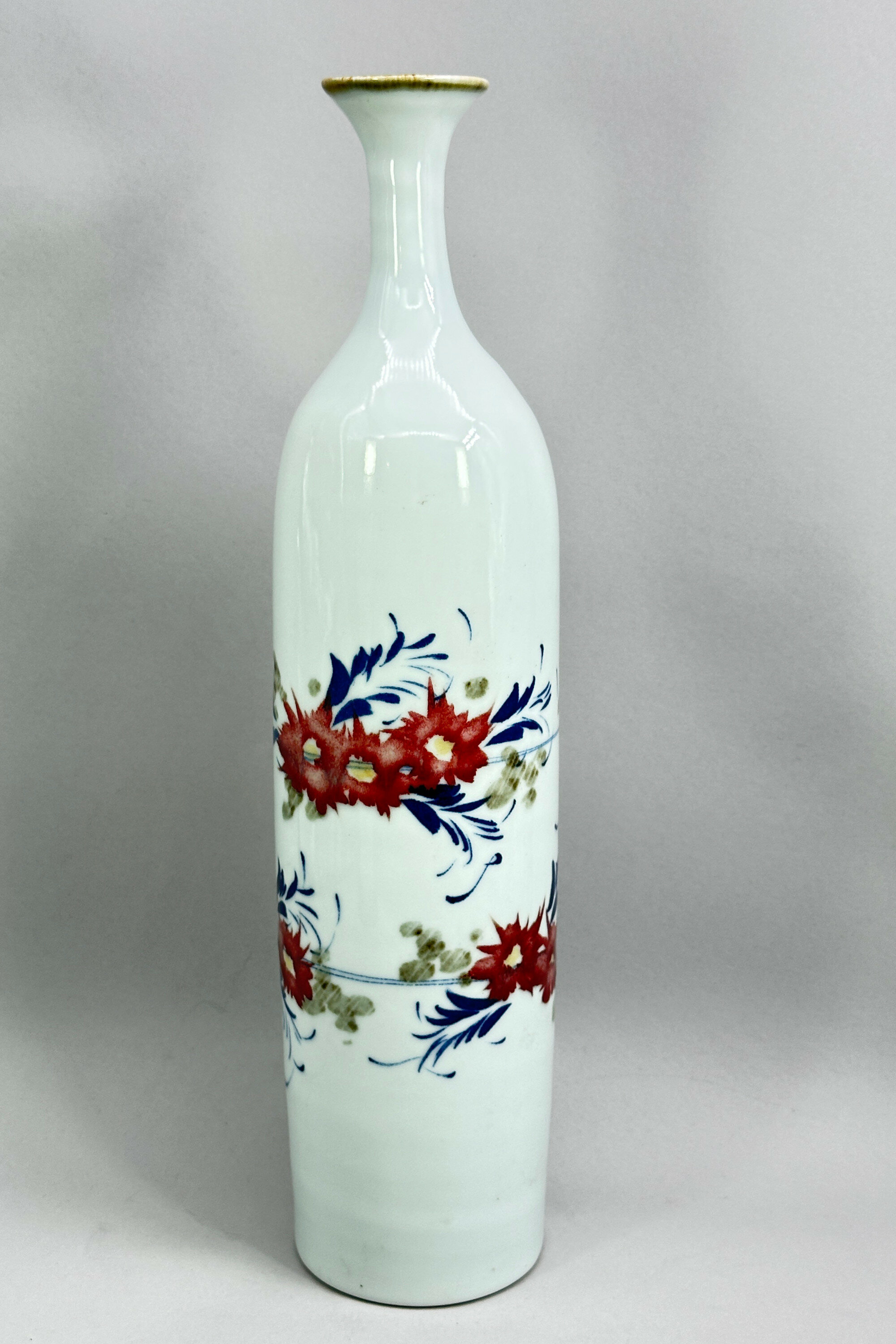
Japanese Studio Pottery Vase, signed, C20th
Price: £150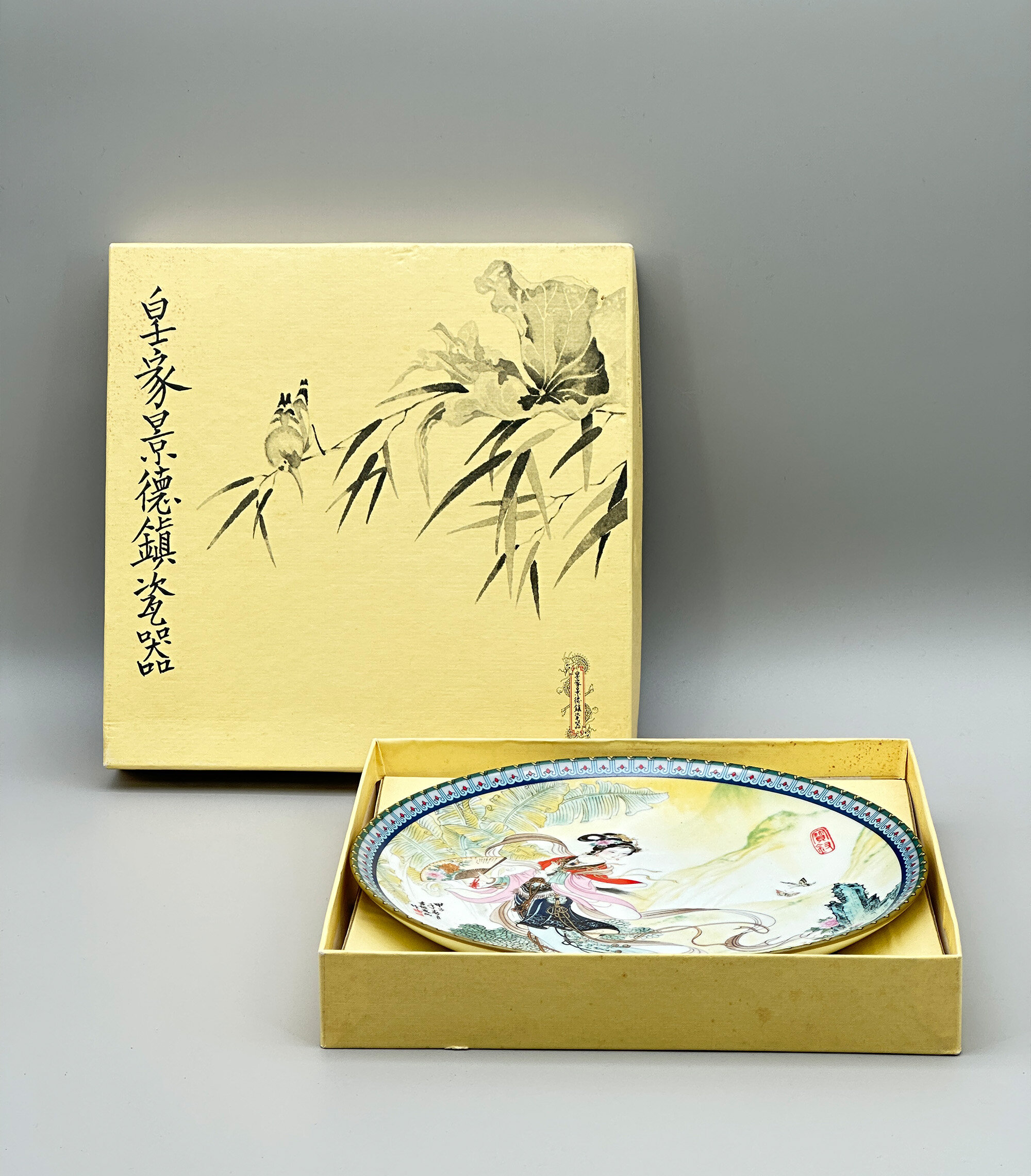
Chinese Plate No 3 from the series Beauties of the Red Mansion, Jingdezhen, 1985
Price: £35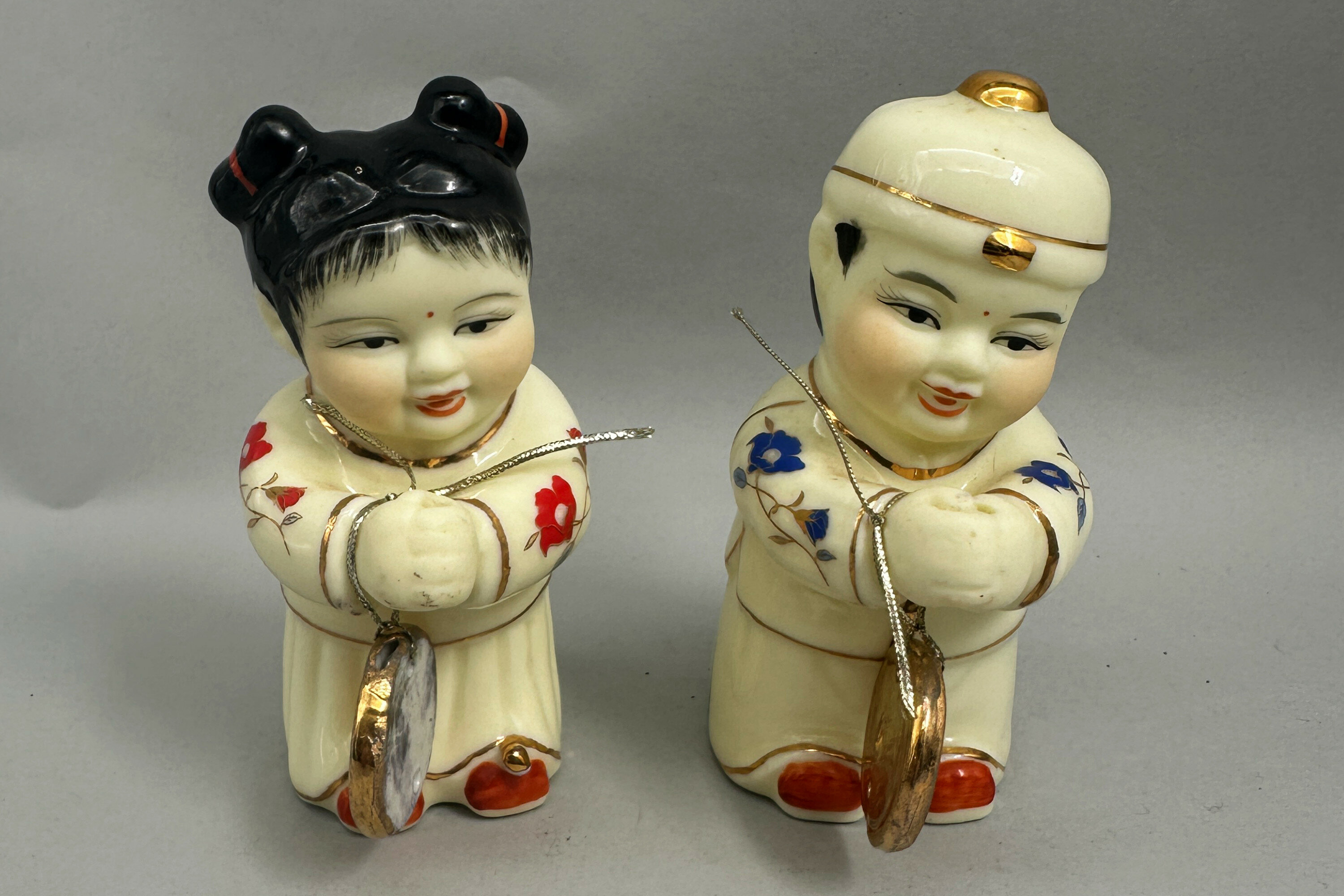
Decorative pair of Chinese ceramic figures of children, Yunu and Jintong , late C20th
Price: £45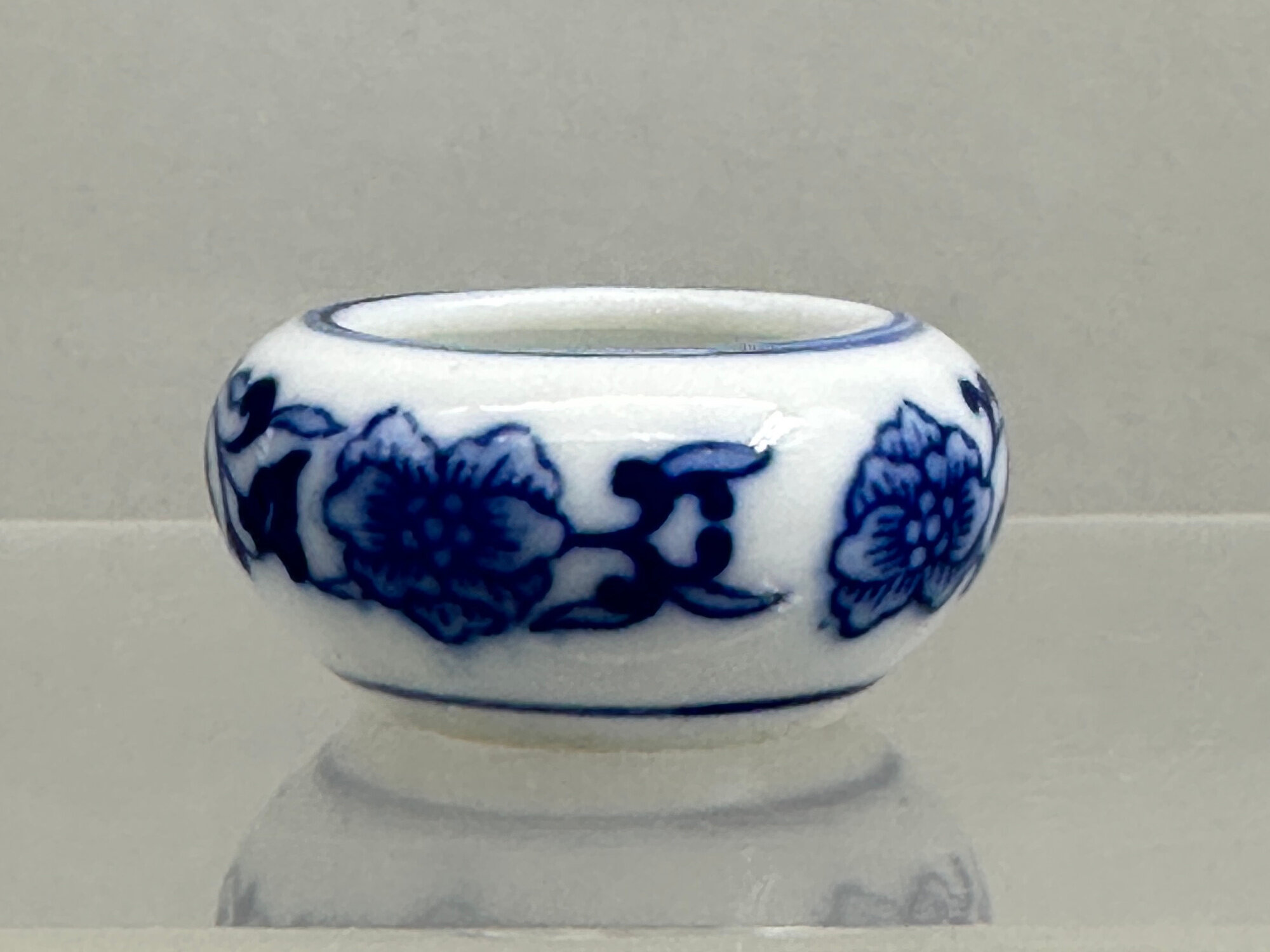
Small Chinese Blue and White Brushwasher, C20th
Price: £25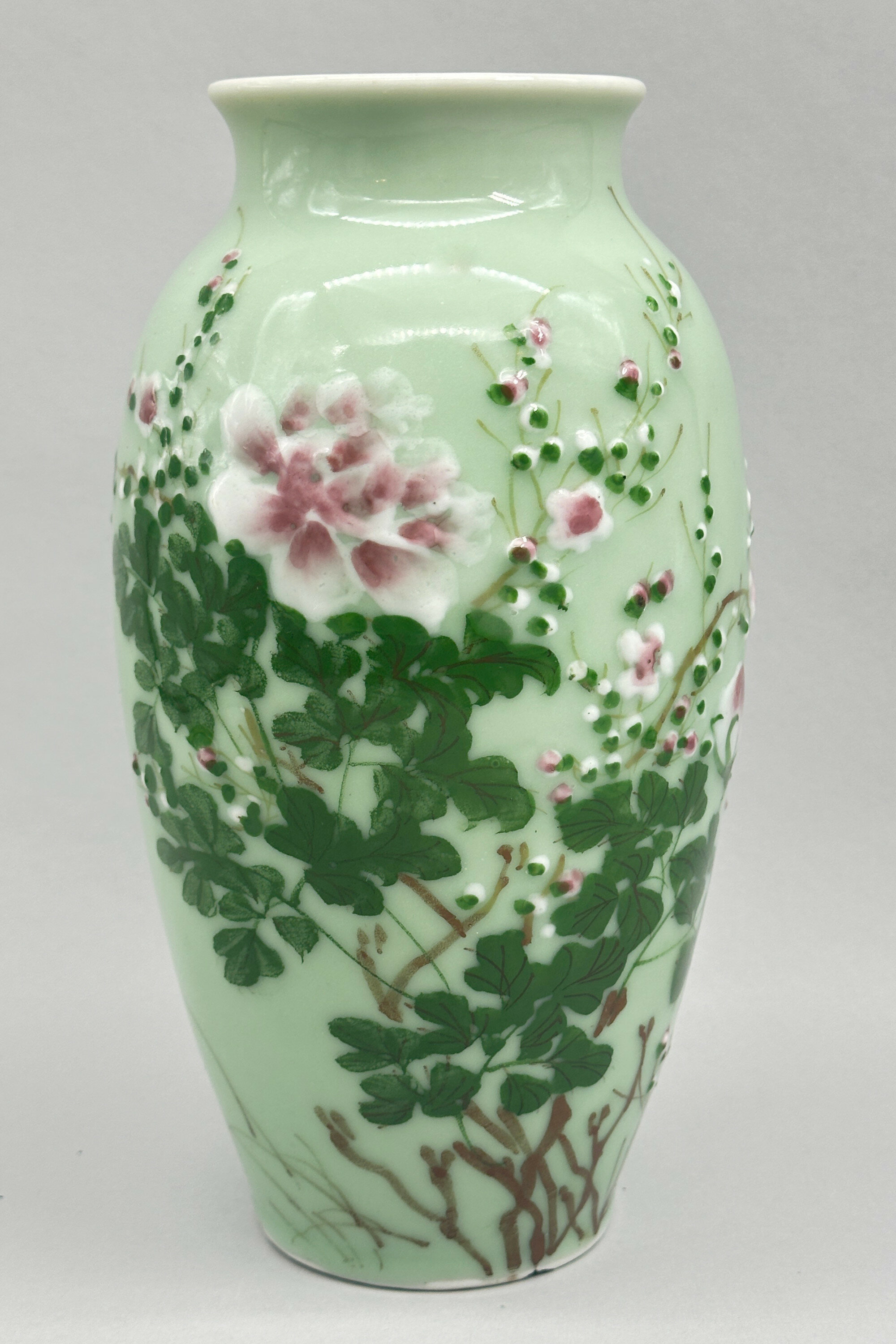
Japanese Celadon glaze vase with enamel decoration, late C19th
Price: £25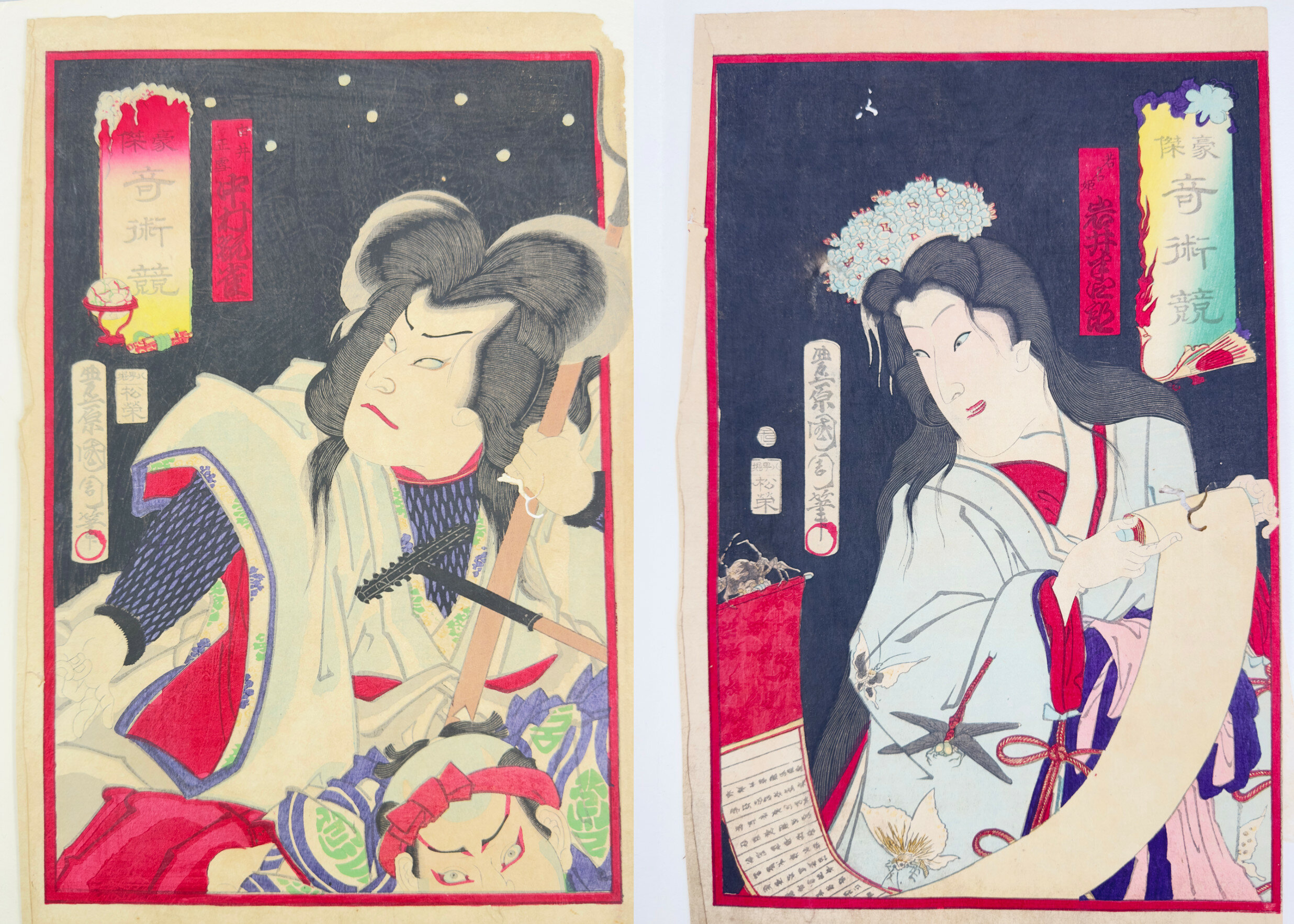
Two Japanese Woodblock Prints by Toyohara Kunichika, second half C19th
Price: £75Toyohara Kunichika achieved great fame and distinction a Japanese print artist. Born in 1835 he studied under Toyohara Chikanobu and then Utagawa Kunisada (also known as Utagawa Toyokuni III) eventually using a combination of both his teacher’s names to create his own professional one. At first he worked within Kunisada’s studio and when his teacher died in 1865 was asked to design two memorial portraits of him. The beginning of the Meiji era (1868-1912) saw Kunichika issuing his own prints, often in themed series and he became known in particular for his portrayals of kabuki actors, indeed he regarded the theatre as almost his second home. A contemporary once wrote ‘"Print designing, theatre and drinking were his life and for him that was enough.’ He achieved great fame and was rated as one of the masters of woodblock printing. Contemporary observers noted Kunichika's skilful use of colour in his actor prints, but he was also criticized for some of his choices for unlike most artists of the period, he made use of strong reds and dark purples rather than the softer colours used previously, exploiting the recent import of new dyes from Germany. Red, for the Japanese, meant progress and enlightenment so there was probably hidden meaning here. Eventually Kunichika’s lifestyle took its toll and he died in poor health, aged 65. It had been a Japanese custom for people of high cultural standing to write a poem before death. Kunichika's own, inscribed on his grave, reads ‘Since I am tired of painting portraits of people of this world, I will paint portraits of the King of hell and the devils.’ For many years his prints fell out of favour but interest has now revived and Kunichika is regarded as one of the eminently collectible Japanese artists in the field and these two prints are an excellent example of his work.
Each print is accompanied by a printed text on fine paper which presumably describes the character represented. The second of them is accompanied by two sheets one of which has become attached in one small place to the print itself but could probably fairly easily be detached by a restorer. In general there are some typical signs of age with minor losses (illustrated), tears and folding but the colours remain bright and fresh.