Tribal & Oceanic Art
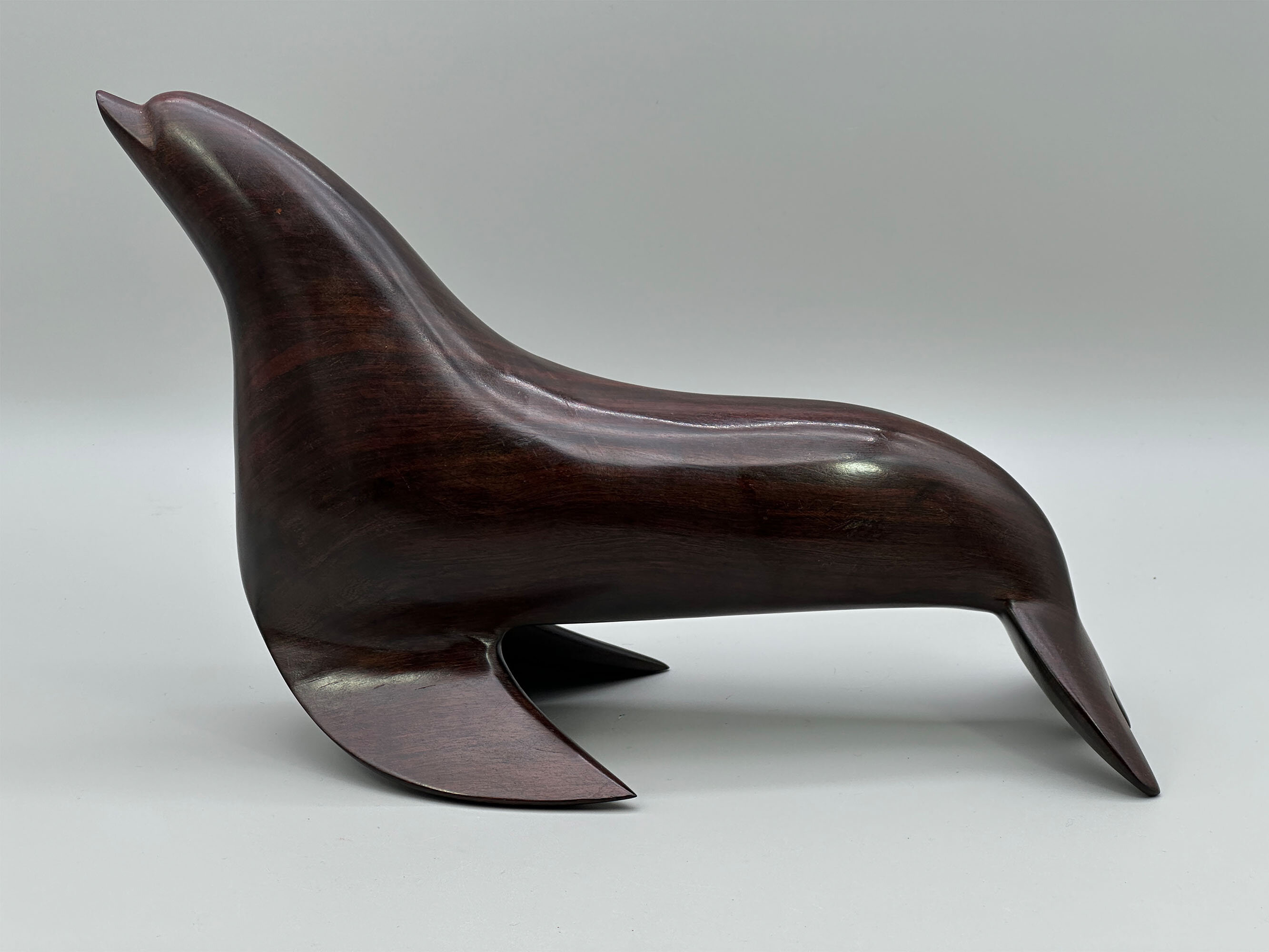
Ironwood (palo fierro) carving of a seal, Mexico, second half C20th
Price: £55Carving was originally done by the Seri people, a nomadic tribe of no more than 500 who live in Mexico and then by town and city dwellers from Sonora and Baja California, who embarked on the trade after the figures became commercially popular. Seri carvings were essentially hand made whereas the mass produced pieces were created with the use of power tools.
The forms are derived from wildlife and are often abstract in style. While it may owe some elements to the use of machine tools, this carving is a fine example of the ‘ironwood’ style with its sleek lines imaginatively representing its subject. The modelling is expressive and well complemented by the patina and finish of the wood. From the above, dating is clearly to the second half of the twentieth century and perhaps more to its later years if this is an example of the ‘commercial’ pieces produced at that time.

Wood Mask, Borneo late C20th
Price: £25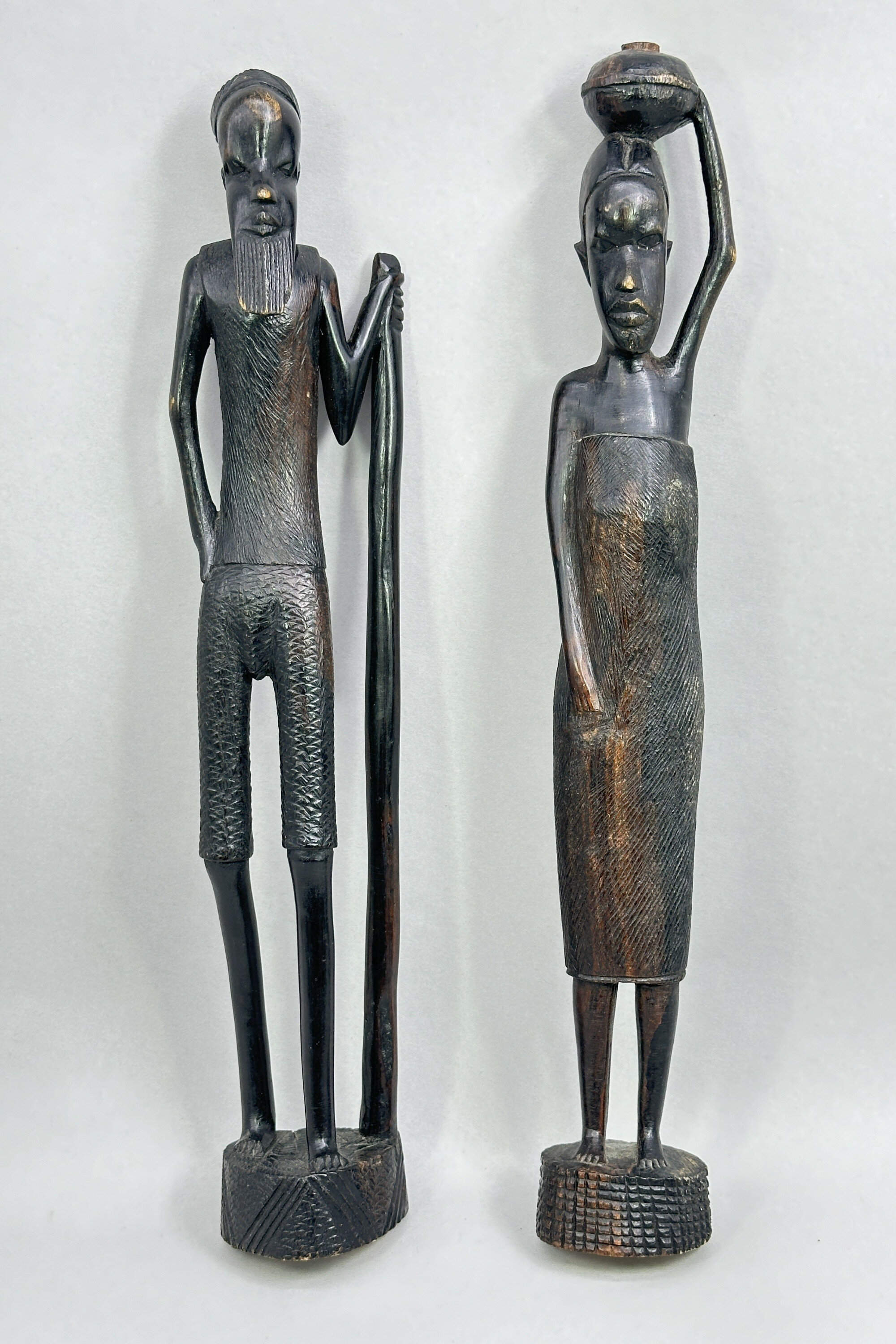
Pair of African Wood Figures of a Man and a Woman, probably mid C20th
Price: £25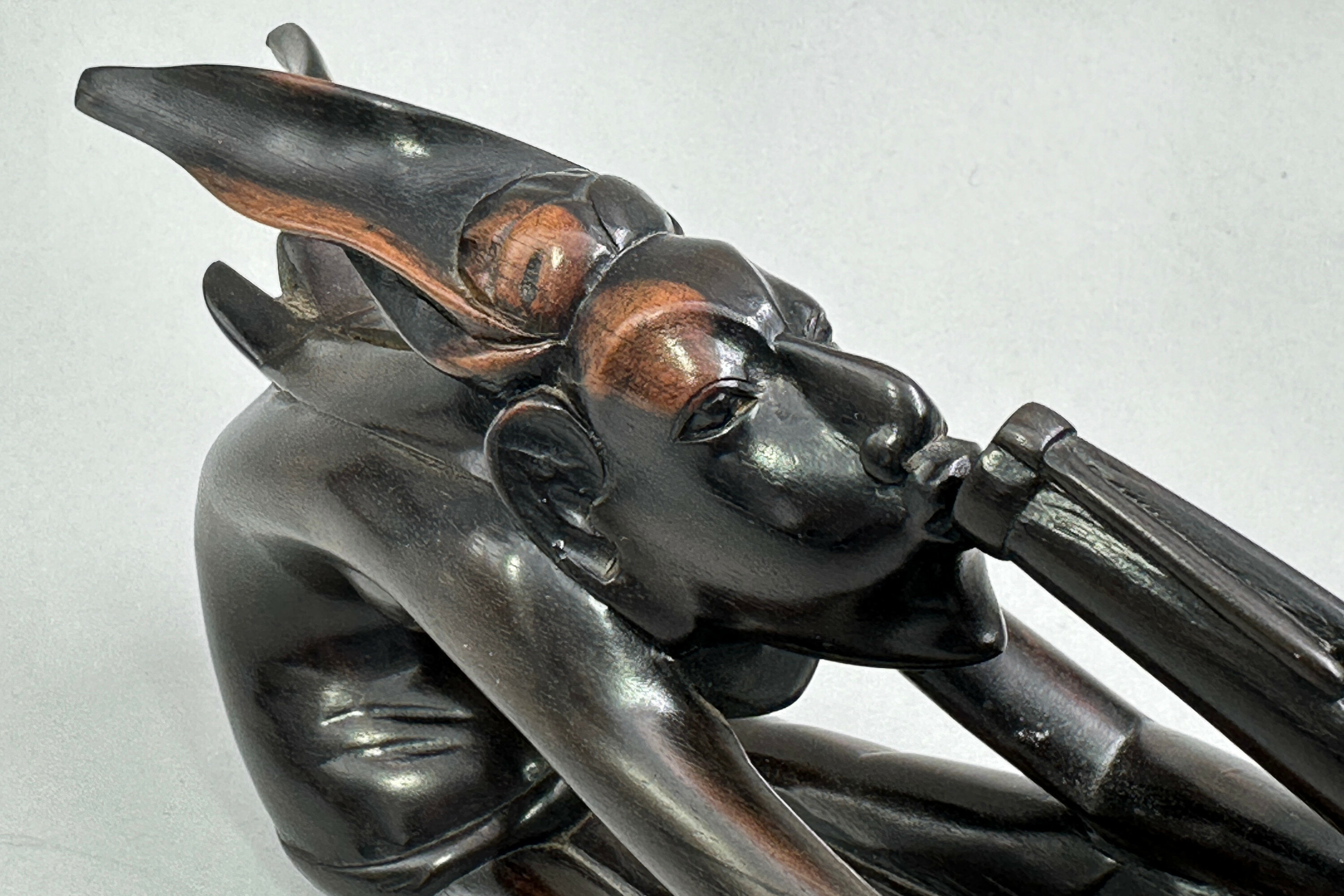
African rosewood sculpture of a seated musician, second half C20th
Price: £75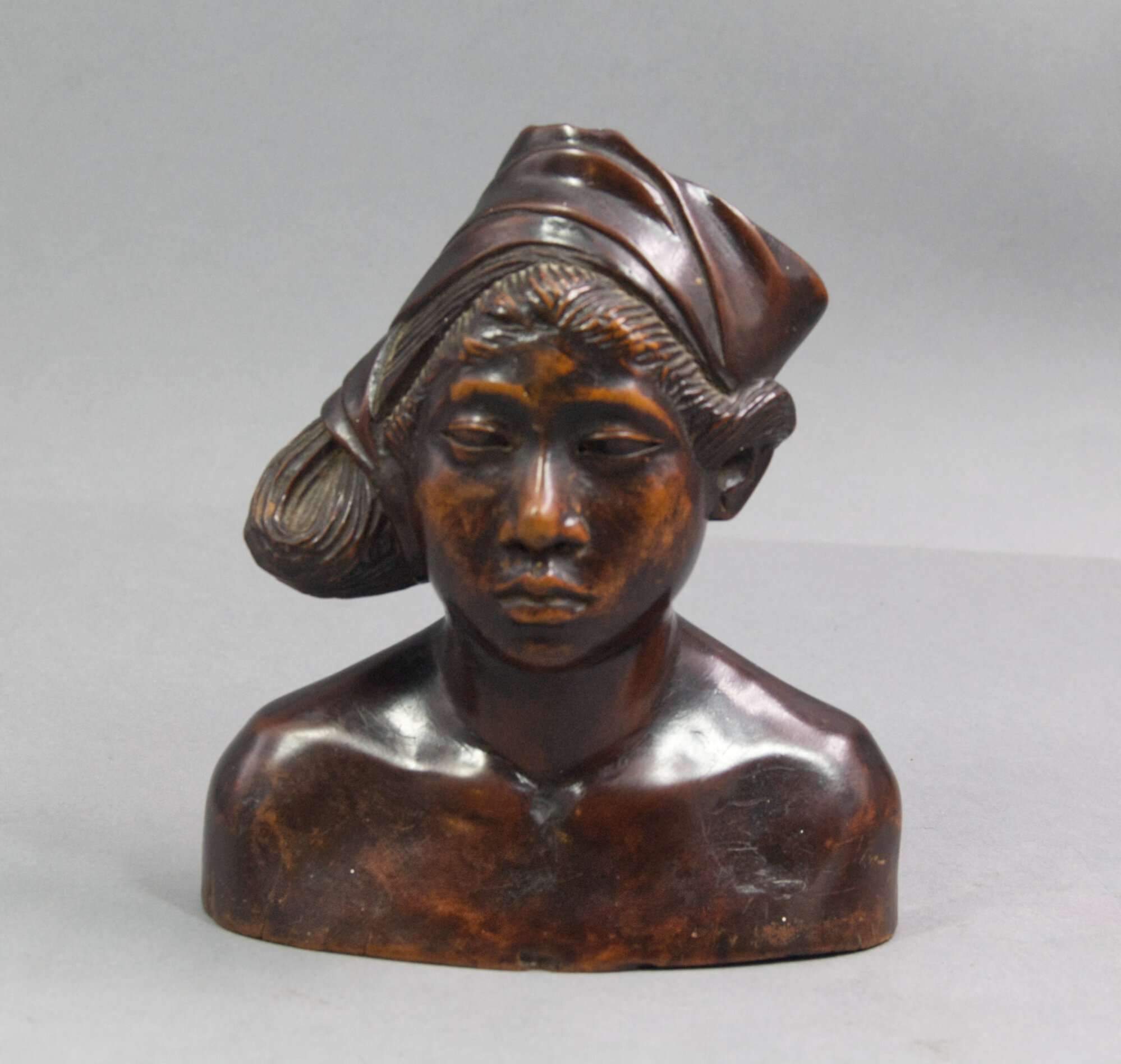
Balinese Portrait Bust of a Male Head, early C20th
Price: £45
Vintage Carved wood bust of a Lady, Bali, Indonesia, second half C20th
Price: £75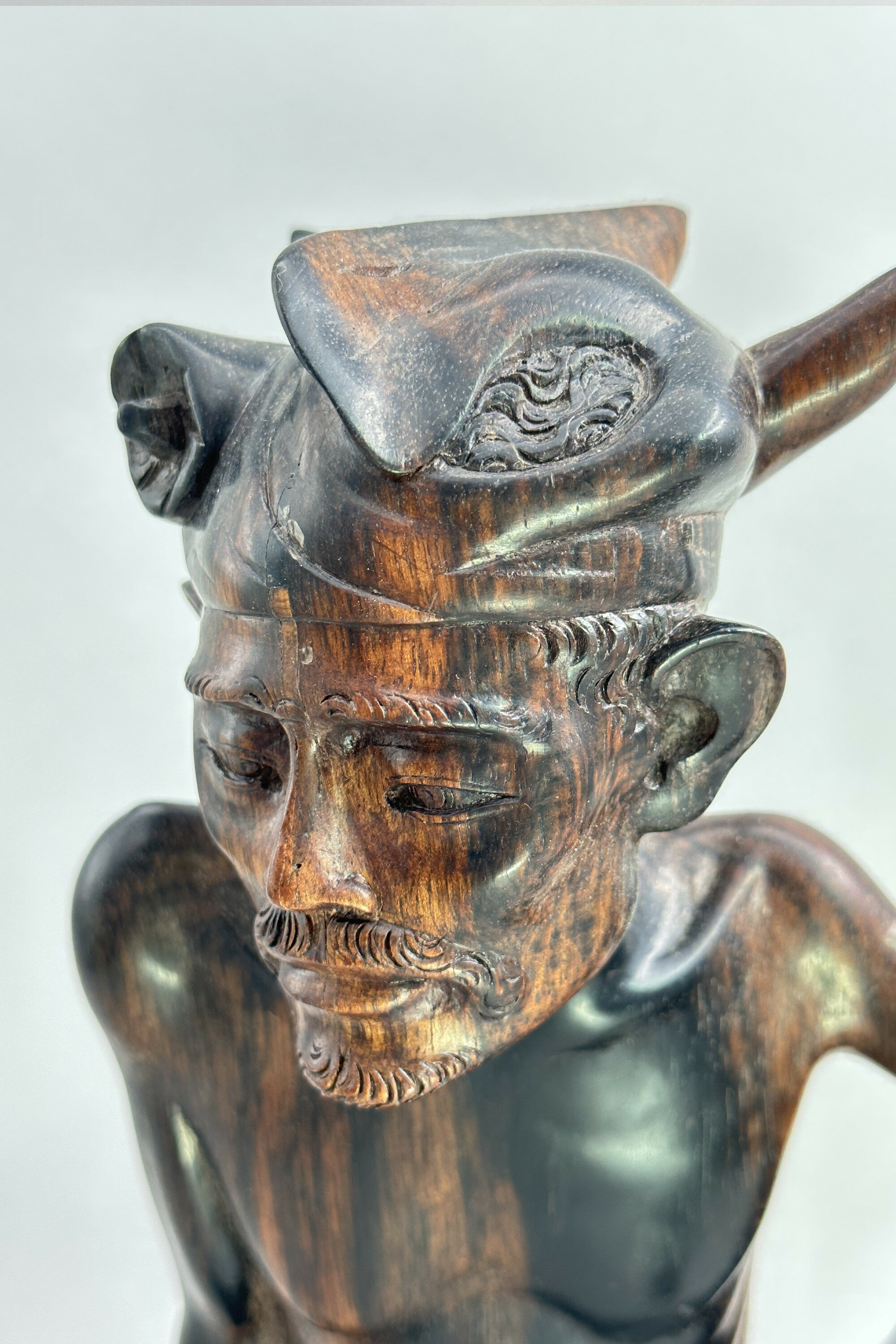
Vintage Carved wood figure of a seated Man, Bali, Indonesia, second half C20th
Price: £75
African Carved Wood Figure of a Lady, probably mid C20th
Price: £25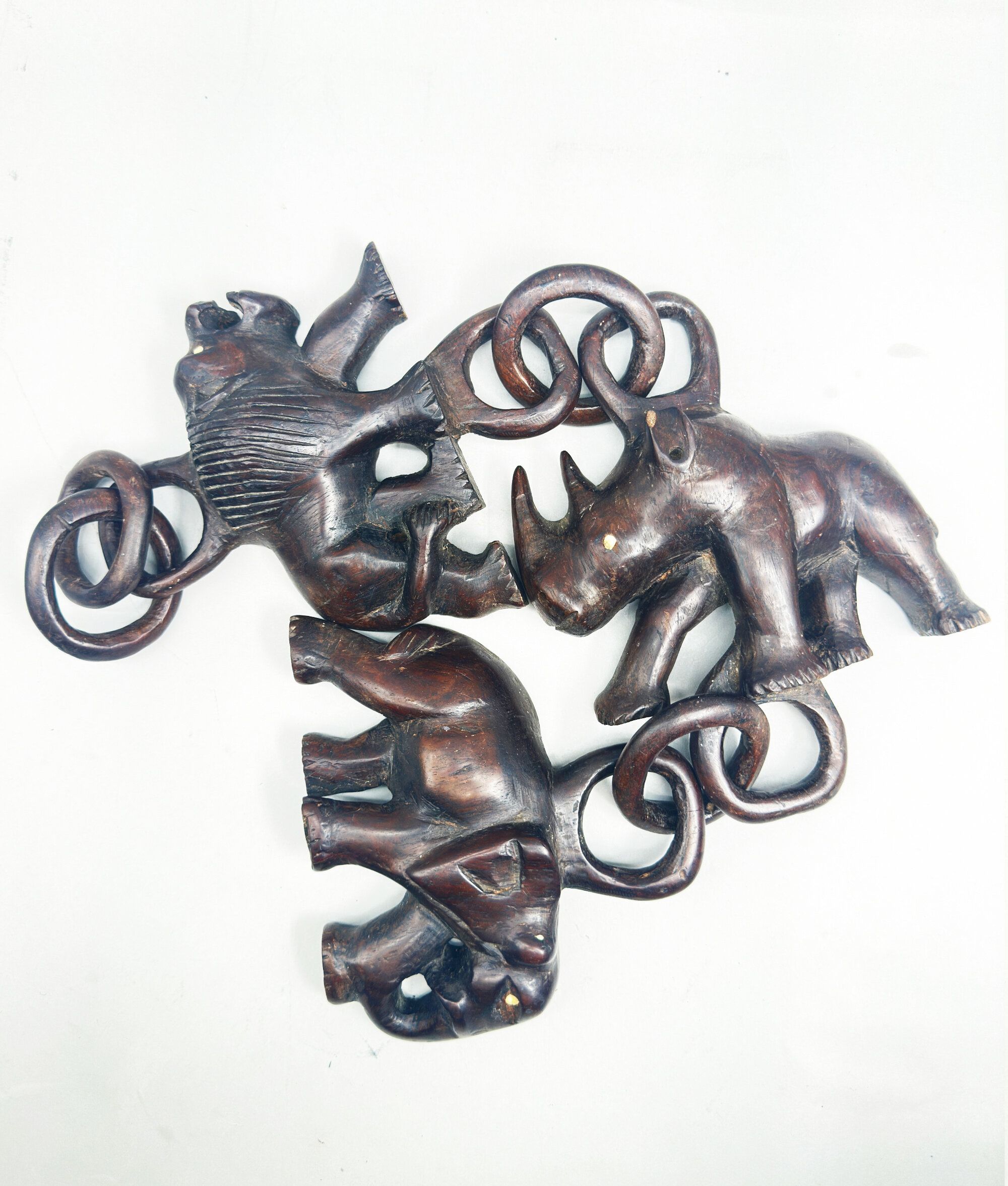
Large African hanging wall decoration : lion, rhinoceros and elephant, mid C20th
Price: £75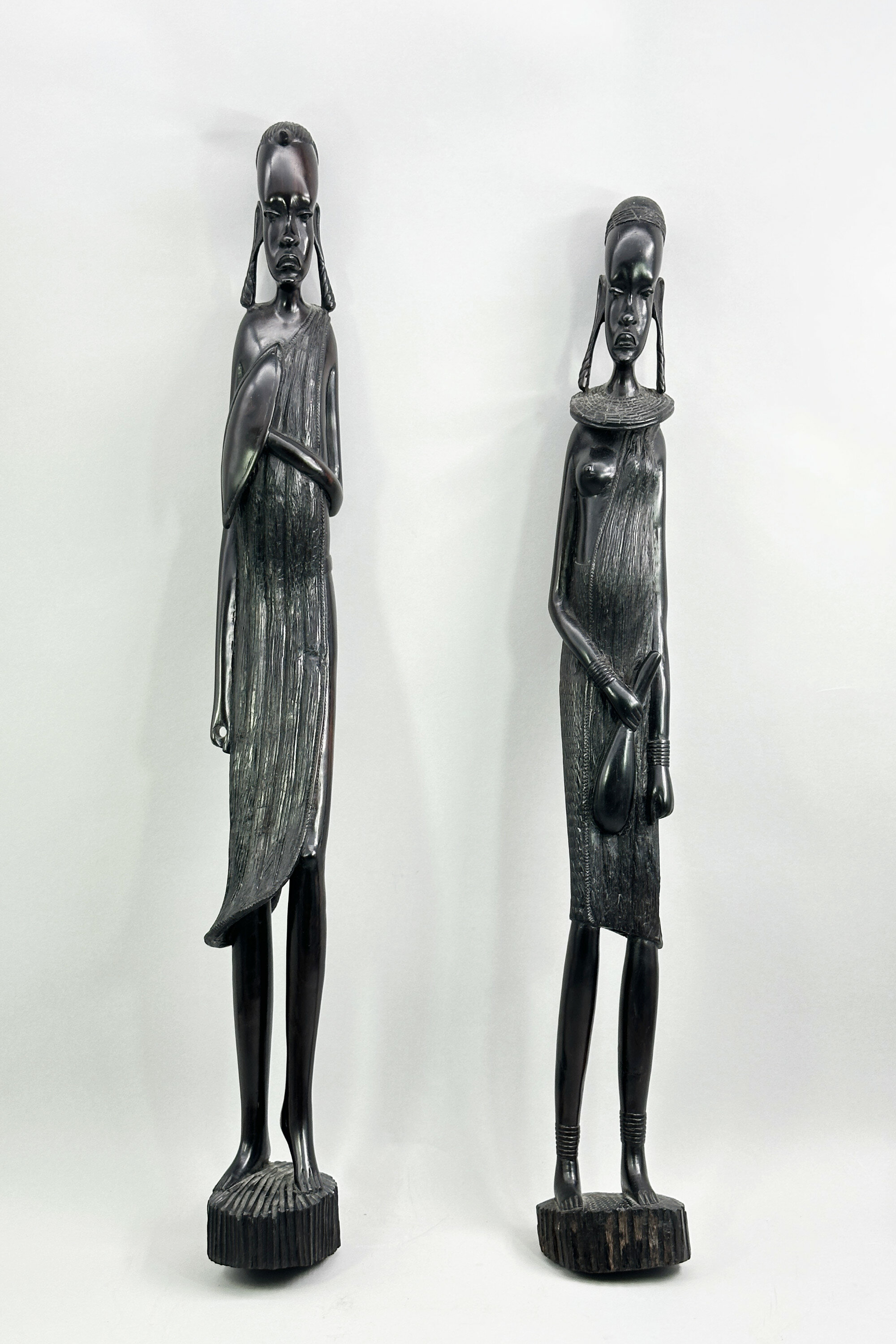
A Pair of African Ebony Wood Makonde Style Carved Figures, probably late C20th
Price: £55Maasai and Makonde are ethnic terms used to describe African peoples who live in Tanzania, Mozamique and Kenya, with their own distinctive languages, culture and art. This pair of figures is typical of the wood carvings produced by their craftsmen in the second half of the twentieth century but their quality and size is well above average, the ebony wood finely rendered with much attention to detail and finished with a highly attractive glossy patina. The two figures complement one another well, their heads slightly turned to face one another with their legs turned slightly outwards and their robes flowing almost in mirror image. The abstract style makes them well suited to a contemporary interior where they could prove a striking accessory.
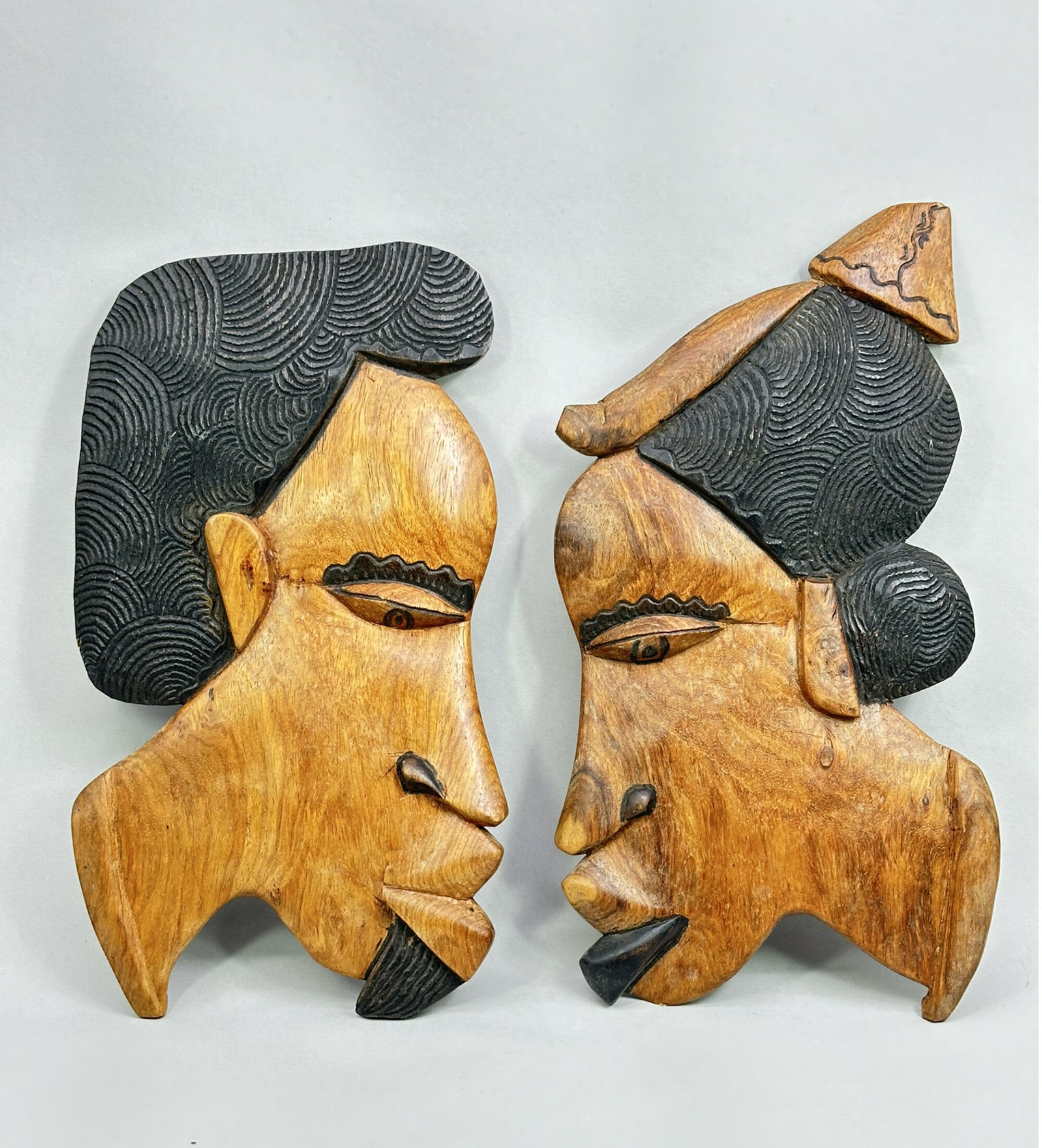
A Pair of African Carved Wood Figure Head Plaques, C20th
Price: £45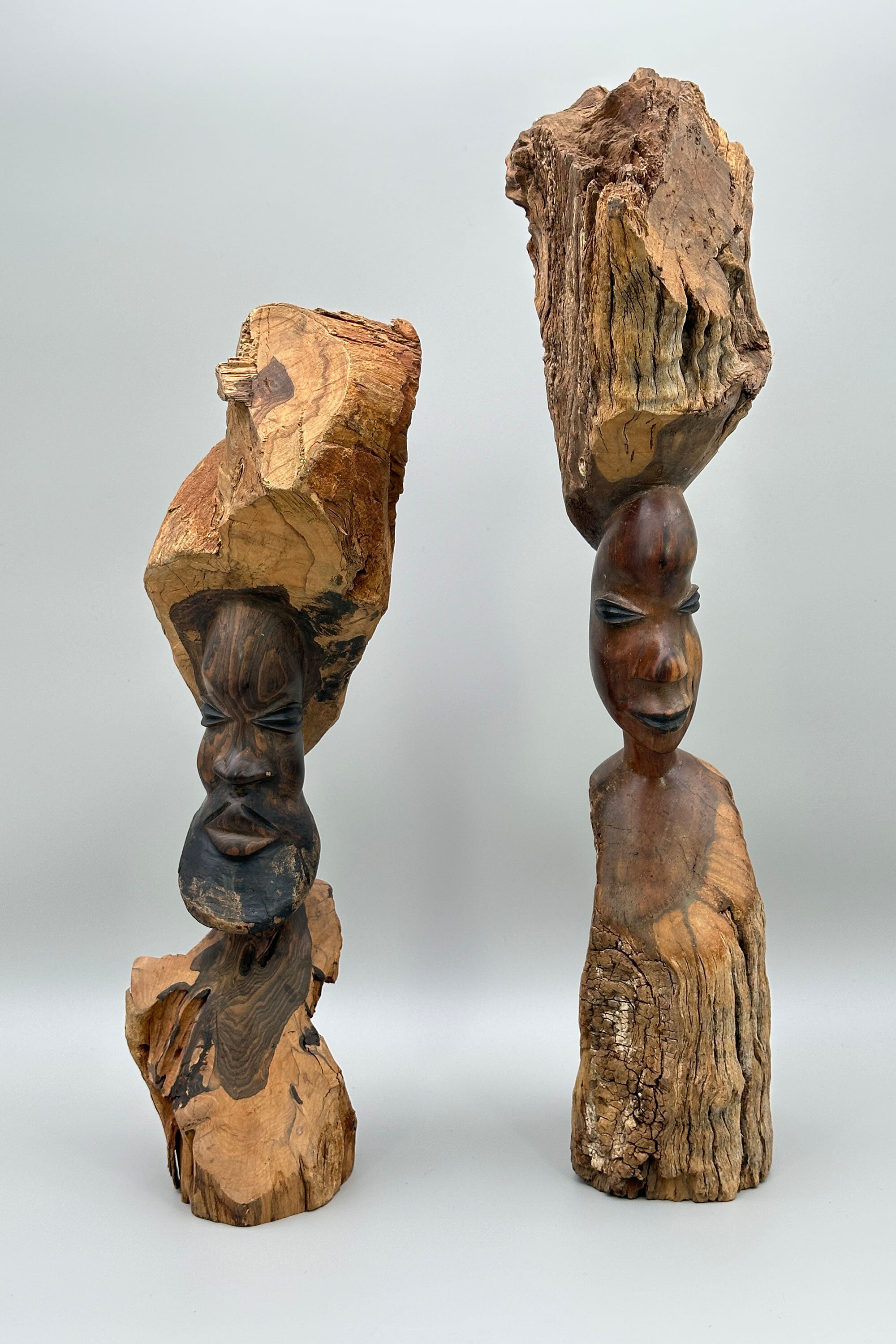
Pair of African wood Makonde style Busts of a man and a lady, C20th
Price: £95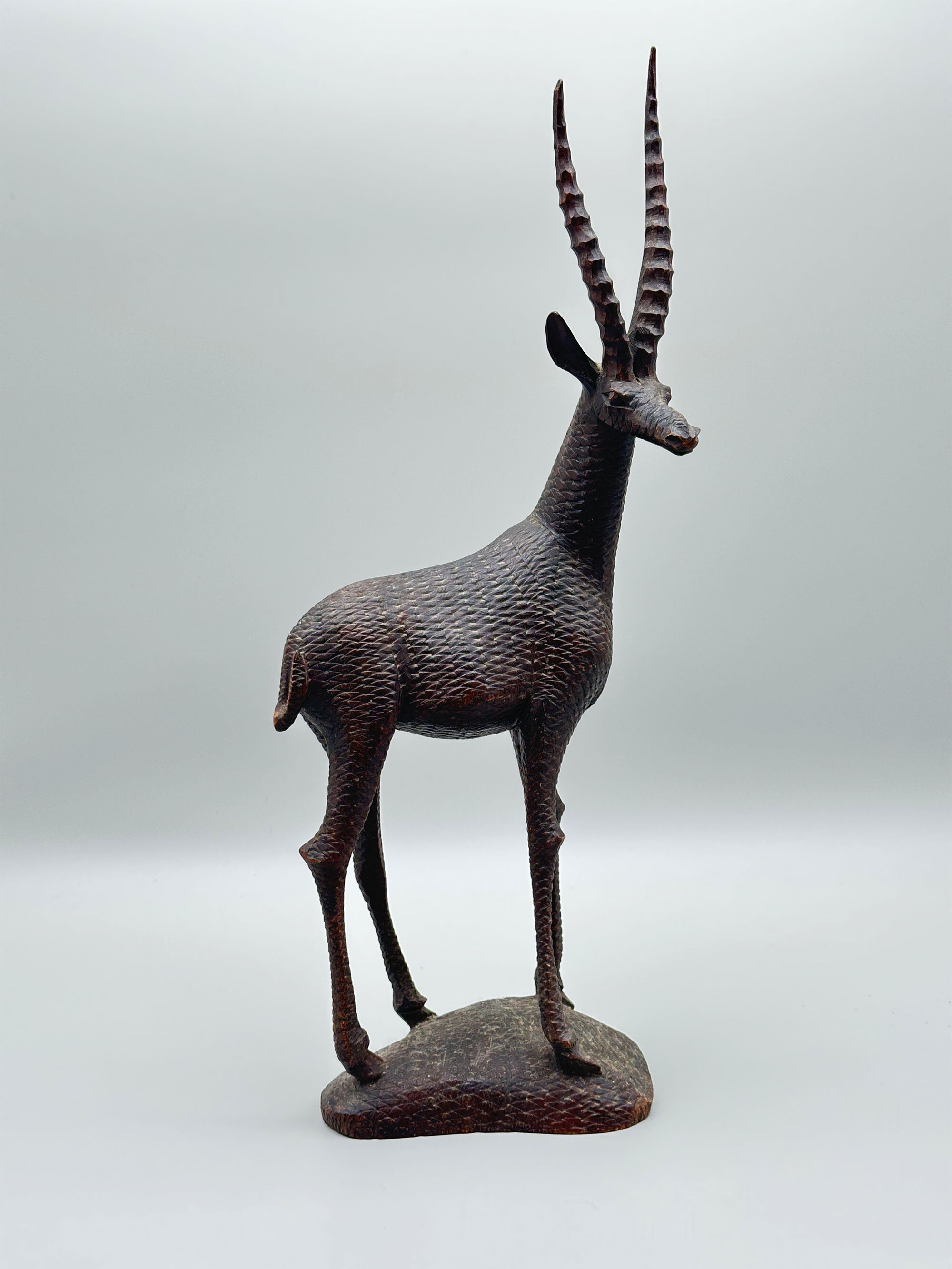
Ebony carved wood figure of an Impala (antelope), African, second half C20th
Price: £75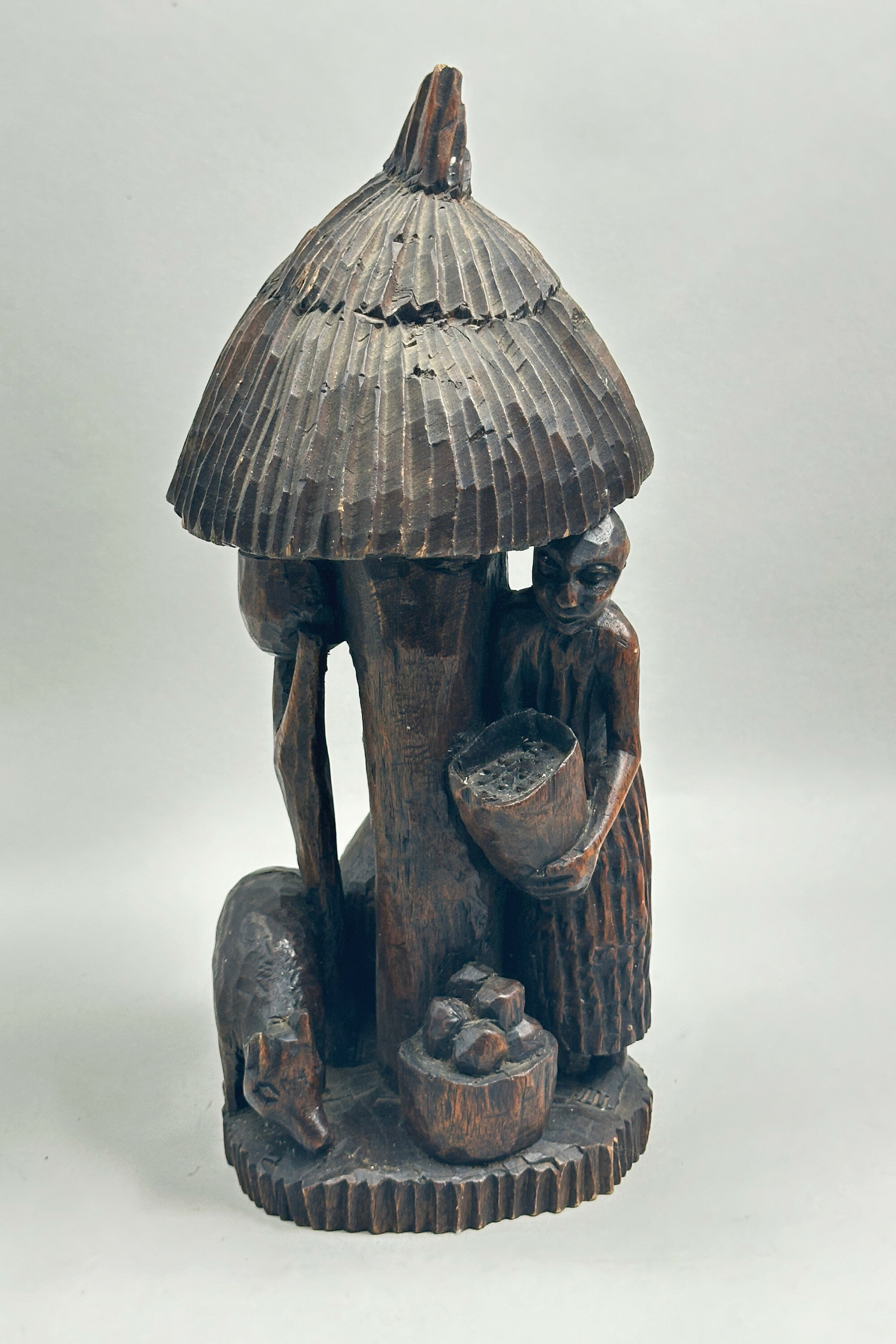
African wood figural group, Guinea c1970
Price: £35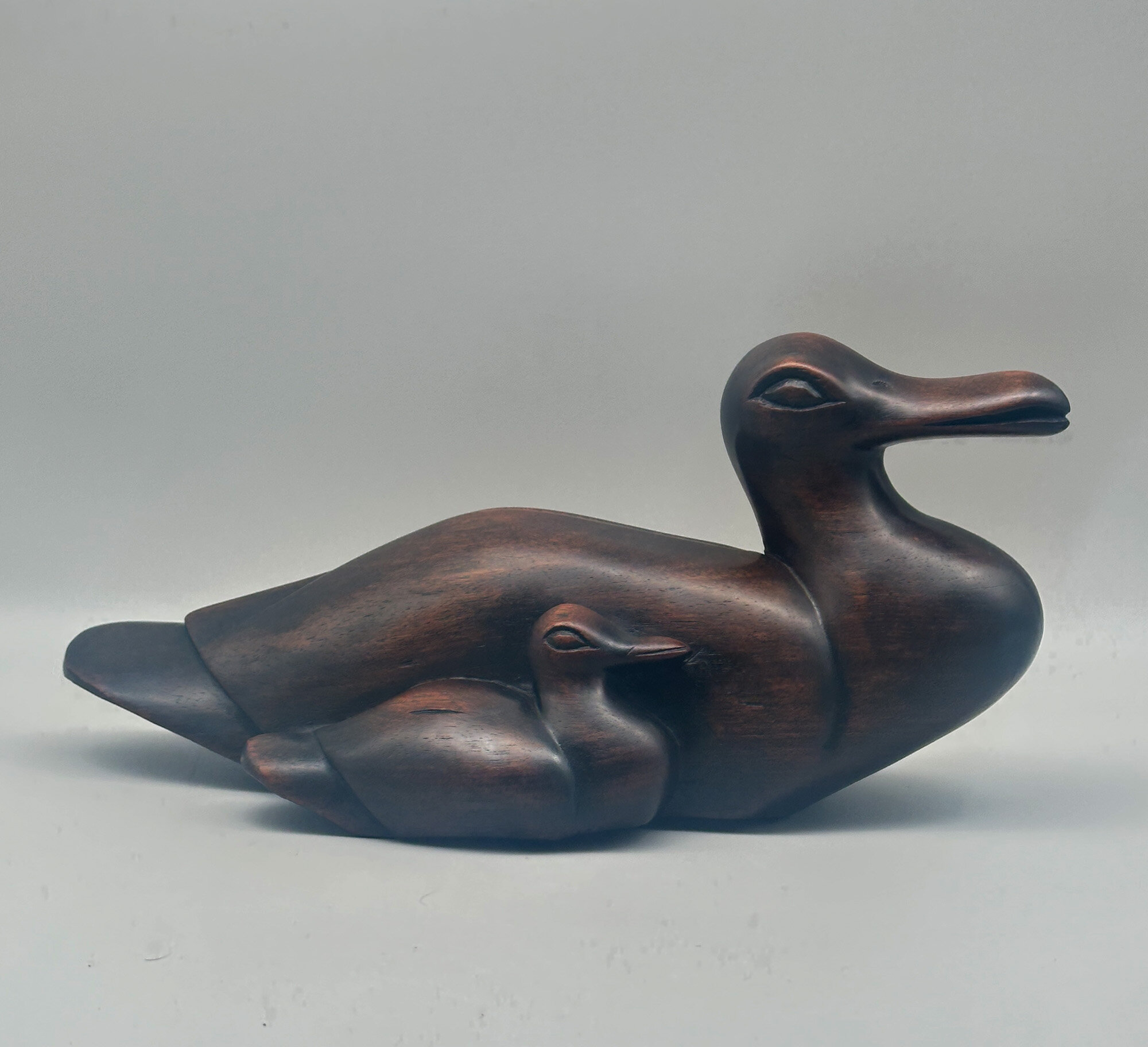
Large ironwood (palo fierro) carving of a duck and baby, Mexico, second half C20th
Price: £75Carving was originally done by the Seri people, a nomadic tribe of no more than 500 who live in Mexico and then by town and city dwellers from Sonora and Baja California, who embarked on the trade after the figures became commercially popular. Seri carvings were essentially hand made whereas the mass produced pieces were created with the use of power tools.
The forms are derived from the wildlife to be found in Mexico and are often abstract in style. While it may owe some elements to the use of machine tools, this carving is a fine example of the ‘ironwood’ style and is, in fact, an unusual composition with the mother and baby duck carved in one piece. The modelling is expressive and well complemented by the patina and finish of the wood. From the above, dating is clearly to the second half of the twentieth century and perhaps more to its later years if this is an example of the ‘commercial’ pieces produced at that time.