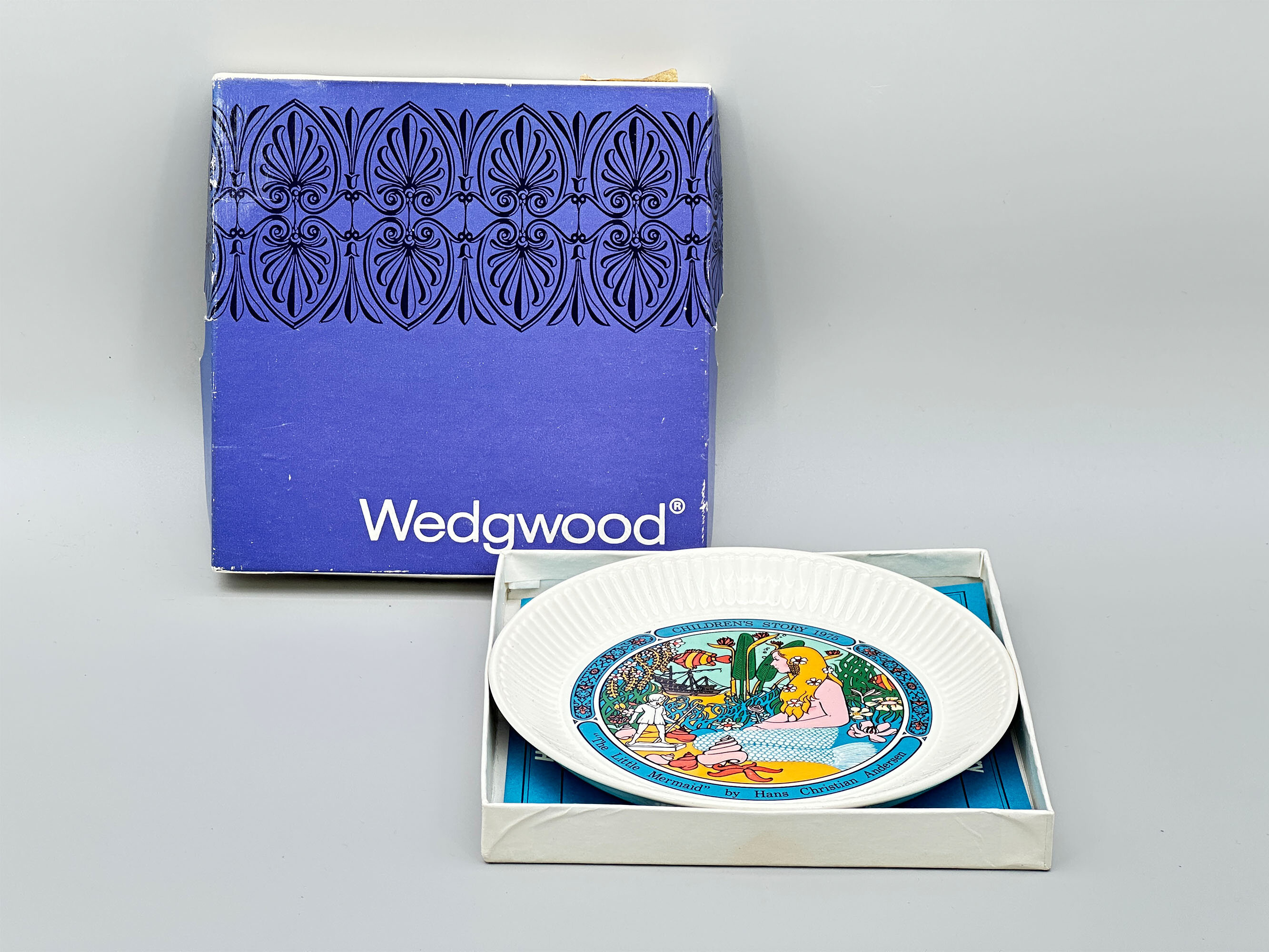
Wedgwood plate from the Childrens Story series, The Little Mermaid, with box, 1975
Price: £15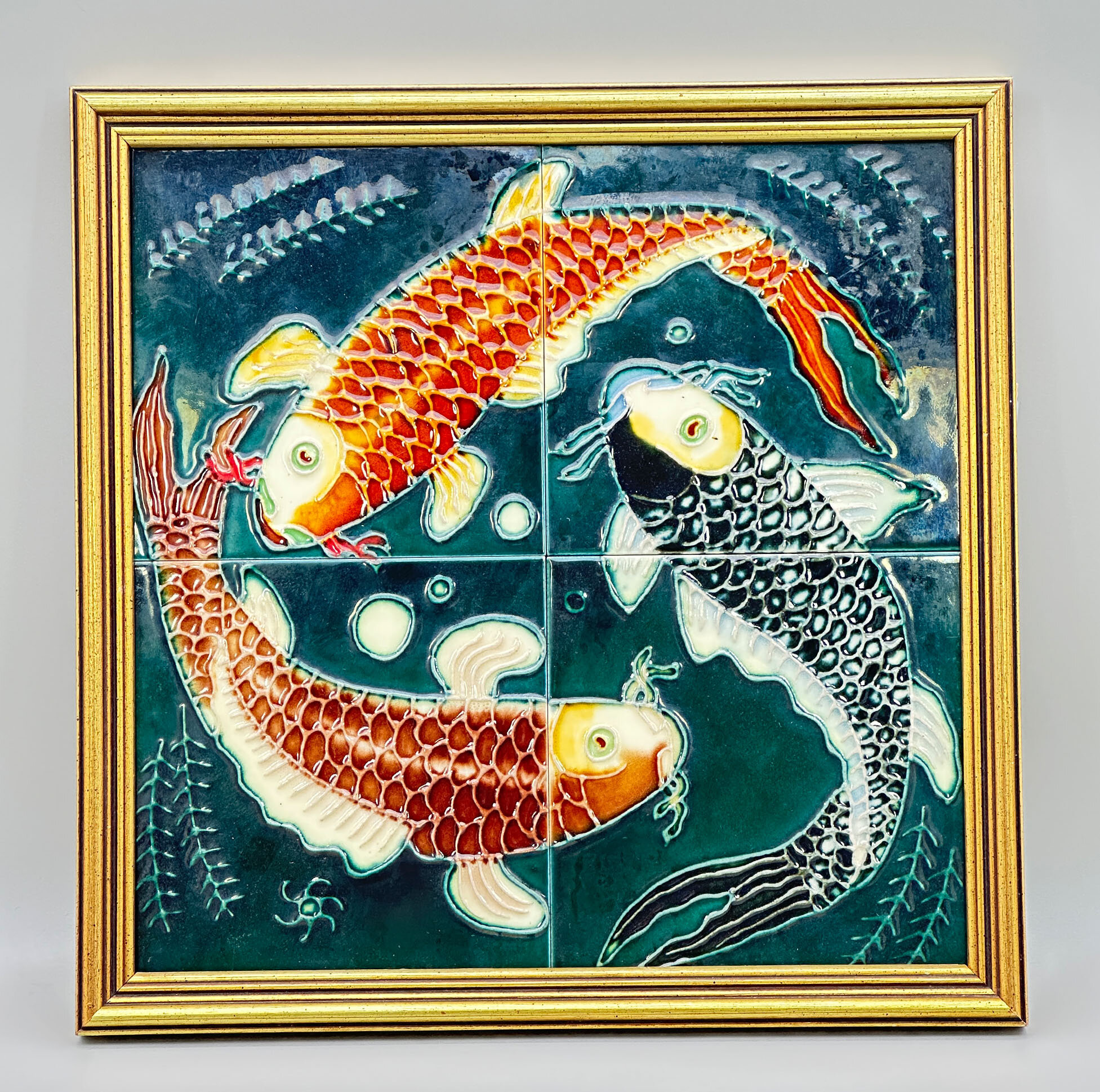
Decorative tile panel with three Koi Carp, C20th
Price: £75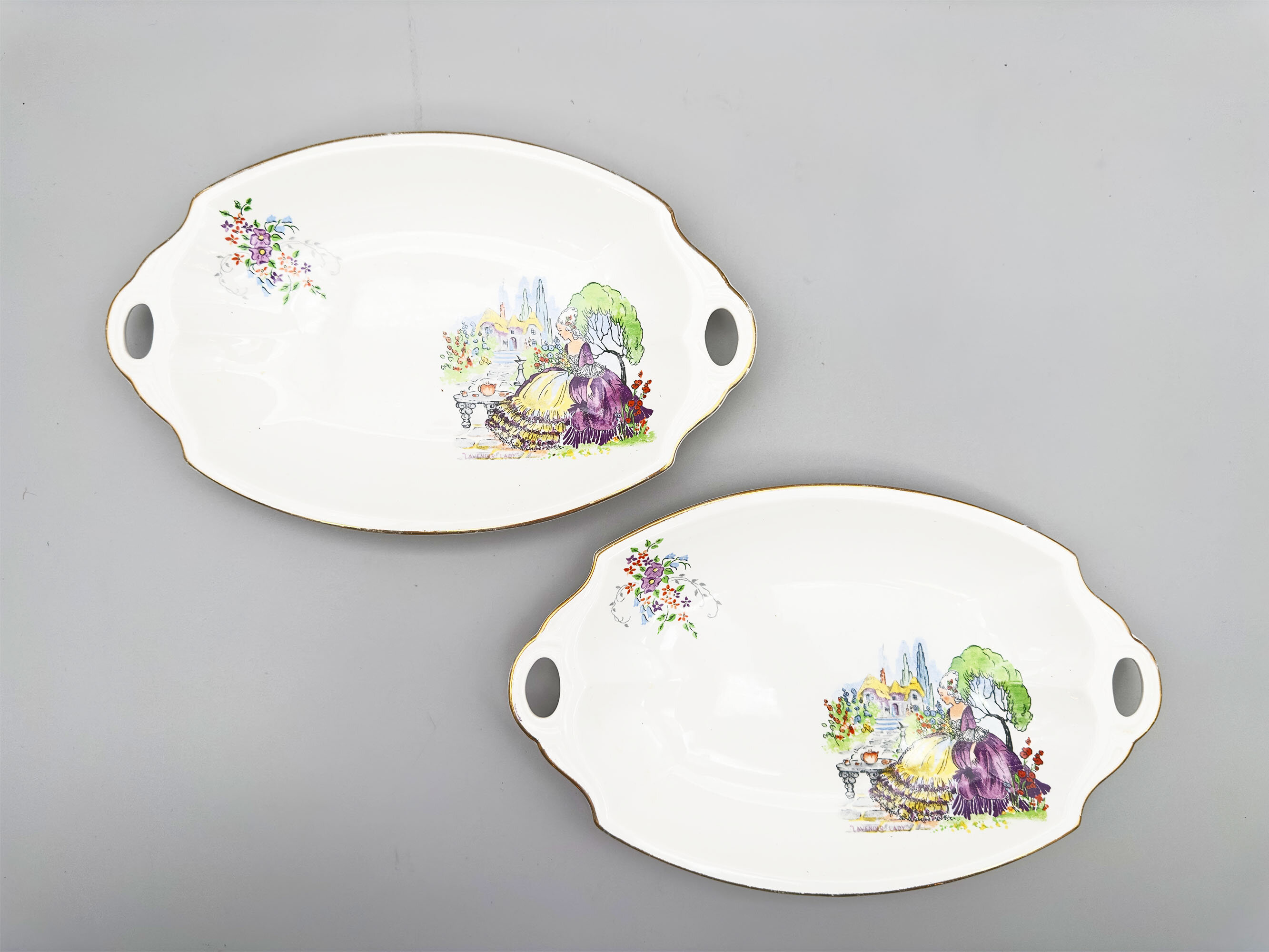
Pair of oval dishes with handles decorated lady in crinoline dress, English mid C20th
Price: £25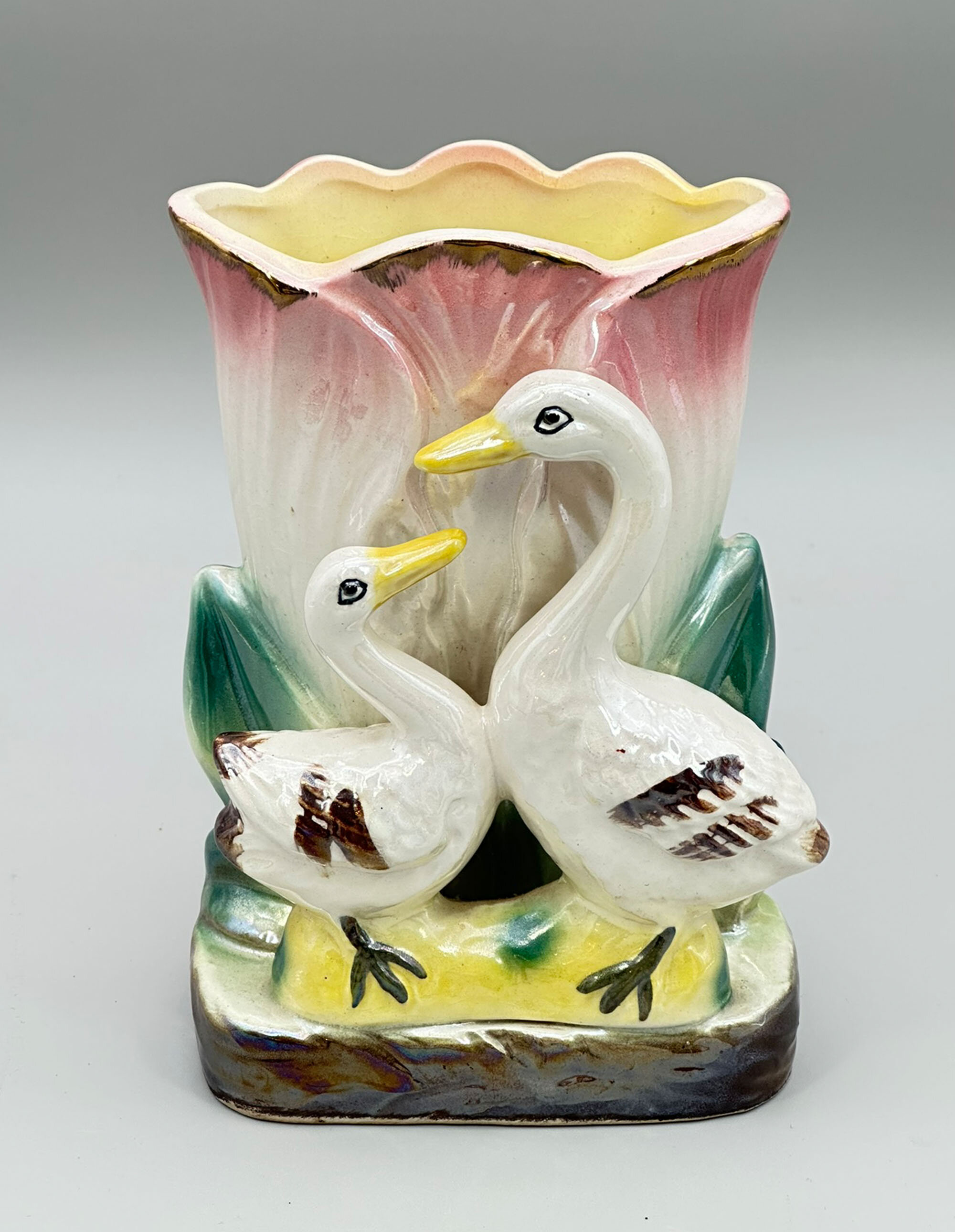
Lustreware novelty Flower Vase with swans, probably French, mid C20th
Price: £35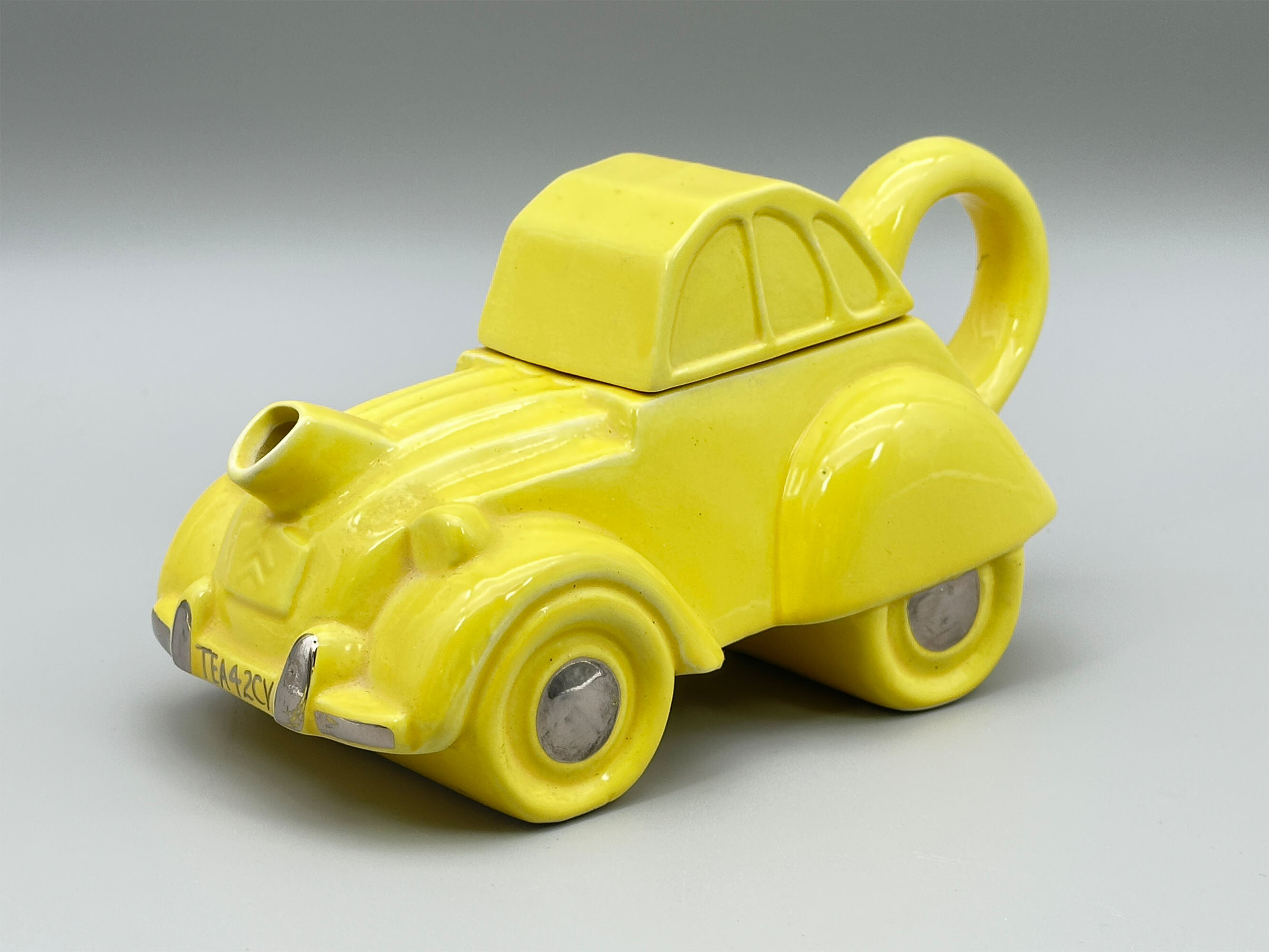
Yellow Citroen 2CV Teapot by Andy Titcomb, signed and dated, 1990
Price: £55‘I worked with Paul Cardew in his first business Sunshine Ceramics from 1978 to 1983. After a number of years making and decorating all manner of odd shaped ashtrays, punk mugs and Nat West piggy banks, I left to concentrate on my own work. I made a range of brooches which were selected by the Design Centre. In 1983 with a converted pigsty as a workshop, I made my first teapot...a black and white harlequin. Encouraged by The Teahouse in Covent Garden London I began to make many more teapots.’
By 1990, he had deserted the pigsty and had a studio in North Cornwall where he continued production until 2016 when ‘I decided that there was too much “stuff” in the world without me adding to it, so I retired from all things ceramic and gave my materials and other equipment to other potters.’
Titcomb’s grandmother owned a yellow ‘Sadler’ racing car teapot, a classic design from the 1930s which is much sought after today (see image 11) and this inspired him to make his own version in the form of a Citroen 2CV, although he also produced a model copying the Volkswagen ‘Beetle’. This reinterpretation of the 1930s original, made in 1990 soon after the move to Cornwall has great charm of its own and is as equally collectible as its prototype.
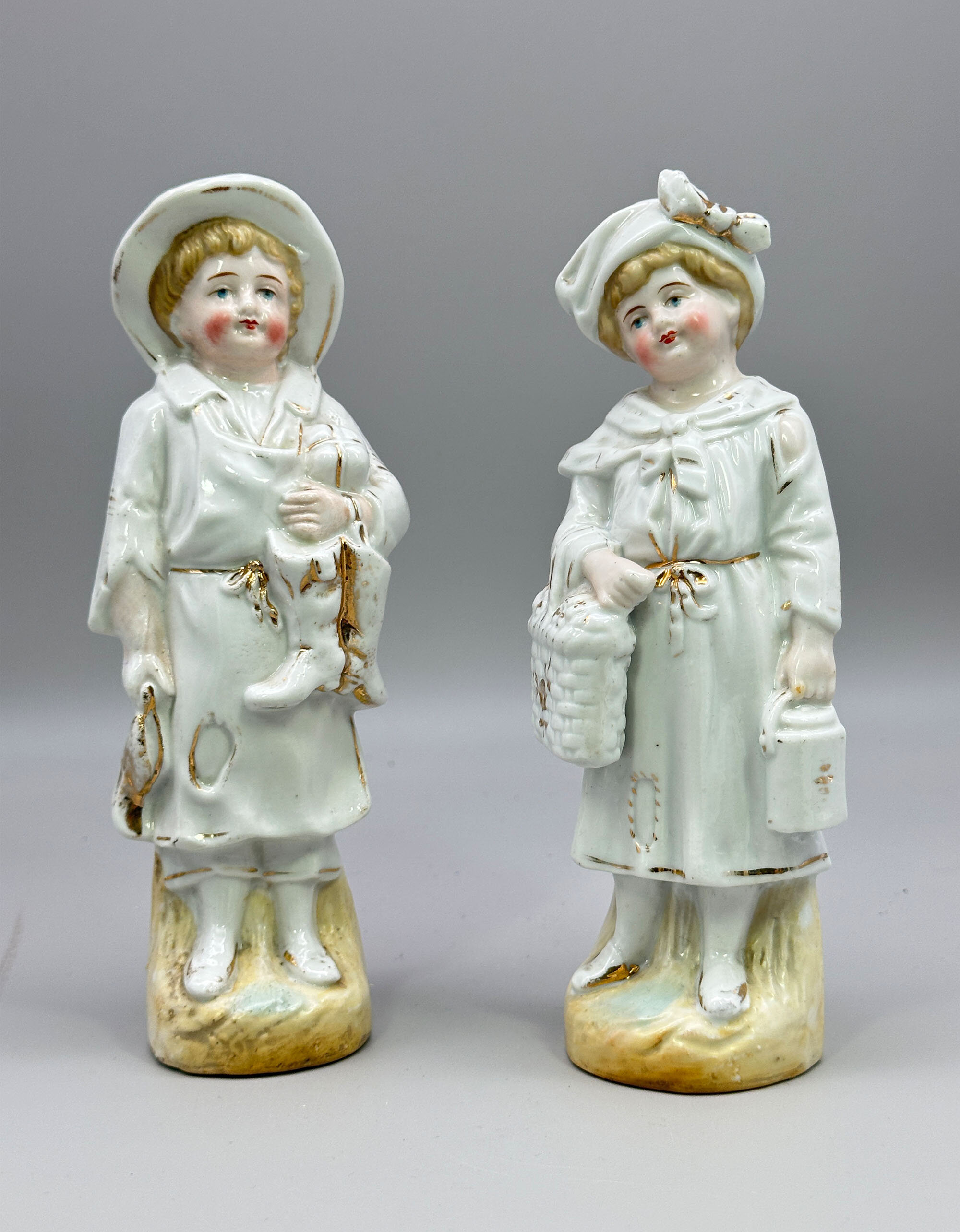
Pair of Staffordshire style figures, Boy and Girl, probably German, late C19th
Price: £75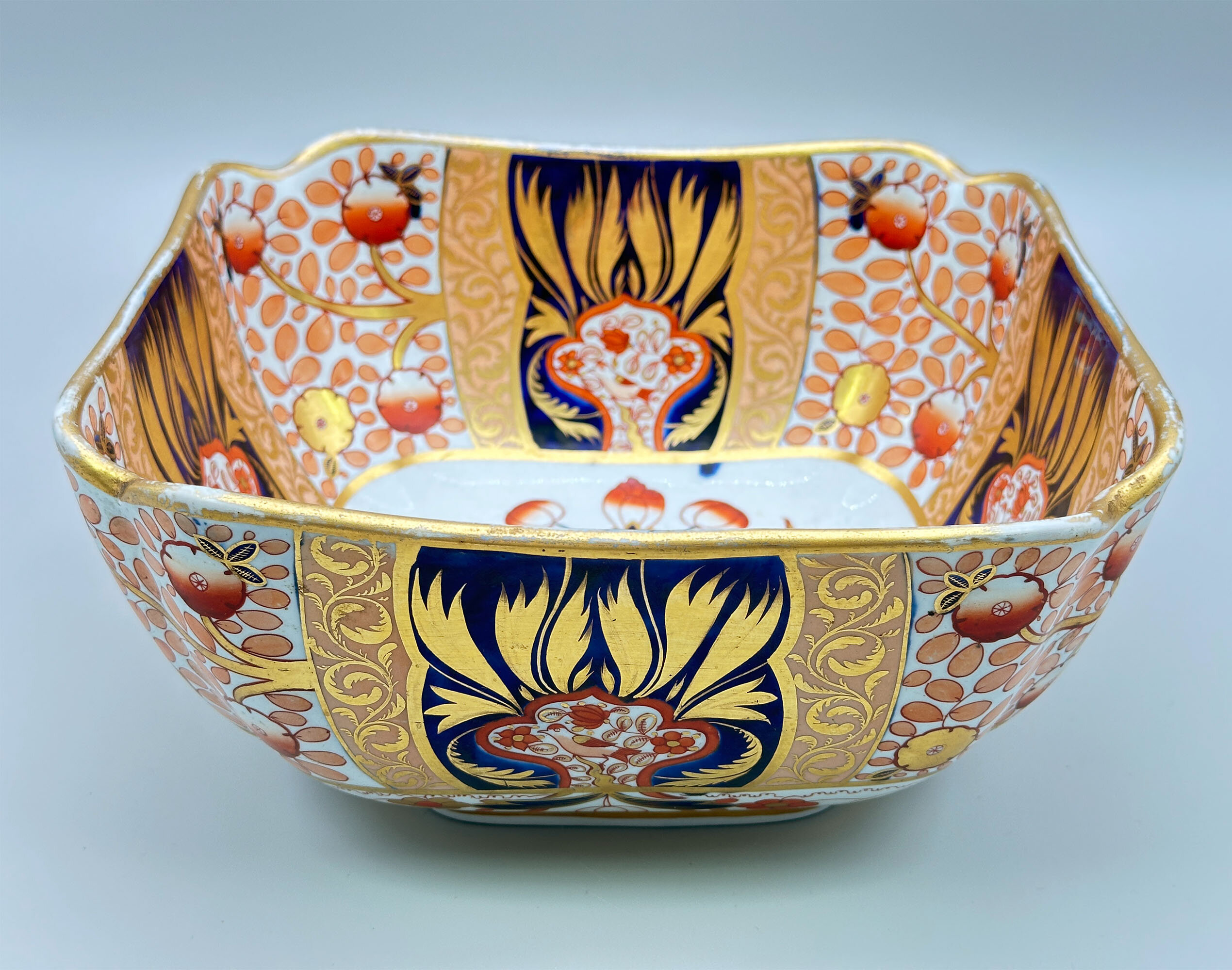
Spode Imari Salad Bowl, pattern no 1409, early C19th
Price: £450The bowl featured here is indeed marked ‘1409’ (see image 8) alongside a form of the name ‘Spode’ which dates to before 1821 (Leonard Whiter : Spode p224). It most likely derives from the service which Whiter once saw complete but has now, presumably, been dispersed. The pattern with its vivid palette of red, blue and gold and floral decoration is a lavish reinterpretation of the ‘Imari’ wares which had been exported to the West in great quantities by the Chinese in the eighteenth century and the Japanese before them. These pieces took their name from their port of export in Japan, Imari; they were actually made at Arita in the former Hizen province. Amongst the wares exported by the Chinese were extensive dinner services and their popularity caused them to be copied and imitated by many of the English potteries from early 1800s onwards, indeed a near identical and contemporary version of this pattern was produced by Coalport.
The square form bowl, indented at the corners and curving inwards towards the base, was a classic Chinese form and is usually referred to as a salad bowl. The standard Chinese dinner service would have had a pair of these, but the shape is rarely found in the English dinner wares made in imitation. Its occurrence here combined with a firmly dateable early nineteenth century pattern in an opulent design which has survived in a remarkable state of preservation makes this very much a ‘one off’ piece and a highly desirable addition to a collection of nineteenth century decorative ceramics.
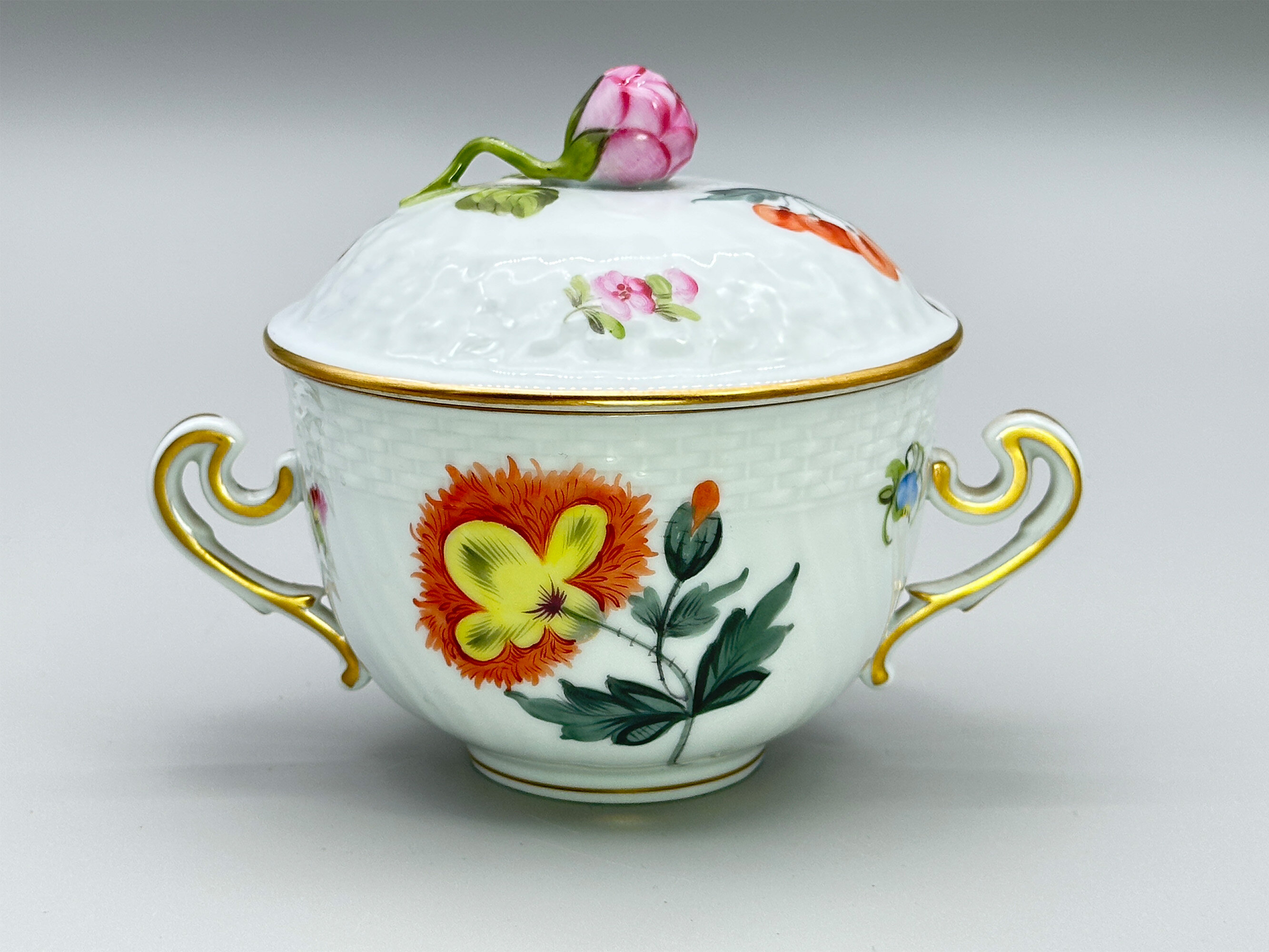
Herend écuelle and cover decorated flowers, marked, late C20th
Price: £75This écuelle and cover, possibly intended as a sugar bowl, was made by the Herend Porcelain factory. Founded in Hungary in 1826 it almost immediately enjoyed enormous popularity with wealthy customers including members of the European aristocracy. Production continued into the twentieth century through nationalistion in 1948 and reprivatisation in 1993 and continues to the present day. The designs produced in recent years often copy those of an earlier period and this is most likely the case here where resemblances can be seen to the nineteenth century productions from Meissen. The format of the mark indicates a fairly recent date of manufacture, probably in the later years of the twentieth century, but the quality of the execution is in no way diminished and the modelling of the finial in particular of the highest standard.